Fine motor skills (writing) Grade 3 Adding up to 1000 Worksheets
5 filtered results
-
From - To
Boost your child's fine motor skills and math proficiency with our Grade 3 Adding Up to 1000 Worksheets. These carefully designed activities focus on enhancing handwriting while tackling arithmetic problems, perfectly suited for young learners. Each worksheet targets coordination and control essential for legible handwriting, integrating engaging math exercises. Ideal for classrooms and homeschooling, our worksheets make learning enjoyable and effective. Equip your third grader with the skills they need to master both writing and math. Start their journey to math excellence and improved fine motor abilities today! Visit Kids Academy to learn more.
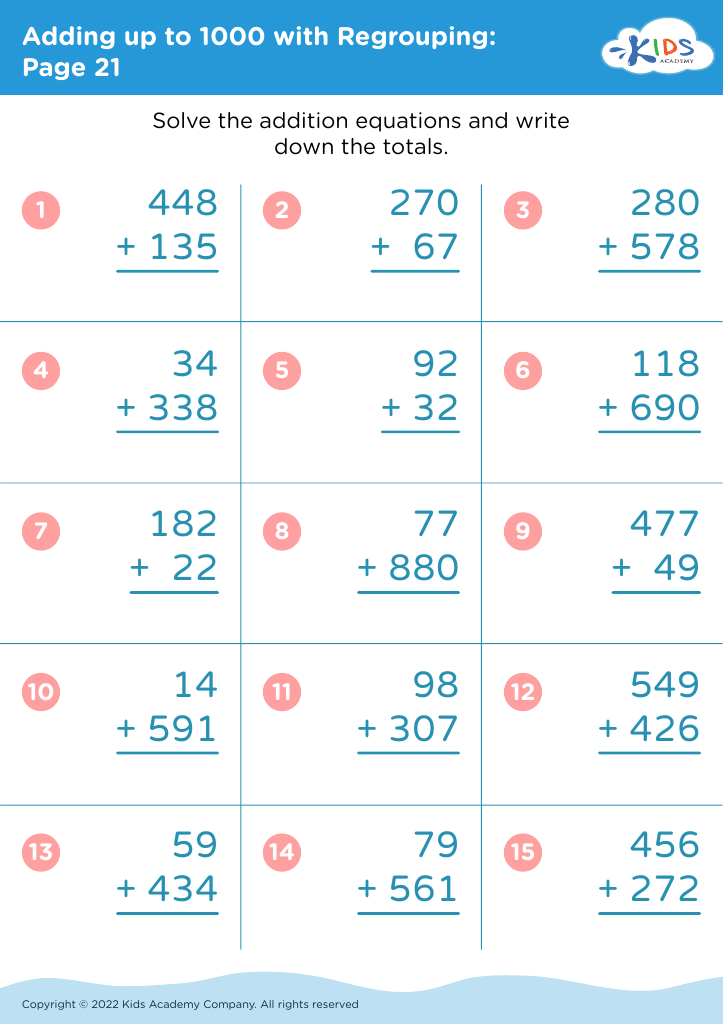
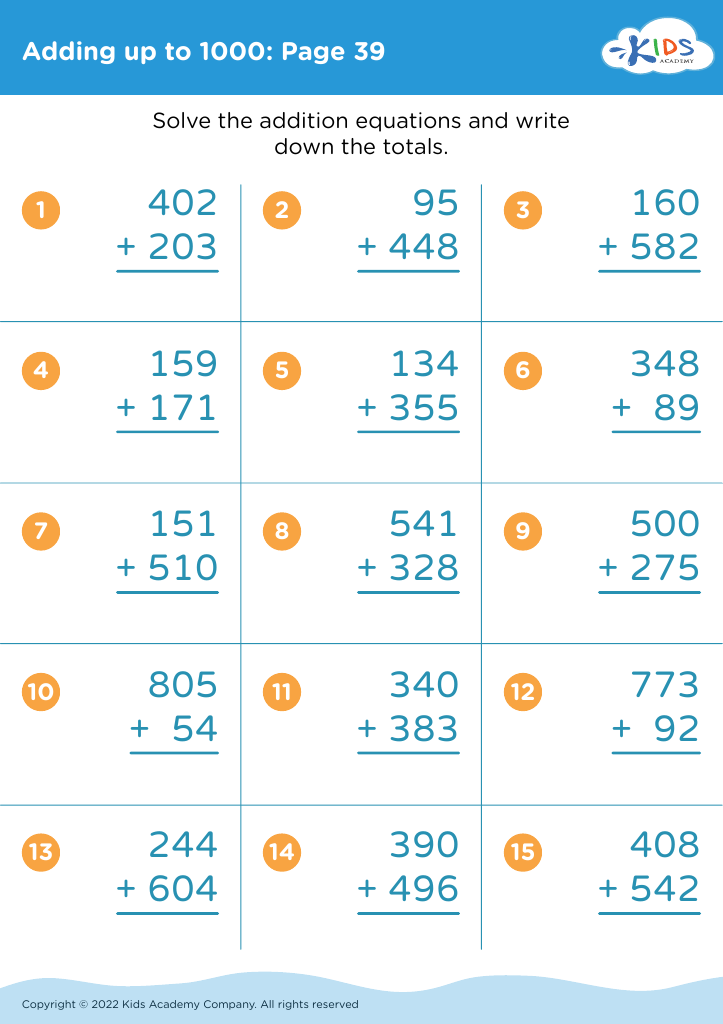
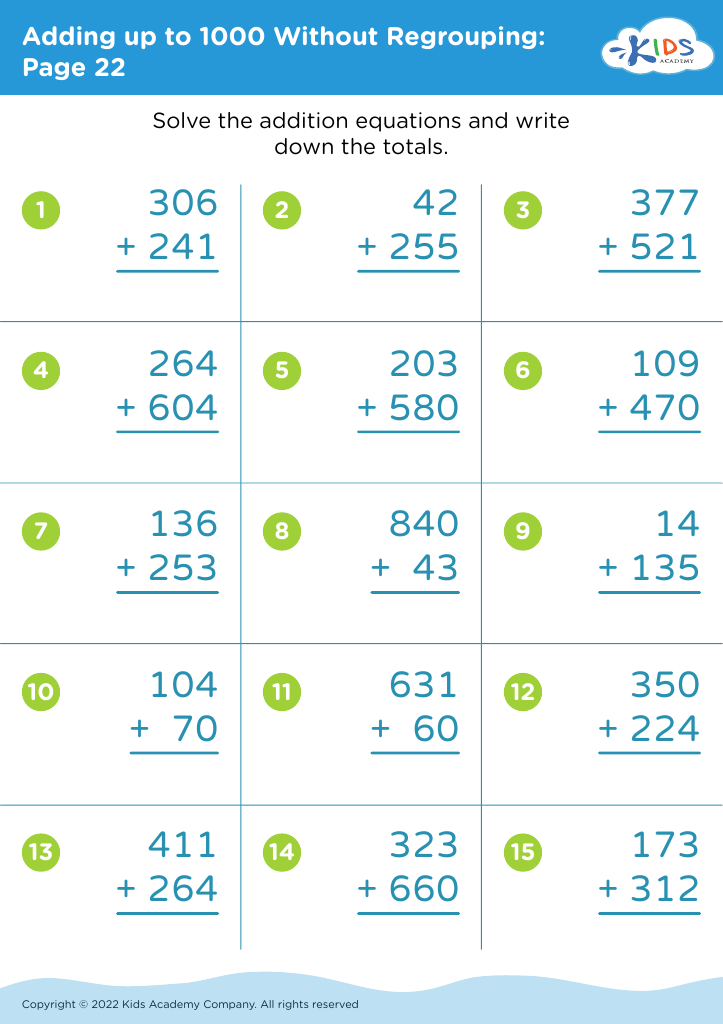
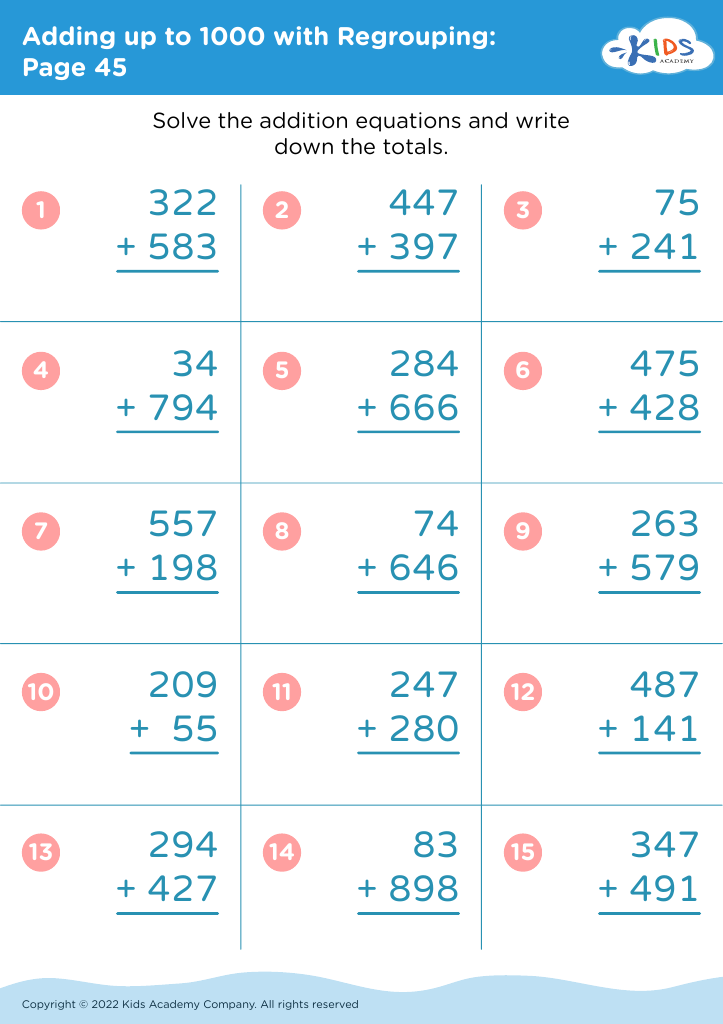
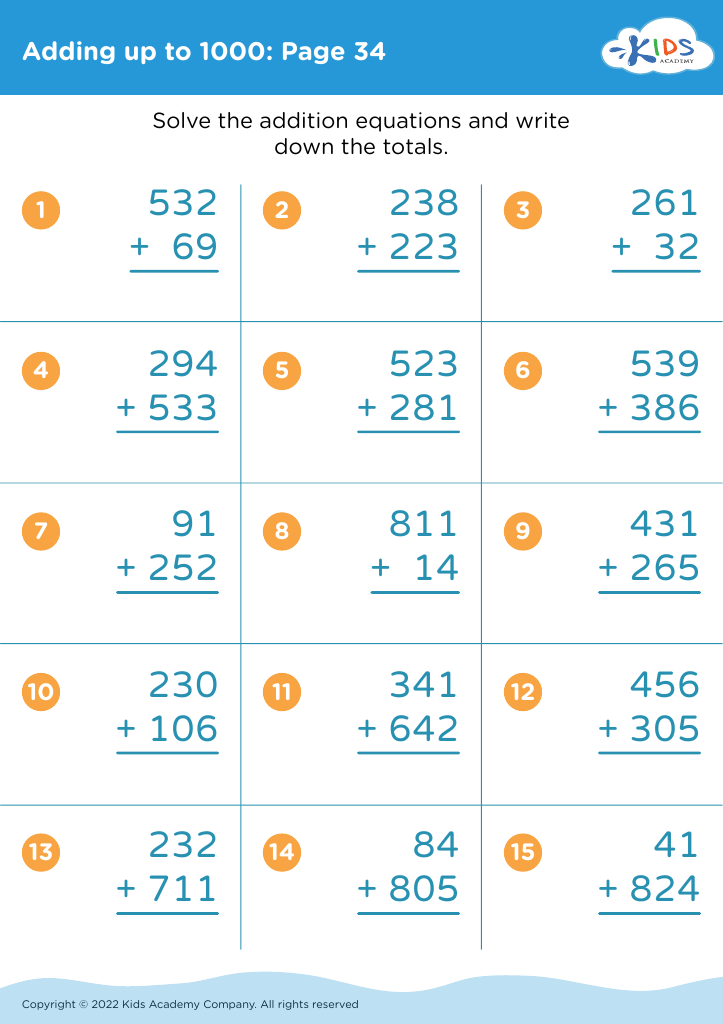


Parents and teachers should prioritize the development of fine motor skills in writing for third-grade children, especially when tackling mathematical concepts such as adding up to 1000. Fine motor skills, which involve the coordination of small muscles in movements—typically linking the hands and fingers—are essential for tasks like writing numbers legibly, aligning columns correctly, and executing calculations with precision.
Fine motor skills allow students to grasp pencils properly, maintain legible handwriting, and develop the endurance needed for academic tasks. Achieving accuracy when handling large sums demands not just cognitive understanding, but also the physical ability to write clearly and neatly. Difficulty in fine motor skills can lead to disorganized work, incorrect number alignments, and frequent errors, potentially resulting in a loss of confidence and enthusiasm for learning.
Furthermore, strengthening fine motor abilities contributes to other critical areas, such as coordination, concentration, and problem-solving skills. As arithmetic concepts become more sophisticated, students who have developed these competencies will be better equipped to manage and document their work effectively, considerably easing their overall learning process. By caring about fine motor skills, parents and teachers help build a strong foundation that supports both academic achievements and personal development.