Following instructions Grade 3 Adding up to 1000 Worksheets
5 filtered results
-
From - To
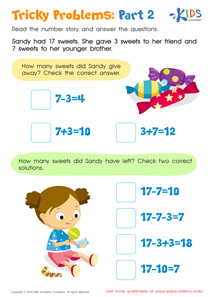
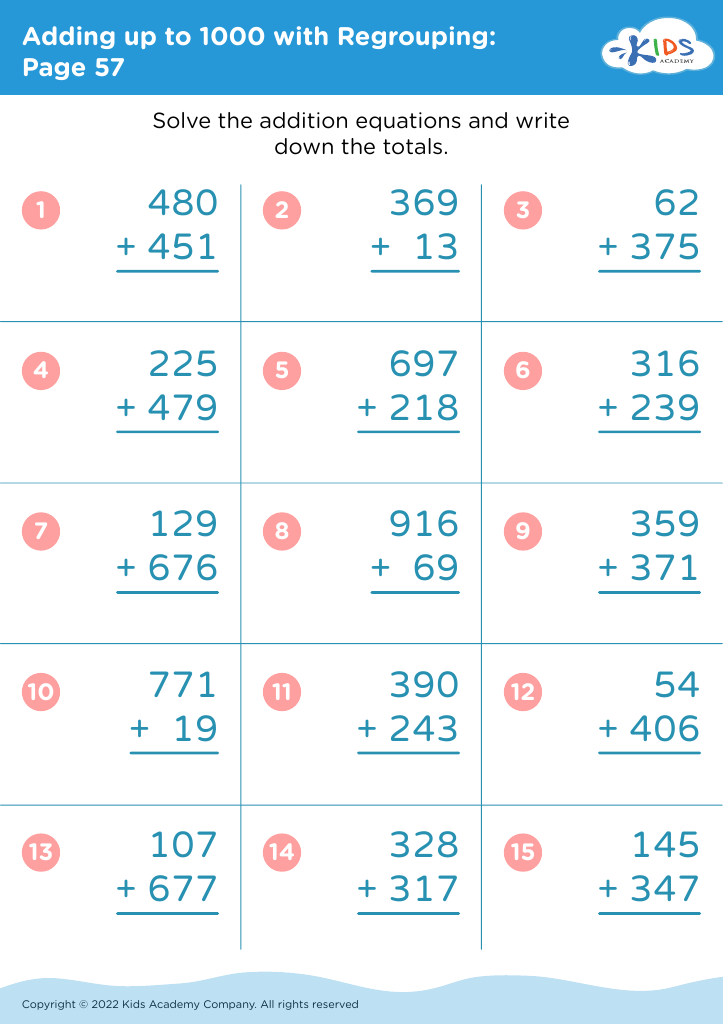
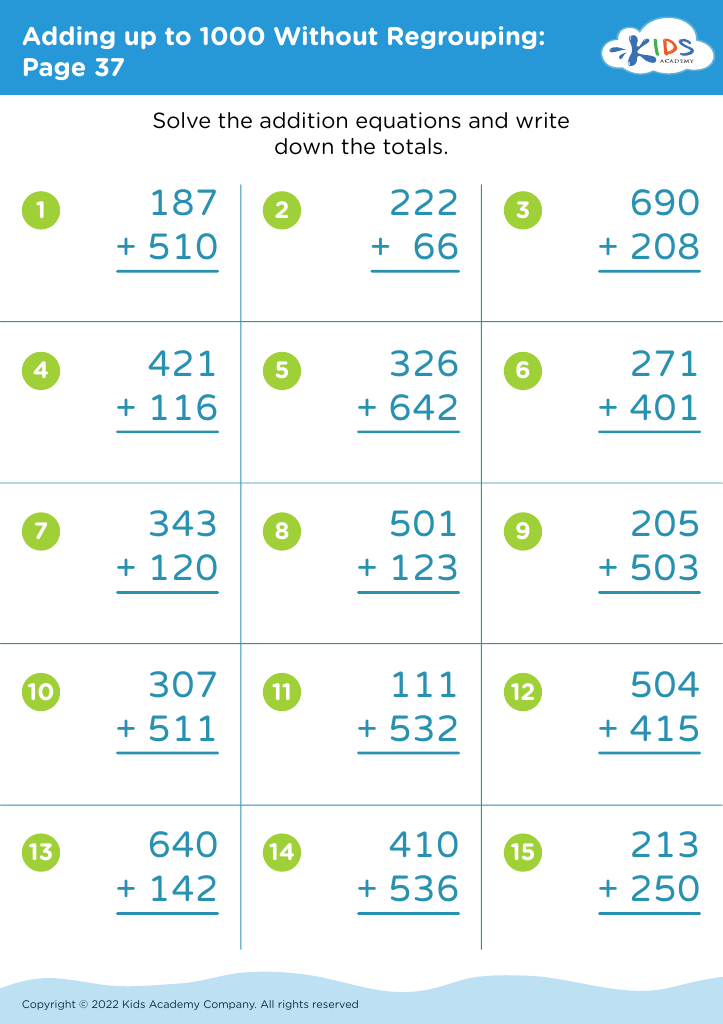
Enhance your Grade 3 students' math skills with our "Following Instructions Grade 3 Adding Up to 1000 Worksheets." These engaging resources are designed to help young learners practice addition while following multi-step instructions. Each worksheet features a variety of problems that challenge students to consolidate their math knowledge, reinforce comprehension, and improve their ability to follow directions accurately. By working through these exercises, children will develop confidence in their computation skills and learn to approach math tasks with a systematic mindset. Perfect for classroom use or at-home practice, these worksheets provide an enjoyable way to master adding up to 1000!
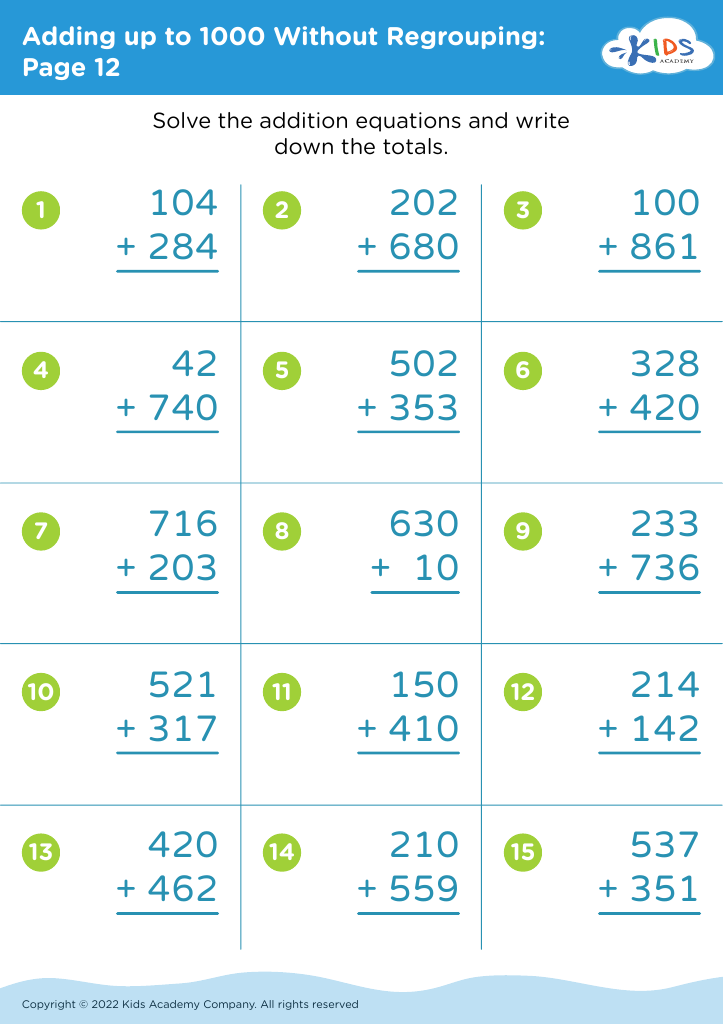
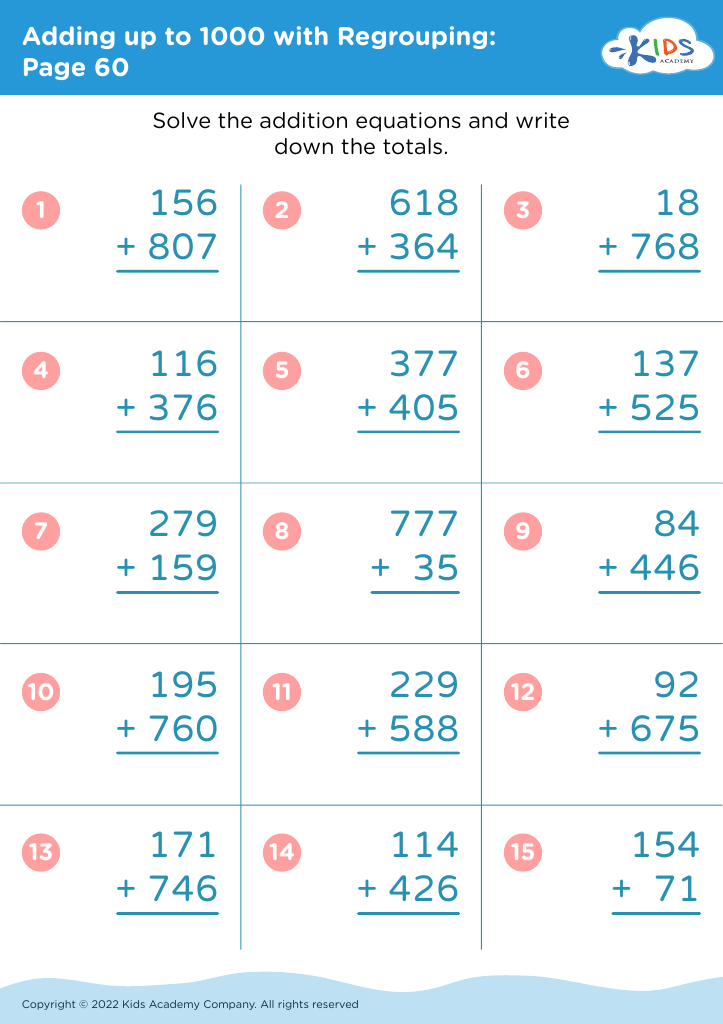
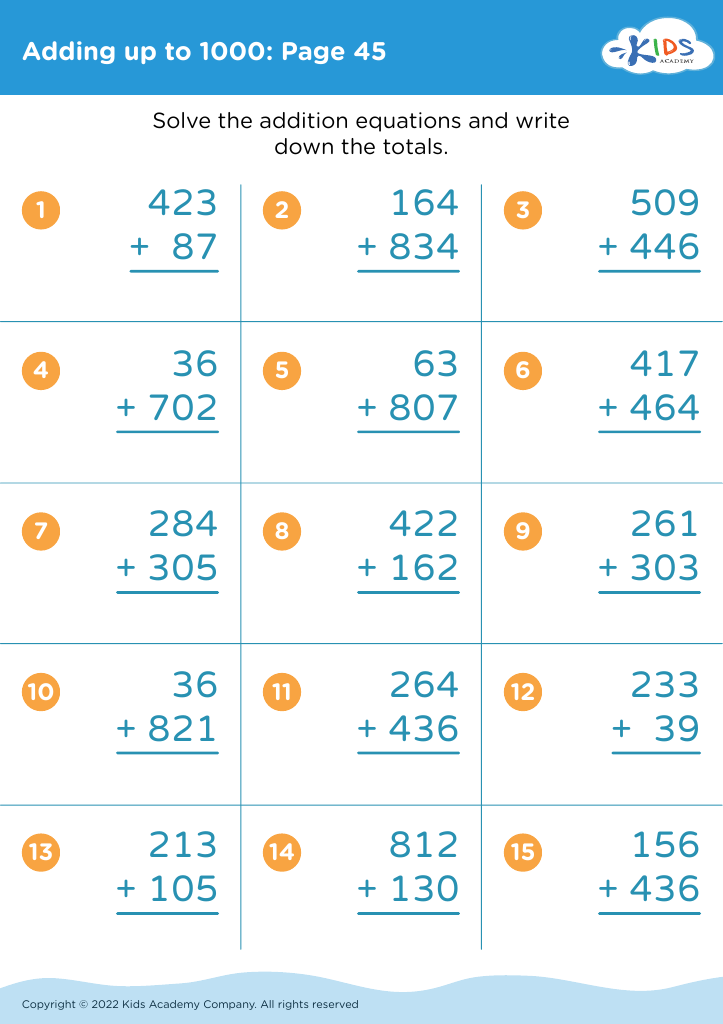


Following instructions, especially in math tasks like adding up to 1000, is crucial for third-grade students. This foundational skill nurtures their ability to understand and apply mathematical concepts. When students learn to follow instructions accurately, they develop critical thinking and problem-solving skills, which are essential for both academic success and everyday life.
For parents and teachers, emphasizing the importance of following instructions fosters a sense of responsibility in children. It helps them learn how to tackle tasks step-by-step, reducing frustration and empowering them to build confidence in their abilities. Following instructions helps students to avoid careless mistakes; a clear understanding of steps ensures they achieve accurate results in calculations.
Moreover, mastering the skill of following instructions lays the groundwork for more complex math concepts in future grades. It encourages discipline and focus, as students learn to concentrate on details. This discipline spills over into other subjects and areas of life, promoting overall academic achievement. Ultimately, by caring about this skill, parents and teachers nurture well-rounded learners equipped to succeed in math and beyond. Developing these skills at an early age sets the stage for lifelong learning and a positive attitude toward challenges.