Fraction Addition Grade 3 Adding up to 1000 Worksheets
5 filtered results
-
From - To
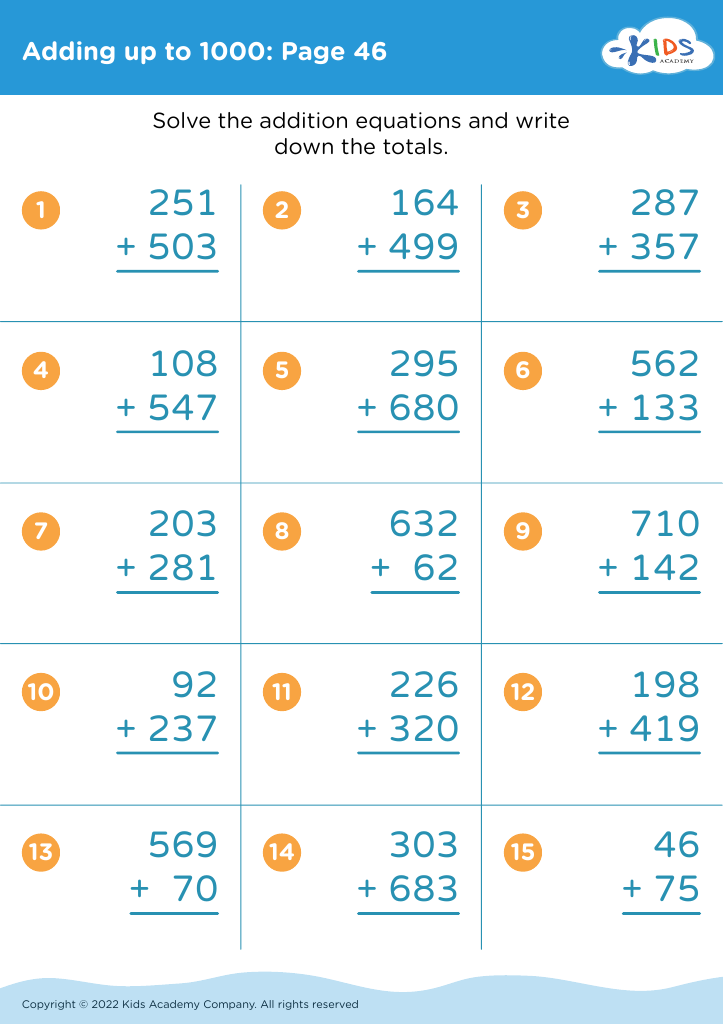
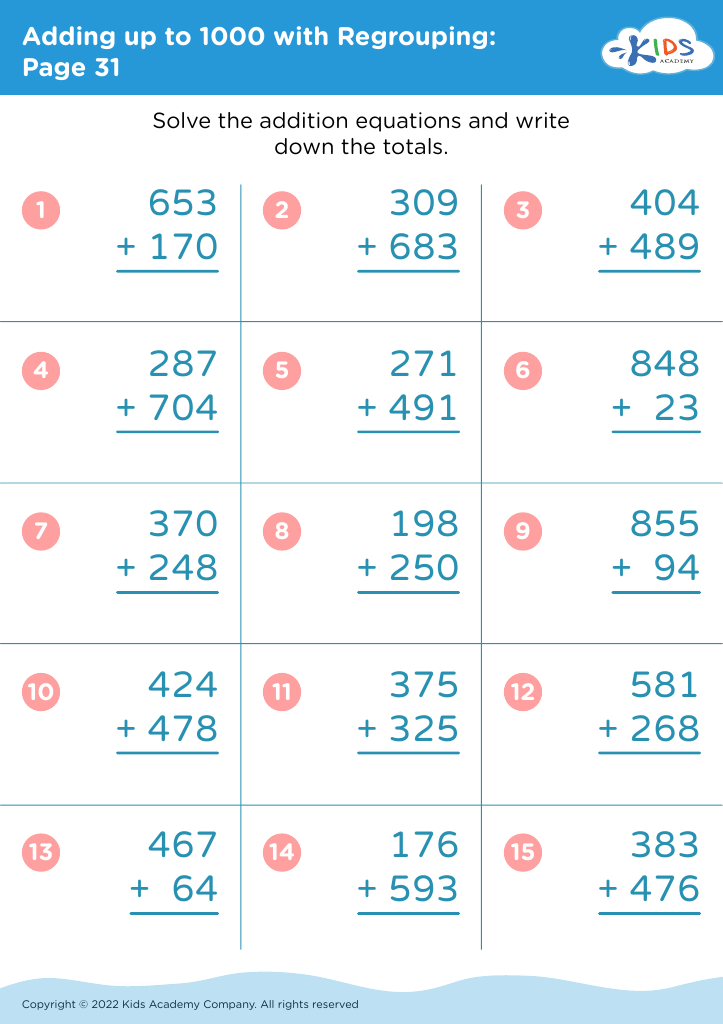
Welcome to our "Fraction Addition Grade 3: Adding up to 1000 Worksheets" page! Designed for third graders, these engaging worksheets help students master the concept of adding fractions with like denominators. Through a variety of fun and challenging problems, children will enhance their mathematical skills while building a solid foundation for future concepts. Each worksheet encourages critical thinking and problem-solving, making learning an enjoyable experience. Perfect for classroom or home use, these resources provide ample practice for students to become confident in adding fractions. Explore our worksheets today and empower your child’s journey in mathematics!


Understanding Fraction Addition in Grade 3 is crucial as it lays the foundation for more complex mathematical concepts in later grades. When parents and teachers emphasize this topic, they empower students with essential skills that lead to better problem-solving abilities. Mastery of adding fractions fosters a deeper understanding of numbers and promotes critical thinking, essential components of a well-rounded education.
In today's world, innumeracy can limit opportunities in various fields, from science and technology to everyday tasks like budgeting or cooking. By ensuring that students learn to add fractions accurately, parents and teachers are not only preparing them for future academic challenges, but also equipping them with practical life skills.
Moreover, adding fractions with unlike denominators, a skill introduced at this level, encourages collaboration and communication in math discussions. It invites children to work together, share strategies, and build social skills, all while cultivating a positive attitude toward learning. Finally, proficiency in this area helps establish a sense of accomplishment and confidence, motivating students to engage with more complex math as they progress. In summary, a solid grasp of fraction addition is fundamental for a child’s growth in mathematics and their overall cognitive development.