Number Recognition Grade 3 Adding up to 1000 Worksheets - Page 2
31 filtered results
-
From - To
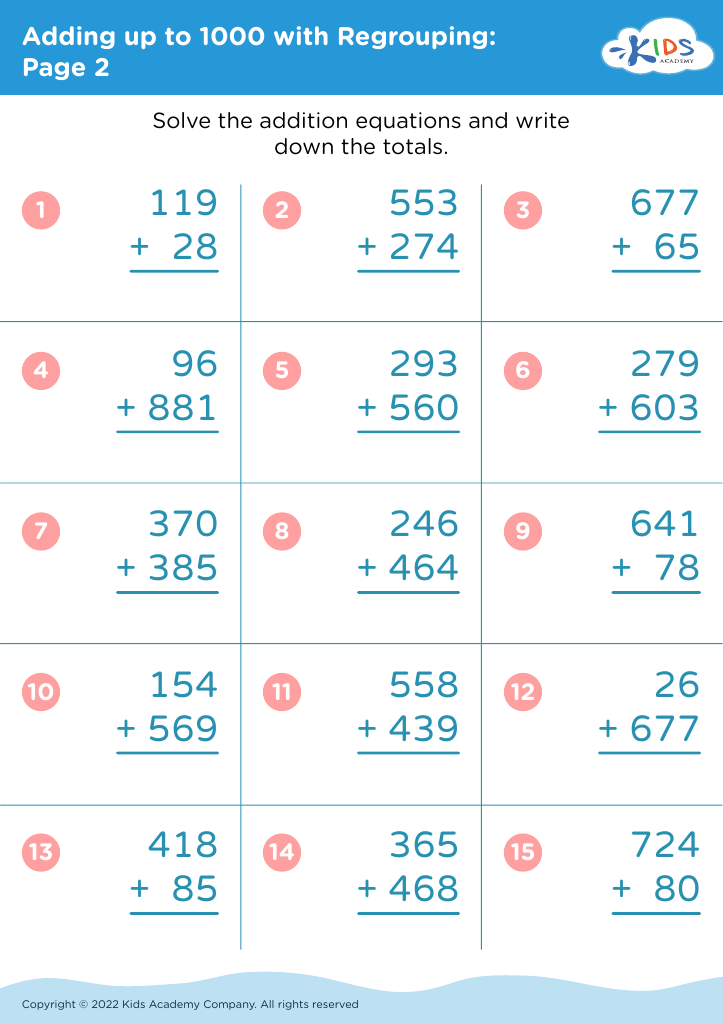
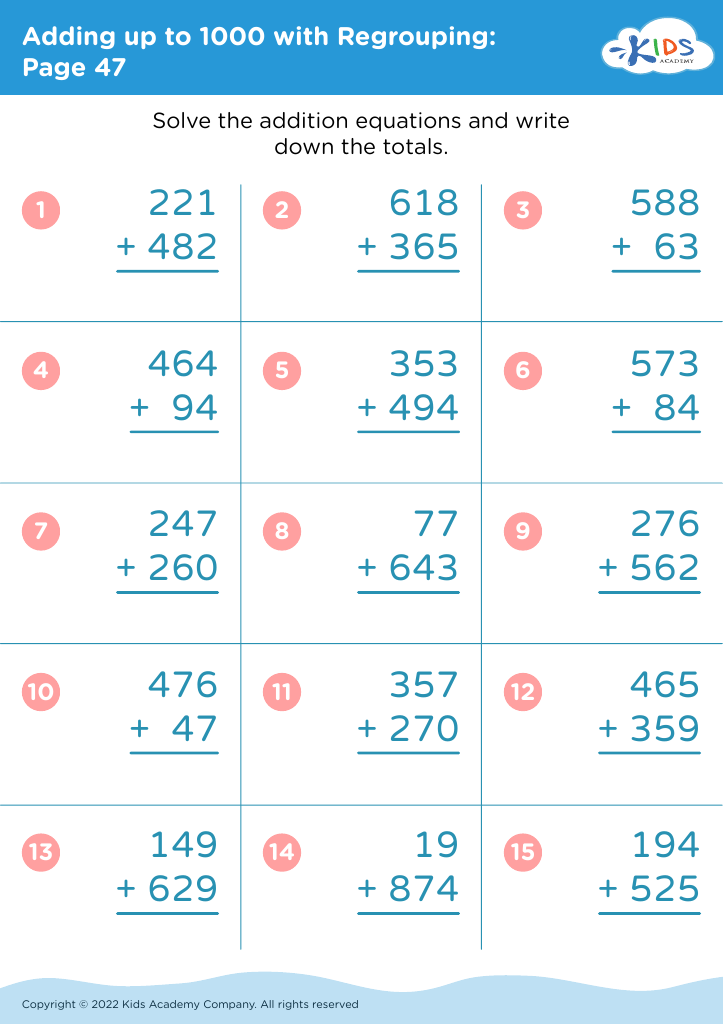
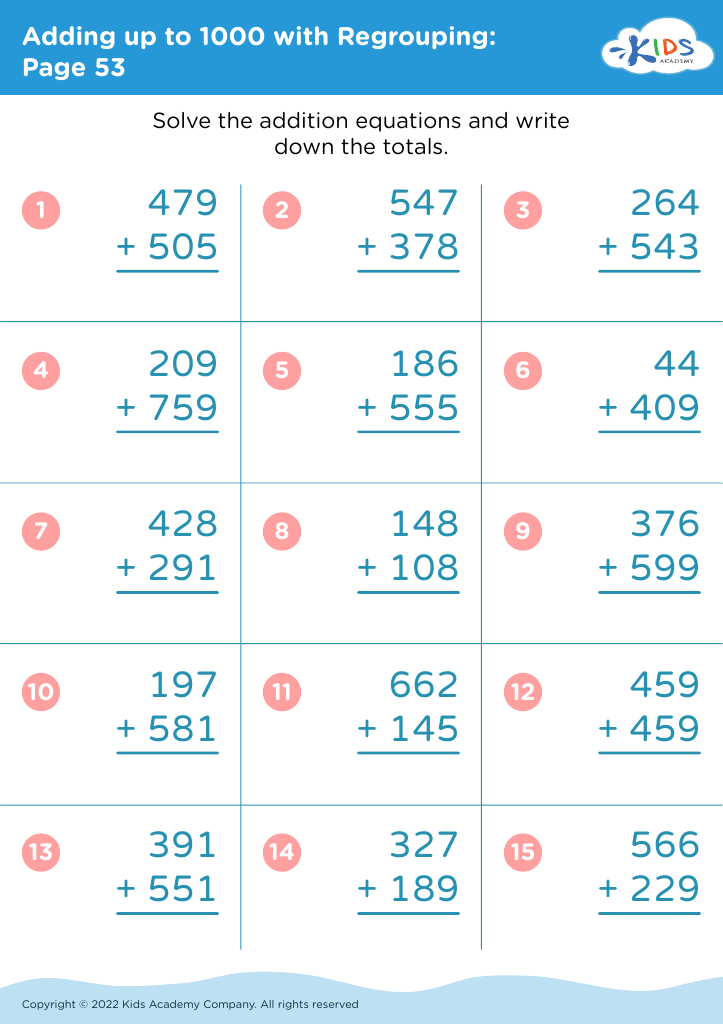
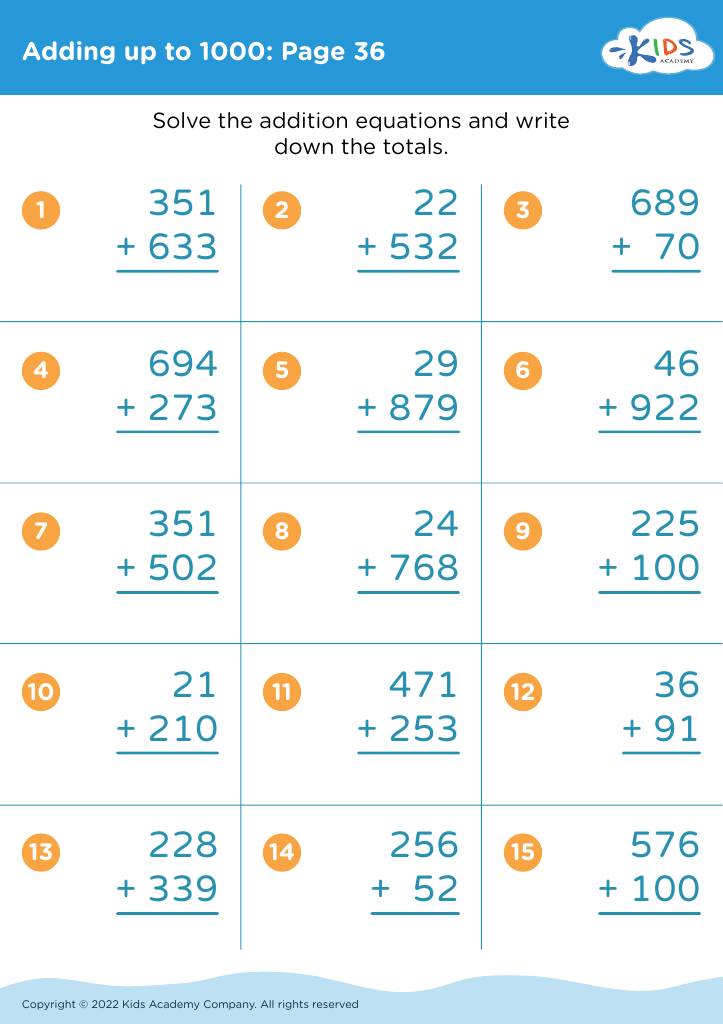
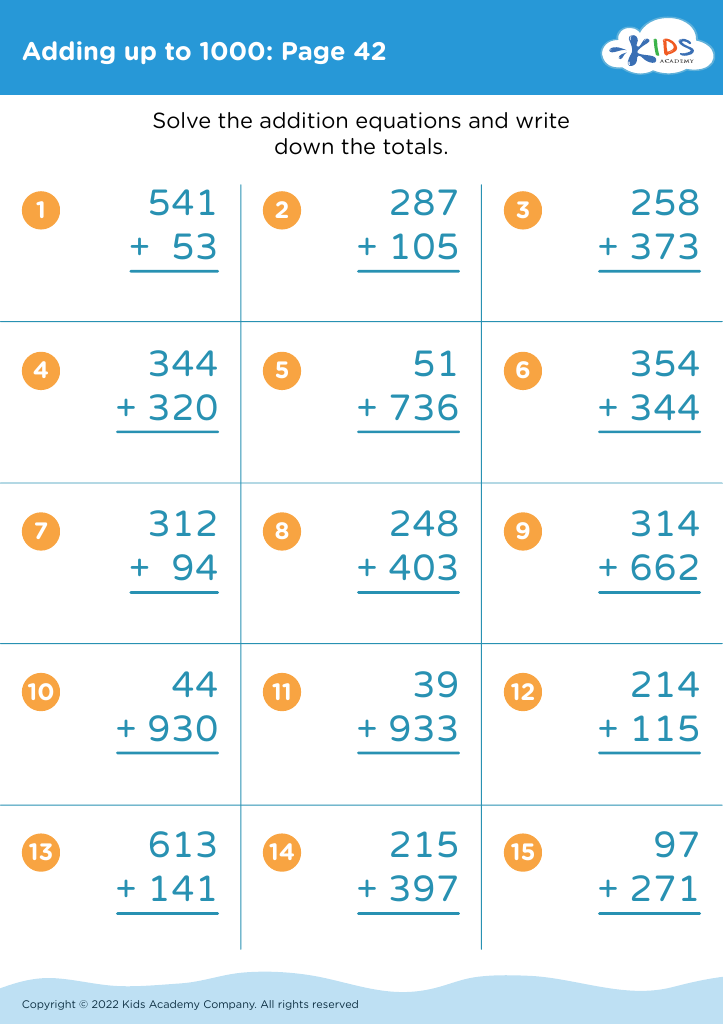
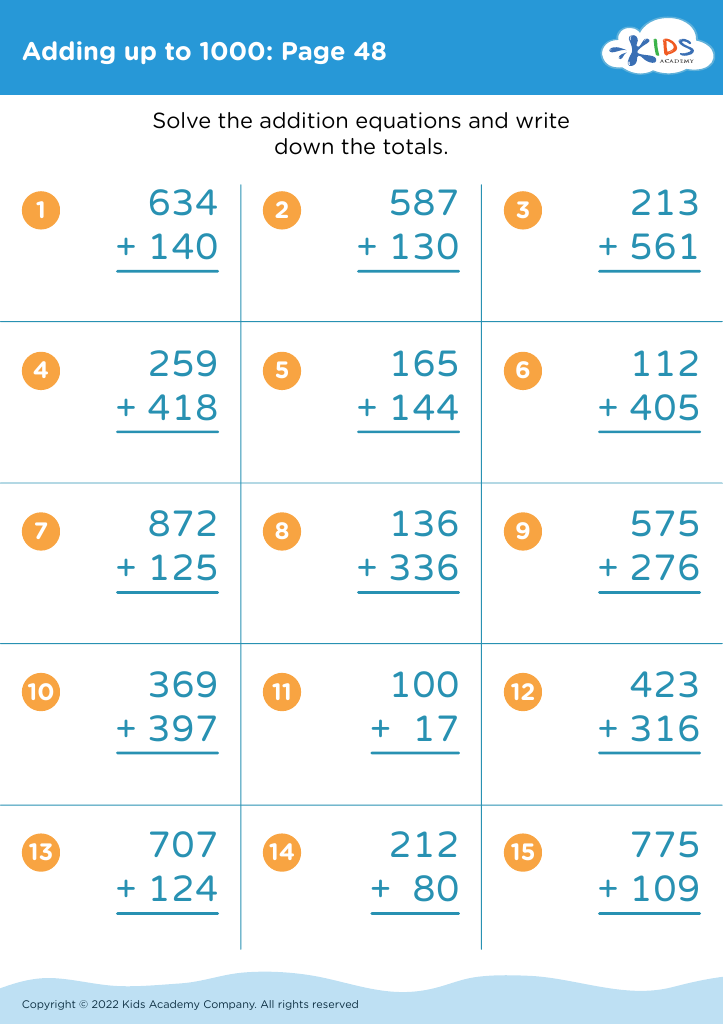
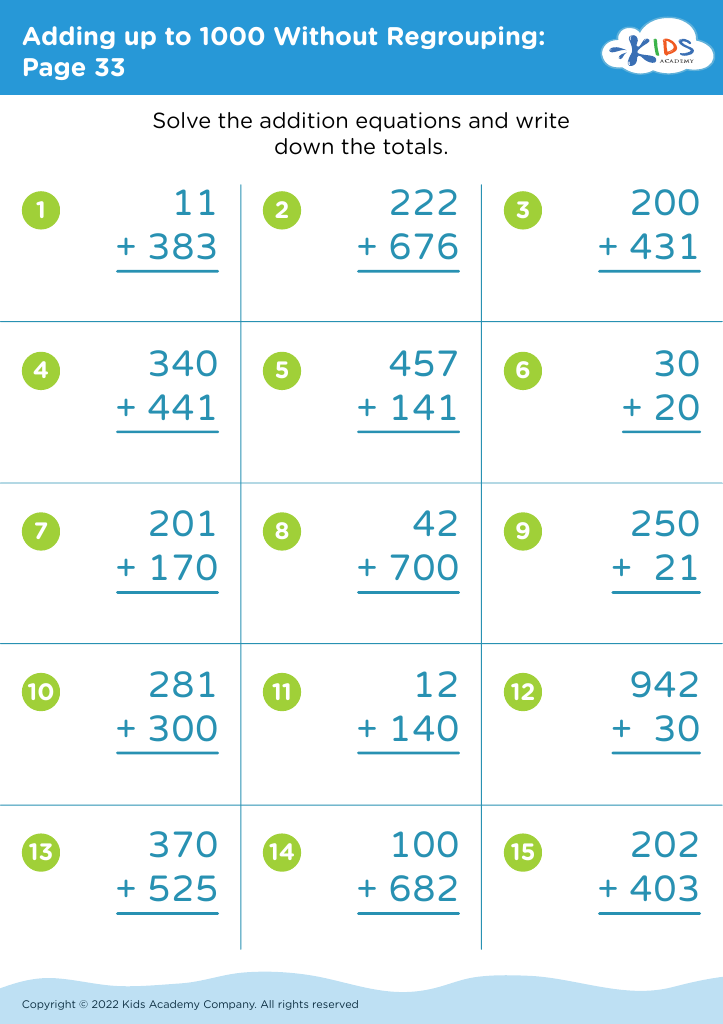



Number recognition is a foundational skill vital for Grade 3 students, especially as they progress toward more complex mathematical concepts. Understanding numbers up to 1000 not only enhances a child’s arithmetic abilities but also fosters critical thinking and problem-solving skills critical in everyday life. Parents and teachers should prioritize this skill because it lays the groundwork for various math operations, such as addition, subtraction, and eventually multiplication and division.
Mastering number recognition enables children to operate confidently within the number system, improving their ability to tackle word problems and conceptualize larger numbers. This skill empowers students to understand the relationship between quantities, promoting numerical fluency that is essential in real-world scenarios, like budgeting or measurements. When children can recognize and manipulate numbers effectively, it reduces math anxiety and boosts their confidence in the subject.
Additionally, number recognition in the context of adding up to 1000 encourages collaboration and communication in group settings, where students can share strategies and solve problems together. Therefore, parents and teachers should care deeply about this competence, as it not only shapes a child's academic success but also builds a strong foundation for lifelong learning and practical skills in mathematics.