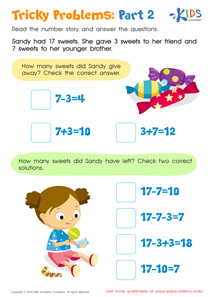
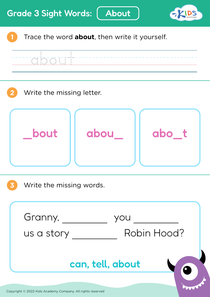
Number Sequencing Grade 3 Adding up to 1000 Worksheets
5 filtered results
-
From - To
Explore our engaging "Number Sequencing Grade 3 Adding up to 1000 Worksheets" for young learners to master sequencing skills! Perfectly crafted for 3rd graders, these worksheets enhance mathematical understanding by guiding students through adding numbers up to 1000 in sequential patterns. Each worksheet offers diverse, age-appropriate exercises to boost problem-solving abilities and confidence in number operations. Parents and educators will find these tools invaluable for supplementing math lessons at home or in the classroom. Equip your child with essential math proficiency while making learning fun and effective with our comprehensive practice worksheets today!
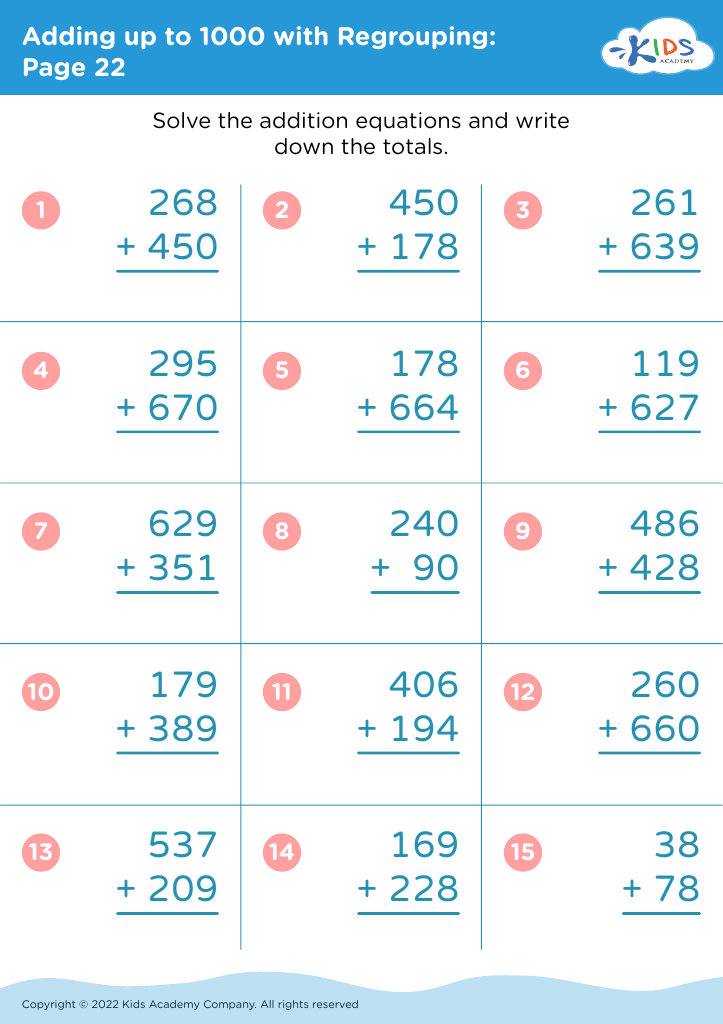
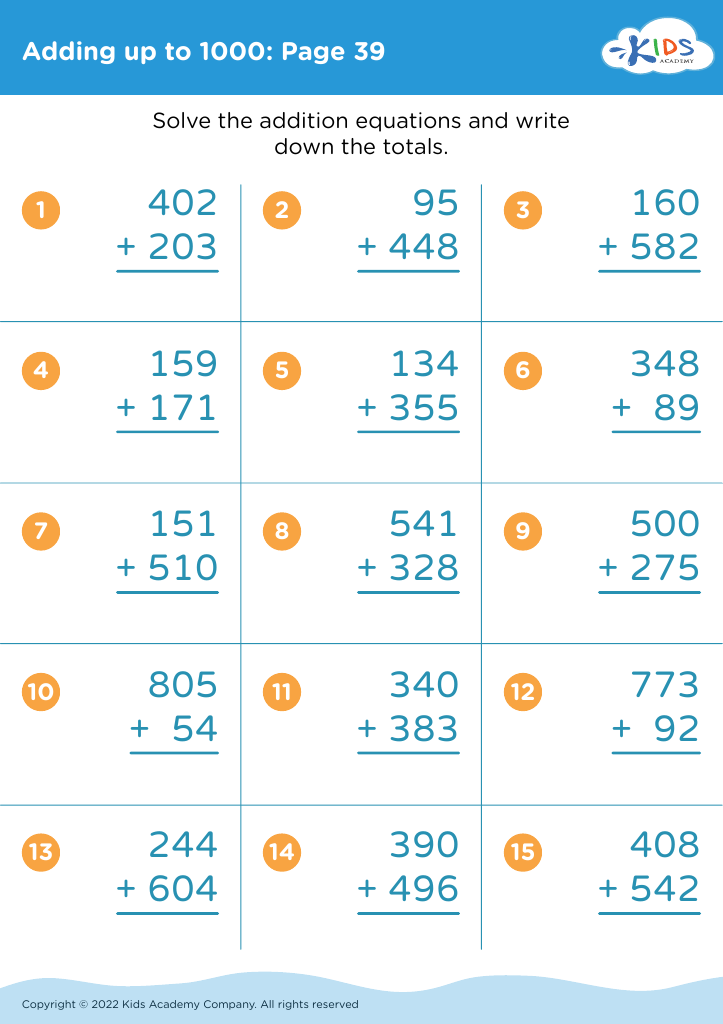
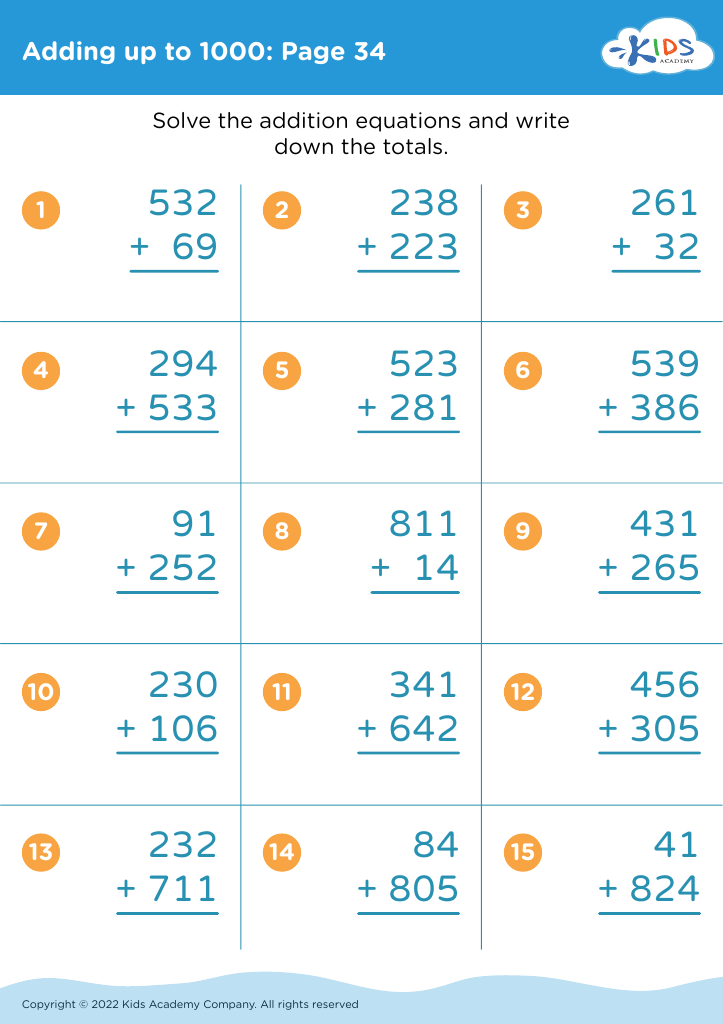
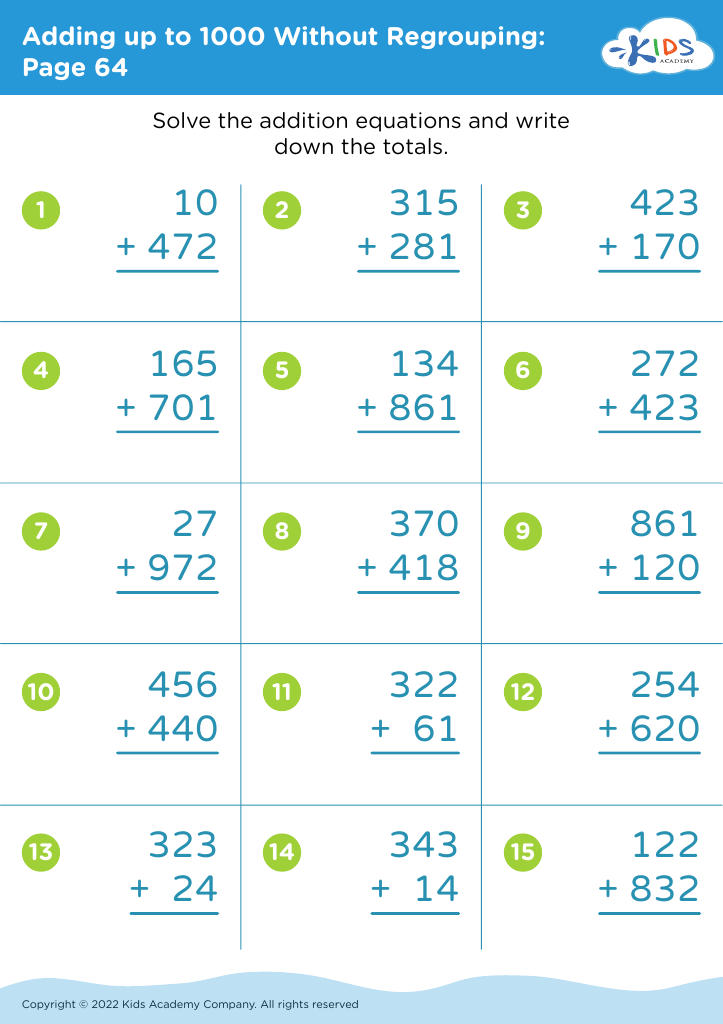
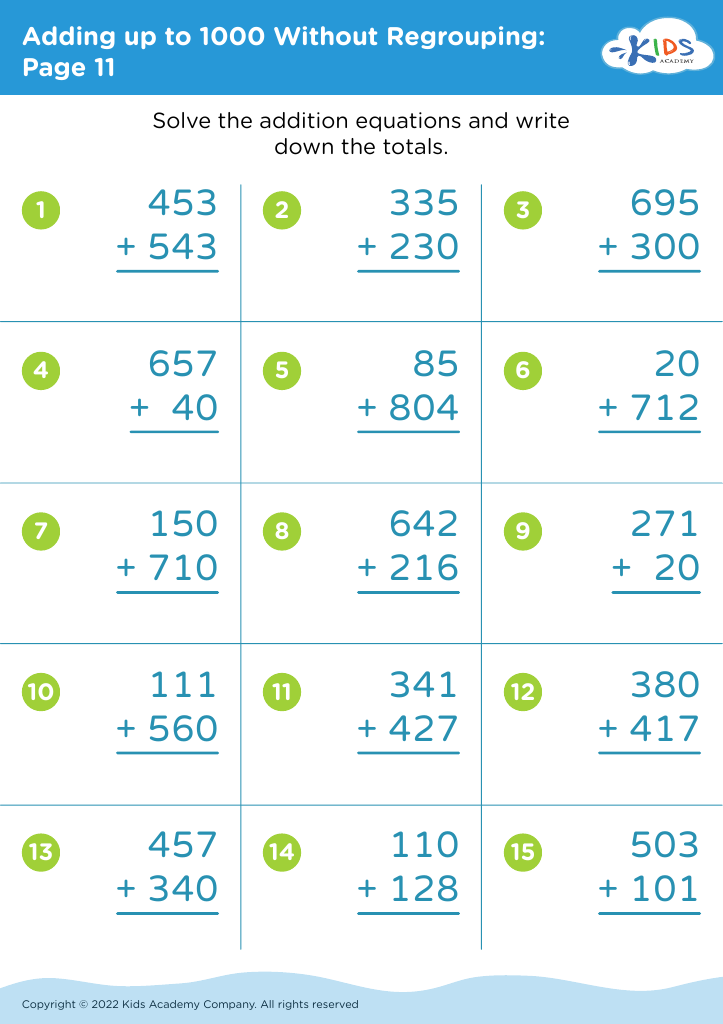


Parents and teachers should care about teaching grade 3 students number sequencing and adding up to 1000 because it forms the foundation for more complex mathematical concepts and everyday numerical competence. When children understand number sequences and can comfortably add numbers up to 1000, they build essential skills in logical thinking, pattern recognition, and numerical fluency.
Firstly, mastering number sequencing enhances a child's ability to recognize patterns, an ability that is critical not only in math but in various problem-solving situations across different subjects and real-life scenarios. Secondly, proficiency in addition up to 1000 facilitates a smoother transition to more advanced arithmetic operations such as multiplication, division, and fractions. Lastly, these skills are directly applicable to everyday tasks like managing money, measuring ingredients in a recipe, or even scoring in a game.
Moreover, early success in mathematics fosters a positive attitude towards the subject, boosting students' confidence and engagement in learning. Both parents and teachers play a crucial role in guiding, encouraging, and providing practical experiences that help solidify these skills. Ensuring strong foundational abilities can greatly influence a child's academic journey, leading to improved critical thinking skills and academic performance throughout their education.