Problem Solving Grade 3 Adding up to 1000 Worksheets
3 filtered results
-
From - To
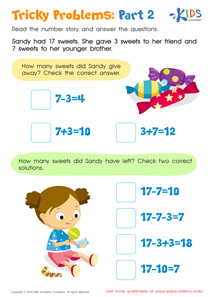
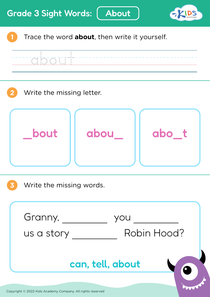
Enhance your Grade 3 student's math skills with our "Problem Solving Grade 3 Adding up to 1000 Worksheets"! Perfectly designed to align with common core standards, these engaging worksheets help young learners to develop essential problem-solving abilities while practicing addition up to 1000. Through a variety of fun and challenging exercises, students will build confidence, improve their computational fluency, and cultivate a deeper understanding of mathematical concepts. Ideal for classroom use or at-home practice, these resources support a strong mathematical foundation ensuring your child’s success in more complex math topics. Download now and watch them excel!
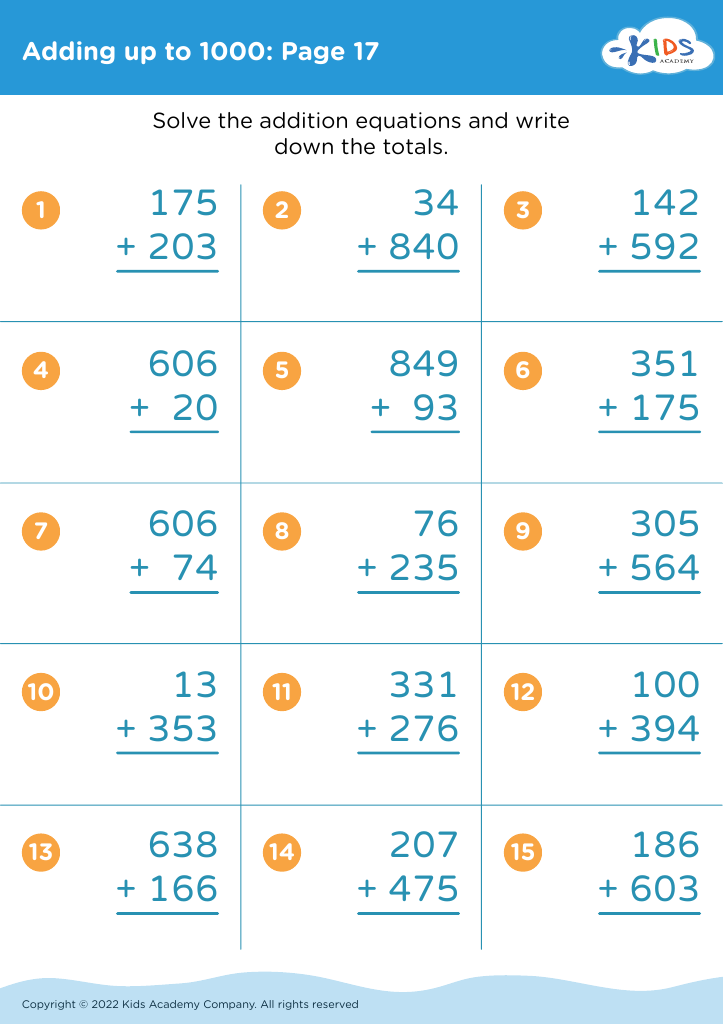
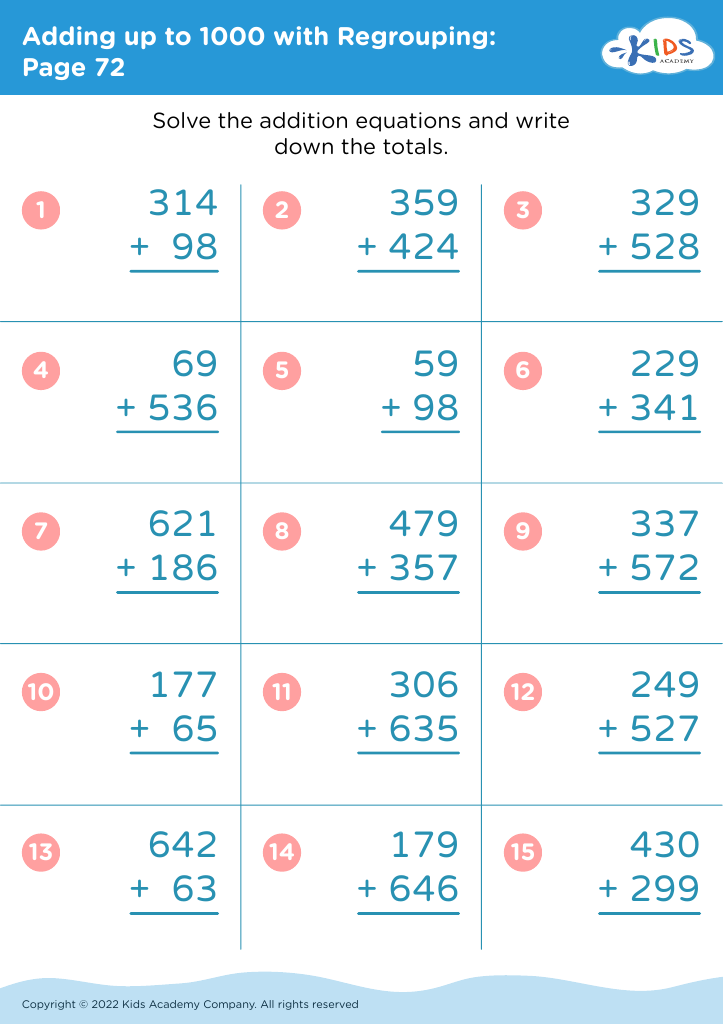
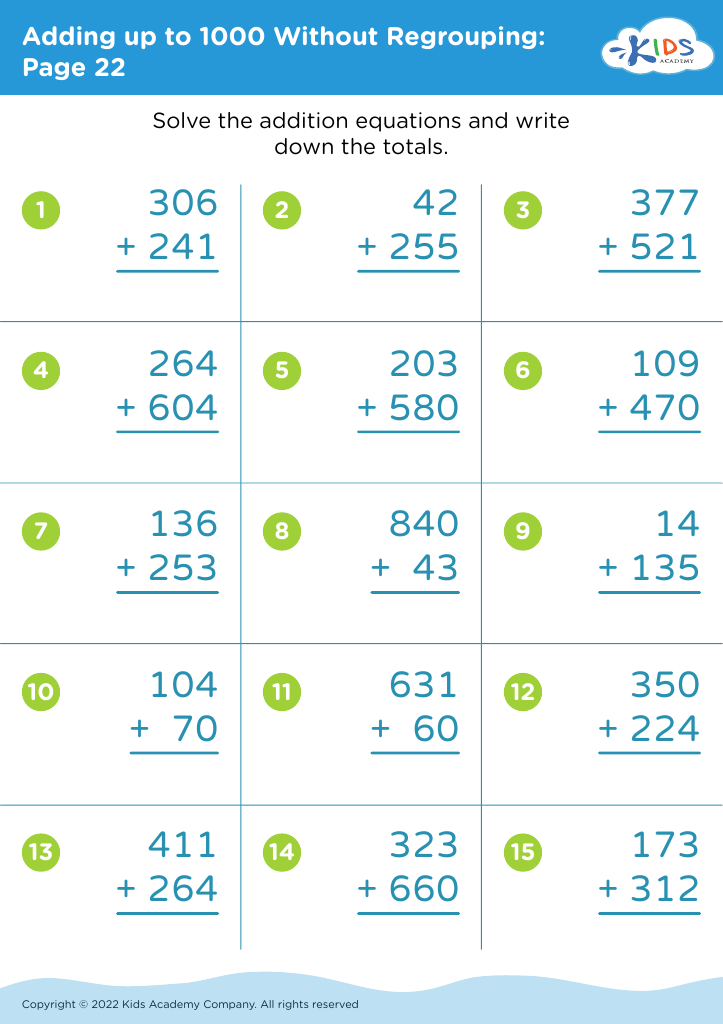


Problem-solving, especially in adding up to 1000, is crucial for third graders as it serves as a foundational skill in mathematics. At this stage, students transition from simple addition to more complex calculations, which helps foster a deeper understanding of numerical relationships and place value. Mastering addition up to 1000 enhances students' ability to perform mental math, bolsters their computational fluency, and supports later learning in arithmetic, algebra, and beyond.
For parents, engaging with their children in these exercises fosters a home environment that values education and encourages learner confidence. It presents opportunities to support their child's academic progress, enhancing their problem-solving skills and numerical comprehension.
For teachers, emphasizing the importance of these skills prepares students for future academic challenges integrating these abilities into broader mathematical concepts and real-world applications. Calculating sums up to 1000 often requires strategizing, estimating, and using various addition techniques, enhancing students' critical-thinking and analytical skills.
Thus, ensuring proficiency in adding up to 1000 is not merely about learning to add; it's about equipping children with essential skills that promote logical reasoning, perseverance, and problem-solving capabilities useful throughout their education and in everyday life.