Problem-solving abilities Grade 3 Adding up to 1000 Worksheets
5 filtered results
-
From - To
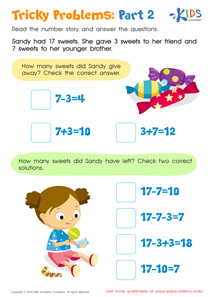
Elevate your child's math skills with our Grade 3 Adding up to 1000 Worksheets, designed to enhance problem-solving abilities. These engaging worksheets offer a variety of addition exercises that challenge students to think critically, build numerical fluency, and strengthen their ability to solve complex problems. Perfectly aligned with educational standards, each activity is crafted to boost confidence and make learning math fun. With colorful visuals and step-by-step instructions, Kids Academy ensures that your third grader develops essential skills needed to succeed. Explore our printable worksheets today and set your child on the path to math mastery!
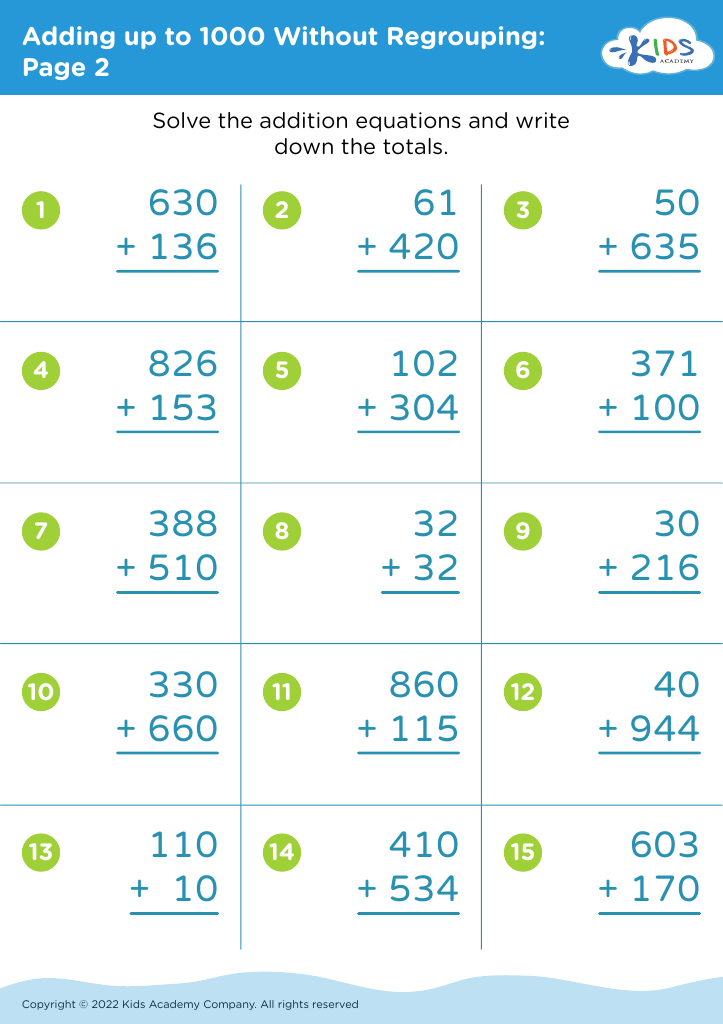
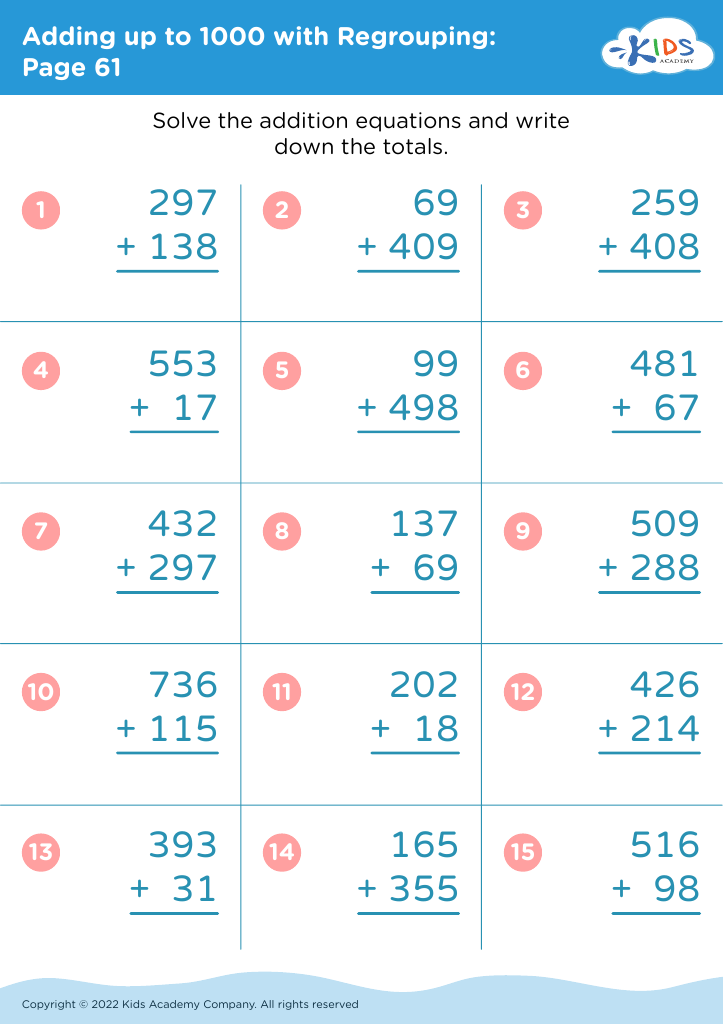
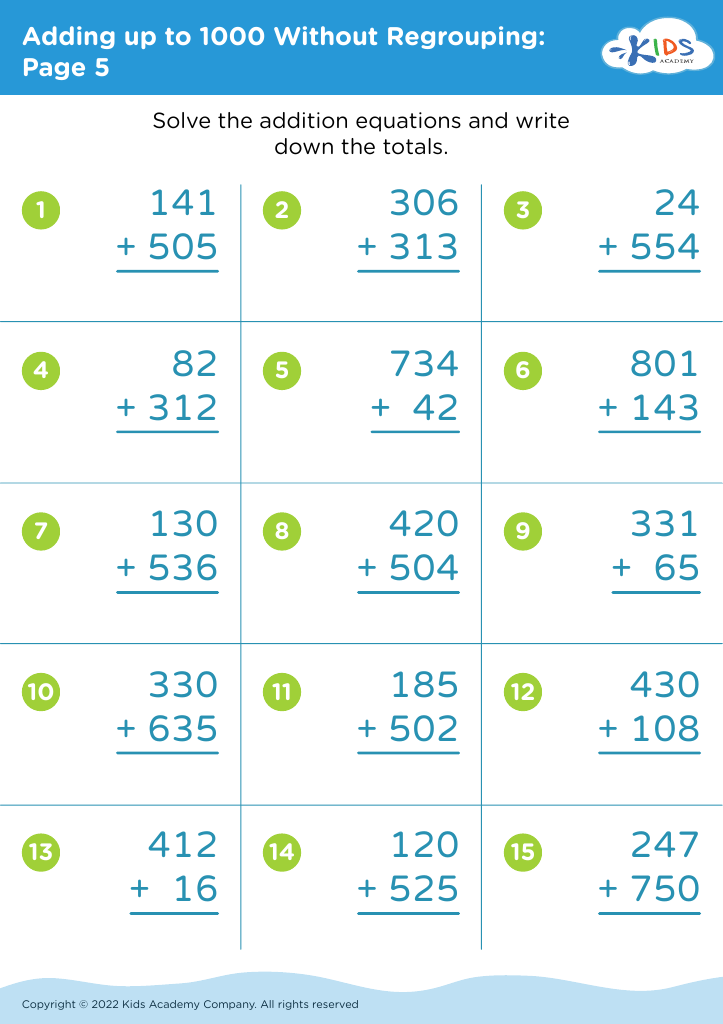
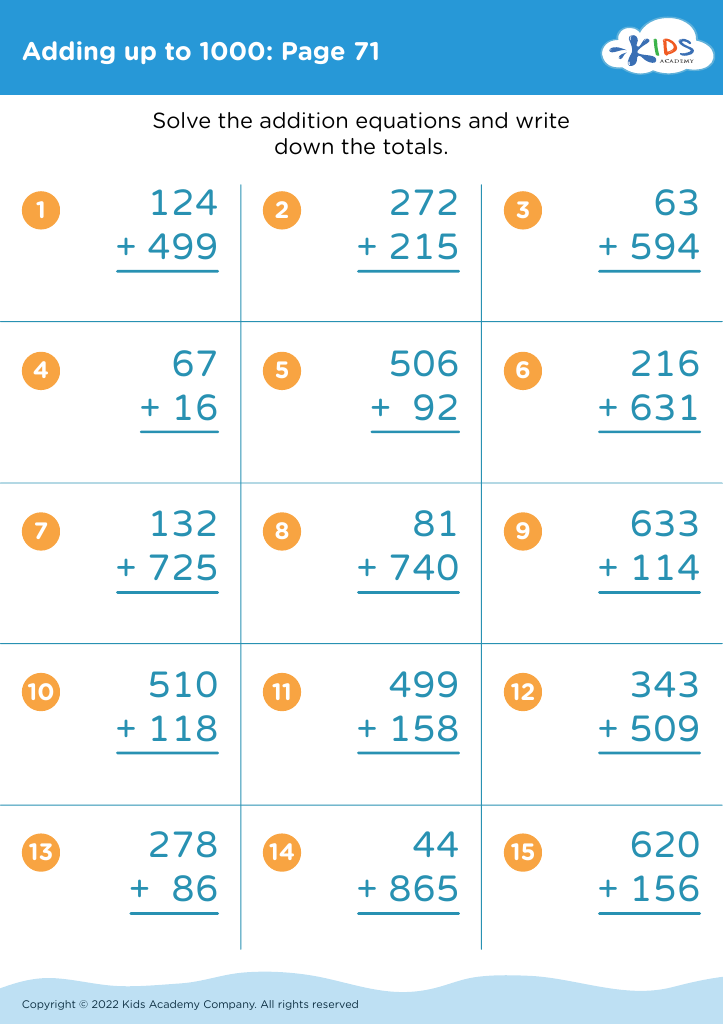
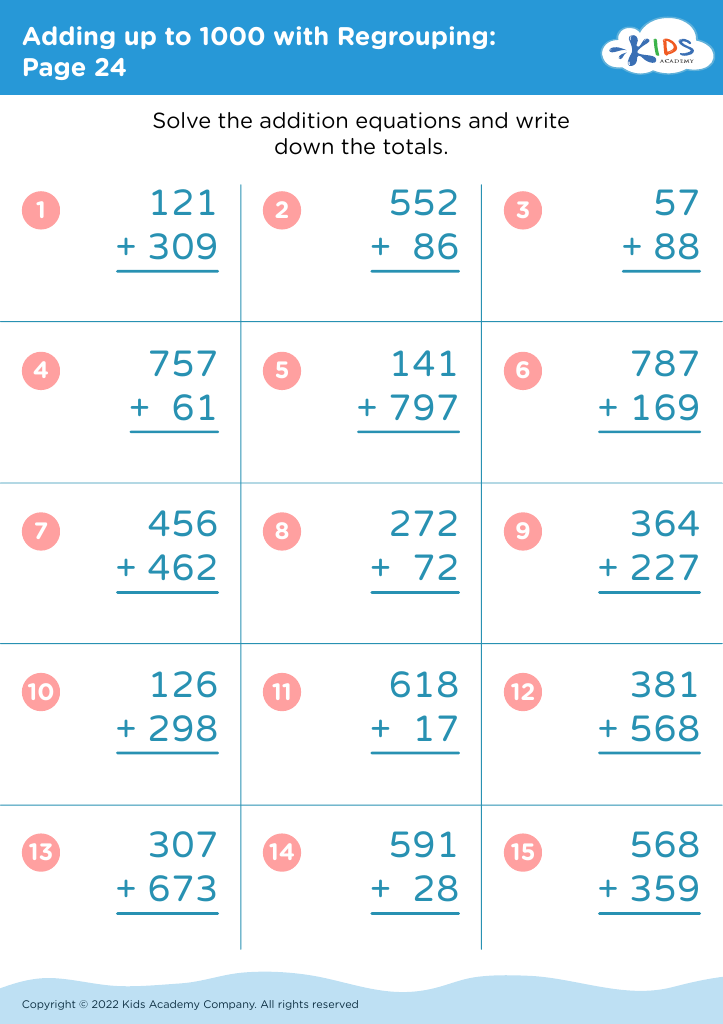


Developing problem-solving abilities in grade 3, especially skills like adding up to 1,000, is crucial for several reasons. First, it builds a strong mathematical foundation. At this age, arithmetic forms the bedrock for future math concepts. Proficiency in basic addition bolsters confidence and paves the way for more complex operations, such as multiplication and division.
Secondly, problem-solving instills critical thinking skills. Students learn to approach problems systematically, identify patterns, and devise strategies, which are valuable skills beyond mathematics. By solving addition problems up to 1,000, they practice breaking down larger tasks into manageable steps, fostering perseverance and attention to detail.
Moreover, these skills are applicable in real-life situations. Whether it’s budgeting a small amount of pocket money, measuring ingredients for a recipe, or planning time effectively, accurate addition helps youngsters make sensible decisions and understand everyday dealings.
Finally, early success in problem-solving encourages a growth mindset. When children tackle and resolve computational challenges, they learn that effort leads to improvement. This positive attitude towards learning can have a long-lasting impact on their academic journey and overall enthusiasm for tackling new challenges.
In summary, prioritizing problem-solving abilities like addition up to 1,000 in grade 3 equips students with essential mathematical skills, sharpens their critical thinking, prepares them for practical applications, and fosters a positive learning attitude.