Problem-solving practice Grade 3 Adding up to 1000 Worksheets
3 filtered results
-
From - To
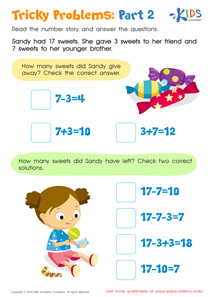
Enhance your third grader's math skills with our engaging "Problem-Solving Practice: Adding up to 1000 Worksheets." Designed for students mastering addition concepts, these worksheets encourage critical thinking and practical problem-solving in various real-world scenarios. Each worksheet offers fun and interactive questions, helping students to understand how to approach problems methodically while strengthening their addition skills. Covering a range of difficulty levels, these resources are perfect for reinforcing classroom learning and providing extra practice at home. Watch your child's confidence grow as they tackle each challenging problem with enthusiasm and develop a solid foundation in mathematics!
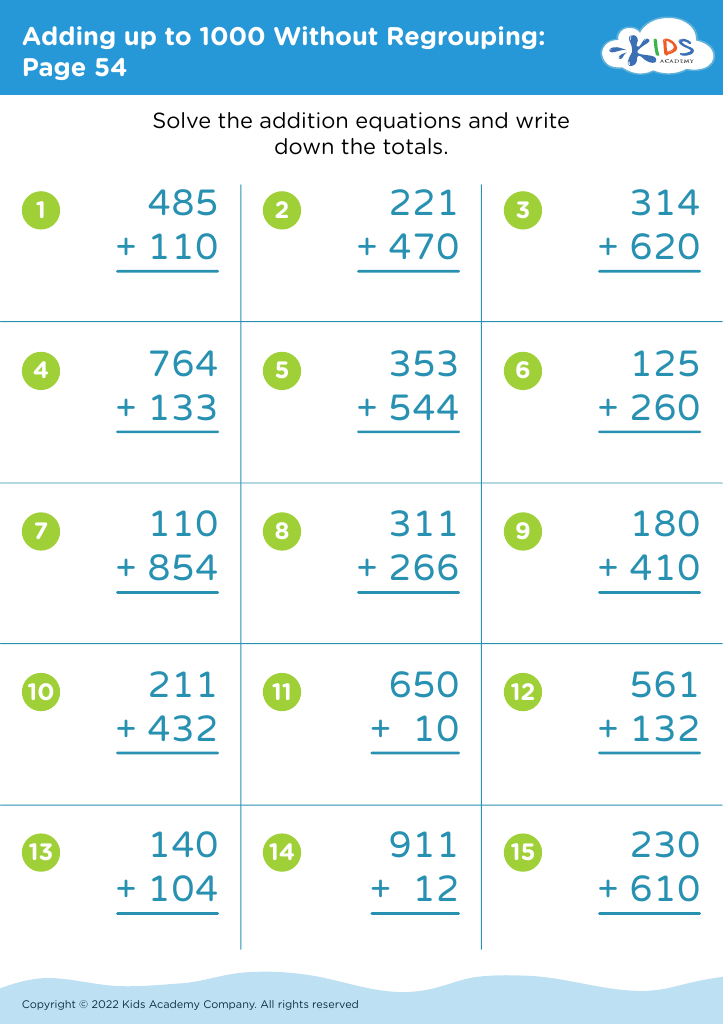
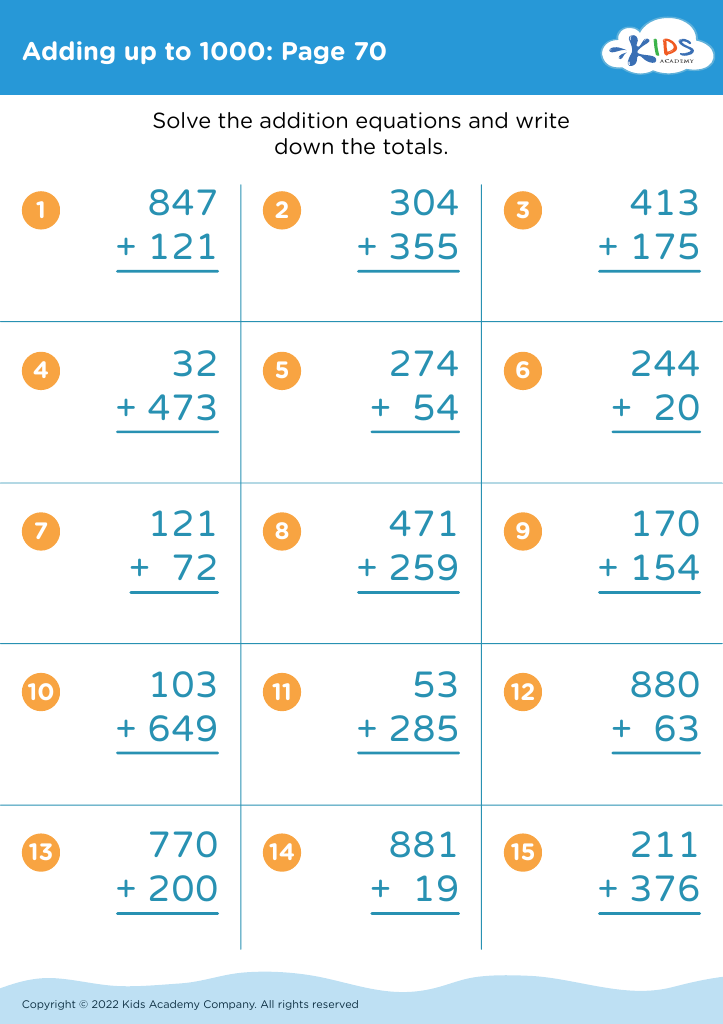
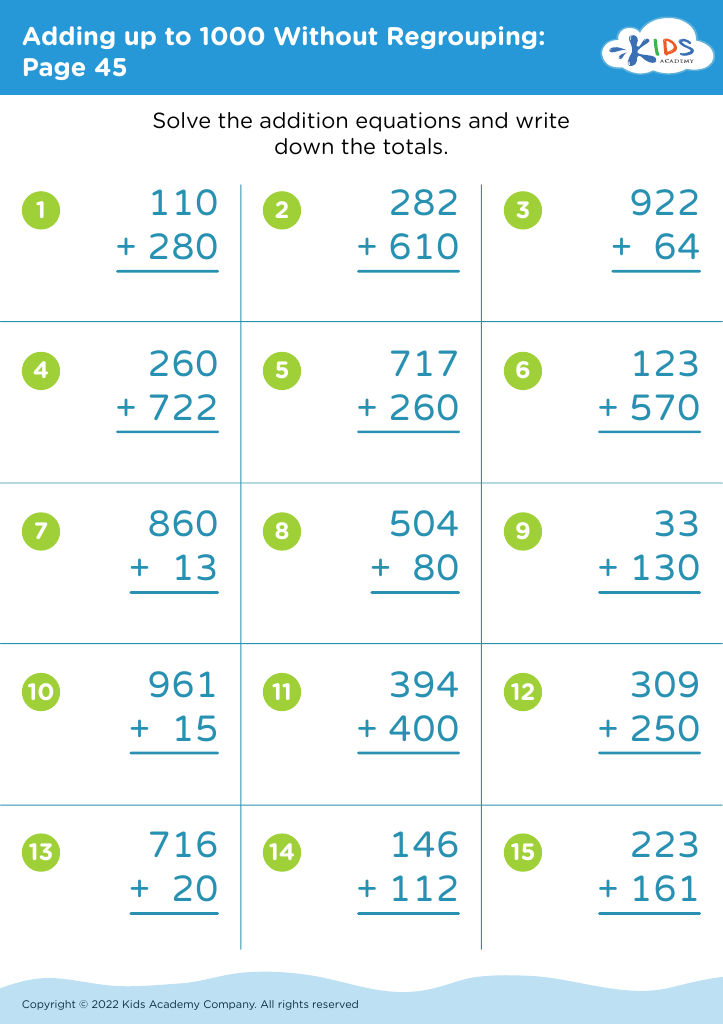


Problem-solving practice, particularly in Grade 3 with an emphasis on adding up to 1000, is crucial for several reasons. Firstly, it helps students develop critical thinking skills. As children learn to approach complex problems by breaking them down into smaller, manageable steps, they enhance their ability to analyze situations and devise effective solutions. This foundational skill set is essential for their future academic success in mathematics and other subjects.
Secondly, practicing addition up to 1000 strengthens numeracy skills, which are vital for everyday life. Understanding how to manage larger numbers prepares students for real-world applications, such as budgeting, shopping, and measurements.
Moreover, engaging in problem-solving fosters a growth mindset. When children encounter challenges in solving math problems, they learn resilience and persistence. They begin to understand that effort and practice lead to improvement, which is a valuable lesson that extends beyond math.
Finally, parents and teachers play a pivotal role in this process. By supporting and encouraging students during problem-solving activities, they help foster a positive attitude towards math, making it more enjoyable and less daunting. Overall, investing time in this practice sets students on a path toward academic success and lifelong learning.