Reading analog clocks Grade 3 Adding up to 1000 Worksheets
3 filtered results
-
From - To
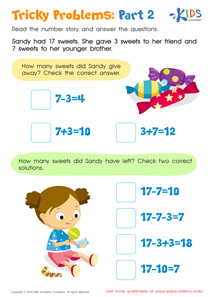
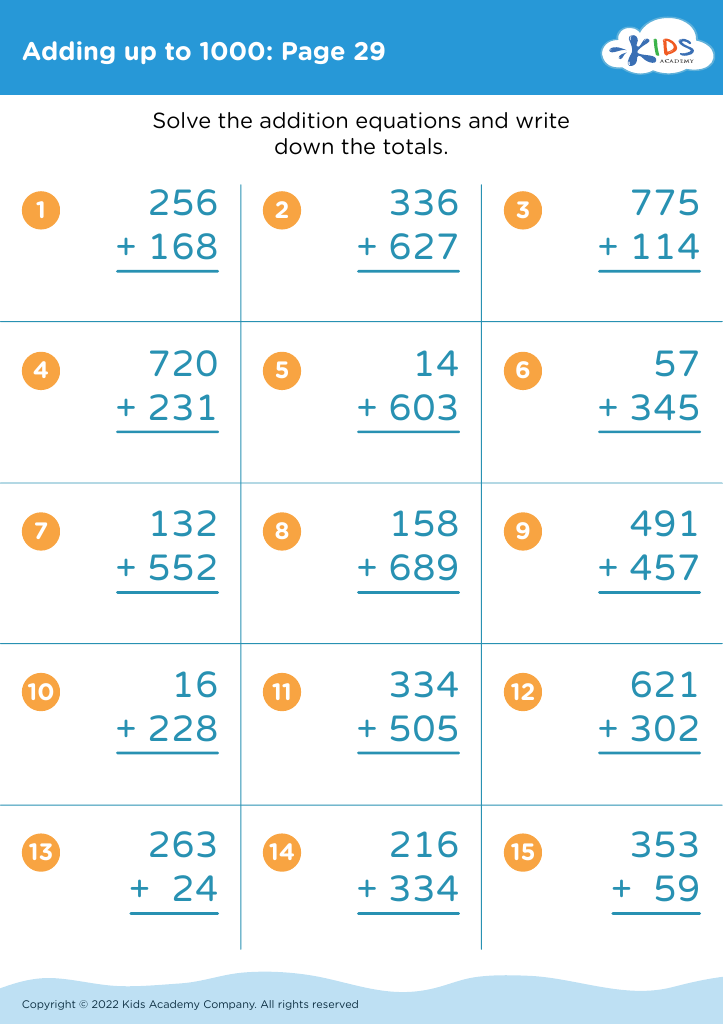
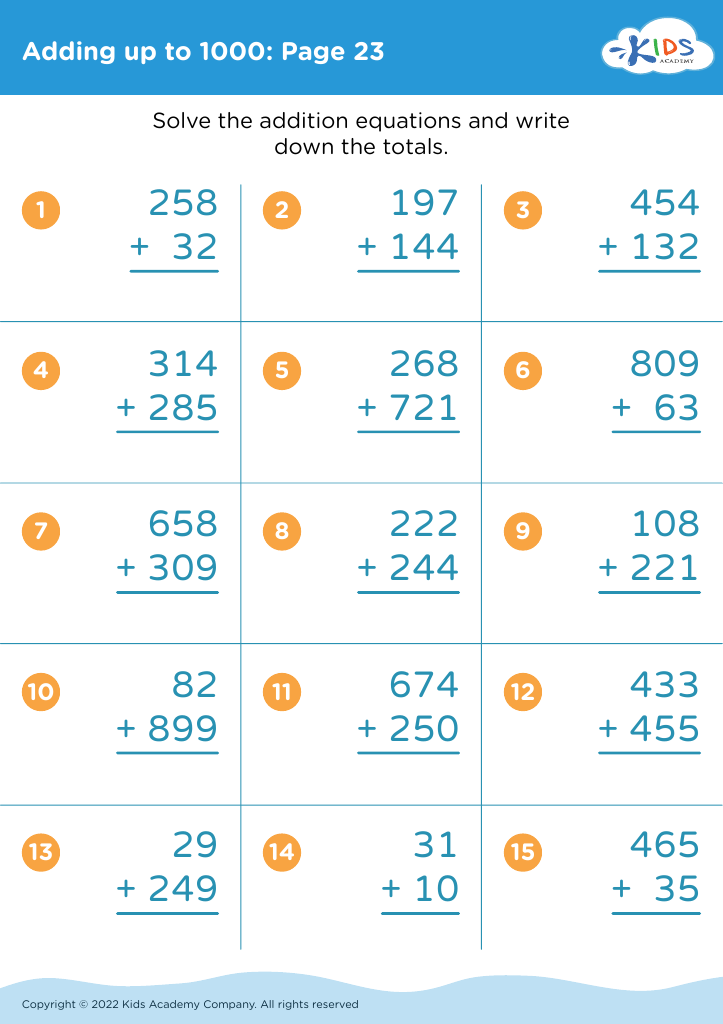
Discover our engaging "Reading Analog Clocks Grade 3 Adding Up to 1000 Worksheets," designed to enhance your child's time-telling skills while reinforcing their addition abilities. These worksheets provide a fun and interactive way for third-grade students to practice reading analog clocks and solving addition problems that sum up to 1000. Aligned with educational standards, the activities promote critical thinking and improve math fluency. Each worksheet features visually appealing clocks and challenging exercises, ensuring an enjoyable learning experience. Perfect for classroom use or at-home practice, these resources help young learners gain confidence in their math skills while mastering the concept of time.
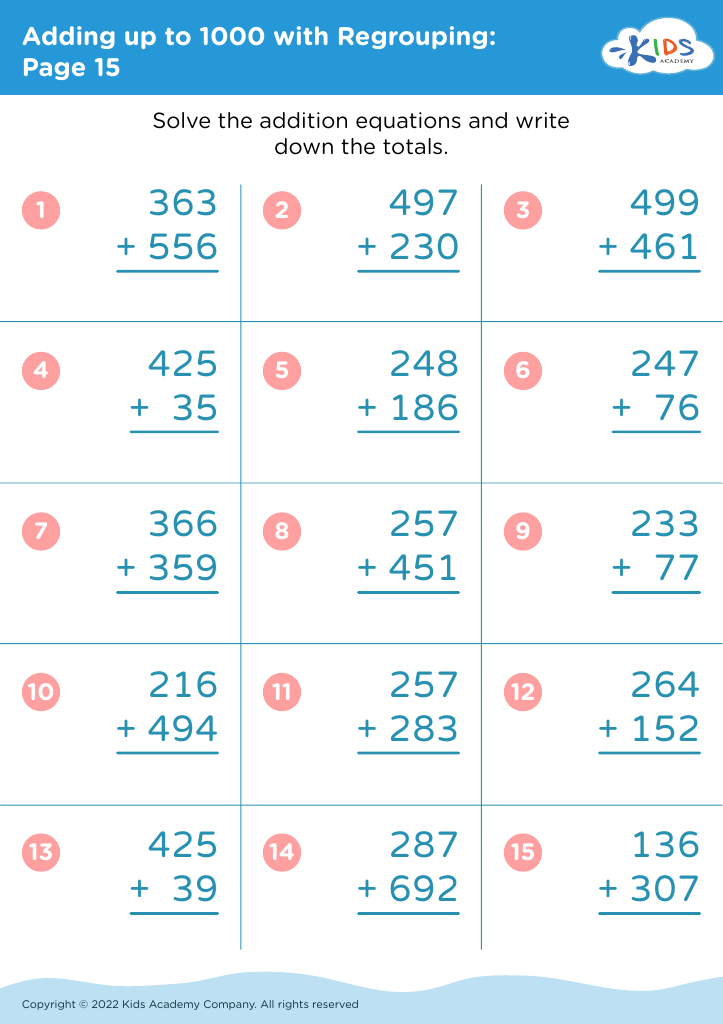


Understanding how to read analog clocks and performing addition up to 1000 are crucial skills for third graders, and both play important roles in their daily lives and education.
Reading analog clocks enhances a child’s ability to tell time, helping them develop a deeper understanding of time management. Recognizing how time is measured fosters a sense of responsibility as children learn to keep track of their schedules for school, extracurricular activities, and home routines. Additionally, it lays the groundwork for more complex concepts in mathematics, such as calculating elapsed time, which is vital as they progress in their education.
Adding up to 1000 strengthens a child’s arithmetic skills, promoting their confidence in working with larger numbers. Third grade is typically when students transition from simple addition to more challenging problems, and mastering this skill prepares them for future mathematical concepts such as regrouping, multiplication, and division. Proficient numeracy skills correlate with improved academic performance across all subjects.
Encouraging these skills in reading analog clocks and arithmetic not only supports children’s current educational growth but also empowers them with important life skills that they will carry into adulthood. Parents and teachers play a pivotal role in helping children develop these foundational abilities.