Shape identification Grade 3 Adding up to 1000 Worksheets
6 filtered results
-
From - To
Boost your third grader's math skills with our "Shape Identification Grade 3 Adding up to 1000 Worksheets" by Kids Academy! These engaging, printable worksheets are designed to help young learners master both shape identification and numbers addition up to 1000. Each worksheet offers fun, interactive problems that combine geometry with arithmetic, fostering holistic math comprehension. Ideal for classroom or home use, these resources enhance visual perception, critical thinking, and problem-solving skills. With our expertly crafted and grade-appropriate materials, your child will build a strong mathematical foundation while enjoying the learning journey. Download and start practicing today!
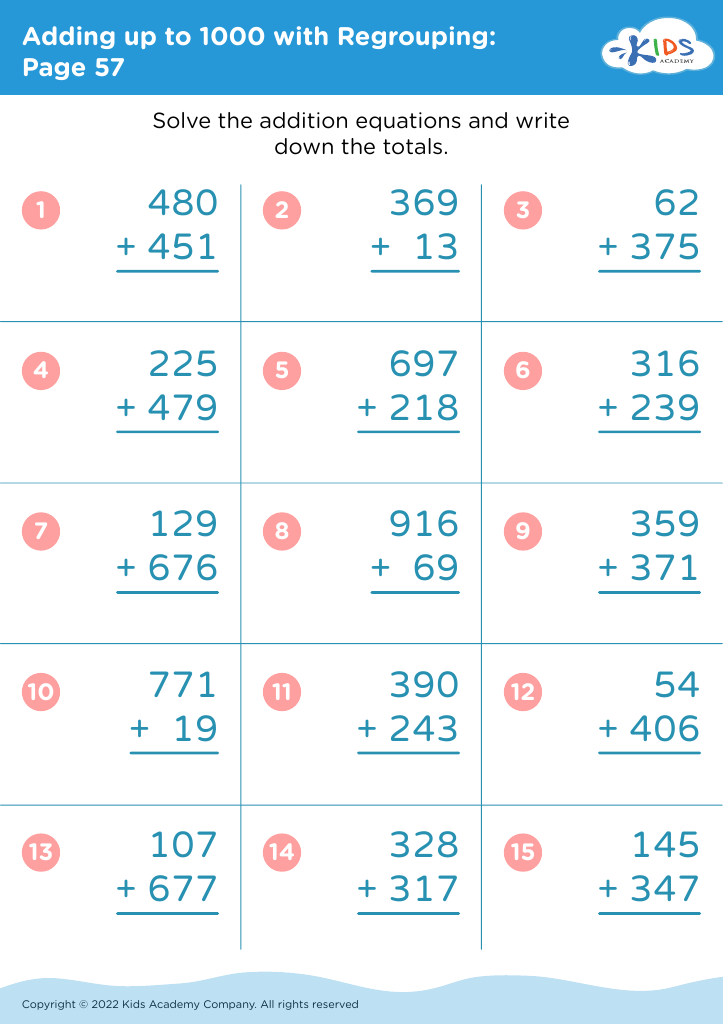
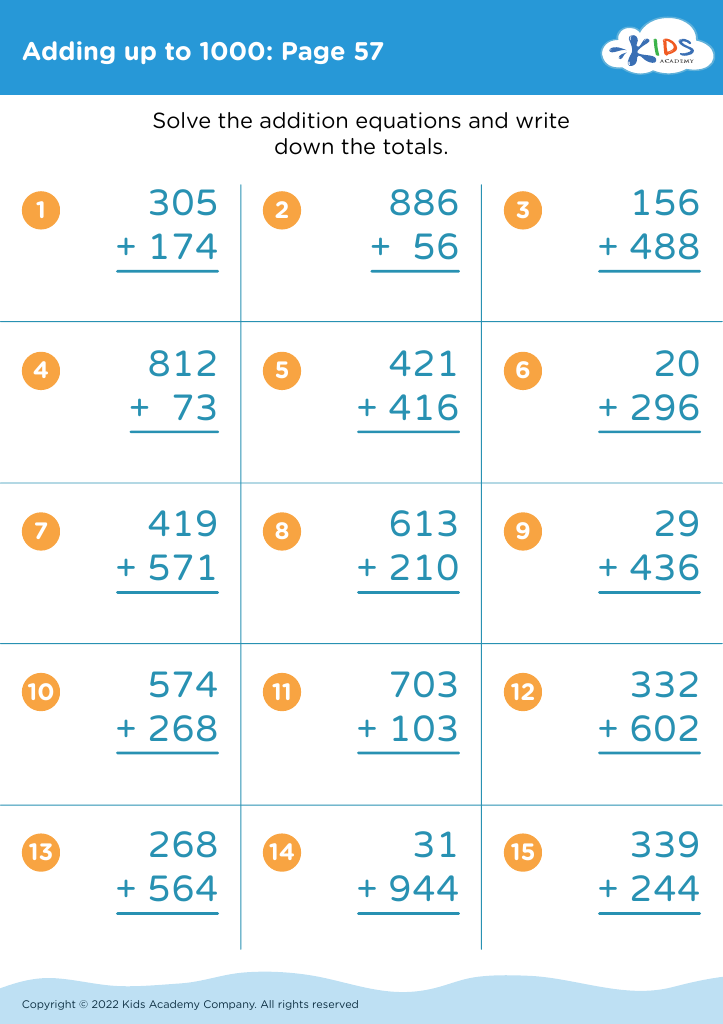
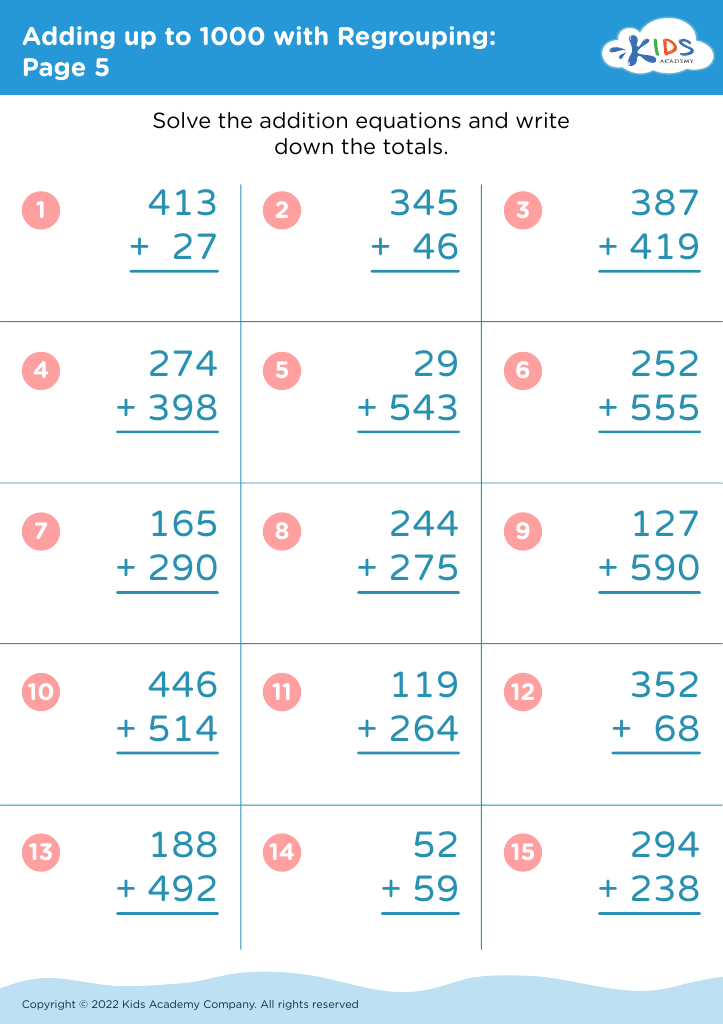
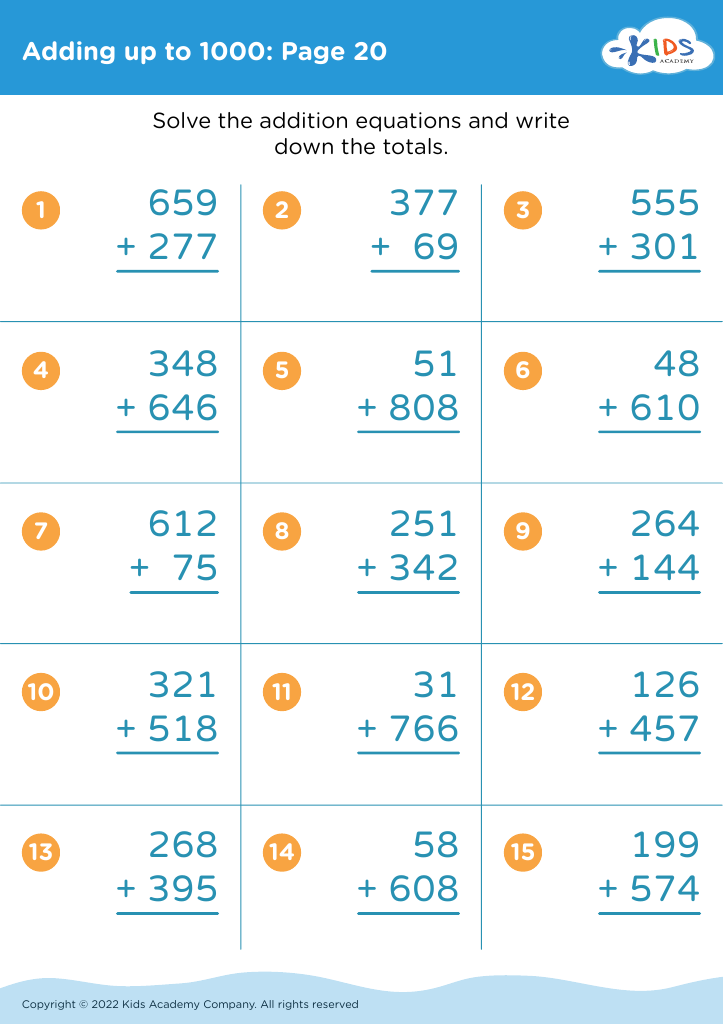
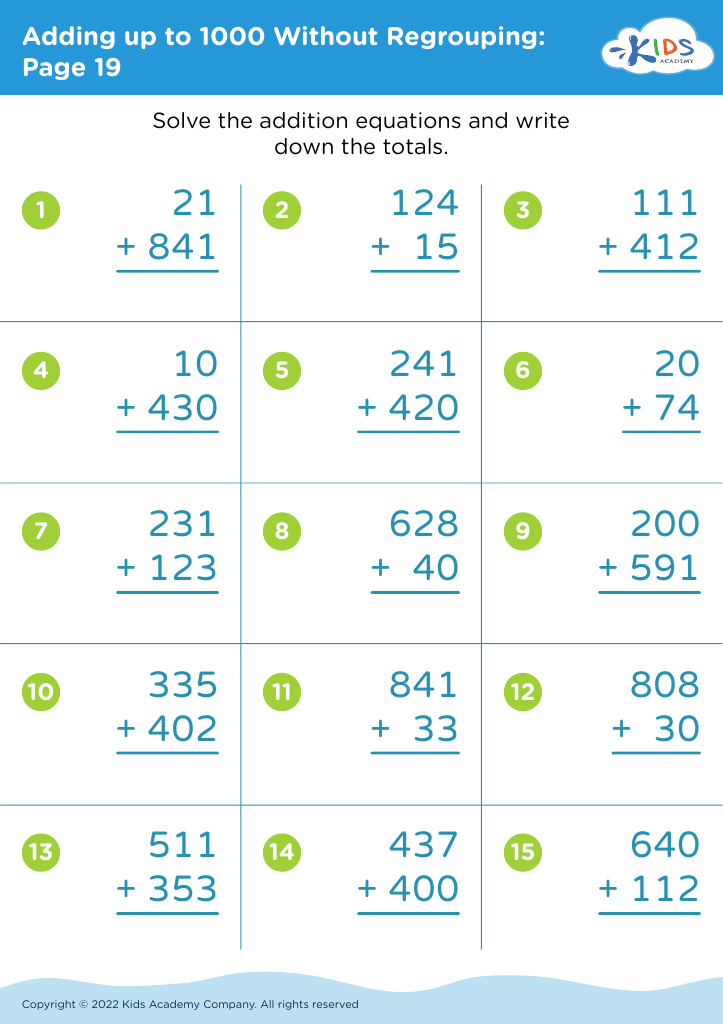
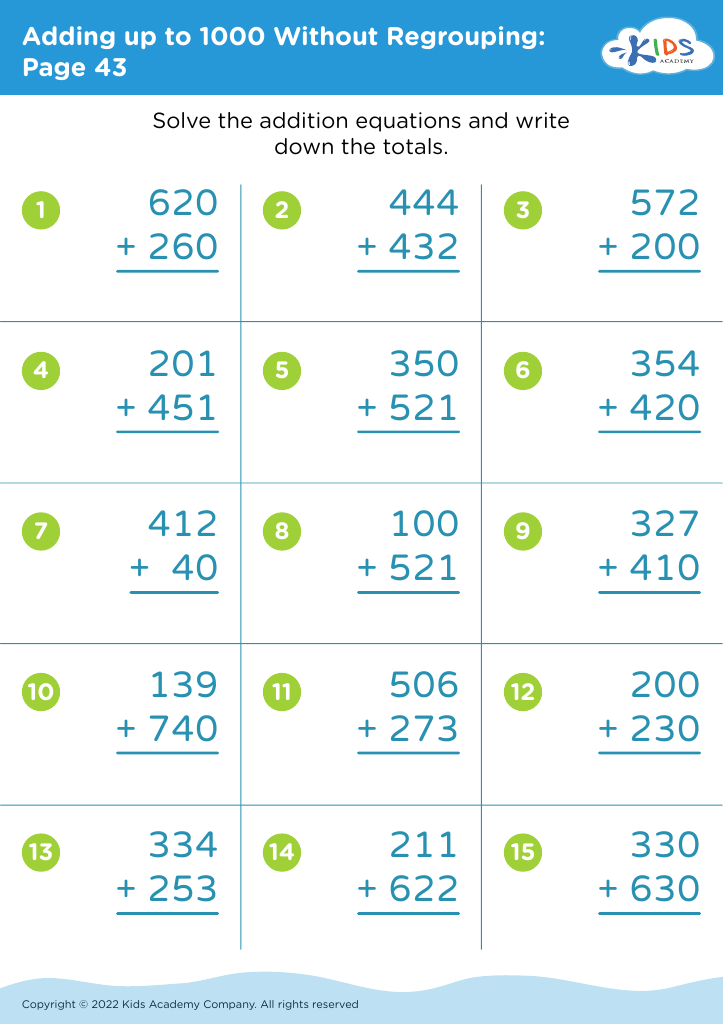


Shape identification and adding up to 1000 are crucial skills for third graders, as they lay the foundation for more advanced mathematical concepts and improve overall cognitive development.
Understanding shapes helps children develop spatial awareness, which is critical for problem-solving and reasoning skills. By recognizing and comparing shapes, students learn to think critically about how objects interact within a given space. Shape identification also intersects with geometry, an essential branch of mathematics that students will encounter throughout their academic careers.
Adding up to 1000 extends fundamental arithmetic skills and is essential for numerical literacy. Proficiency in addition fosters confidence in handling more complex math problems as students progress through their education. Másaddition practice enhances mental calculation skills, paving the way for a better understanding of operations like multiplication and division. Grasping these concepts at an early age can prevent future math anxiety and build a solid foundation for success in subjects such as algebra and calculus.
Furthermore, these skills are interconnected; for example, solving problems involving the perimeters or areas of shapes often requires repetitive addition. By caring about shape identification and addition, parents and teachers equip students with essential tools for lifelong learning and problem-solving.