Subtraction skills Grade 3 Adding up to 1000 Worksheets
4 filtered results
-
From - To
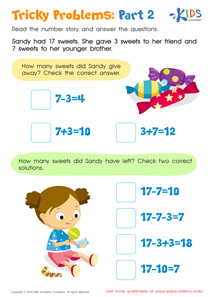
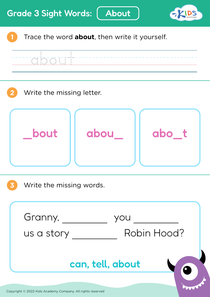
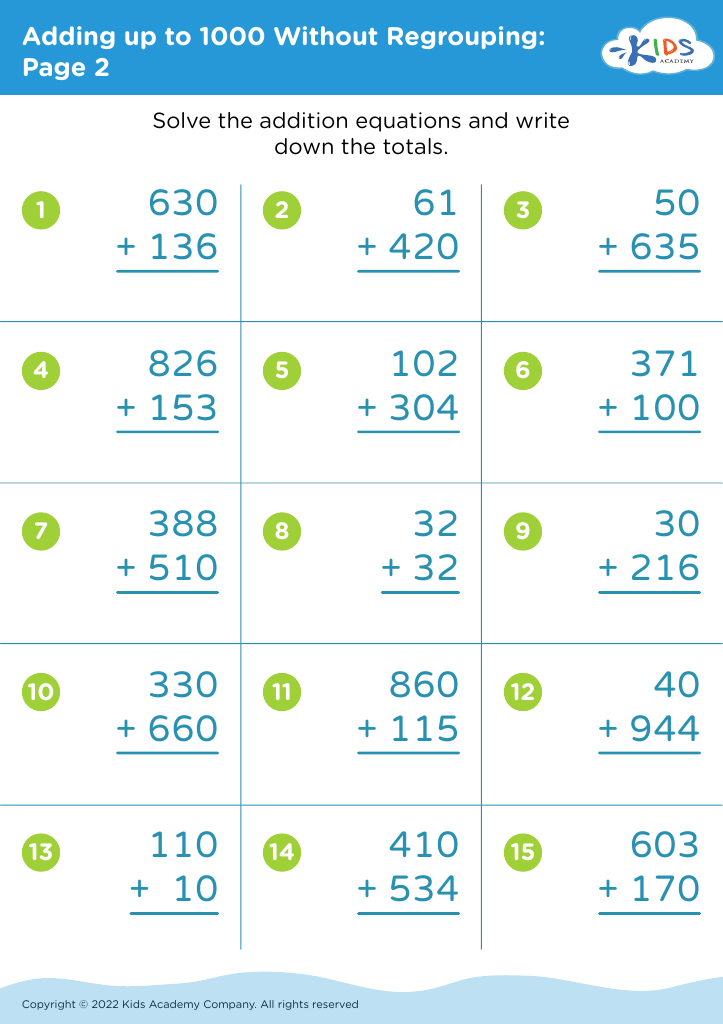
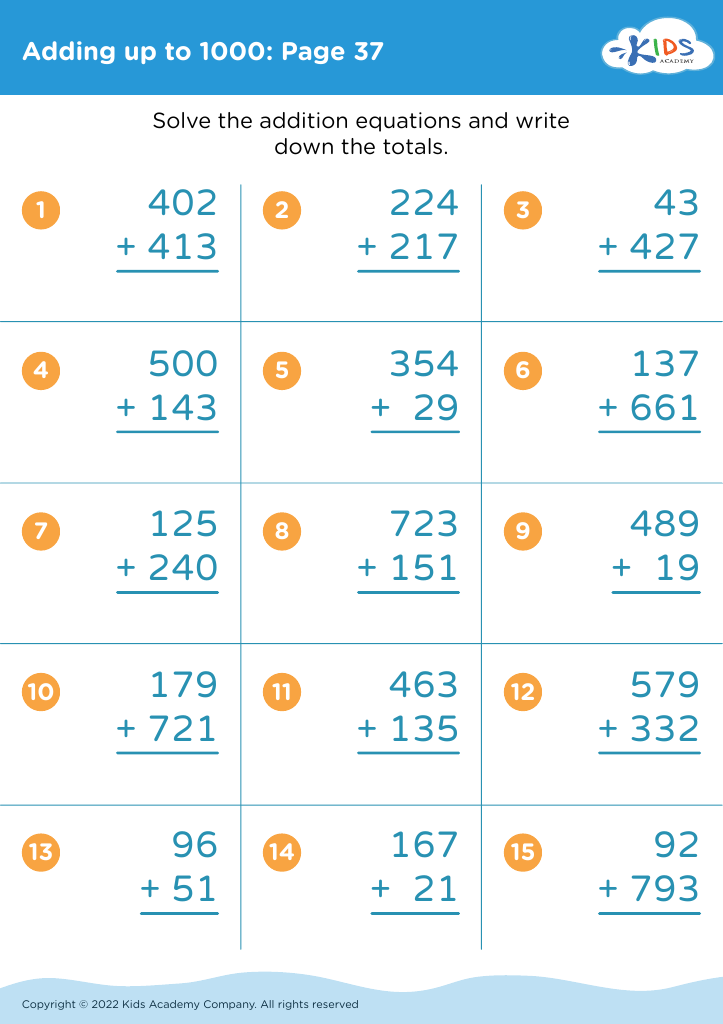
Our "Subtraction Skills Grade 3: Adding Up to 1000" worksheets are designed to help third graders master subtraction with larger numbers. These engaging printable worksheets provide comprehensive practice for subtracting up to 1000, reinforcing essential math skills. Perfect for classroom use or additional practice at home, they feature a variety of exercises to build confidence and accuracy in young learners. Developed by education experts and aligning with common core standards, these exercises ensure a thorough understanding of subtraction concepts, complementing any math curriculum. Download our worksheets today to enhance your child's subtraction skills effectively!
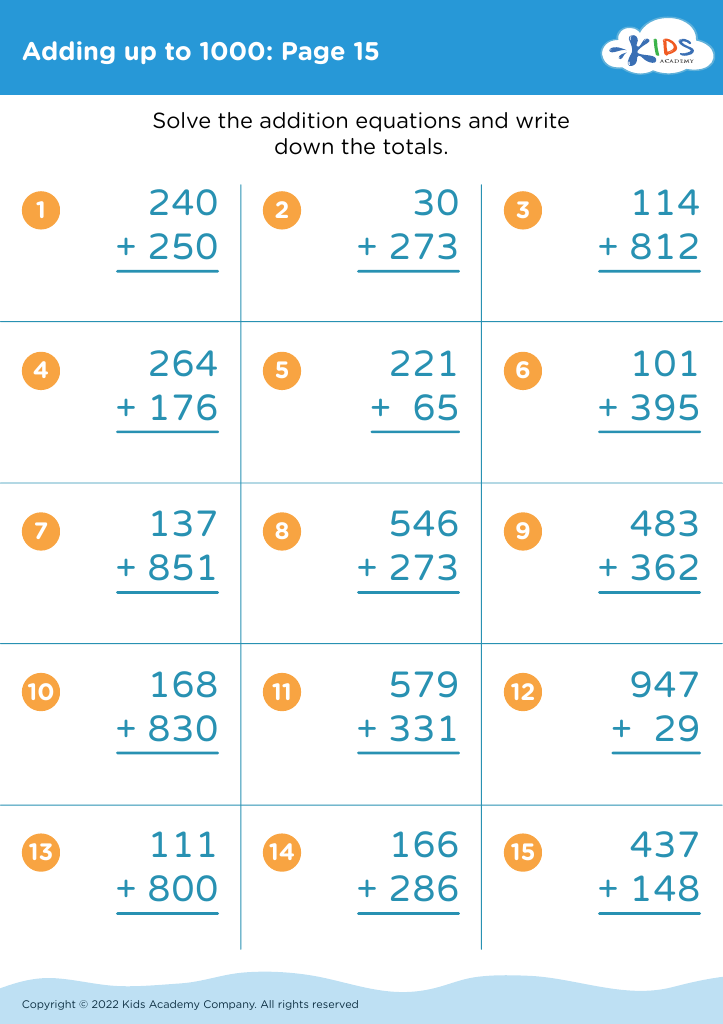
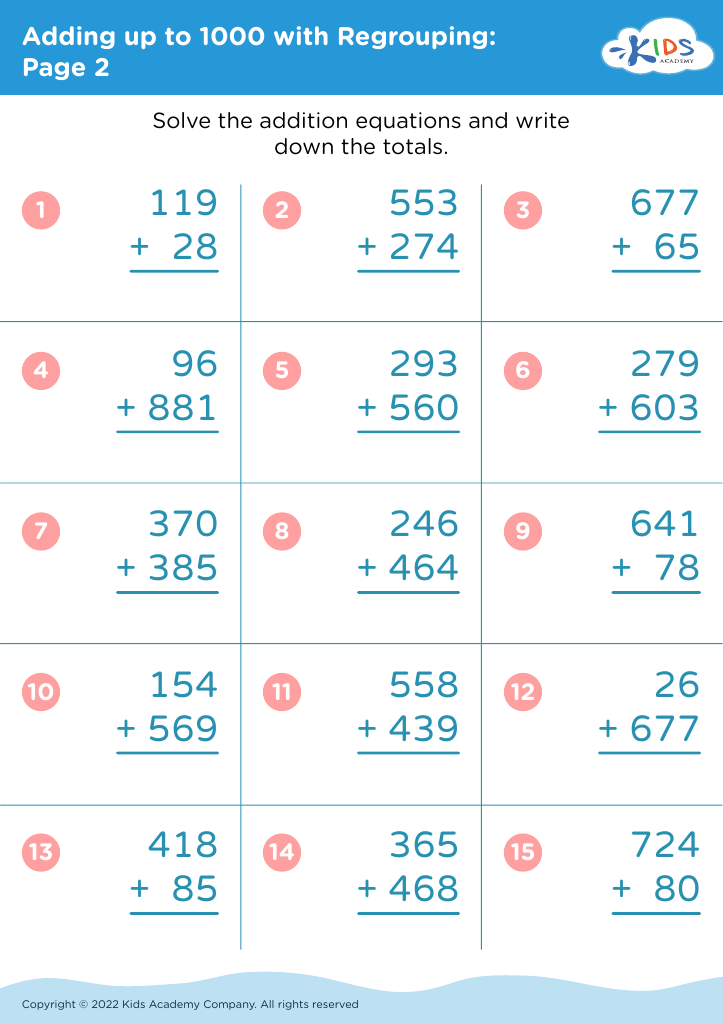


Subtraction skills, especially subtraction that involves numbers up to 1000, are fundamentally important for third graders as these skills form the cornerstone of their mathematical proficiency. At this educational stage, students transition from basic arithmetic operations to more complex calculations, and mastering these skills sets the stage for tackling advanced mathematical concepts.
Firstly, strong subtraction skills enable students to solve real-world problems involving money, time, and quantity, enhancing their ability to make informed decisions and manage tasks efficiently. In addition, understanding the inverse relationship between addition and subtraction reinforces their overall number sense, allowing them to develop proficiency in other mathematical areas, including multiplication of larger numbers.
Furthermore, the cognitive benefits of learning subtraction are significant. As third graders practice subtracting larger numbers, they improve their computational fluency, critical thinking skills, and intellectual discipline. Such skills are not only crucial in mathematics but are transferable across subjects and into everyday decision-making processes.
For these reasons, parents and teachers should prioritize the development of subtraction skills up to 1000. By creating supportive, engaging learning environments that encourage practice and conceptual understanding, they can significantly contribute to a child's academic success and overall numerical literacy that will prove invaluable in their future education and beyond.