Understand multiplication Grade 3 Adding up to 1000 Worksheets
3 filtered results
-
From - To
Unlock the world of multiplication with our comprehensive "Understand Multiplication Grade 3" worksheets! Designed specifically for third graders, these engaging resources help young learners grasp multiplication as repeated addition, building a solid foundation for future math success. With problems focused on adding up to 1000, students will enhance their computation skills while developing a deep understanding of mathematical concepts. Our worksheets provide a variety of exercises that cater to different learning styles, ensuring every child finds joy in learning. Explore our easy-to-use materials and watch your child's confidence soar as they master multiplication in no time! Perfect for classroom or home use.
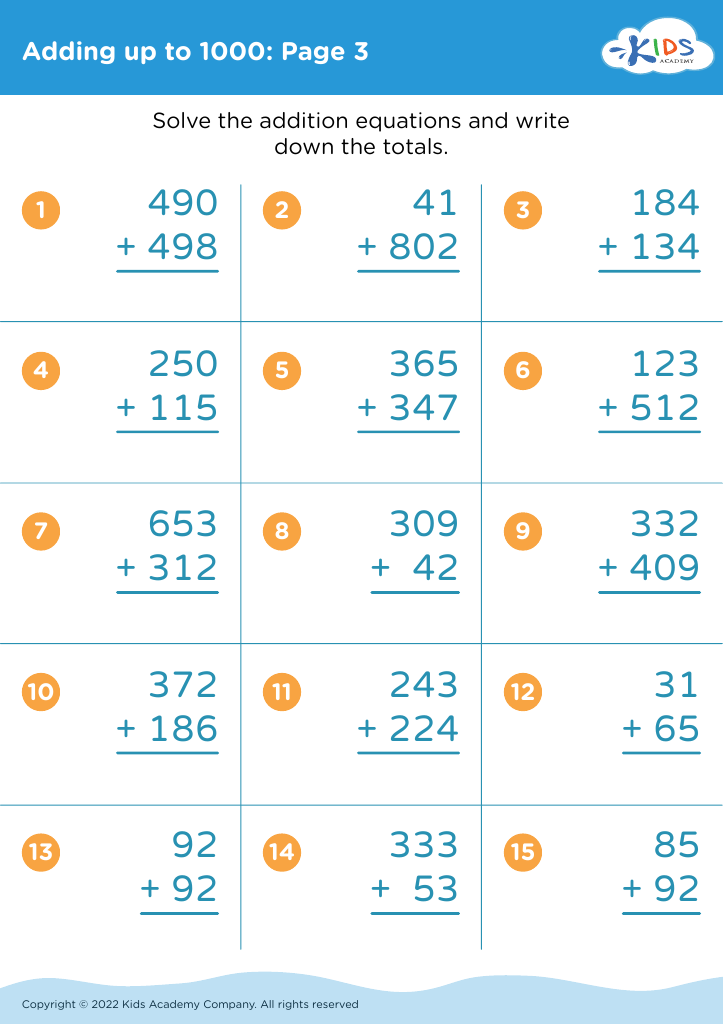
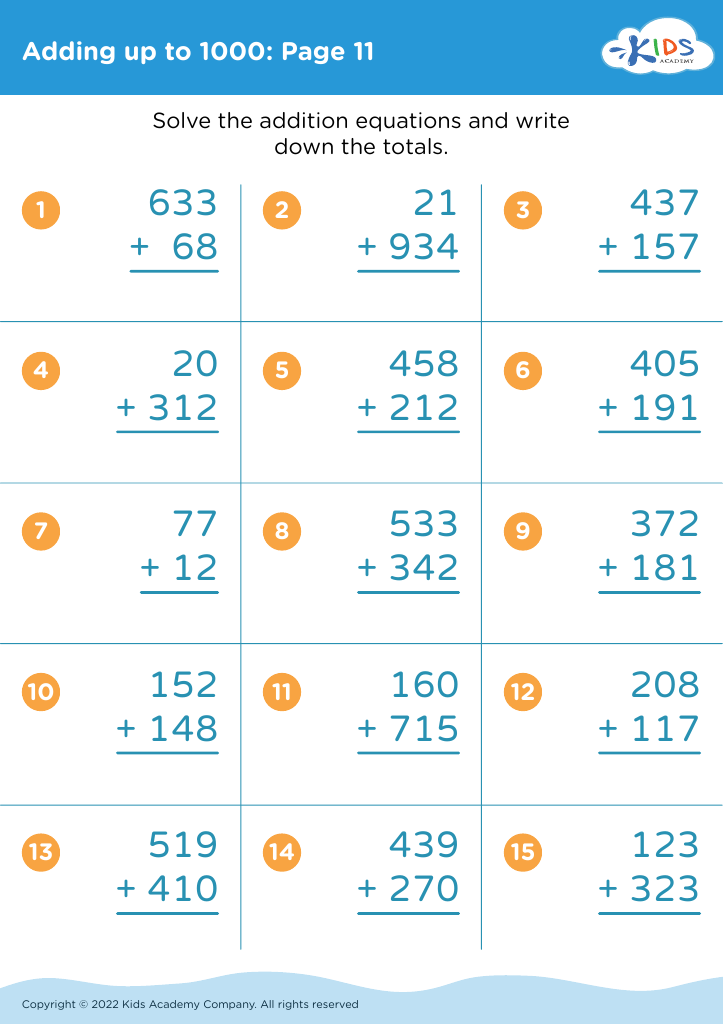
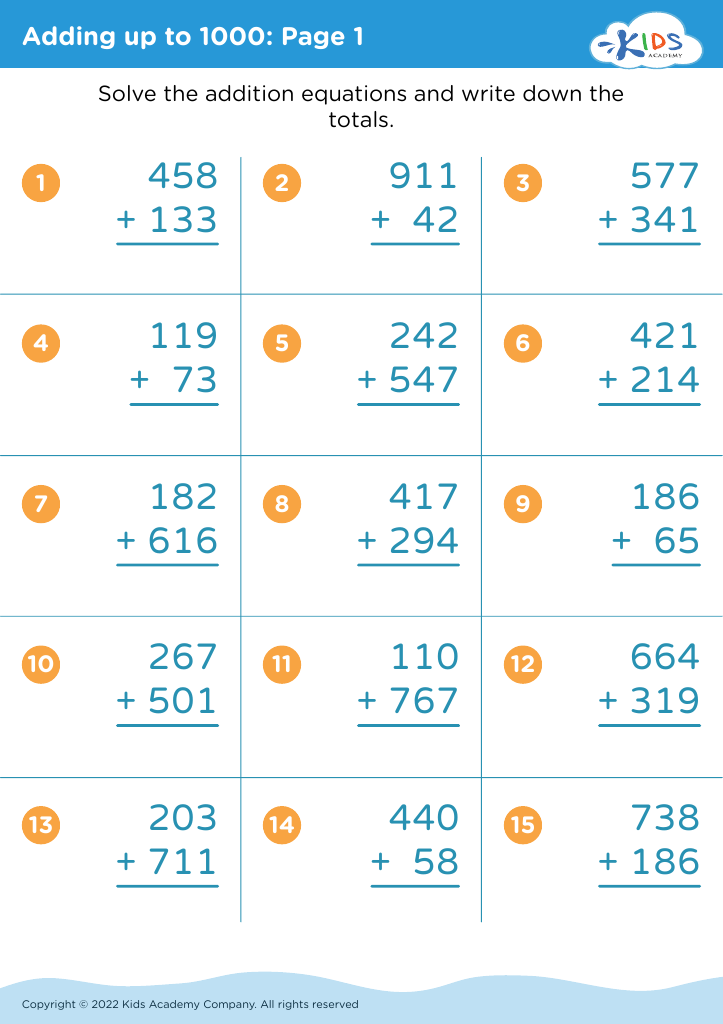


Understanding multiplication and the concept of adding up to 1000 are foundational skills for third graders that significantly aid their mathematical development.
First, multiplication is not just a mathematical operation; it introduces students to more complex concepts such as arrays, factors, and problem-solving. Grasping multiplication patterns helps them tackle higher-level math with confidence as they progress through school. Skills acquired at this stage lay the groundwork for everything from fractions to geometry in later grades.
Second, the capability of adding up to 1000 caters to students' numerical fluency. It equips them with skills necessary for real-world applications, such as managing finances or calculating distances – situations they encounter daily. Mastery of these concepts enhances their critical thinking and helps them approach problems methodically.
Moreover, when parents and teachers actively engage with children in developing these skills, they reinforce a positive attitude towards math. Encouragement and support create a conducive learning environment. In sum, caring about students' understanding of multiplication and adding up to 1000 fosters both immediate academic success and long-term mathematical proficiency, ultimately nurturing confident and capable learners.