Understand subtraction Grade 3 Adding up to 1000 Worksheets
3 filtered results
-
From - To
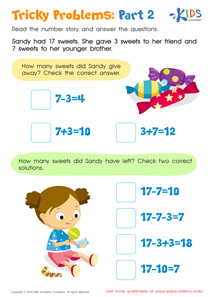
Welcome to our "Understand Subtraction: Grade 3 Adding up to 1000 Worksheets" page! Here, we provide engaging and educational worksheets designed to enhance your child's subtraction skills. Tailored for third graders, these resources focus on mastering subtraction with numbers up to 1000, helping students develop a strong numerical foundation. Through a variety of interactive exercises, kids will practice crucial subtraction concepts, reinforce their understanding, and gain confidence in problem-solving. Whether in the classroom or at home, our worksheets make learning subtraction fun and effective. Unlock the potential for math success and watch your child excel with our carefully curated materials!
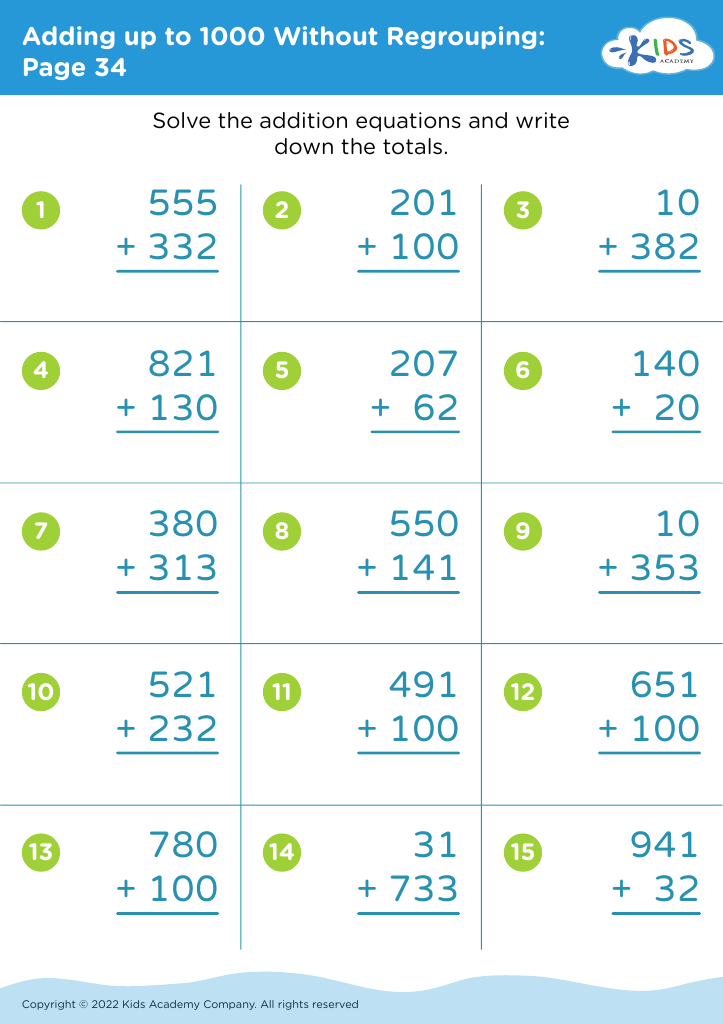
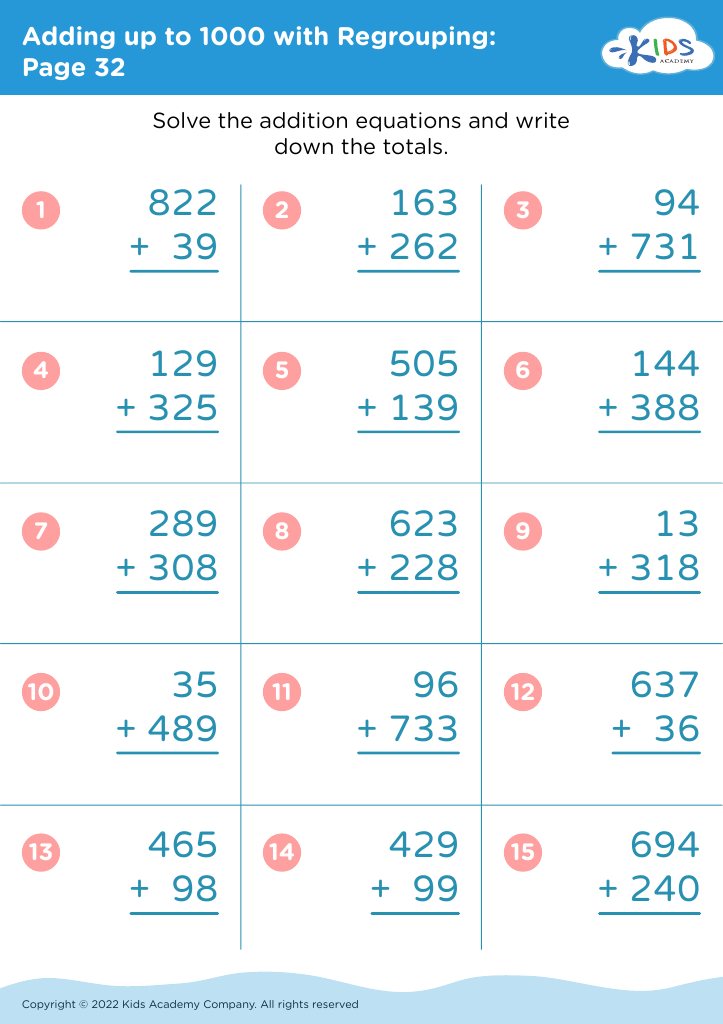
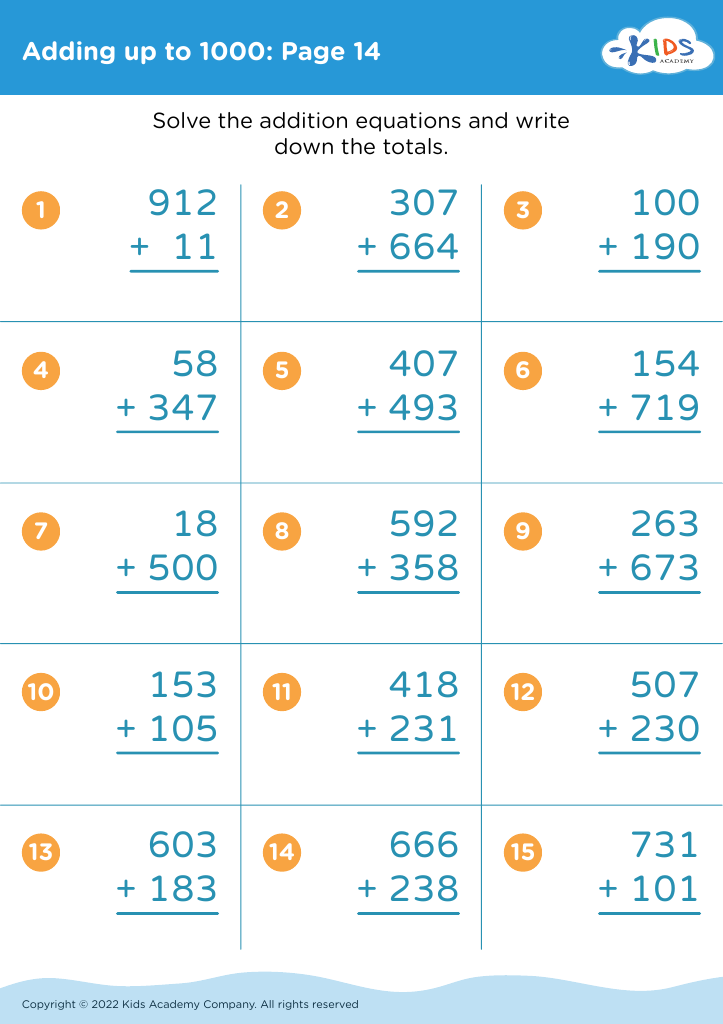


Understanding subtraction, especially in the context of adding up to 1000, is crucial for third graders as it forms a foundational skill for their mathematical literacy. This knowledge enables students to grasp essential concepts like place value, number relationships, and the inverse operations of addition and subtraction.
When students learn to subtract within the range of 1000, they develop confidence in handling larger numbers, which is essential for more advanced mathematics. It supports problem-solving skills, allowing them to analyze situations, identify what is unknown, and apply appropriate strategies to find solutions.
Parents and teachers should care about this because strong subtraction skills directly influence a child's academic success. Mastery of these skills encourages students to feel confident in tackling mathematics, fostering a positive attitude toward the subject. Moreover, proficiency in subtraction helps in daily situations, such as budgeting pocket money or understanding sales prices.
Finally, foundational math skills like subtraction aid in the development of critical thinking. By engaging in subtraction activities, students are not only learning numbers but are also building perseverance and precision, traits that will benefit them in all areas of learning and beyond. Therefore, prioritizing subtraction skills is vital for young learners’ holistic development.