Understanding patterns Grade 3 Adding up to 1000 Worksheets
5 filtered results
-
From - To
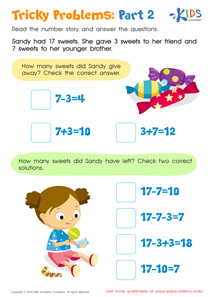
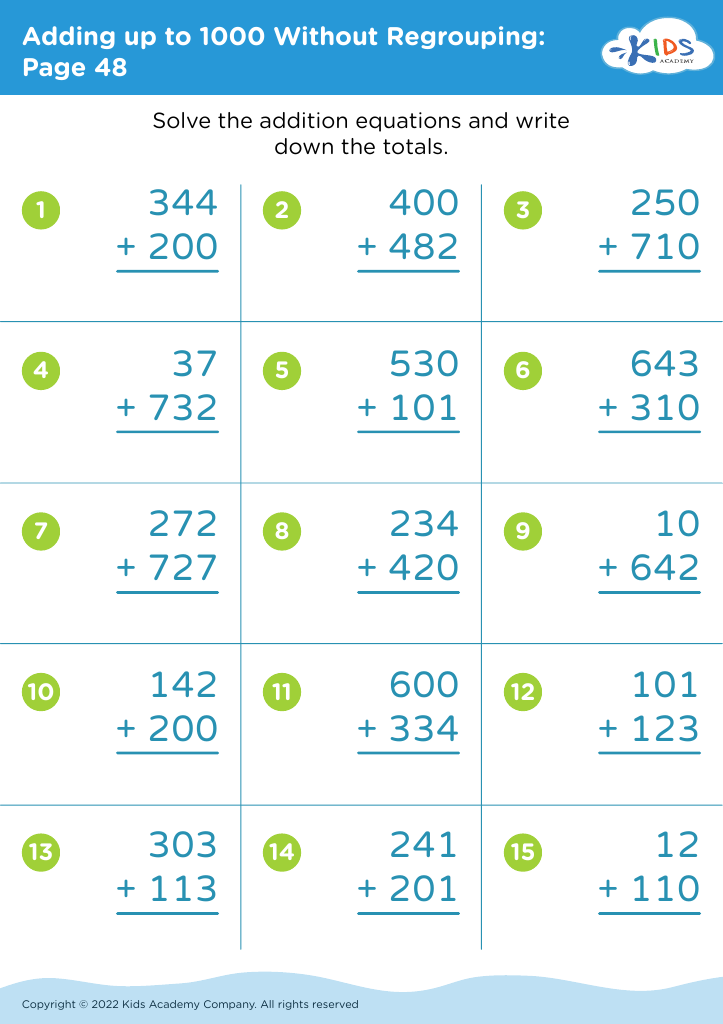
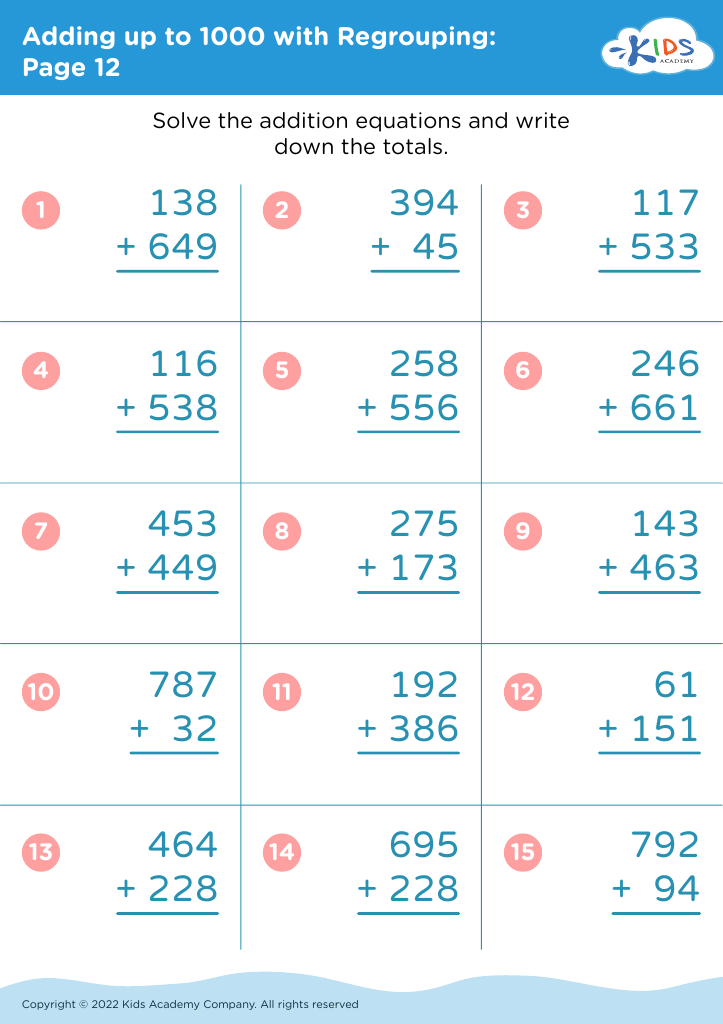
Discover engaging worksheets designed to help Grade 3 students understand patterns while mastering addition up to 1000. Our "Understanding Patterns" worksheets provide various exercises that reinforce mathematical concepts through visual and practical activities. These resources encourage students to identify numerical patterns, develop problem-solving skills, and enhance their overall number sense. By practicing with fun and interactive worksheets, learners will gain confidence in their ability to add and recognize patterns in numbers effectively. Perfect for classroom use or at-home learning, these worksheets support teachers and parents in making math enjoyable and accessible for young learners. Explore our collection today and elevate your child's math journey!
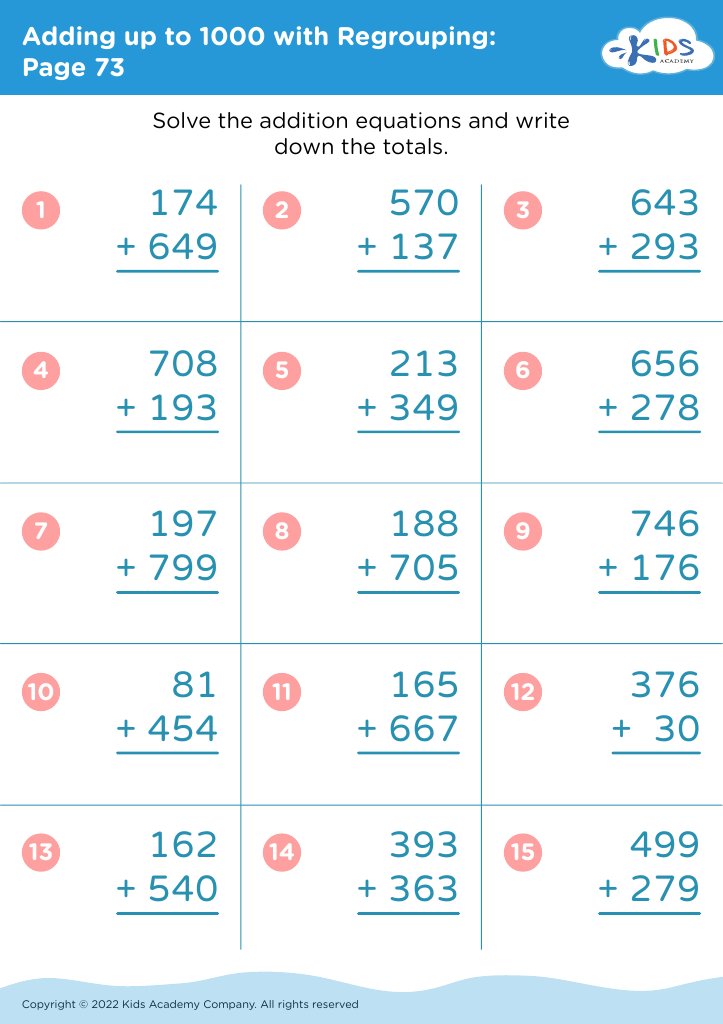
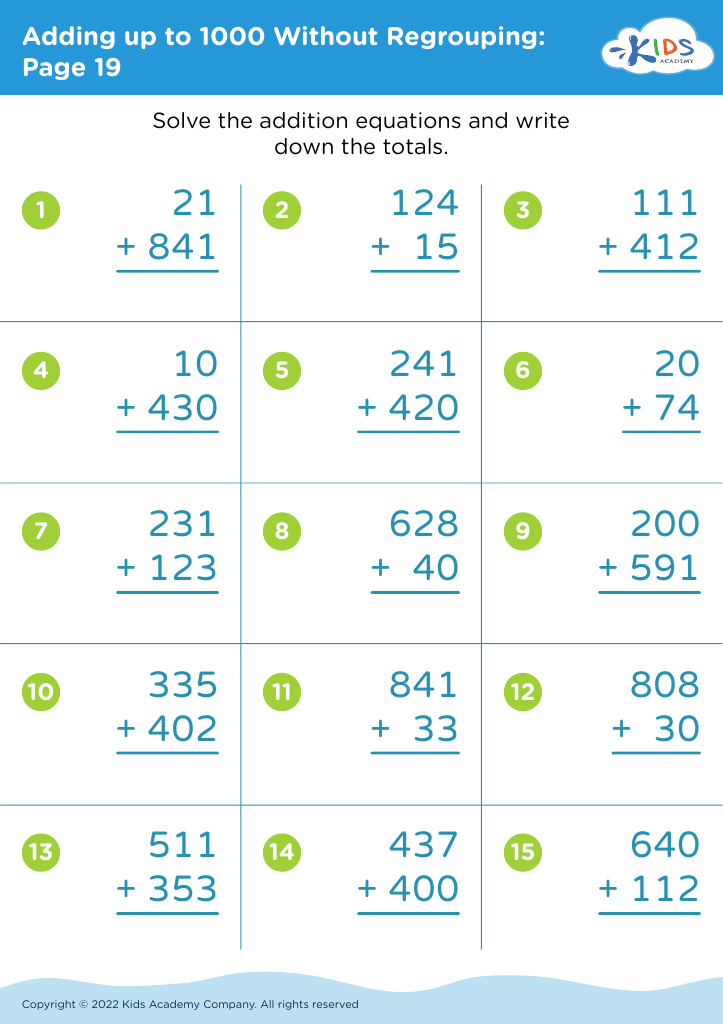
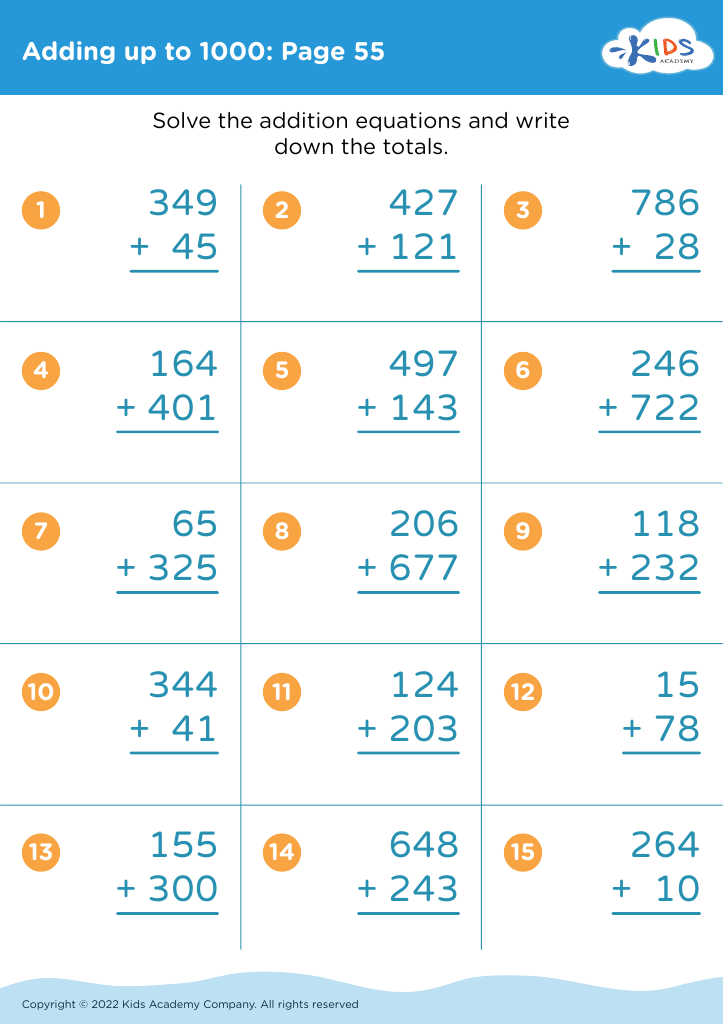


Understanding patterns in mathematics, especially concepts like adding up to 1000, is crucial for Grade 3 students. This foundational knowledge not only strengthens their arithmetic skills but also builds a framework for future problem-solving. Patterns help students recognize relationships between numbers, making it easier for them to grasp more complex mathematical concepts later on, such as multiplication and division.
For parents and teachers, caring about this topic means investing in a child's educational journey. When students can identify patterns, they gain confidence in their abilities, which can lead to a more positive attitude towards math. This, in turn, fosters a love for learning and a willingness to tackle challenging concepts.
Furthermore, understanding patterns supports logical thinking and reasoning, skills that are essential not just in math but in everyday situations, such as budgeting or time management. Engaging with these concepts at an early age ensures students are adequately prepared for higher-level math in subsequent grades.
By focusing on these early math skills, parents and teachers contribute to a student's overall development, equipping them with tools that encourage critical thinking and problem-solving—essentials for success in school and life's challenges ahead.