Understanding sequencing Grade 3 Adding up to 1000 Worksheets
3 filtered results
-
From - To
Welcome to our "Understanding Sequencing Grade 3 Adding Up to 1000 Worksheets" page! Designed to support young learners, these engaging worksheets help students grasp the concept of sequencing numbers in addition problems up to 1000. By offering a variety of exercises that challenge children to arrange numbers in order and solve addition problems, we promote critical thinking and enhance their math skills. Ideal for classroom use or home study, our worksheets make learning enjoyable and effective. Foster your child’s confidence in math and watch them excel with our comprehensive, user-friendly resources!
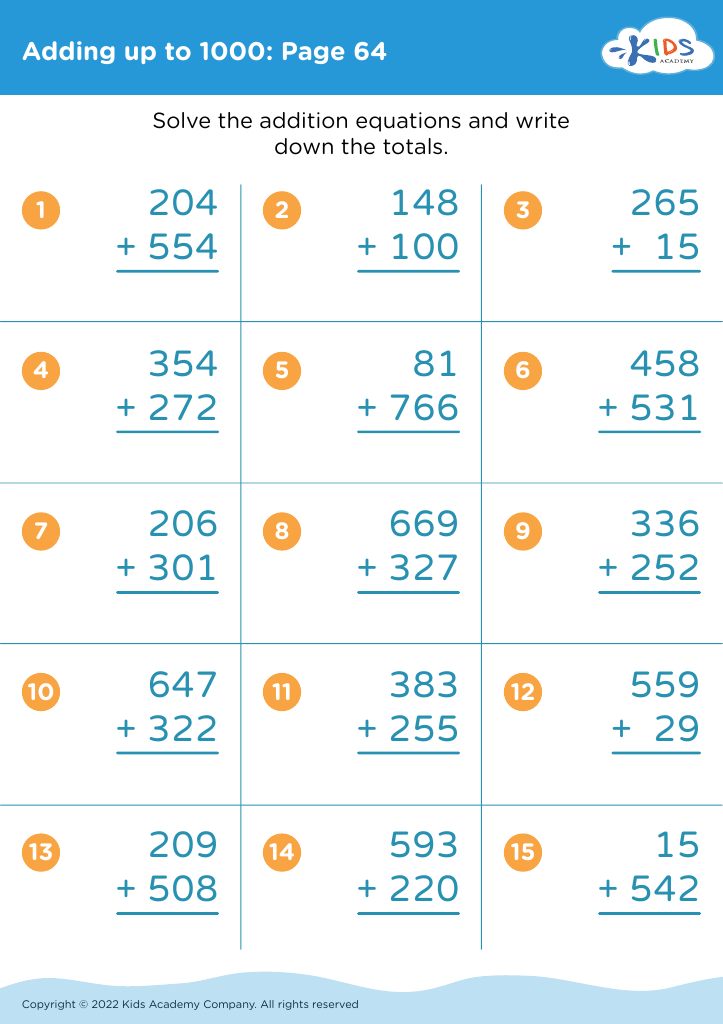
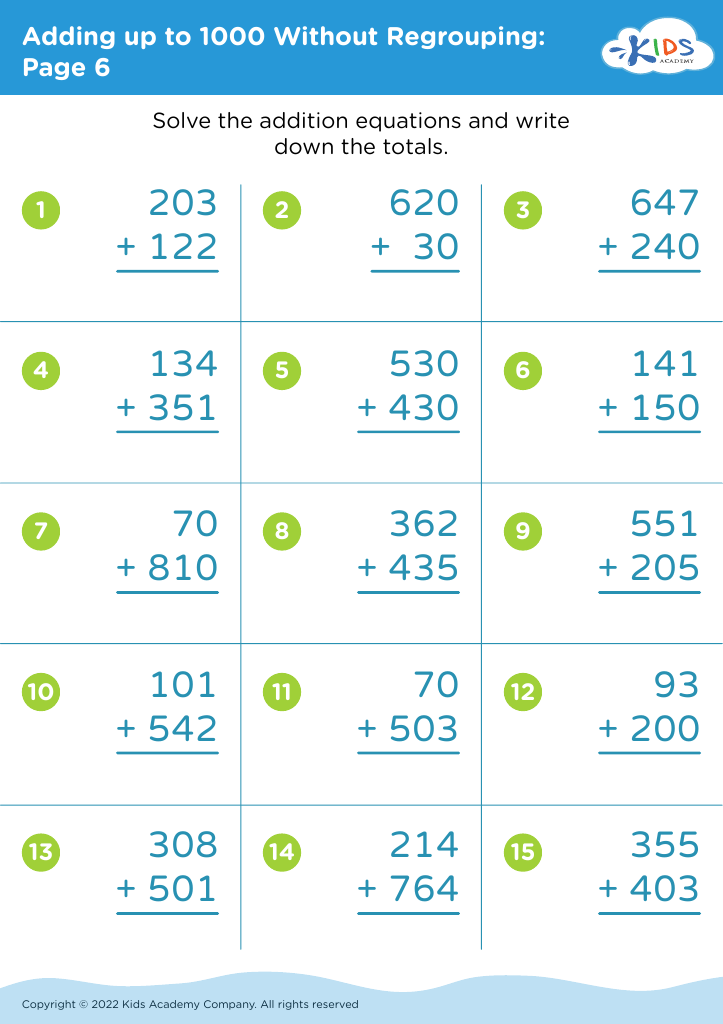
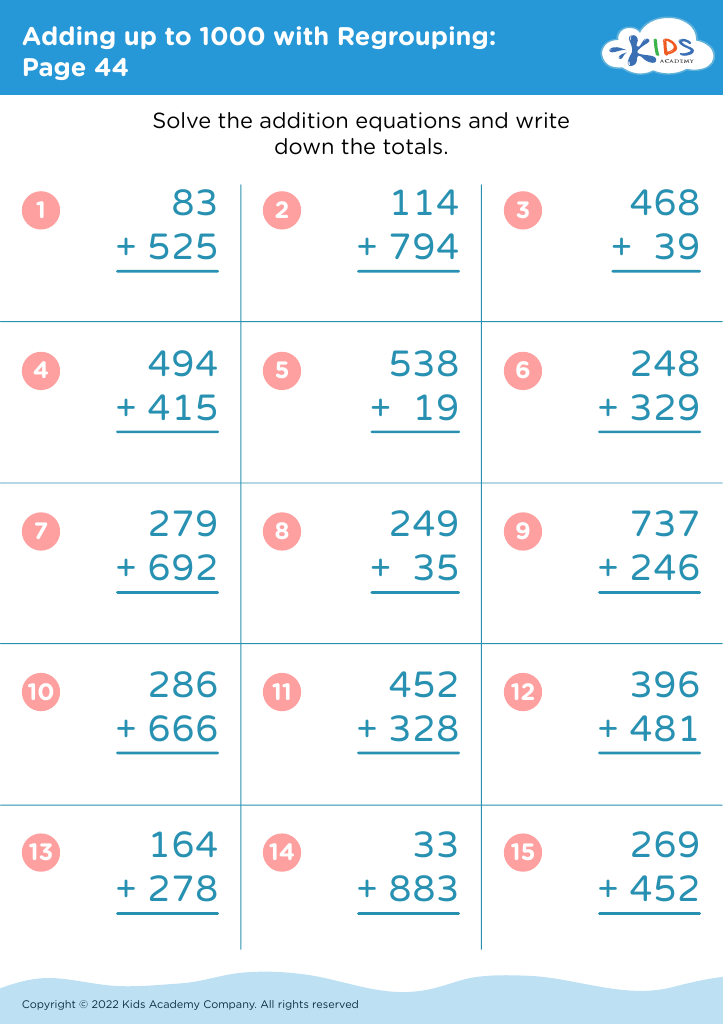


Understanding sequencing in Grade 3 math, particularly in adding up to 1000, is crucial for both parents and teachers for several reasons. First, sequencing helps students grasp the fundamental steps involved in addition, reinforcing their number sense. By learning to arrange numbers systematically, children can more easily identify patterns and relationships, building a solid foundation for more complex mathematical concepts.
Moreover, the ability to add large numbers is essential not just academically but also for practical daily life skills. Whether they are managing money, telling time, or organizing items, children will benefit from strong addition skills throughout their lives.
Additionally, mastering sequencing in addition enhances problem-solving abilities and critical thinking. When children learn to approach problems step-by-step, it fosters confidence and independence in their learning process. This skill translates beyond math to other subjects and real-world tasks.
For parents and teachers, emphasizing the importance of sequencing also encourages a supportive learning environment. Engaging students with hands-on activities and games targeted at sequencing can make learning enjoyable and impactful. In summary, understanding sequencing in adding up to 1000 is vital for children’s mathematical development and essential for their overall growth as learners.