Understanding symmetry Grade 3 Adding up to 1000 Worksheets
4 filtered results
-
From - To
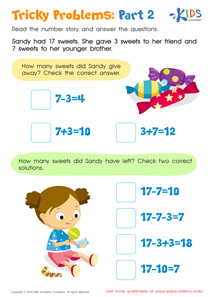
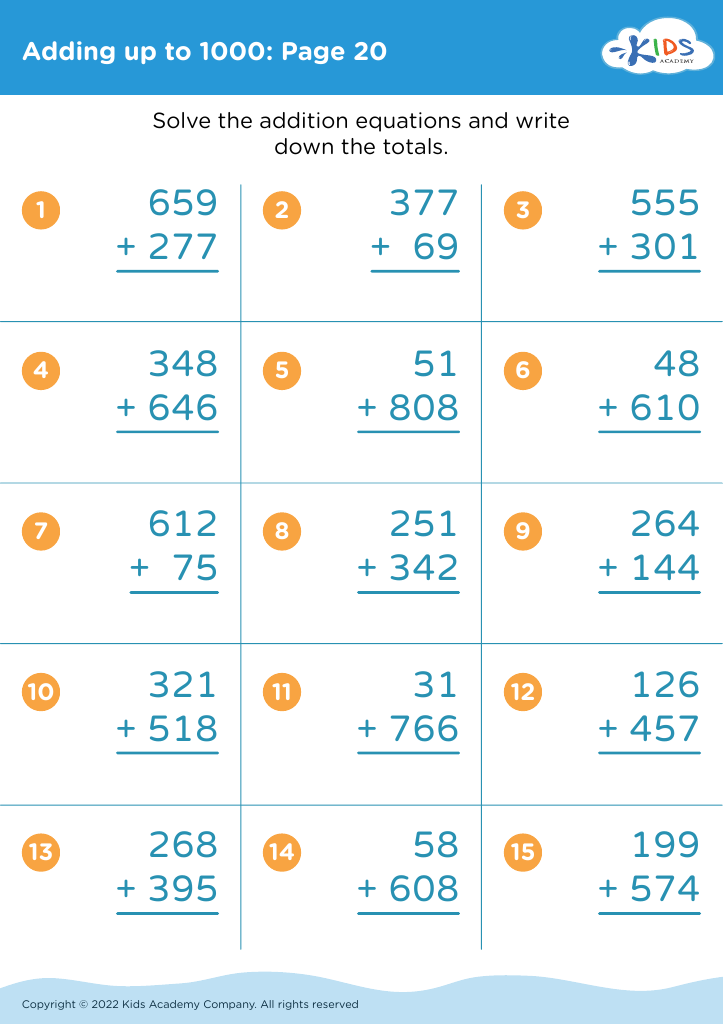
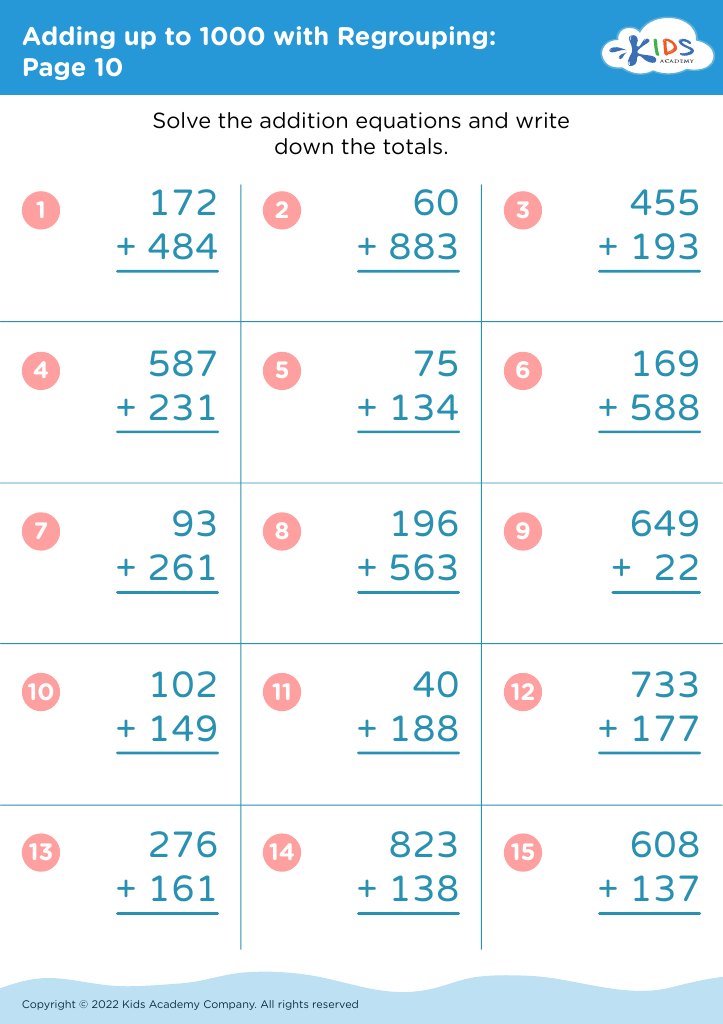
Explore our "Understanding Symmetry Grade 3 Adding up to 1000 Worksheets," designed to enhance third graders' math skills in an engaging and educational way. Our worksheets focus on teaching symmetry through fun and interactive exercises that also incorporate addition problems up to 1000. Students will learn to recognize symmetrical shapes, draw lines of symmetry, and balance equations while boosting their addition prowess. Perfect for classroom use or at-home practice, these worksheets help young learners develop a solid understanding of core math concepts, paving the way for future success. Download now and watch your child's confidence and abilities grow!
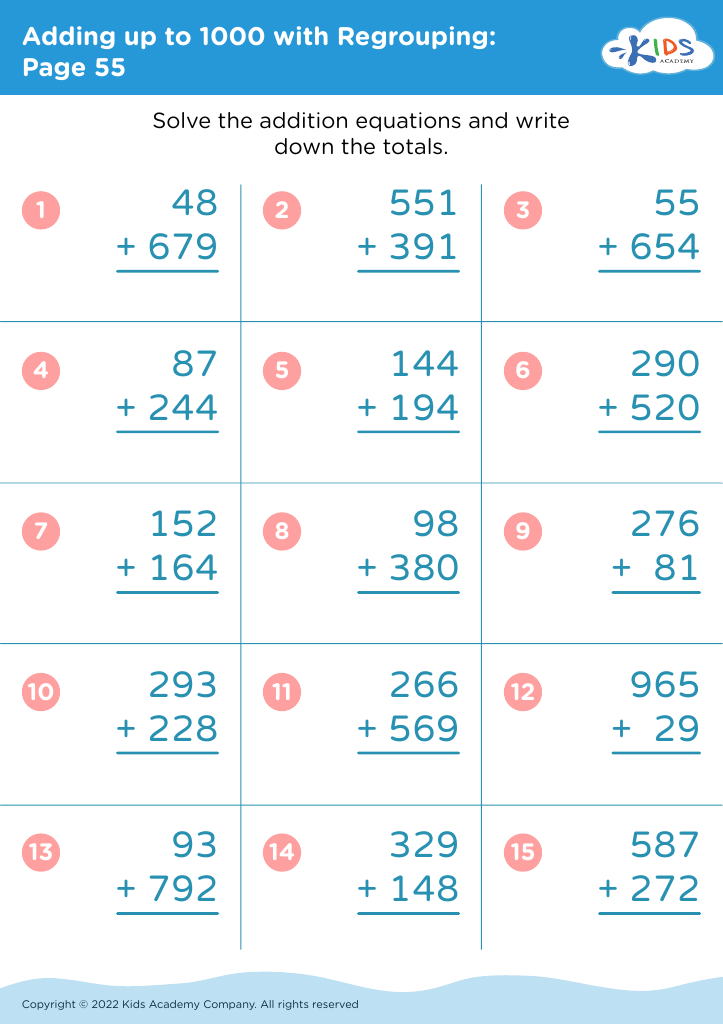
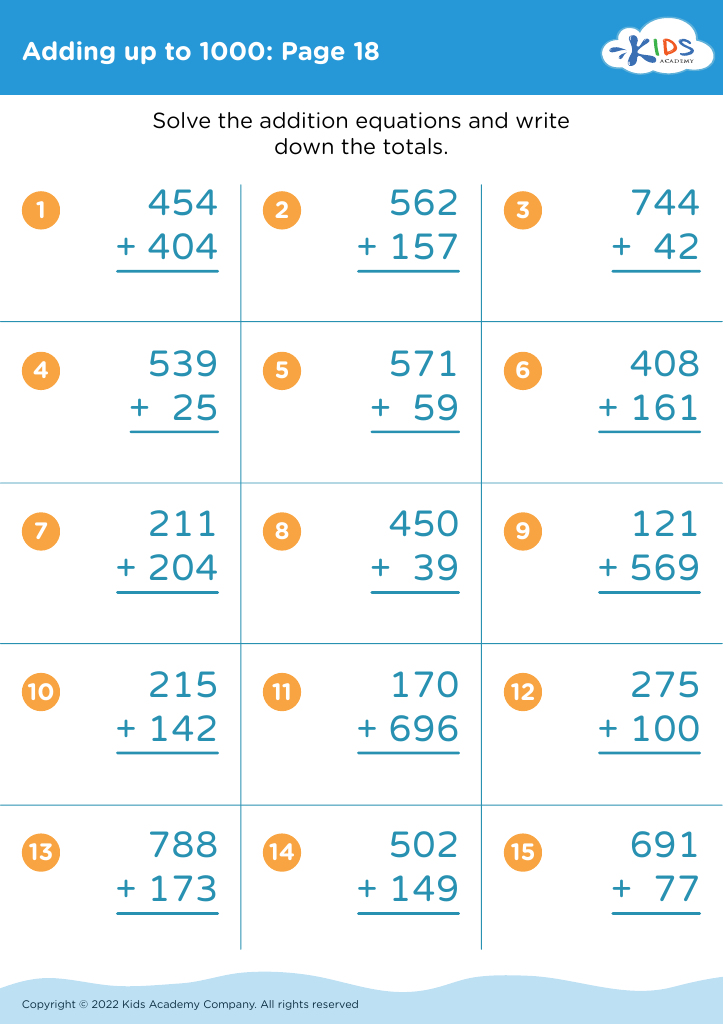


Understanding symmetry and adding up to 1000 are foundational skills in a child’s mathematical development.
Symmetry in Grade 3 teaches children about balance and harmony in shapes, patterns, and numbers. It enhances their spatial awareness and helps them develop critical thinking skills as they recognize and create symmetrical patterns. This awareness is crucial not only in mathematics but also in art, science, and daily life activities. For example, it aids in understanding geometry, defining proportional relationships, and even in solving complex problems later in life. Symmetry fosters a deeper appreciation of the natural world's aesthetic and structural properties.
Adding up to 1000, on the other hand, strengthens a child’s understanding of number relationships and place value. As children practice addition operations within this range, they become more confident with consecutive number systems, an essential skill for higher arithmetic proficiency. This capability is crucial as it acts as a springboard for more advanced mathematical concepts such as multiplication, division, and eventually algebra. Mastery in addition significantly boosts their problem-solving skills and mathematical fluency.
Both concepts together lay down a mathematical foundation necessary for future academic success and everyday life. Parents and teachers should focus on these areas to foster a productive, engaging learning environment and ensure a child’s numeracy skills are robust and comprehensive.