Understanding time Grade 3 Adding up to 1000 Worksheets
3 filtered results
-
From - To
Unlock your child's potential with our "Understanding Time Grade 3: Adding up to 1000 Worksheets!" Perfect for 3rd graders, these worksheets combine time-telling skills with addition exercises, making learning both fun and educational. Students will master reading clocks, calculating time intervals, and adding numbers up to 1000. Ideal for classroom use or at-home practice, each worksheet features engaging, age-appropriate problems designed to boost confidence and enhance mathematical proficiency. Give your child the tools to succeed in math and everyday life with our expertly crafted, easy-to-use worksheets. Start your student’s journey towards time-telling and addition mastery today!
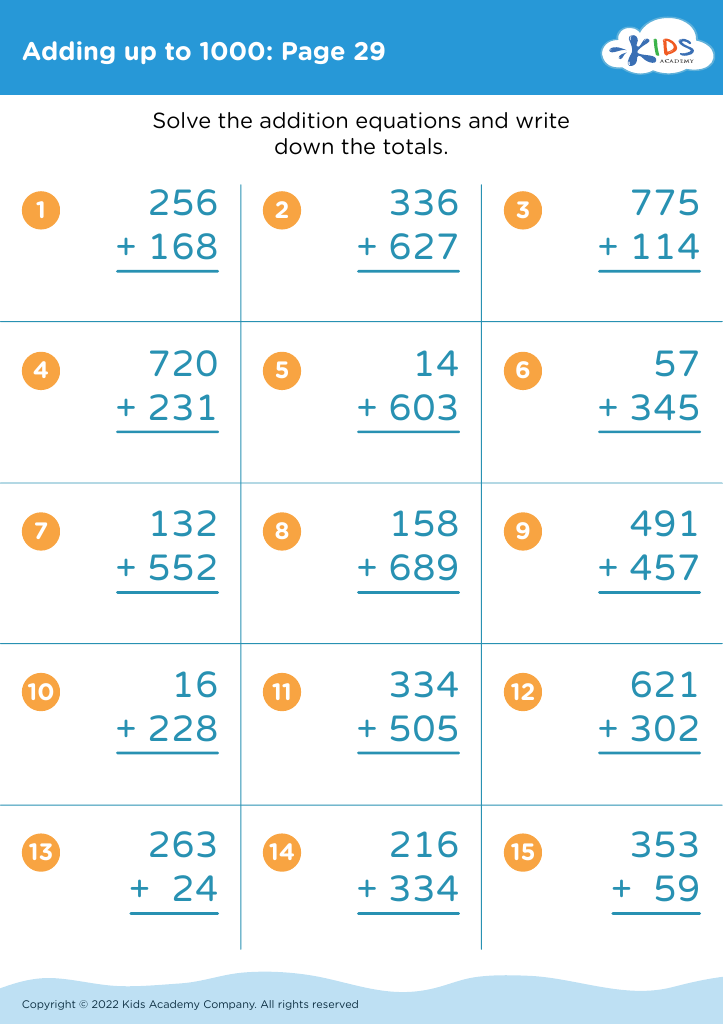
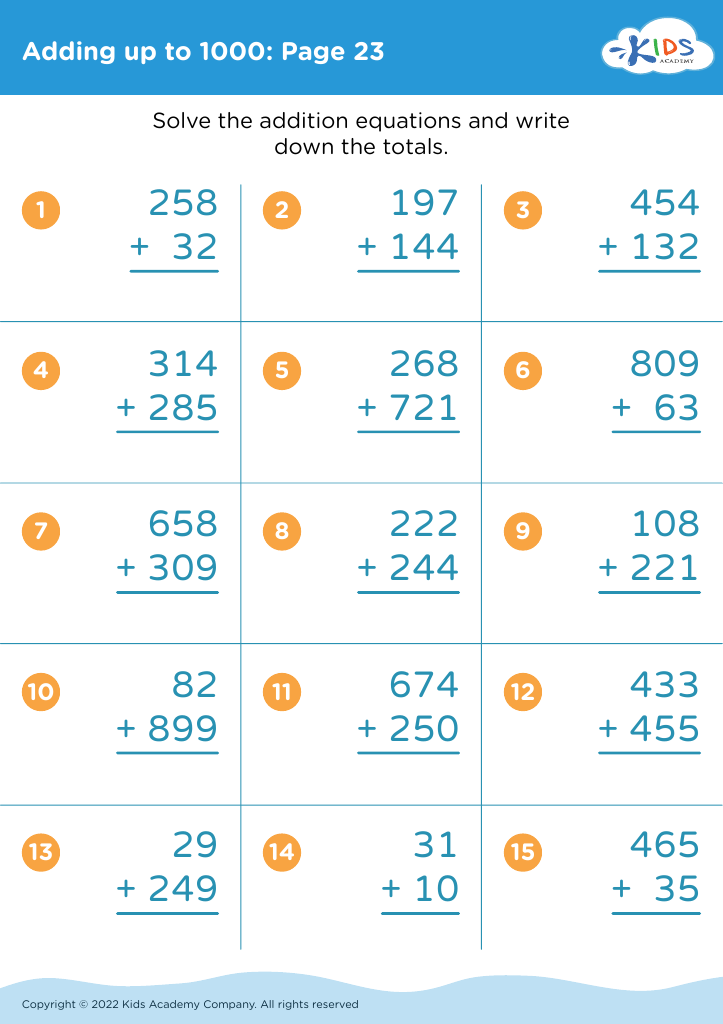
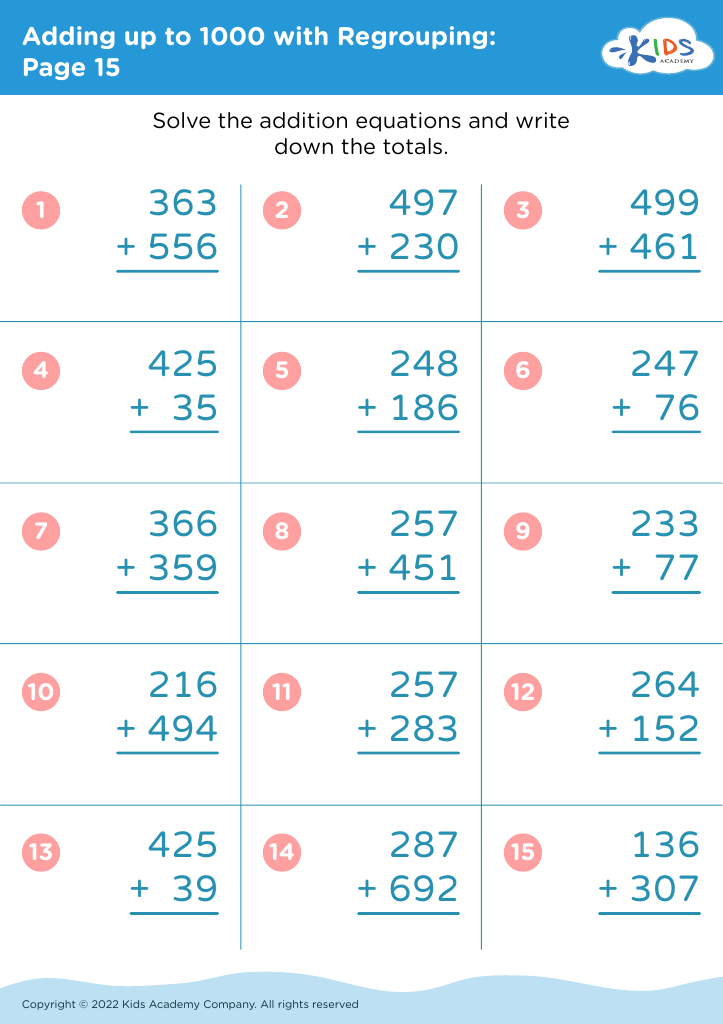


Understanding time and adding up to 1,000 are fundamental skills for third graders that have far-reaching implications in both academic and real-life settings. Time management is essential for students, as it helps them structure their day, understand sequencing, and develop responsibility. When students grasp the concept of time, they can better follow schedules, meet deadlines, and prepare for future commitments, building crucial life skills early on.
Similarly, mastering addition up to 1,000 forms the foundation for more complex mathematical concepts. Arithmetic serves as the basis for later topics like multiplication, division, and fractions, which are essential for more advanced math in higher grades. Addition skills are also indispensable in everyday scenarios, such as handling money, calculating expenses, and understanding quantities in daily activities like cooking or shopping.
Moreover, proficiency in these areas boosts a child’s confidence, enabling a positive attitude toward learning and problem-solving. Early success in understanding these concepts can motivate continued academic improvement, laying the groundwork for future educational achievements.
Ensuring that students are comfortable with these skills empowers them not only to perform well academically but also to navigate their daily lives more effectively. Hence, parents and teachers should prioritize helping children master telling time and adding up to 1,000 as these competencies represent critical milestones in a child’s educational journey.