Visual interpretation Grade 3 Adding up to 1000 Worksheets
3 filtered results
-
From - To
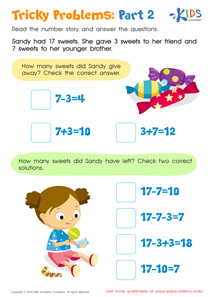
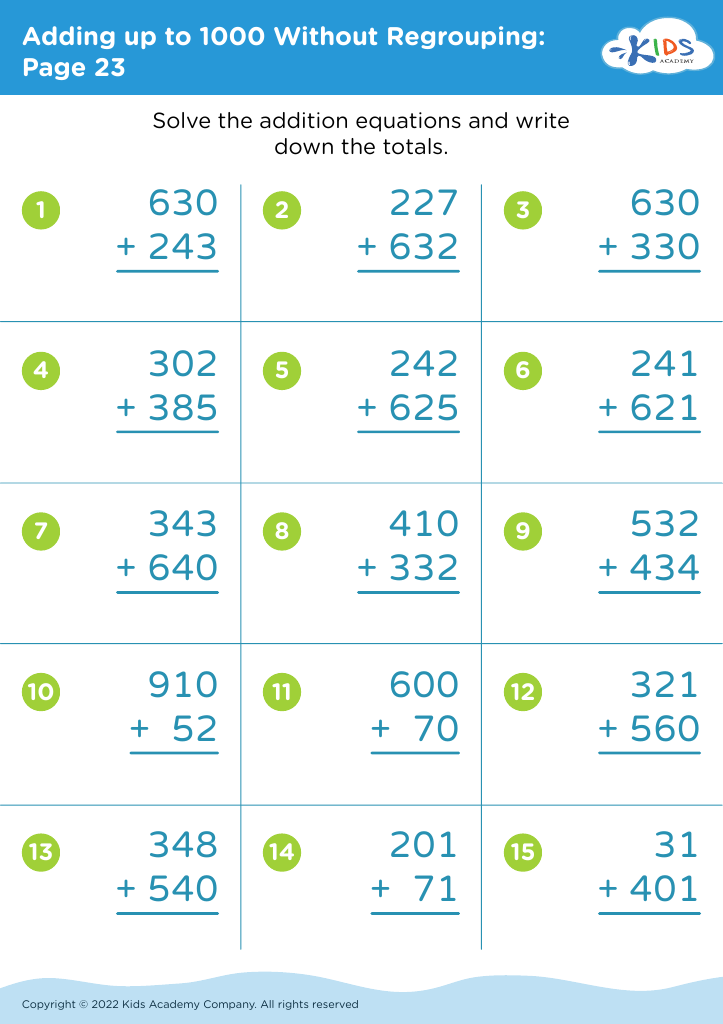
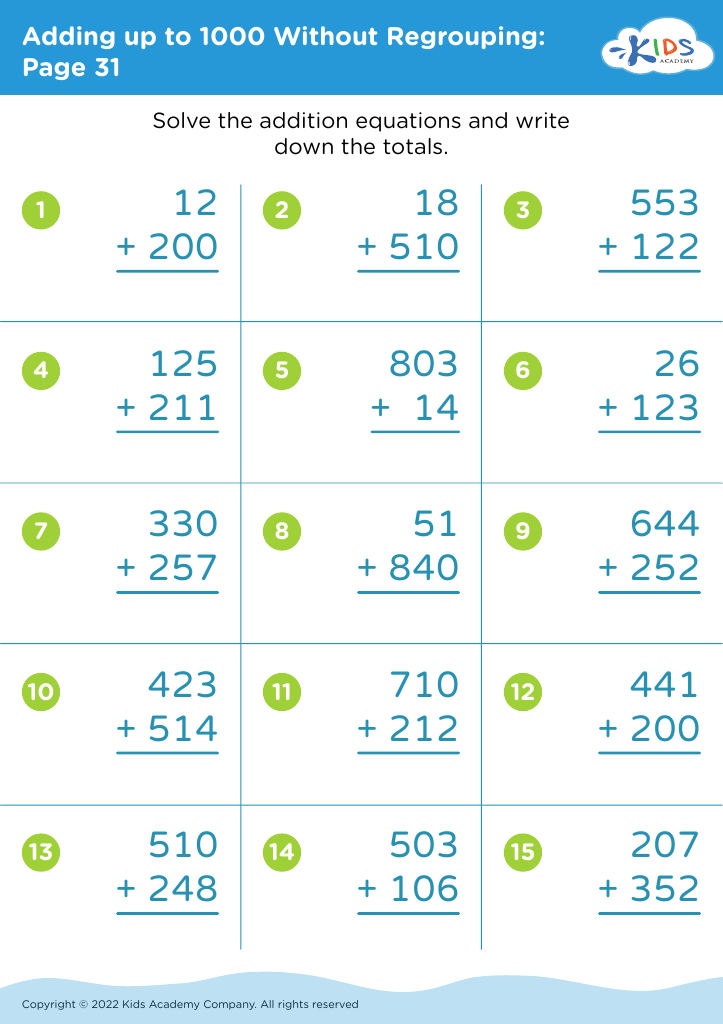
Enhance your third graders' math skills with our Visual Interpretation - Adding Up to 1000 Worksheets. These thoughtfully designed worksheets help students grasp the concept of addition, particularly for sums up to 1000. Through engaging visuals, children will learn to interpret data, recognize patterns, and solve problems effectively. Our worksheets provide opportunities for critical thinking and number sense, fostering a deeper understanding of mathematical concepts. Perfect for classroom activities or home practice, they cater to diverse learning styles and promote a fun, interactive learning experience. Equip your students with essential skills that lay the foundation for future mathematics success today!
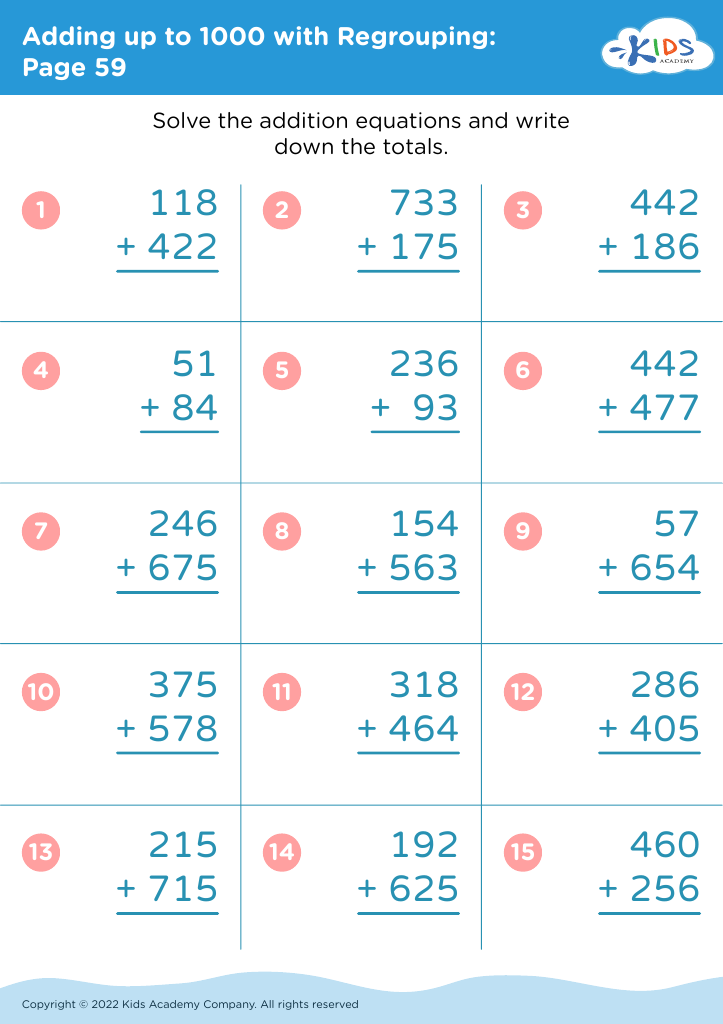


Visual interpretation is a critical skill for Grade 3 students, particularly when learning to add numbers up to 1000. For both parents and teachers, emphasizing this skill is essential for several reasons.
Firstly, visual representation helps students understand abstract concepts in a concrete way. Using visuals like number lines, ten frames, and charts enables children to visualize addition and enhances their comprehension of magnitude and value. This understanding lays the foundation for more complex mathematical concepts down the line.
Moreover, visual interpretation aids in problem-solving. When students can visualize a numerical problem, they can more effectively break it down. This skill is beneficial not only in mathematics but also in other areas of learning.
Additionally, promoting visual thinking fosters creativity and critical analysis. Children learn to explore multiple approaches to a problem—an essential skill in today’s world, where critical thinking is paramount.
Lastly, engaging parents in visual interpretation techniques helps reinforce what is learned in school. Parents can use everyday opportunities, such as grocery shopping or cooking, to further encourage visual comprehension, thereby creating a strong home-school connection and nurturing confident, competent learners. In essence, caring about visual interpretation prepares students for future academic success and everyday life.