Practice writing numbers Grade 3 Addition & Subtraction Worksheets
3 filtered results
-
From - To
Enhance your third grader’s math skills with our engaging addition and subtraction worksheets designed specifically for practicing writing numbers. These worksheets provide a perfect blend of structured exercises and fun activities, making learning enjoyable. Students can strengthen their understanding of numerical concepts while improving their handwriting through a variety of interactive problems. Whether your child is reviewing basic concepts or tackling more challenging equations, our resources cater to different skill levels. With a focus on reinforcing number writing and mathematical operations, these worksheets are ideal for classroom use or at-home practice. Jump-start your child’s math journey today!
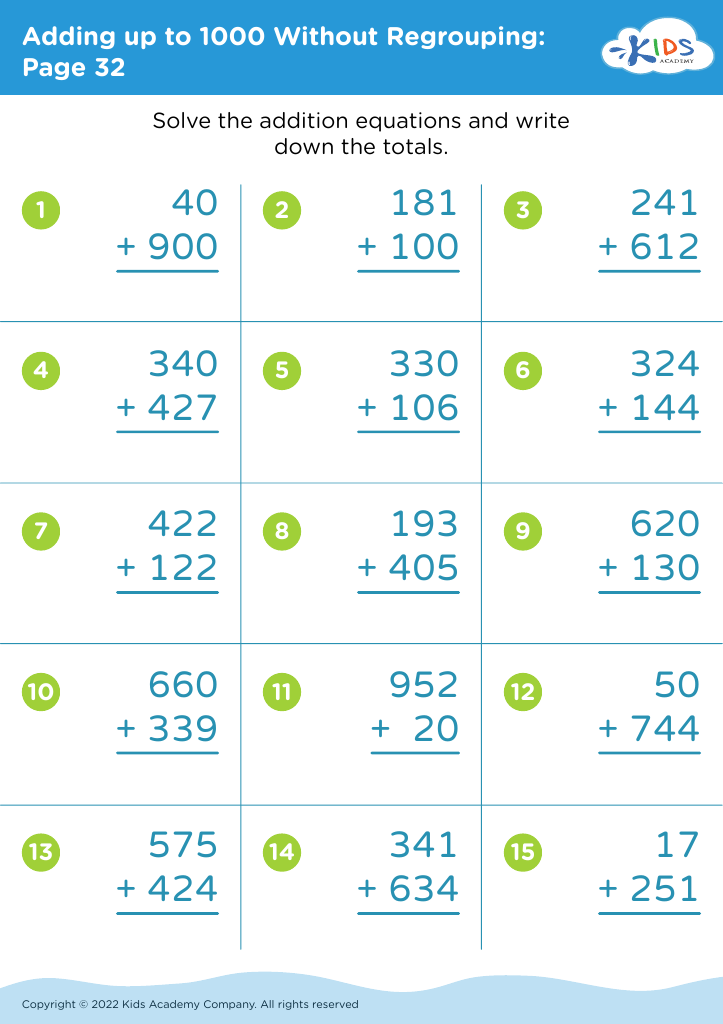
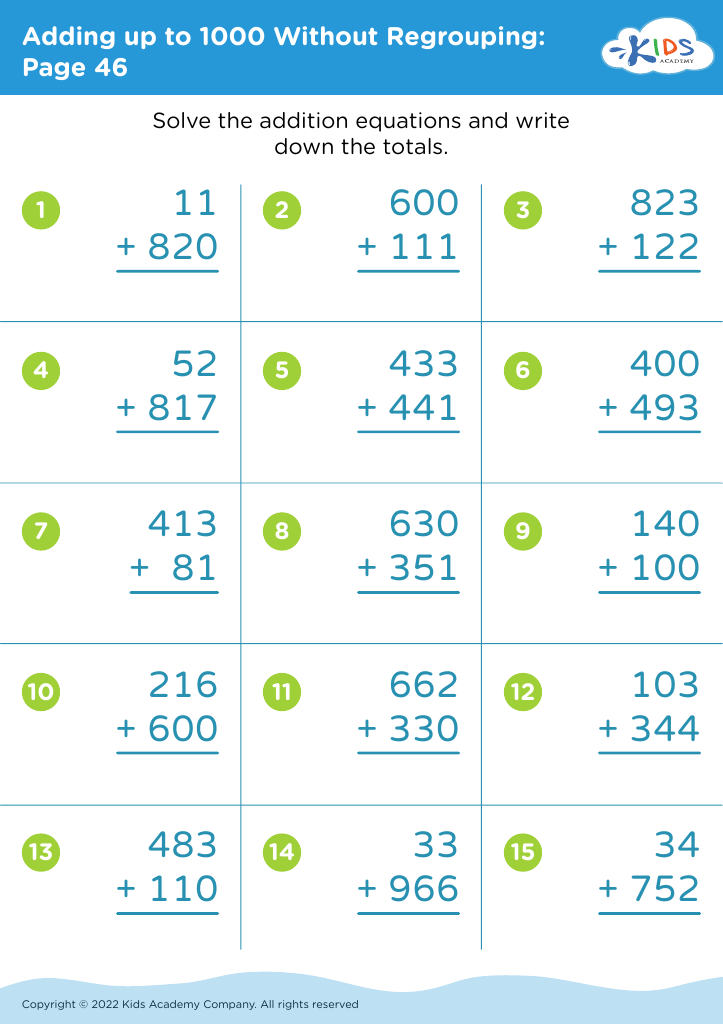
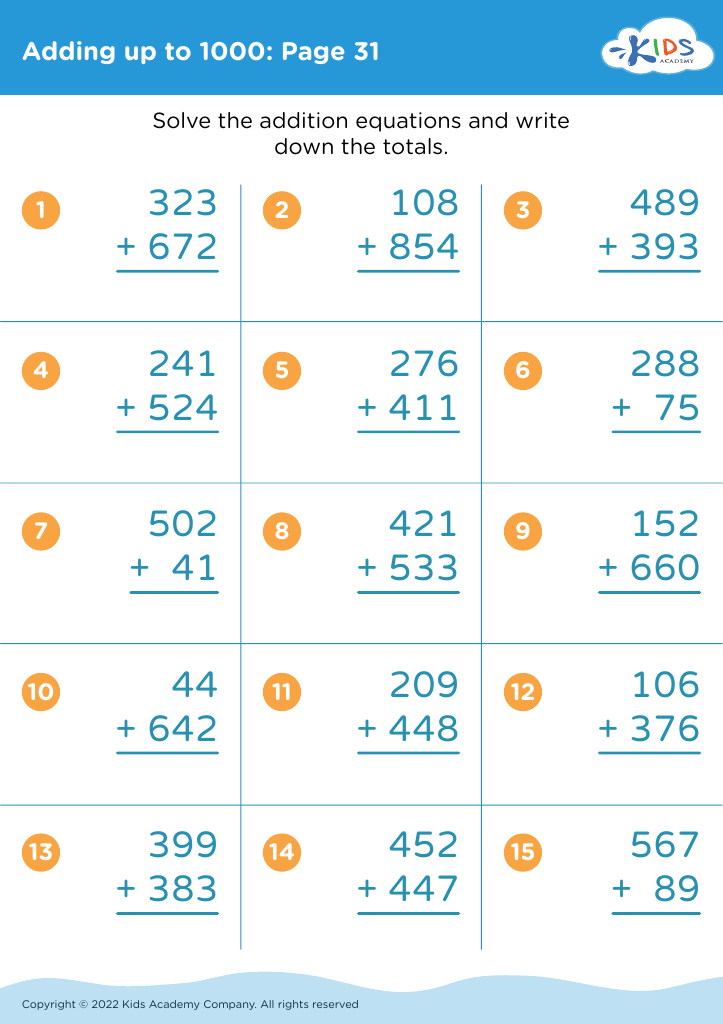








Practice writing numbers in Grade 3 addition and subtraction is crucial for students' overall mathematical development. At this stage, children solidify their understanding of foundational math concepts, which are essential for more advanced topics later on. Familiarity with numbers helps children develop fluency in computations, enabling them to solve problems efficiently and accurately.
Moreover, being able to write numbers neatly and correctly promotes better comprehension. When students physically write out numbers, they are more likely to engage with the concept, enhancing memory retention and cognitive engagement. This tactile experience can make learning more interactive and enjoyable.
Additionally, consistent practice helps to build confidence in young learners. Mastering addition and subtraction boosts their self-esteem, motivating them to tackle more complex mathematical challenges. Parents and teachers play vital roles in encouraging this practice; their support not only reinforces learning but also establishes a positive attitude toward math.
Lastly, clear communication of mathematical ideas is essential in our data-driven world. Practicing writing numbers ensures that children can express their mathematical thinking coherently, paving the way for successful communication in future academic endeavors. In summary, early attention to these skills nurtures a solid foundation in math, crucial for lifelong learning and problem-solving abilities.