Problem-solving practice Grade 3 Addition & Subtraction Worksheets
4 filtered results
-
From - To
Explore our engaging Problem-Solving Practice worksheets designed for Grade 3 students to master addition and subtraction! These comprehensive worksheets help young learners develop critical thinking skills while improving their math proficiency. Each worksheet features age-appropriate word problems that challenge students to apply their knowledge in real-world scenarios, promoting analytical reasoning. With vibrant visuals and relatable themes, kids will find joy in solving math challenges. Perfect for classroom or home learning, these resources empower children to enhance their problem-solving abilities and build a strong mathematical foundation. Download our free worksheets today and watch your child's confidence in math soar!
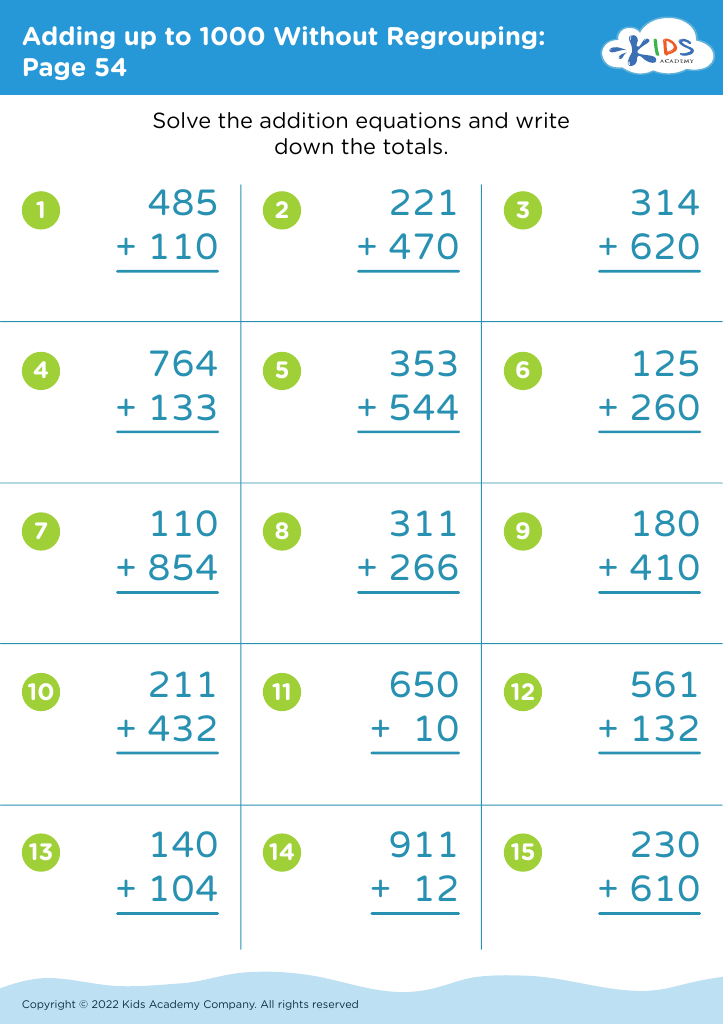
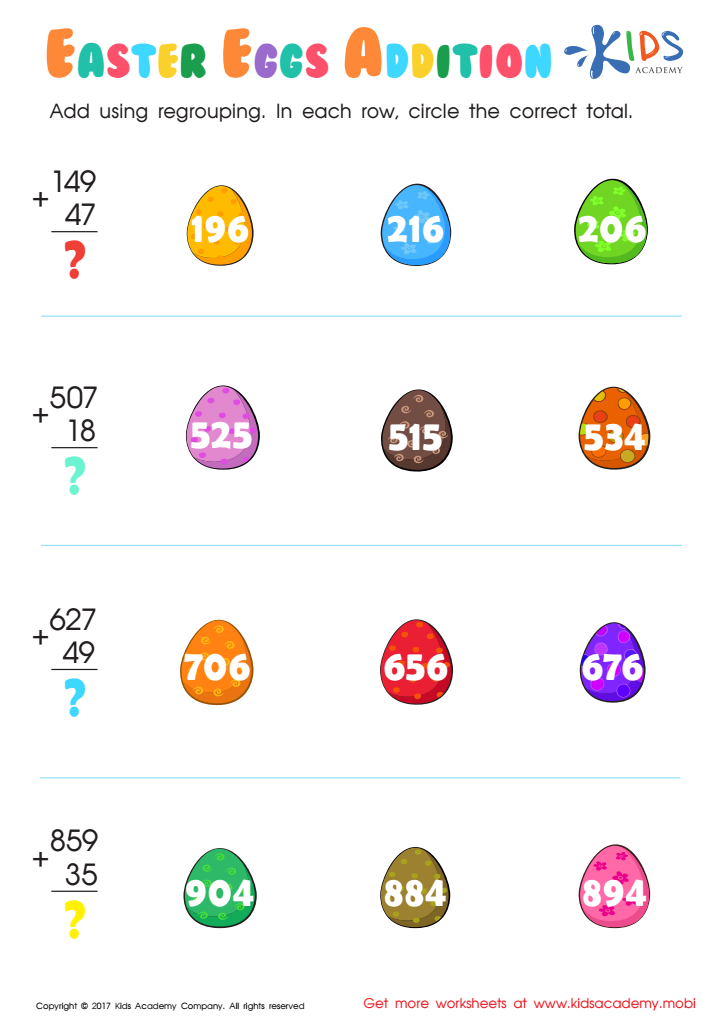
Addition with Regrouping Worksheet
 Assign to My Students
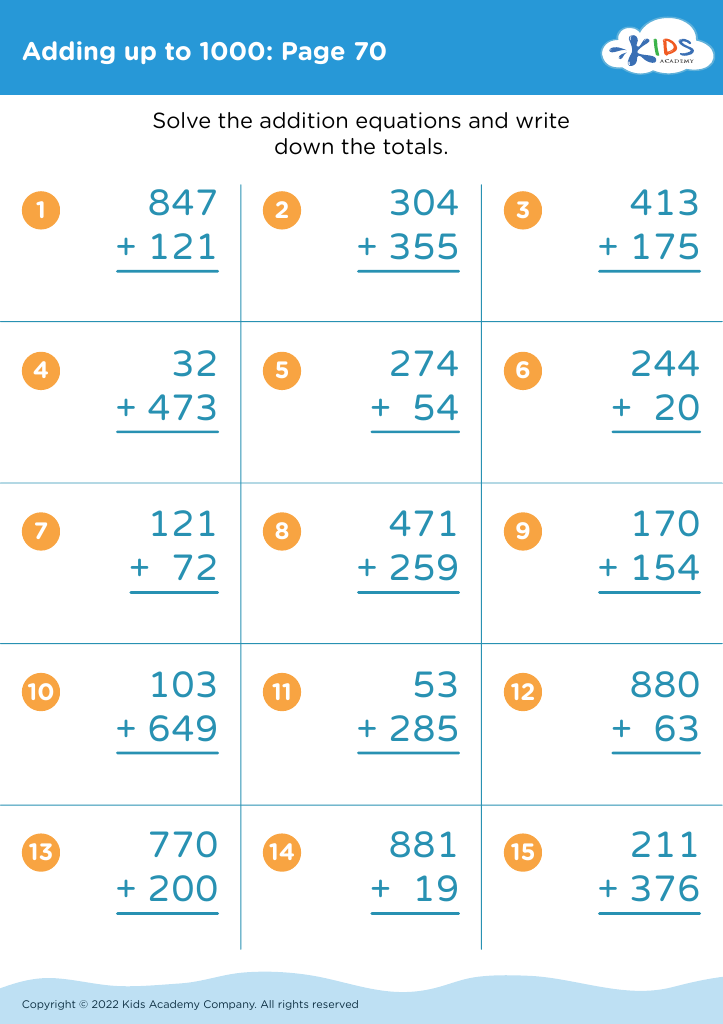
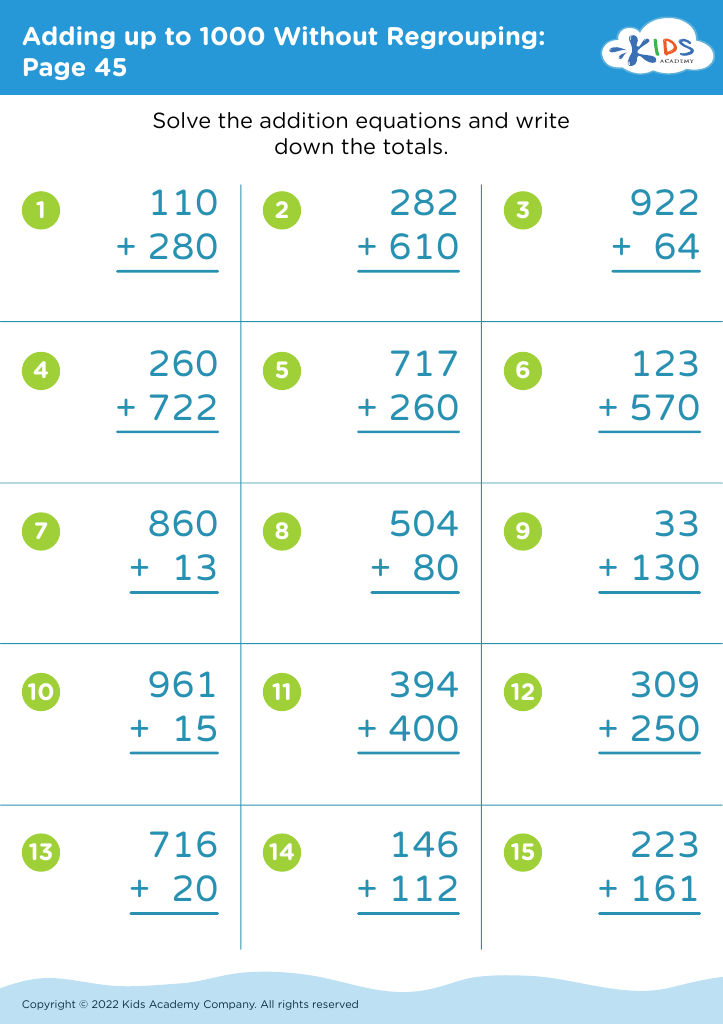








Problem-solving practice in Grade 3 addition and subtraction is crucial for several reasons that directly benefit students’ mathematical development and overall academic skills. This stage is pivotal, as students begin to move beyond rote memorization of basic arithmetic to applying their knowledge in various contexts. Engaging in problem-solving activities helps children develop critical thinking skills, as they learn to analyze situations, identify the necessary operations, and justify their reasoning.
Moreover, these problem-solving skills foster resilience and perseverance. Students learn that not all problems are straightforward and may require them to try multiple approaches before finding a solution. This experience builds their confidence and encourages a growth mindset, essential attributes for lifelong learners.
Additionally, contextualizing addition and subtraction through real-world problems shows students the relevance of math in everyday life, making it more engaging and meaningful. For parents and teachers, promoting problem-solving practices aligns with educational standards, ensuring that children are well-prepared for future mathematical challenges.
In summary, supporting problem-solving practices in Grade 3 addition and subtraction cultivates essential skills in students, helping them become competent and confident mathematicians as they progress through their education.