Shape identification Grade 3 Addition & Subtraction Worksheets
6 filtered results
-
From - To
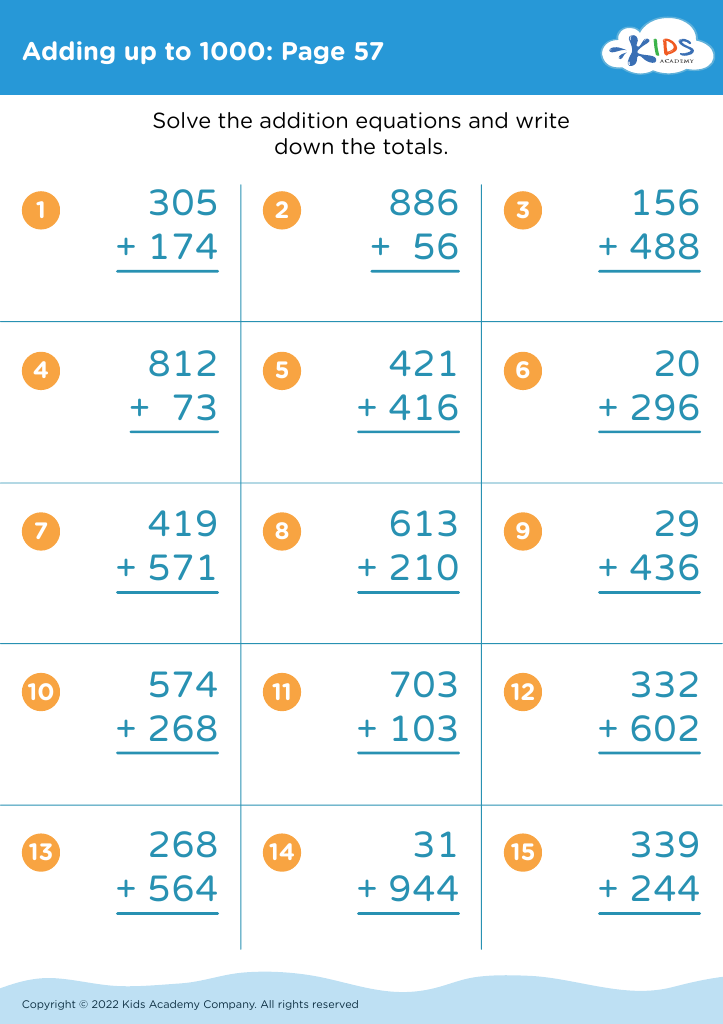
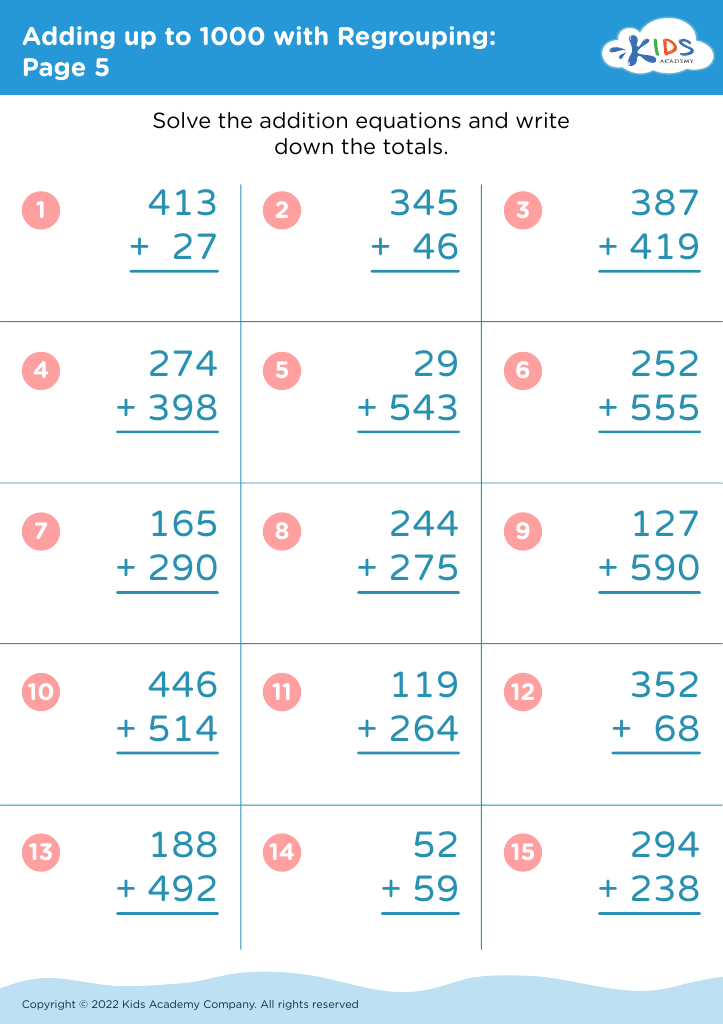
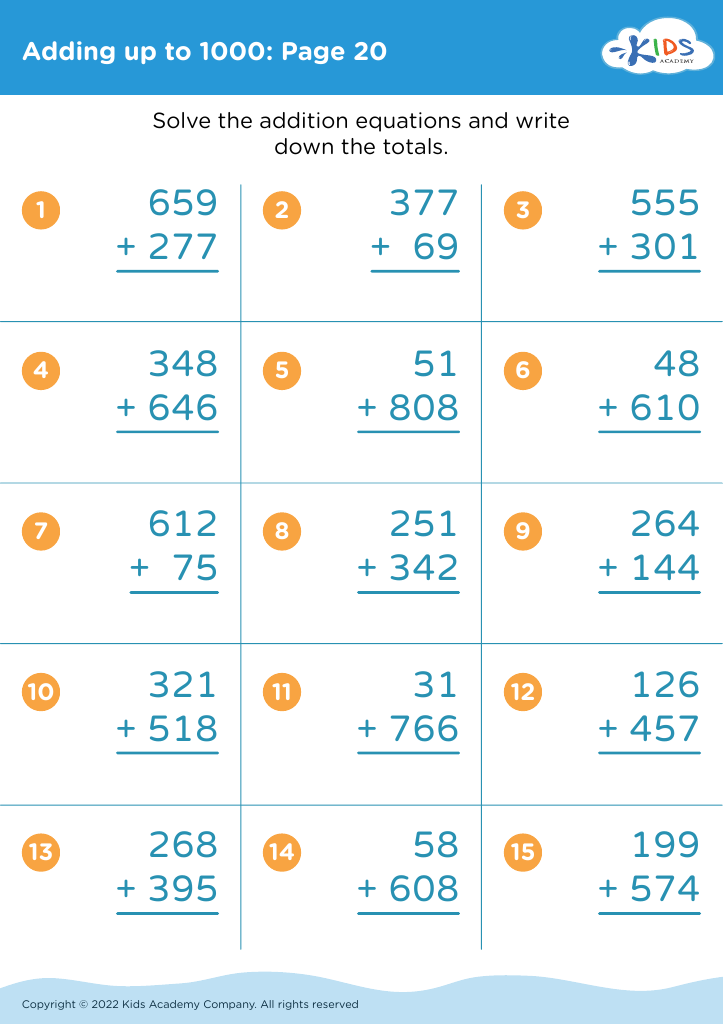
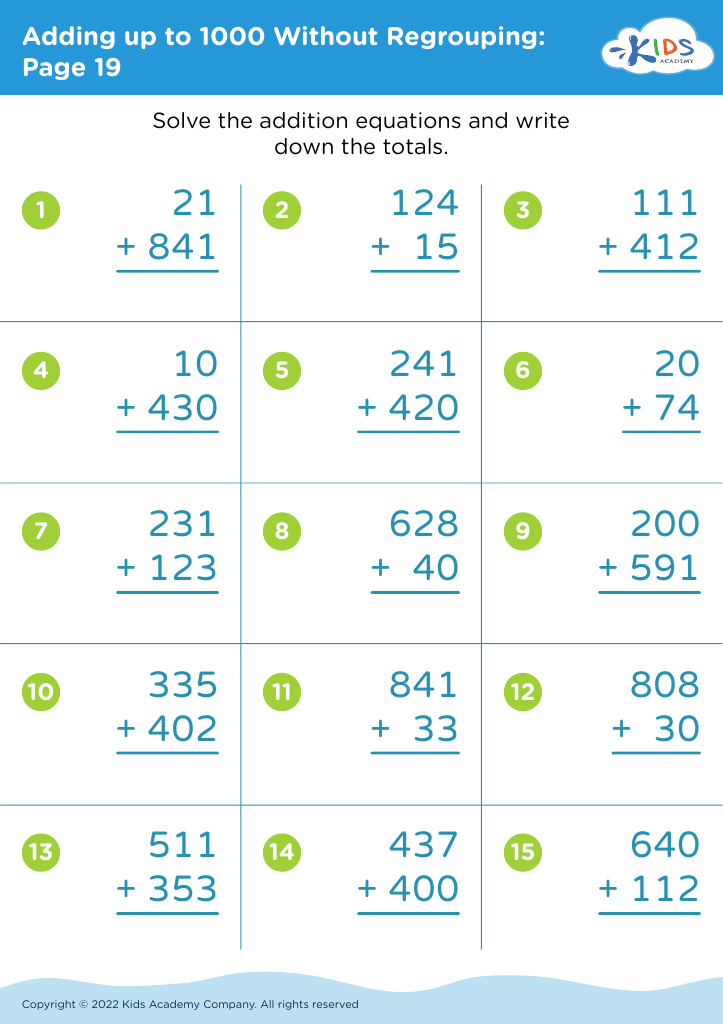
Enhance your Grade 3 students' understanding of shapes while reinforcing essential addition and subtraction skills with our engaging worksheets. Our "Shape Identification Grade 3 Addition & Subtraction Worksheets" blend geometric learning with math practice, helping young learners effortlessly identify and differentiate between various shapes such as circles, squares, and triangles. Each worksheet features fun, interactive problems that encourage critical thinking and problem-solving. By integrating shape identification with math, students will develop a nuanced understanding of both subjects, ensuring a comprehensive learning experience. Perfect for classroom activities or homework, these worksheets provide a creative way to solidify foundational skills in a playful manner.
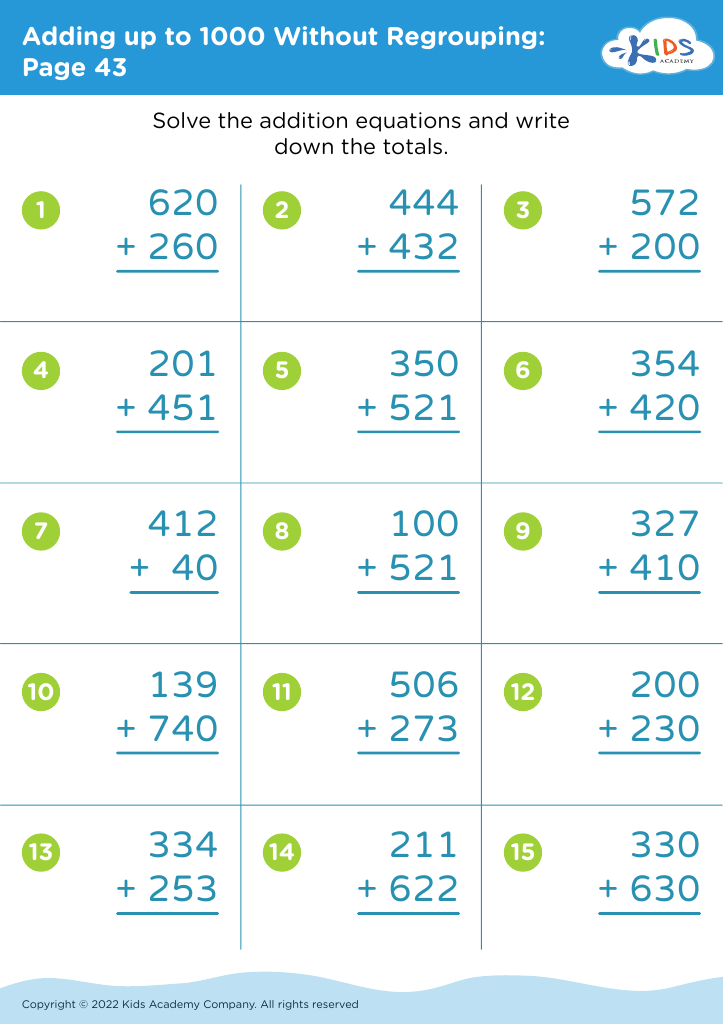








Shape identification is a crucial skill that serves as a foundational element in a child's mathematical development, particularly for Grade 3 students who begin to tackle more complex addition and subtraction. Understanding shapes not only enhances spatial awareness, but also develops critical problem-solving skills necessary for grasping geometric concepts. Parents and teachers should care about this initiative because it helps students connect mathematical ideas to real-world objects, fostering a better understanding of how mathematics operates in everyday life.
Moreover, shape identification plays a vital role in improving a child's overall cognitive development. Familiarity with various shapes provides a basis for more sophisticated mathematical concepts such as geometry and measurement, which will be further explored in later grades. When teachers and parents actively engage in helping students identify and understand shapes, they lay the groundwork for robust mathematical reasoning and logic.
Additionally, learning about shapes strengthens addition and subtraction skills, as students can efficiently categorize objects and solve related problems. Encouraging awareness of shapes enables circle or line sectioning, leading to subtracting or adding dimensions effectively. Collectively, enhancing shape identification contributes to a child’s overall academic confidence, ensuring they have a solid foundation for ongoing mathematical success.