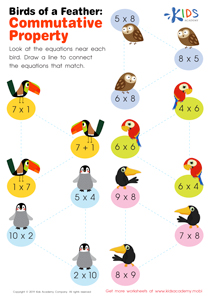
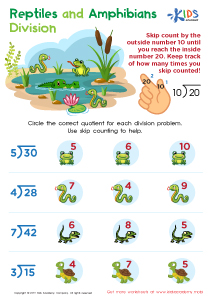
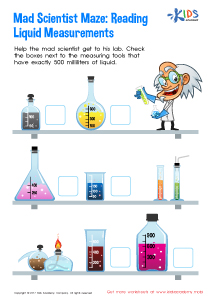
Vocabulary expansion Grade 3 Addition & Subtraction Worksheets
4 filtered results
-
From - To
Introducing our "Vocabulary Expansion Grade 3 Addition & Subtraction Worksheets," meticulously designed to enhance your child's math and language skills. These engaging worksheets focus on building a robust math vocabulary, essential for mastering addition and subtraction concepts. Tailored for third graders, each worksheet combines fun activities with educational content, ensuring a comprehensive learning experience. Kids will not only practice their math skills but also expand their mathematical terminology, aiding in better understanding and communication. Perfect for both classroom and home use, our worksheets are an excellent resource to foster academic growth and confidence in young learners.
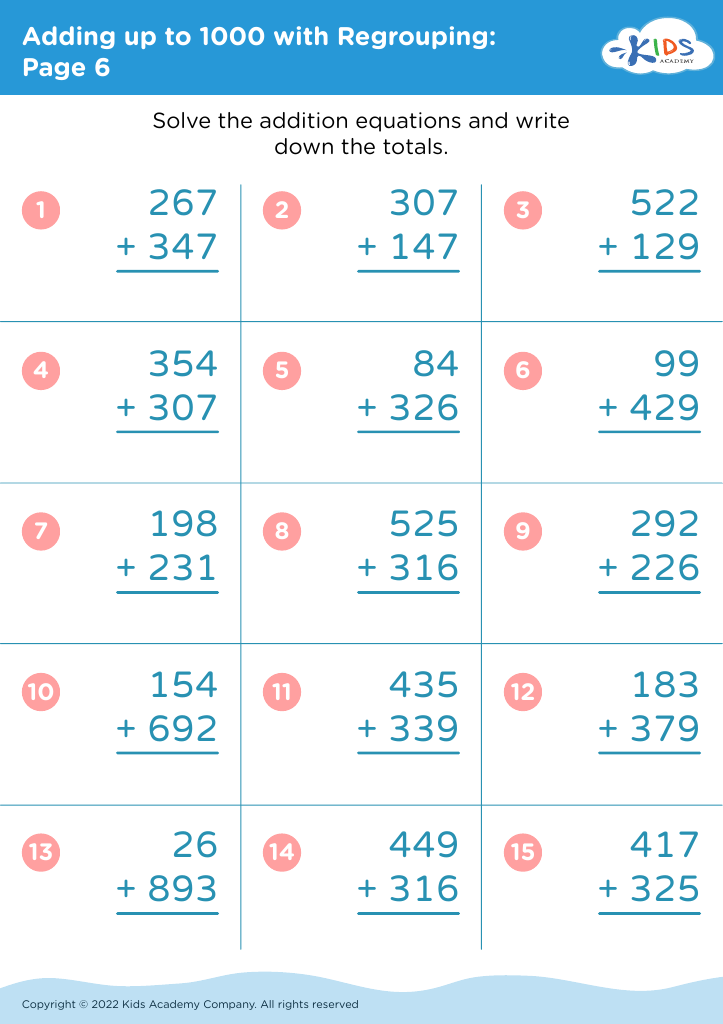
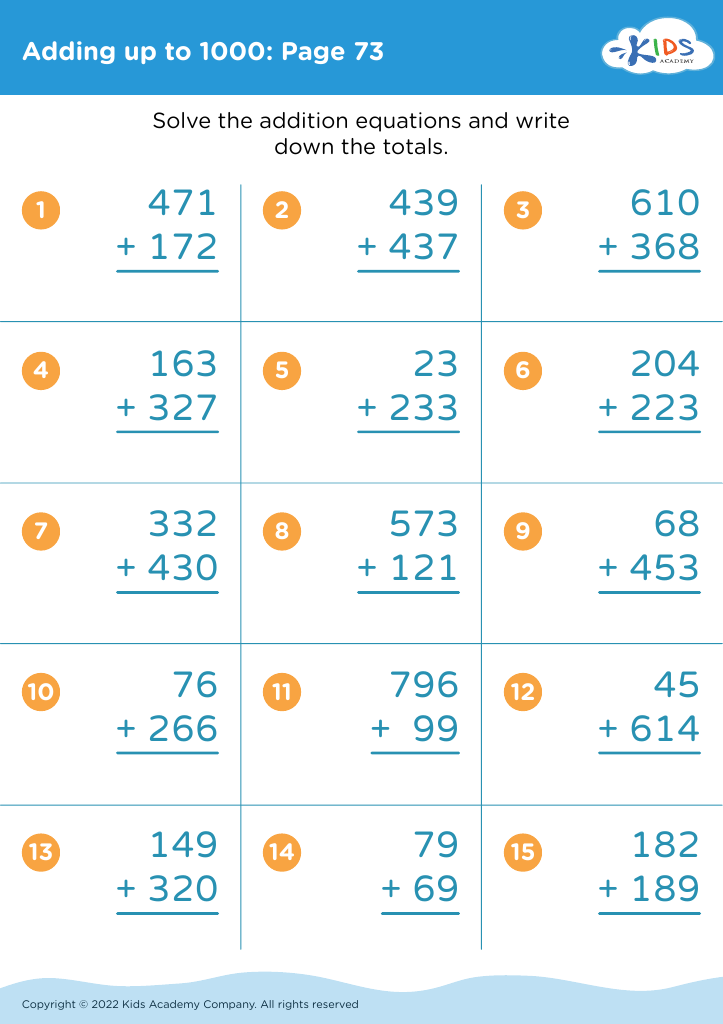
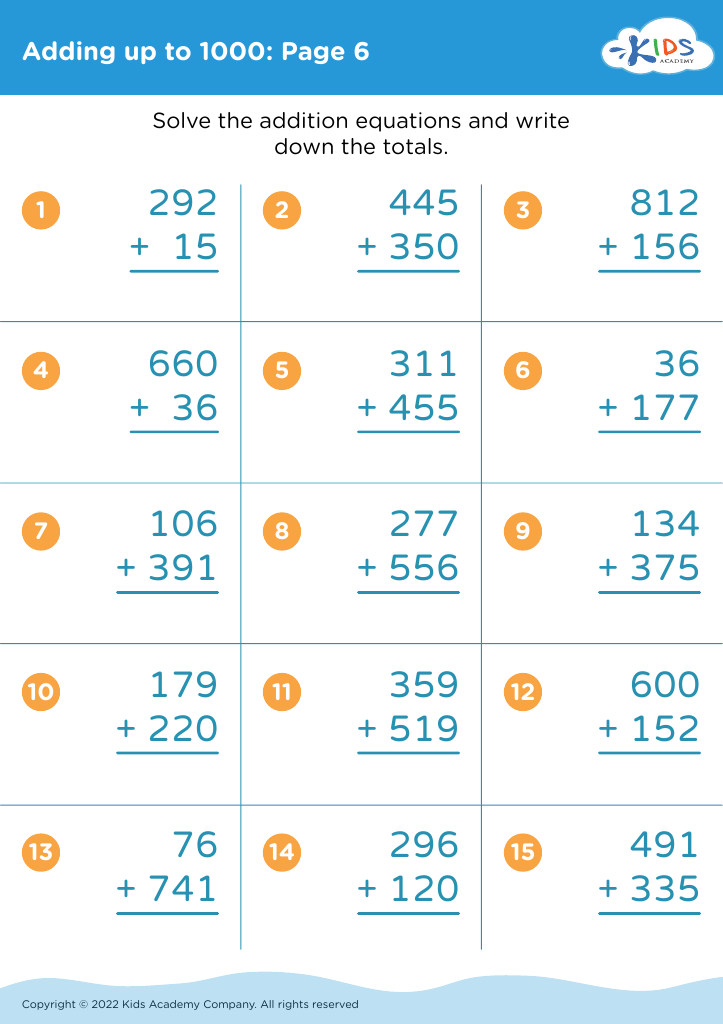
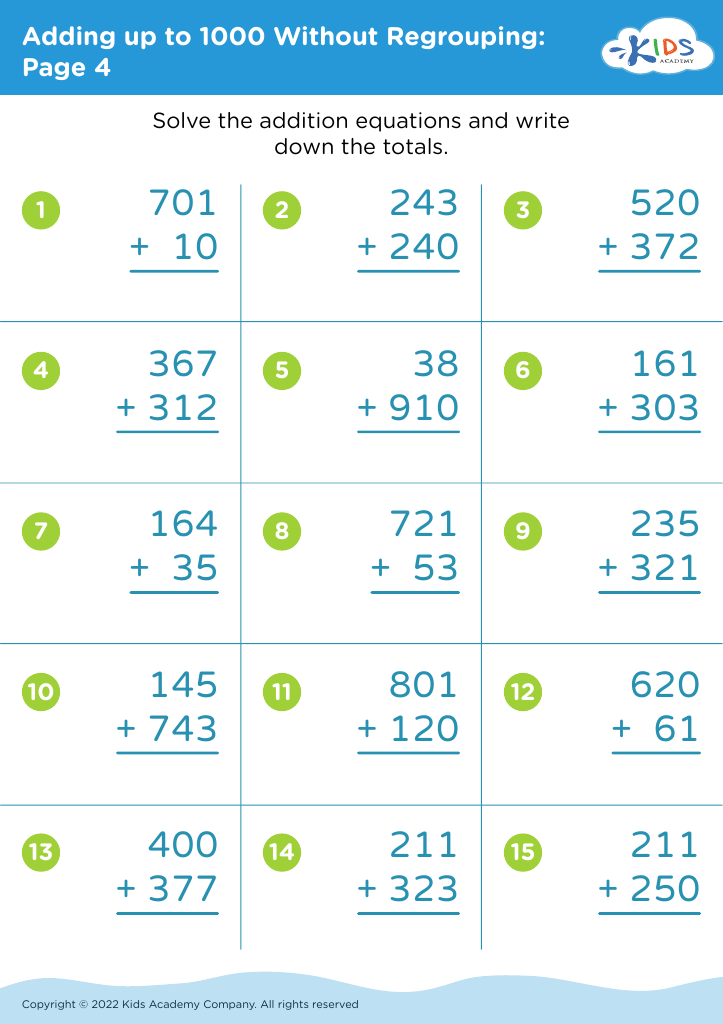








Vocabulary expansion is crucial in Grade 3, especially in subjects like addition and subtraction, because it deeply influences students' overall comprehension and problem-solving skills. When parents and teachers emphasize vocabulary, they help children better understand the specific terms and concepts essential for mastering mathematical operations. Words like "sum," "difference," "minuend," and "subtrahend" may seem complicated at first, but understanding these terms enables students to follow instructions more accurately and solve problems more effectively.
Knowing and using the correct vocabulary helps children articulate their thought processes. For example, by learning words like "regroup," students can explain step-by-step procedures in multi-digit addition or subtraction, deepening their understanding of these operations. This verbalization is key to developing mathematical reasoning and critical thinking skills—abilities that are foundational for future academic success in more complex mathematics and other subjects.
Moreover, a strong vocabulary bridges the gap between concrete and abstract thinking. As students transition from using physical manipulatives to more abstract representations of numbers and operations, precise language helps clarify new concepts. It also boosts confidence, enabling students to engage in discussions, ask more pointed questions about what they don't understand, and follow along more easily in class. Hence, focusing on vocabulary expansion in Grade 3 sets a solid groundwork for continued educational growth.