Filters

19 filtered results

Clear all filters
Favorites
With answer key
Interactive

19 filtered results

Difficulty Level

Grade


Enhance your child's math skills with our Grade 3 Counting Practice Addition Worksheets! Designed to build a strong foundation in addition, these worksheets help third-graders master counting and addition through engaging exercises. Perfect for classroom or home use, our expertly crafted worksheets foster a love for math with fun visuals and interactive activities. They focus on incremental difficulty levels, ensuring steady progress and boosting confidence. Download our worksheets to make learning addition enjoyable and effective! Empower your young learner to achieve math excellence with our comprehensive collection of Grade 3 Counting Practice Addition Worksheets at Kids Academy.
Check out this FREE Grade 3 Trial Lesson on Addition!

Early Migration

Favorites
With answer key
Interactive
  • Grade 3
  • Counting practice
  • Addition
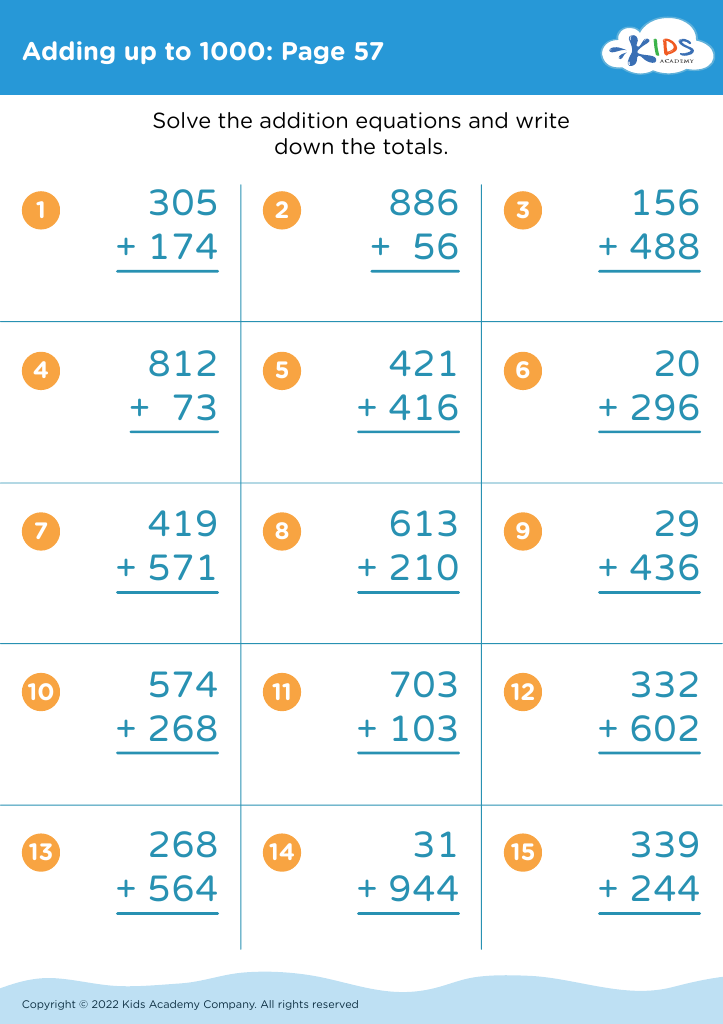
Adding up to 1000: Page 57

Adding up to 1000: Page 57

Adding up to 1000: Page 57
Worksheet
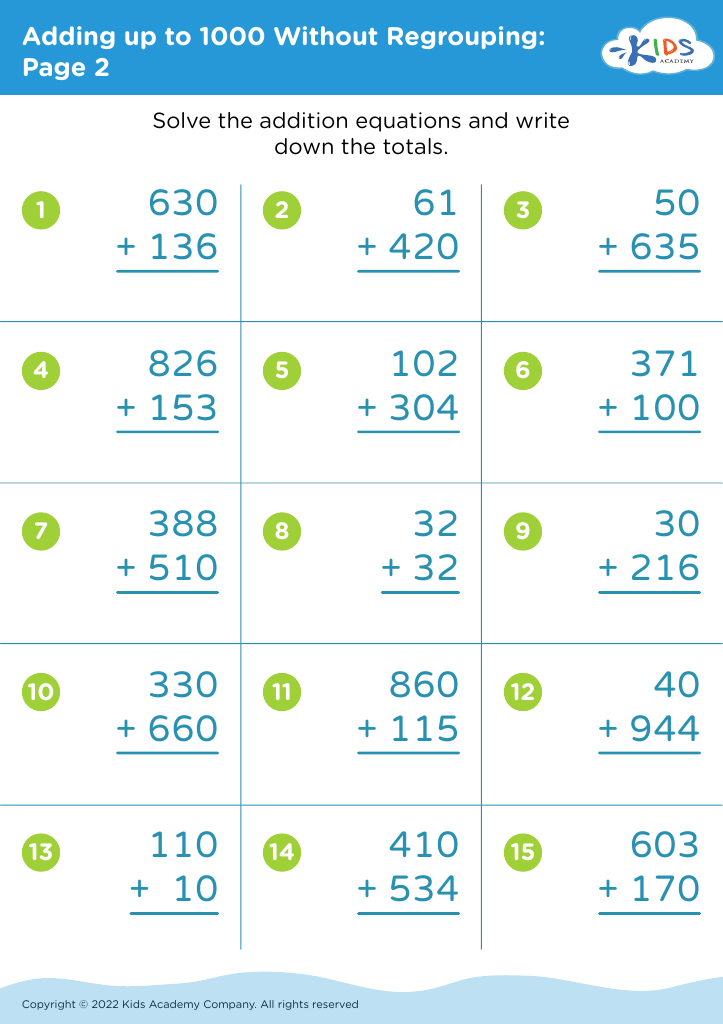
Adding up to 1000 Without Regrouping: Page 2
Worksheet
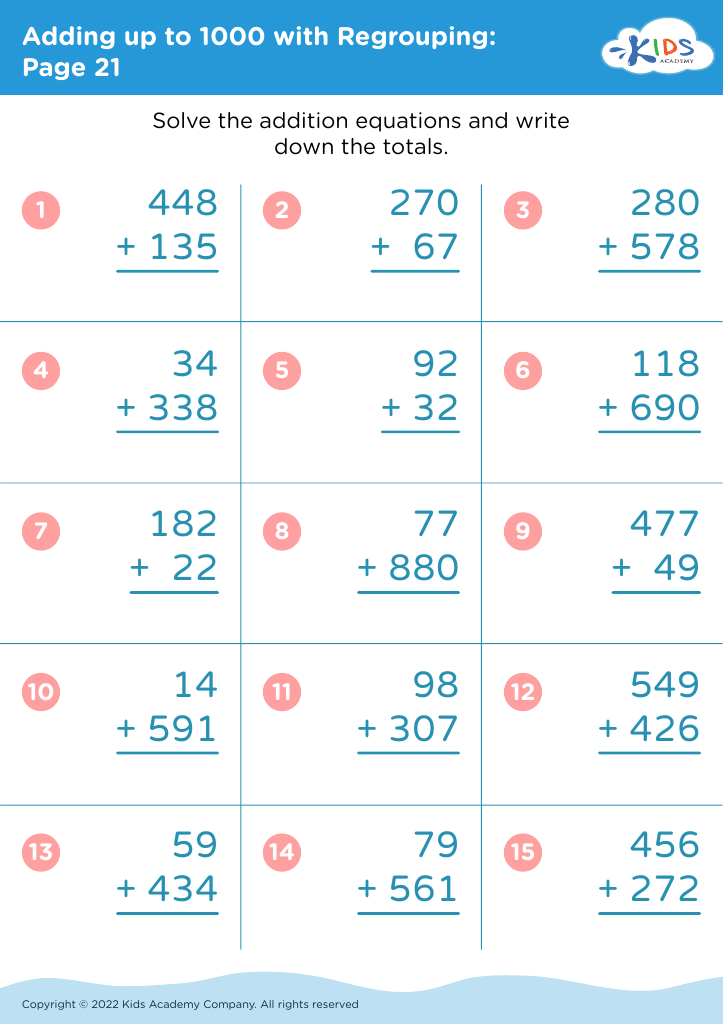
Adding up to 1000 with Regrouping: Page 21
Worksheet
Adding up to 1000 Without Regrouping: Page 1
Worksheet
Adding up to 1000: Page 21

Adding up to 1000: Page 21

Adding up to 1000: Page 21
Worksheet
Adding up to 1000: Page 32

Adding up to 1000: Page 32

Adding up to 1000: Page 32
Worksheet
Adding up to 1000: Page 37

Adding up to 1000: Page 37

Adding up to 1000: Page 37
Worksheet
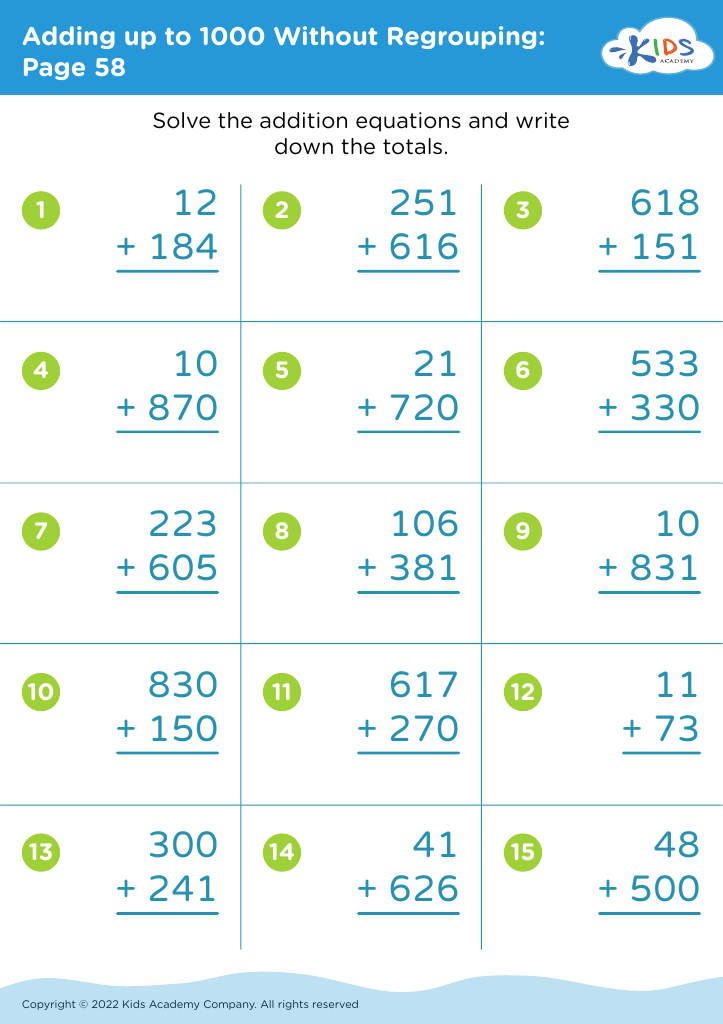
Adding up to 1000 Without Regrouping: Page 58
Worksheet
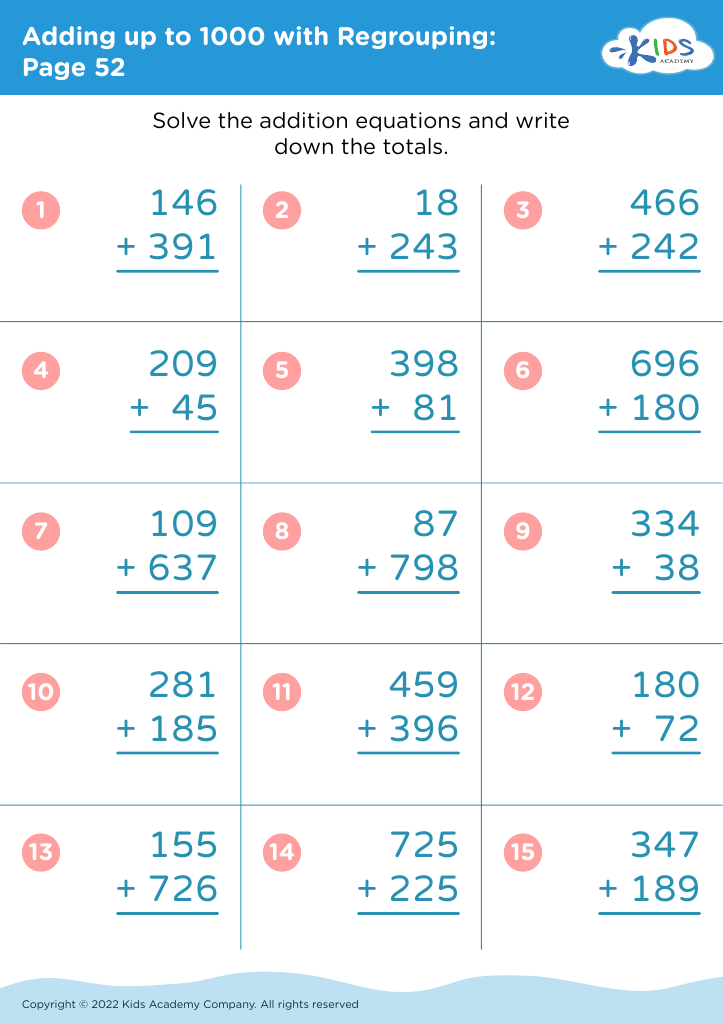
Adding up to 1000 with Regrouping: Page 52
Worksheet
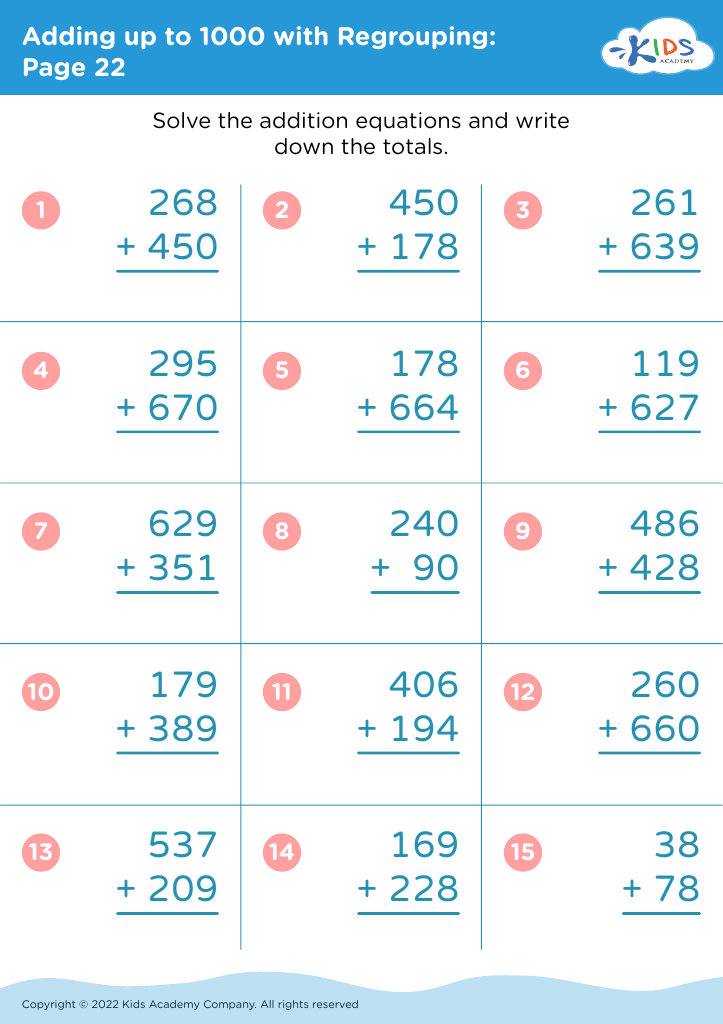
Adding up to 1000 with Regrouping: Page 22
Worksheet
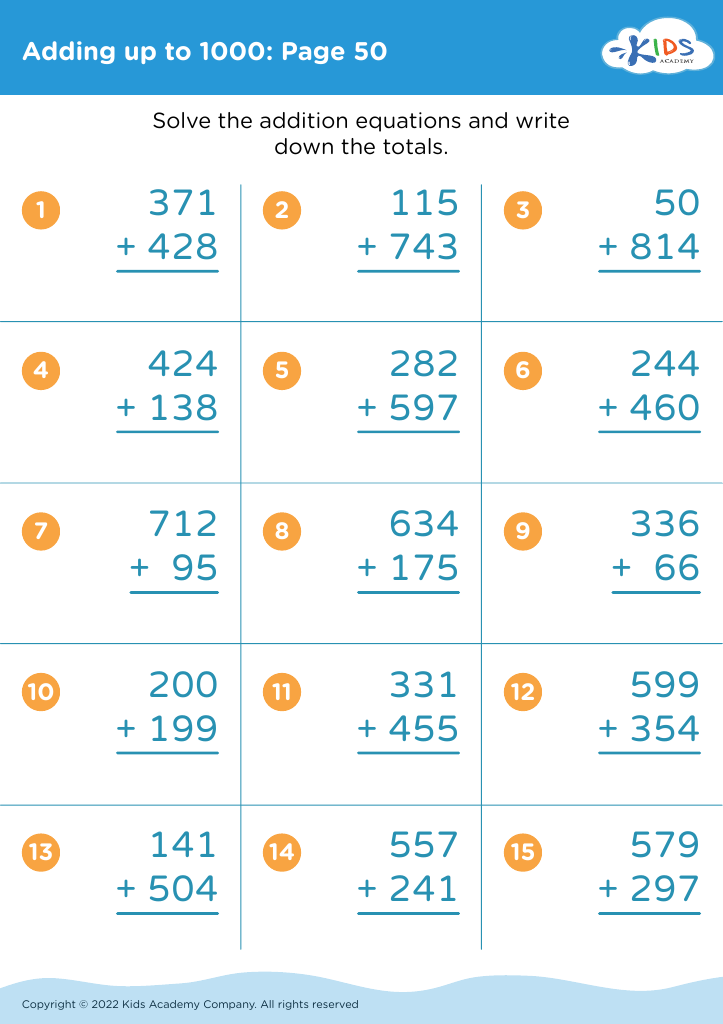
Adding up to 1000: Page 50

Adding up to 1000: Page 50

Adding up to 1000: Page 50
Worksheet
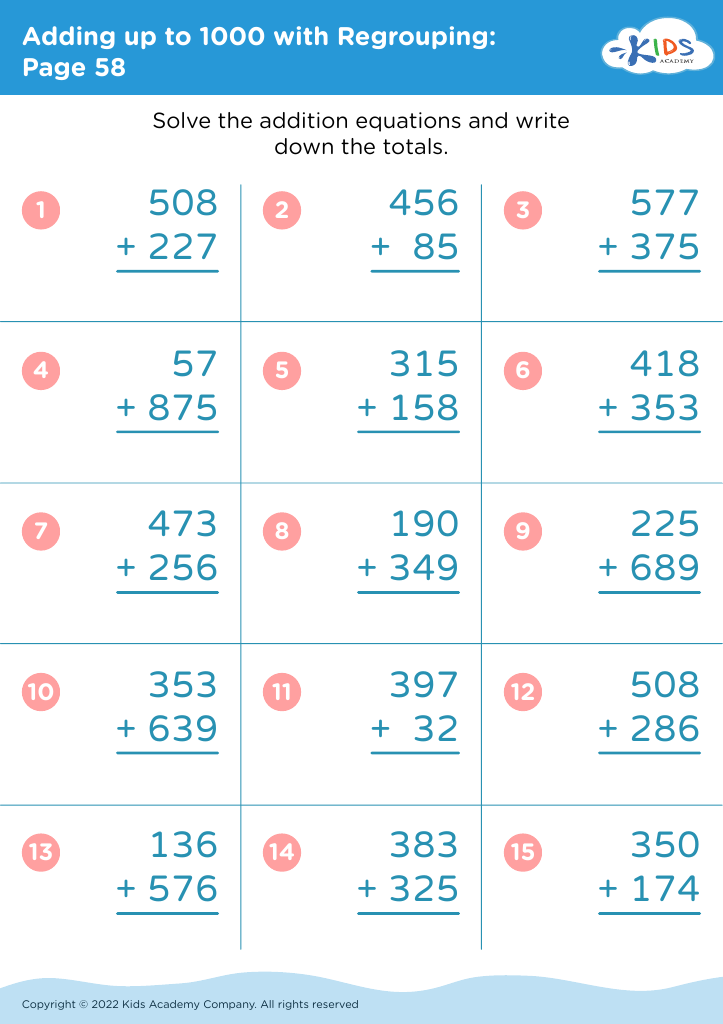
Adding up to 1000 with Regrouping: Page 58
Worksheet
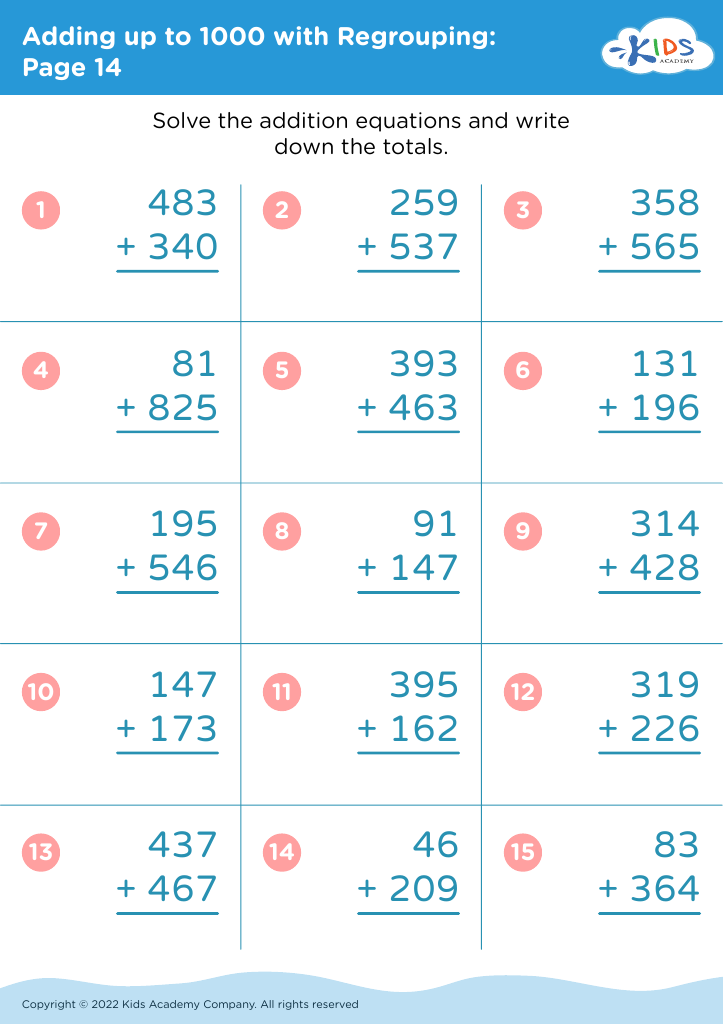
Adding up to 1000 with Regrouping: Page 14
Worksheet
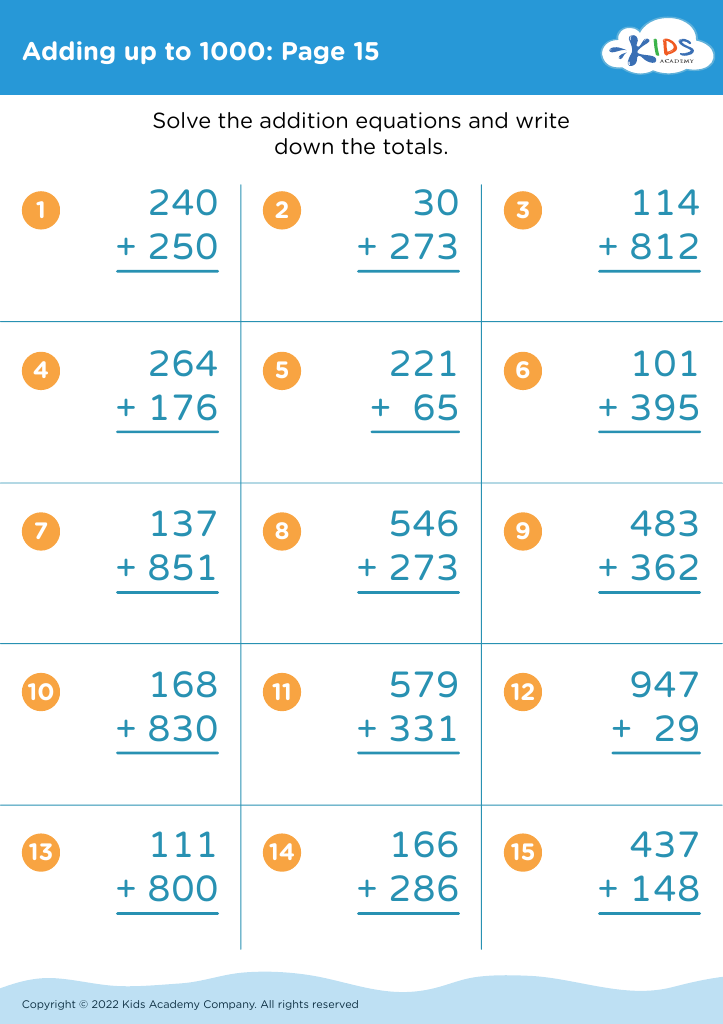
Adding up to 1000: Page 15

Adding up to 1000: Page 15

Adding up to 1000: Page 15
Worksheet
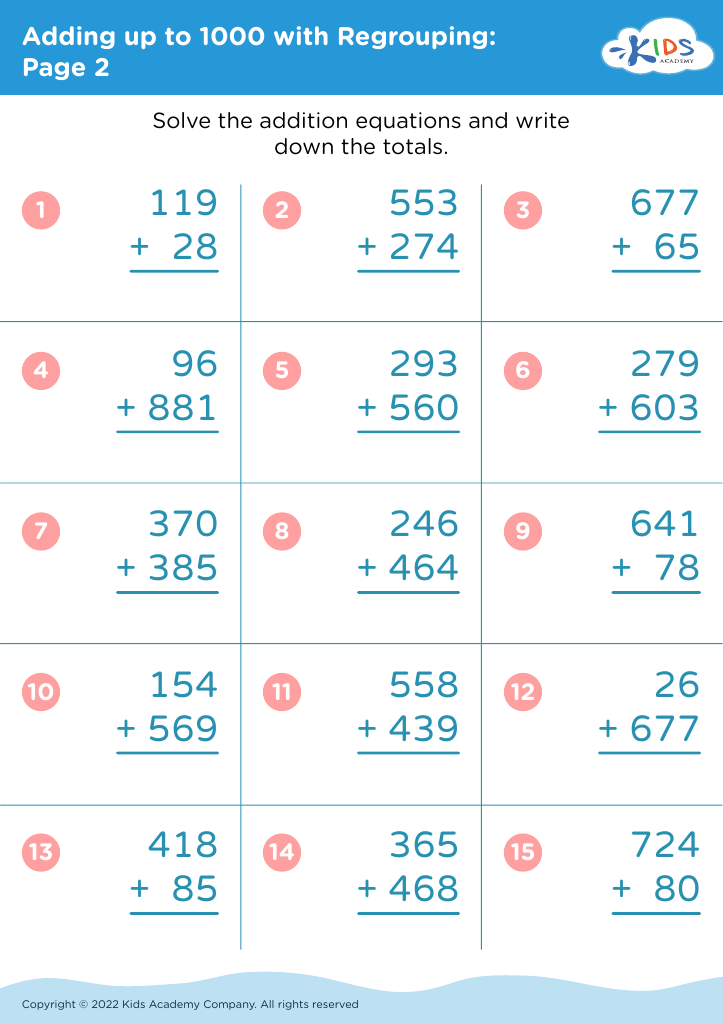
Adding up to 1000 with Regrouping: Page 2
Worksheet
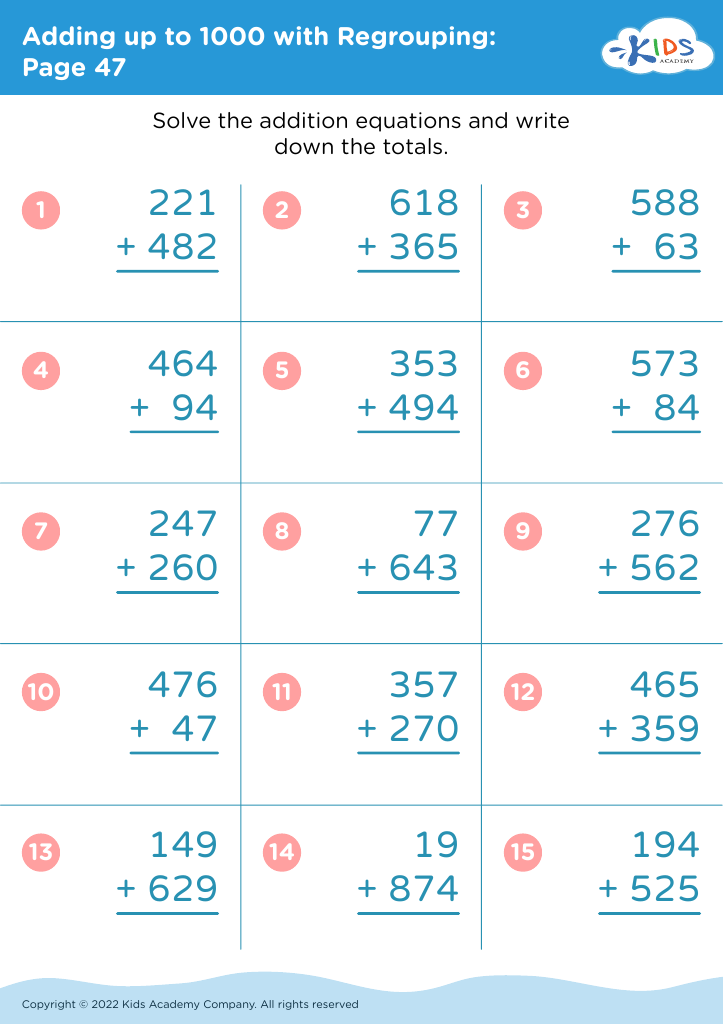
Adding up to 1000 with Regrouping: Page 47
Worksheet
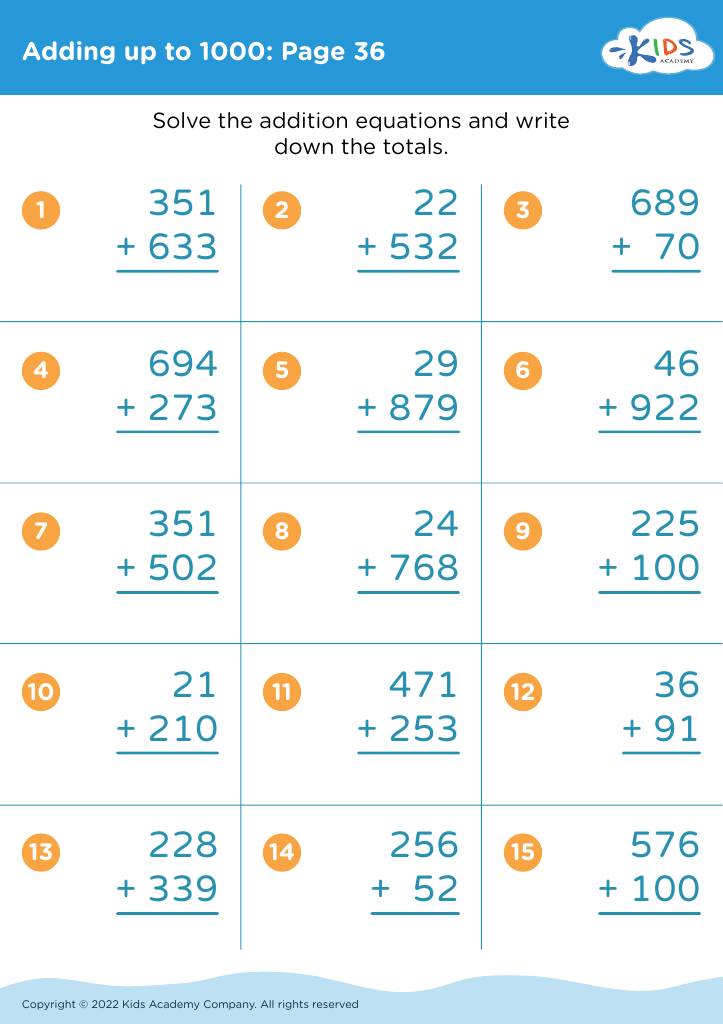
Adding up to 1000: Page 36

Adding up to 1000: Page 36

Adding up to 1000: Page 36
Worksheet
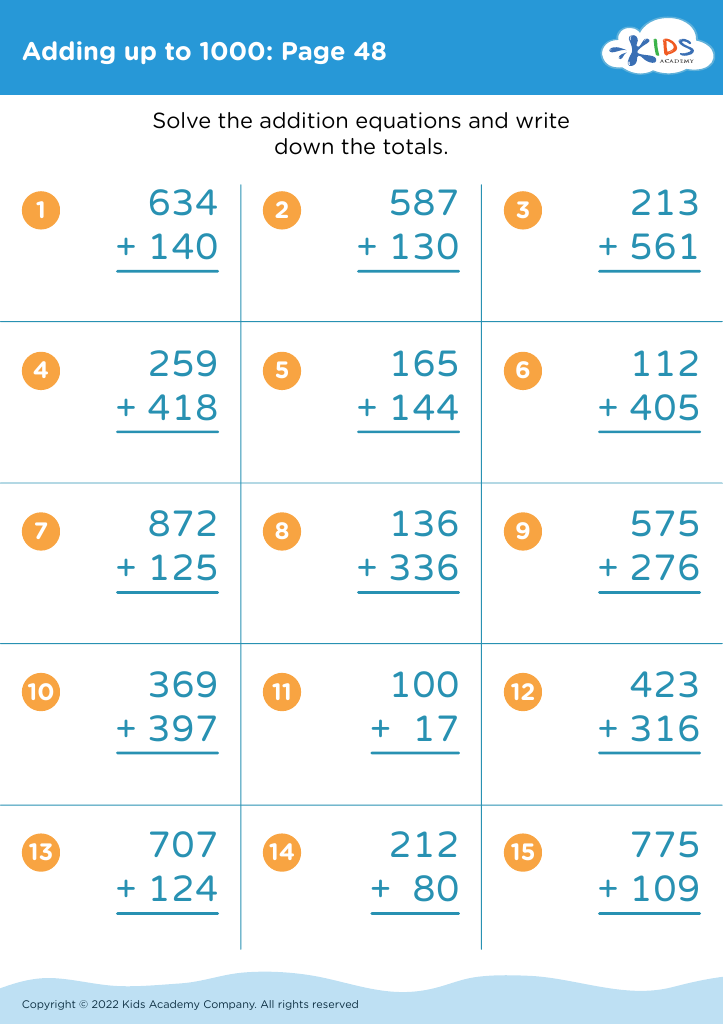
Adding up to 1000: Page 48

Adding up to 1000: Page 48

Adding up to 1000: Page 48
Worksheet
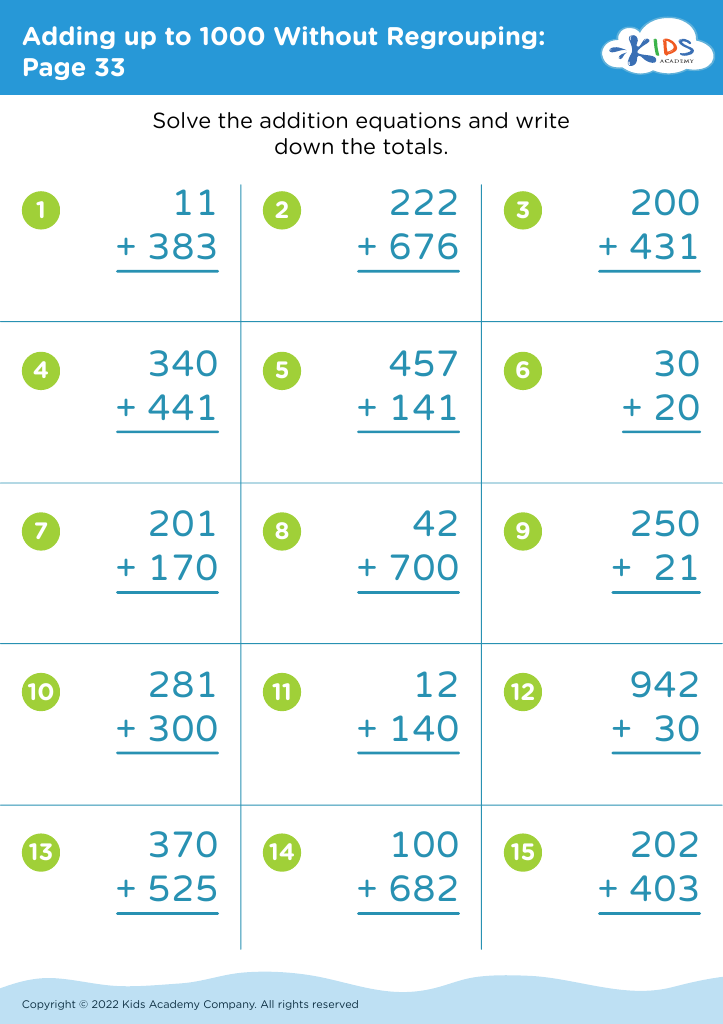
Adding up to 1000 Without Regrouping: Page 33
Worksheet


Counting and practicing addition in the third grade is a cornerstone of a child's mathematical development, and there's a good reason parents and teachers should prioritize this. At this age, children transition from basic arithmetic to more complex problem-solving, and ensuring a firm grasp of addition is fundamental to their future success.

Firstly, proficiency in addition provides the building blocks for more advanced mathematical concepts such as subtraction, multiplication, and division. Without a solid understanding of addition, these new concepts can become challenging, leading to gaps in knowledge that can impact academic progress.

Secondly, counting and addition cultivate critical thinking and problem-solving skills. They teach children how to break down larger problems into more manageable parts, fostering confidence and independent thinking. Engaging in regular addition practice helps children develop fluency and automaticity, making math less intimidating and more enjoyable.

Additionally, numeracy skills are essential for everyday life, from managing money to time management. Early and consistent practice ensures that children grow up equipped with the practical skills needed to navigate the adult world.

In essence, caring about counting and addition practice in third grade lays a strong foundation for mathematical proficiency, critical thinking capability, and essential life skills, setting the stage for future educational and personal success.