Math problem-solving Grade 3 Addition Worksheets
4 filtered results
-
From - To
Unlock your child's math potential with our engaging Grade 3 Addition Worksheets focused on problem-solving! Designed for young learners, these worksheets provide a wealth of opportunities to practice addition through real-life scenarios. Our carefully crafted problems help students build essential skills in critical thinking, reasoning, and mathematical applications. Perfect for enhancing classroom learning or providing extra practice at home, these resources cater to different learning styles. Download and print our user-friendly worksheets to inspire your child's confidence in math as they tackle engaging problems while mastering addition concepts. Let the math adventure begin today!
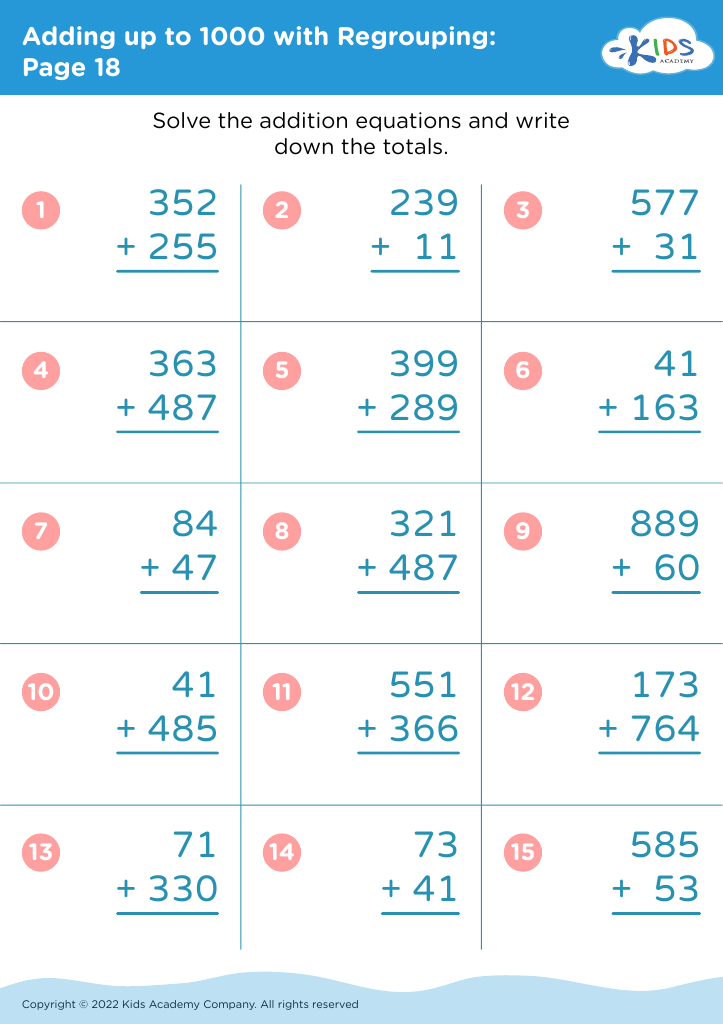
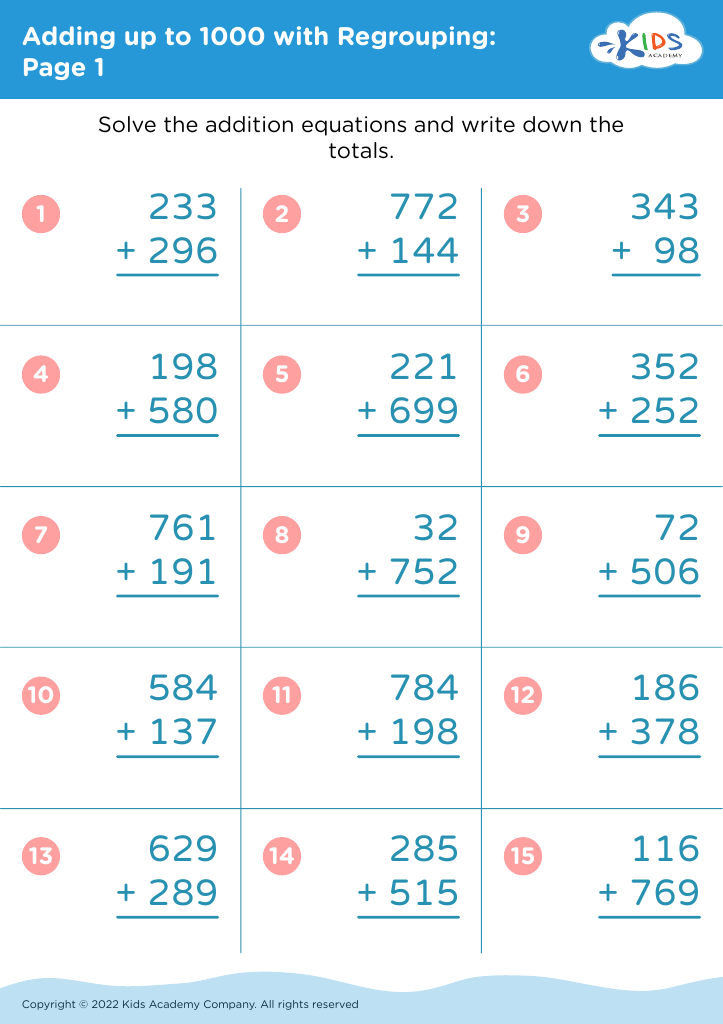
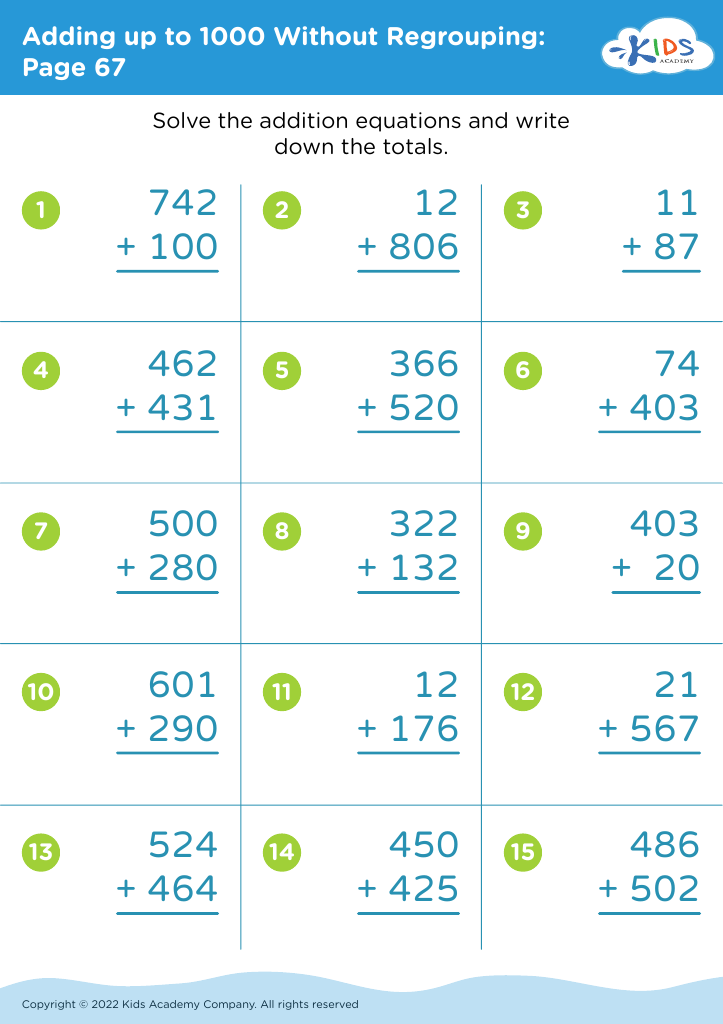
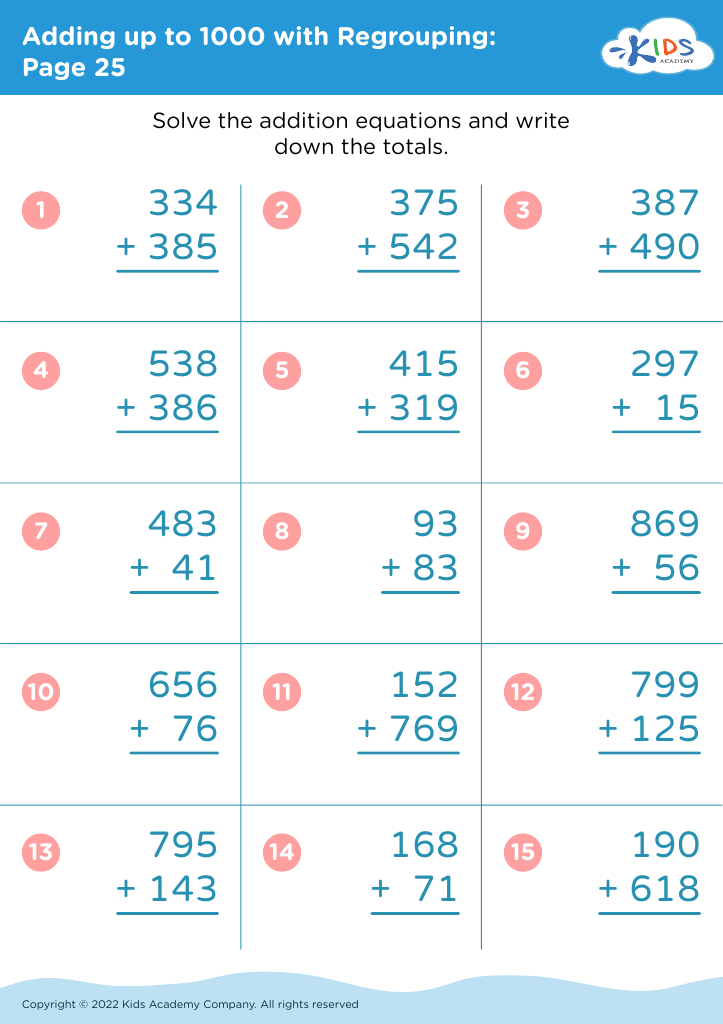








Parents and teachers should prioritize Grade 3 math problem-solving, particularly in addition, for several compelling reasons. Firstly, math serves as a foundational skill in a child's education, influencing their ability to grasp more complex concepts in later grades. By honing addition skills, children develop critical thinking and analytical skills that are applicable in various aspects of life.
Additionally, problem-solving encourages perseverance and resilience. When students encounter challenging math problems, they learn to approach difficulties with a positive mindset, thereby fostering a sense of achievement and confidence. Mastery of addition also aids in the development of financial literacy, as it equips children with the skills to manage money and make informed decisions about spending and saving.
Community engagement is another crucial aspect; when parents and teachers collaborate in supporting a child's learning, it strengthens their understanding and keeps them motivated. By actively involving in problem-solving, parents demonstrate the practical importance of math, reinforcing its relevance beyond the classroom. Ultimately, a strong grasp of addition lays the groundwork for students to tackle more advanced math topics, ensuring they are well-equipped to succeed academically and tackle real-life challenges confidently.