Reading analog clocks Grade 3 Addition Worksheets
3 filtered results
-
From - To
Unlock the fun of learning to read analog clocks with our Grade 3 Addition Worksheets! Designed specifically for third graders, these engaging worksheets blend the crucial life skill of telling time with essential addition practice. Our colorful and interactive activities help children improve their understanding of hours and minutes while reinforcing addition concepts. Perfect for in-class or at-home practice, these worksheets provide step-by-step guidance, ensuring kids grasp the mechanics of analog clocks with confidence. Enhance your child's mathematical journey with fun, educational, and effective resources tailored to develop their time-reading and addition skills simultaneously!
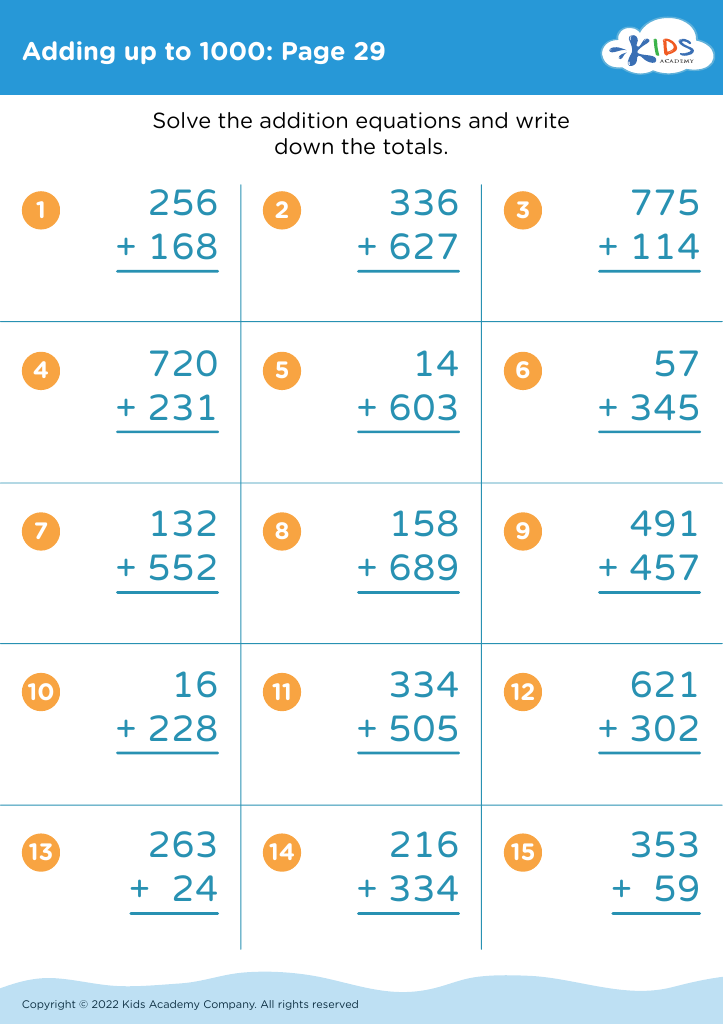
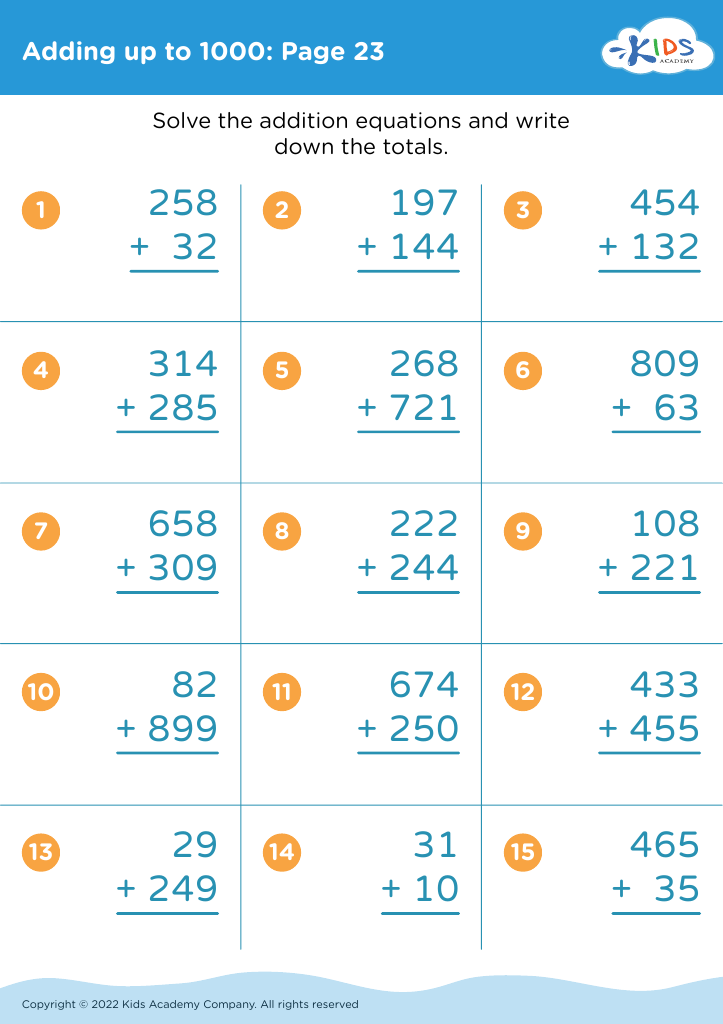
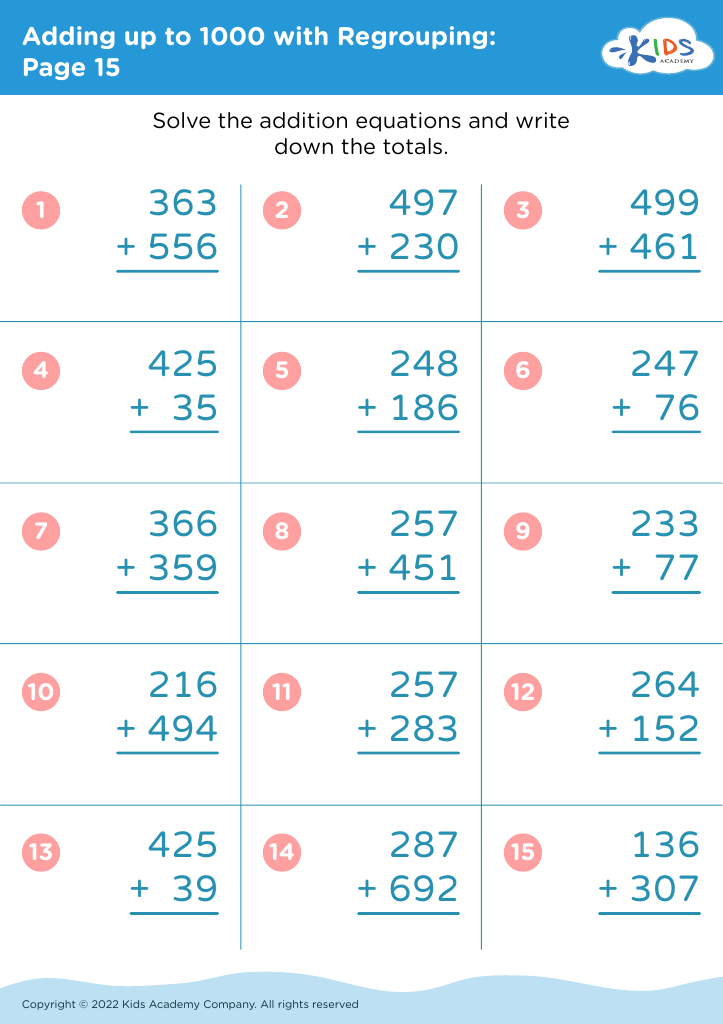








Parents and teachers should prioritize teaching children in Grade 3 how to read analog clocks and practice addition because these skills are fundamental for their academic and everyday lives. Learning to read analog clocks helps children develop a sense of time management and punctuality. It teaches them to understand the passage of time in a concrete, visual manner, which is crucial for organizing their daily schedules and developing routines.
Additionally, mastering addition is a core mathematical skill that is the foundation for more advanced math concepts, such as multiplication, division, and fractions. Practicing addition in Grade 3 helps students build the mental arithmetic skills necessary to tackle more complex problems with confidence. Moreover, competence in addition is essential for problem-solving and critical thinking in both academic subjects and real-world scenarios, such as budgeting, shopping, or cooking.
Integrating lessons on reading analog clocks with addition practice makes learning more engaging and relevant. For instance, students can calculate the duration between different times on an analog clock, fostering a blended skill set. As a result, children become better equipped for life’s practical demands, setting a strong groundwork for future education and personal development.