Understanding Sequences Grade 3 Addition Worksheets
6 filtered results
-
From - To
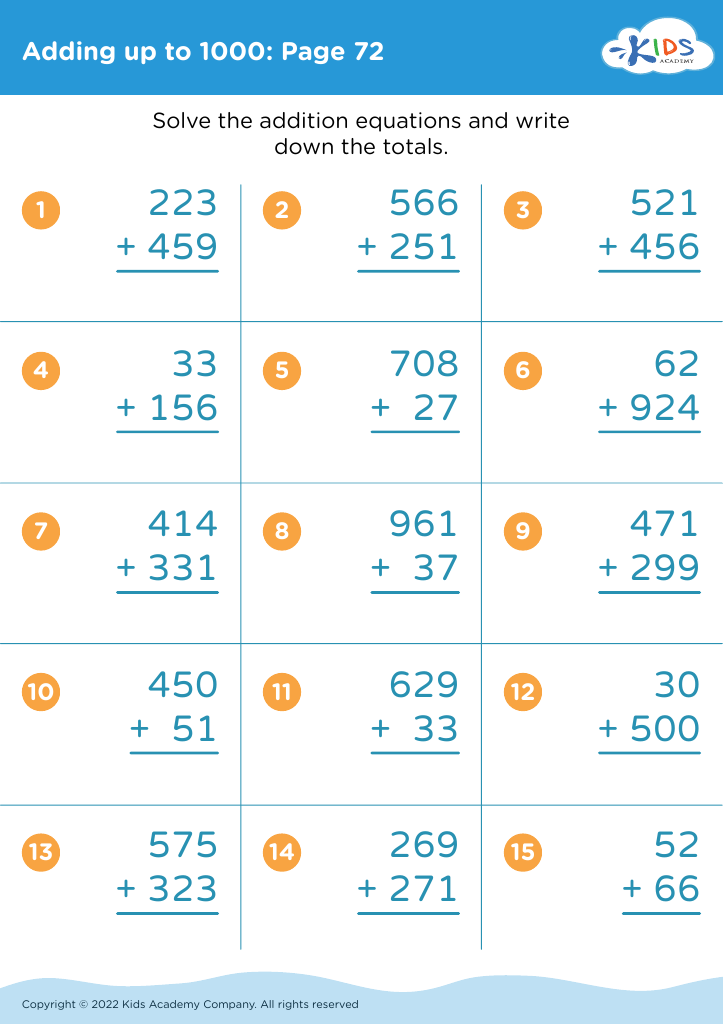
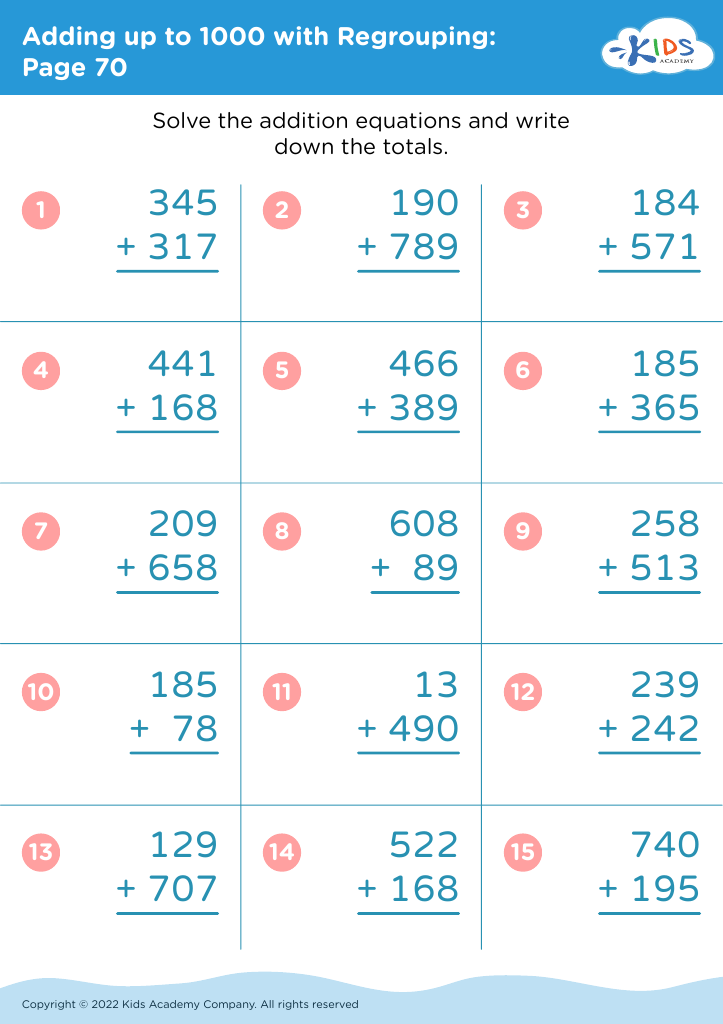
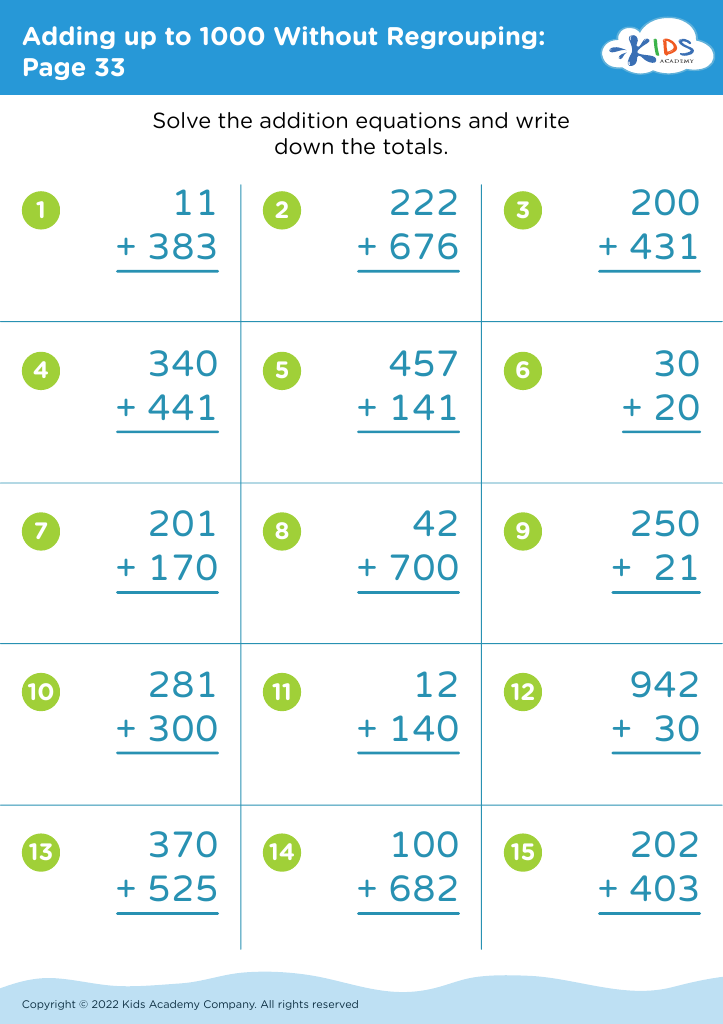
Explore our "Understanding Sequences Grade 3 Addition Worksheets" designed to enhance your child's math skills! These engaging worksheets help students grasp the concept of numerical sequences while practicing addition. Each worksheet features a variety of exercises, from filling in missing numbers in a sequence to simple addition problems that reinforce their understanding of patterns. Perfect for reinforcing classroom learning or enhancing home study, these resources foster a strong foundation in math as students learn to identify and work with sequences. Download these fun and educational worksheets to support your third grader's journey to becoming a confident math learner!
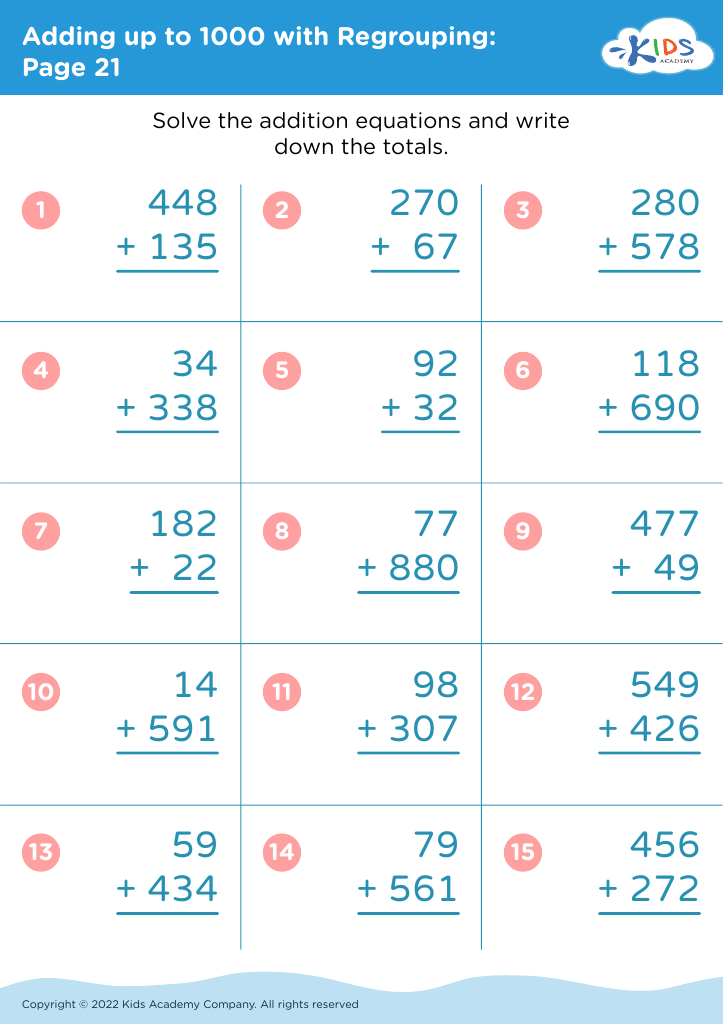
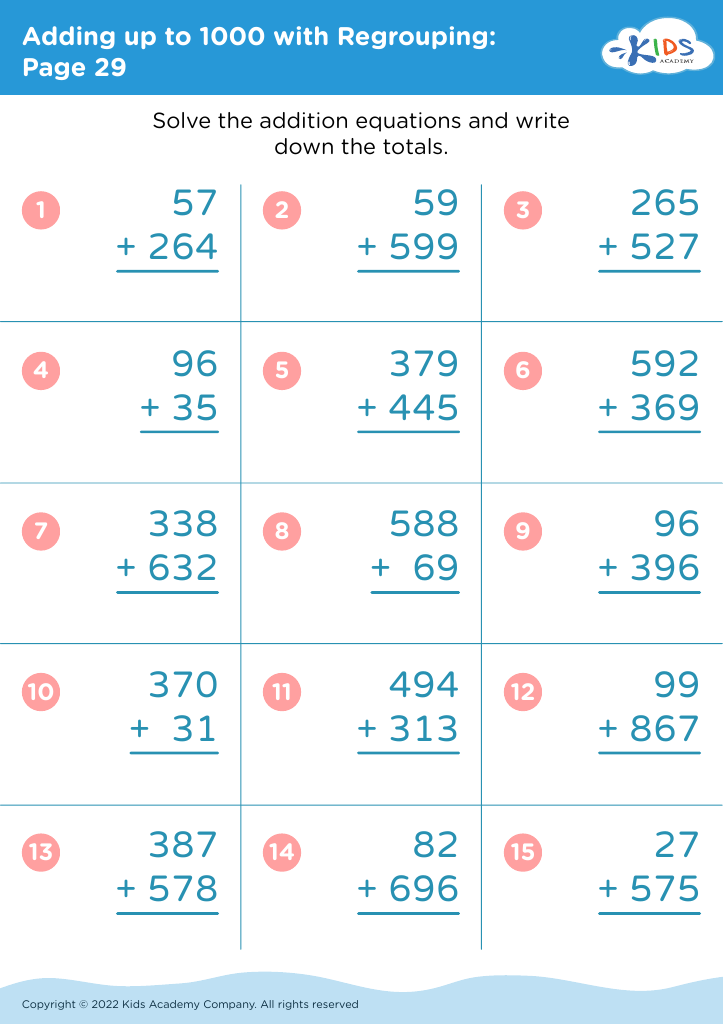
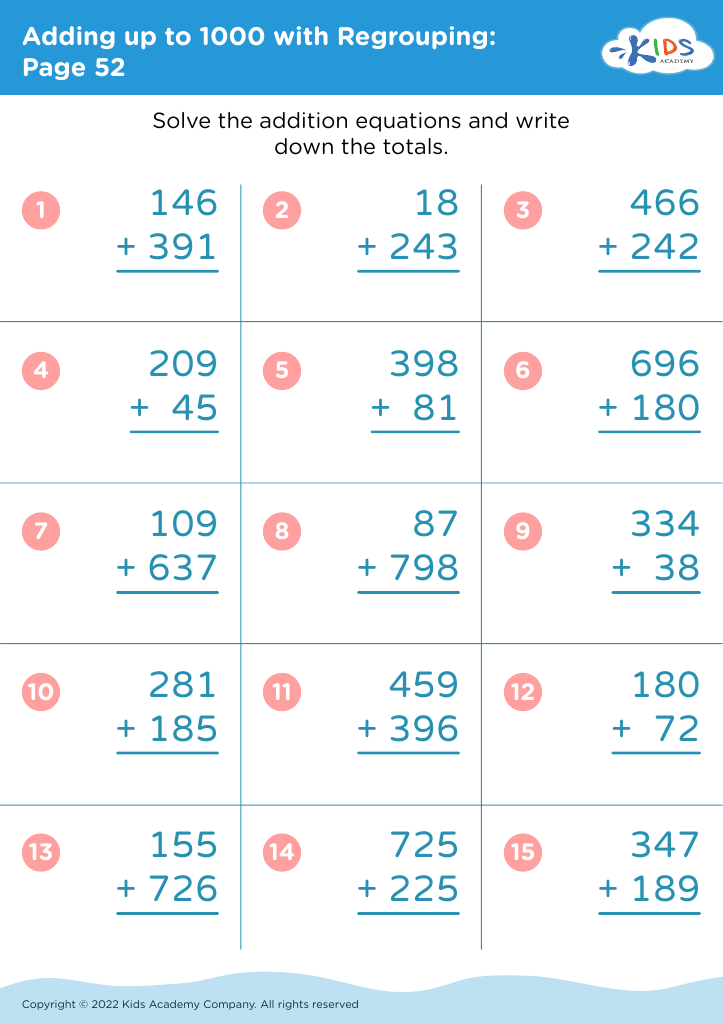







Understanding sequences, especially in Grade 3 addition, is crucial for students' mathematical development and cognitive skills. At this stage, children transition from concrete arithmetic skills to more abstract mathematical reasoning. Sequences such as "2, 4, 6, 8" illustrate patterns, helping children recognize relationships between numbers. This conceptual understanding lays the groundwork for deeper math concepts in later grades, including multiplication and division.
For parents and teachers, fostering a strong grasp of sequences encourages problem-solving and critical thinking. It empowers children to predict outcomes and understand operations more intuitively. Furthermore, understanding sequences supports the engagement of students, as recognizing patterns can make learning more enjoyable and relatable.
Additionally, when students comprehend sequences in mathematical contexts, they are likely to perform better in standardized testing and assessments, leading to greater confidence. It also enhances their overall academic performance, making them more versatile learners.
Involving parents in activities that promote the understanding of sequences not only reinforces concepts at home but also fosters a collaborative learning environment. This shared commitment between teachers and parents significantly influences students’ attitudes towards math, encouraging lifelong skills that extend beyond the classroom. Therefore, recognizing the importance of sequences in addition is essential for a child's holistic educational experience.