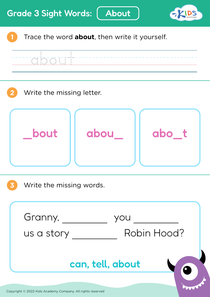
Understanding symmetry Grade 3 Addition Worksheets
5 filtered results
-
From - To
Introducing "Understanding Symmetry Grade 3 Addition Worksheets" from Kids Academy! These engaging resources help third graders master both symmetry and addition. Through fun exercises, students enhance their mathematical skills by recognizing symmetric shapes and solving addition problems. Each worksheet is designed to build a solid math foundation and stimulate critical thinking. Vibrant illustrations and intuitive layouts keep young learners captivated while they practice. Perfect for classroom use or at-home learning, these worksheets support grade-level standards and boost confidence in mathematics. Unlock the world of symmetry and addition with Kids Academy's expertly crafted worksheets today!
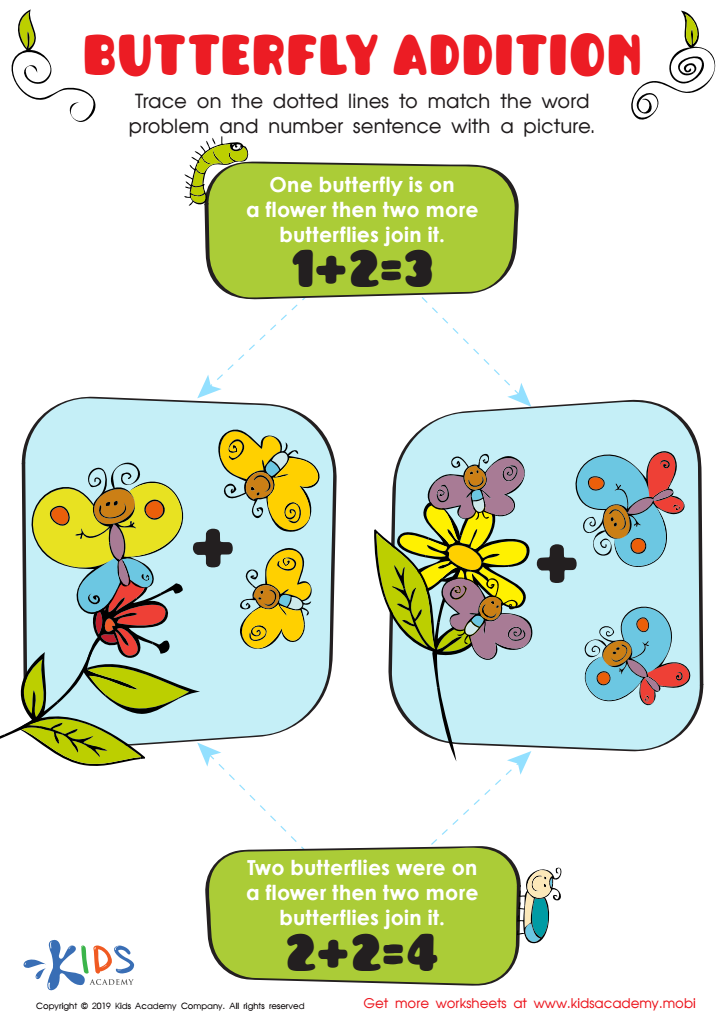
Butterfly Addition Worksheet
 Assign to My Students
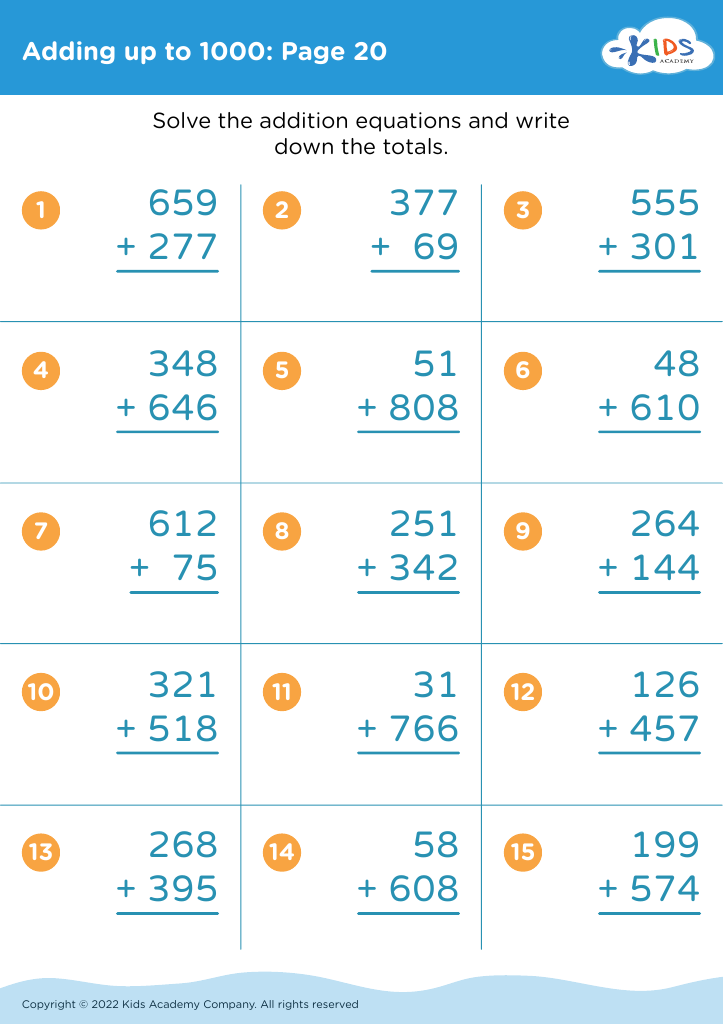
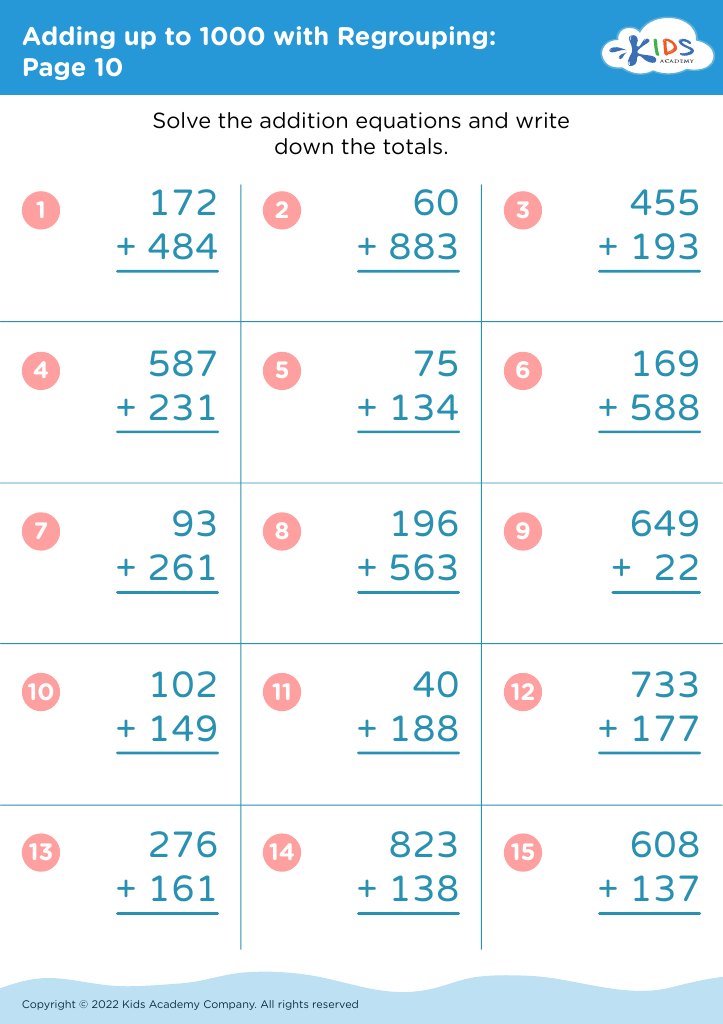








Understanding symmetry and Grade 3 addition are fundamental concepts that significantly impact a child's cognitive development, mathematical reasoning, and problem-solving skills. Parents and teachers should care about these topics for several key reasons:
Firstly, symmetry is a principal element in both math and the natural world. It helps children develop spatial awareness and visual processing skills. Recognizing symmetrical patterns lays the groundwork for geometry and fosters skills in identifying shapes and structures. This cognitive ability translates to better understanding spatial relationships and can enhance skills in art, architecture, and even engineering in the future.
Secondly, mastering Grade 3 addition serves as a cornerstone for all subsequent mathematical learning. At this stage, children consolidate their fluency with basic arithmetic operations, which are essential for tackling more complex problems later. Proficiency in addition aids in grasping other mathematical operations like subtraction, multiplication, and division. It also boosts children’s confidence and enjoyment of math, fostering a positive attitude towards learning.
When children see connected concepts like symmetry and addition, it enriches their analytical abilities, enabling them to recognize patterns, solve puzzles, and develop logical reasoning. Overall, equipping children with these skills prepares them not just for higher academic success but for everyday problem-solving, fostering enduring intellectual curiosity and competency.