Visual Learning Grade 3 Addition Worksheets
3 filtered results
-
From - To
Boost your third grader's math skills with our engaging Visual Learning Grade 3 Addition Worksheets! Designed to enhance understanding through visual aids, these worksheets use innovative techniques to help students grasp addition concepts easily. Each activity is crafted to promote critical thinking, improve problem-solving abilities, and strengthen mathematical fluency. With colorful graphics, intuitive layouts, and various difficulty levels, these worksheets cater to diverse learning styles, making math fun and approachable. Ideal for homeschoolers and classroom settings, they're a perfect tool for reinforcing essential skills and building confidence in young learners. Explore our collection today and watch your child's math abilities soar!
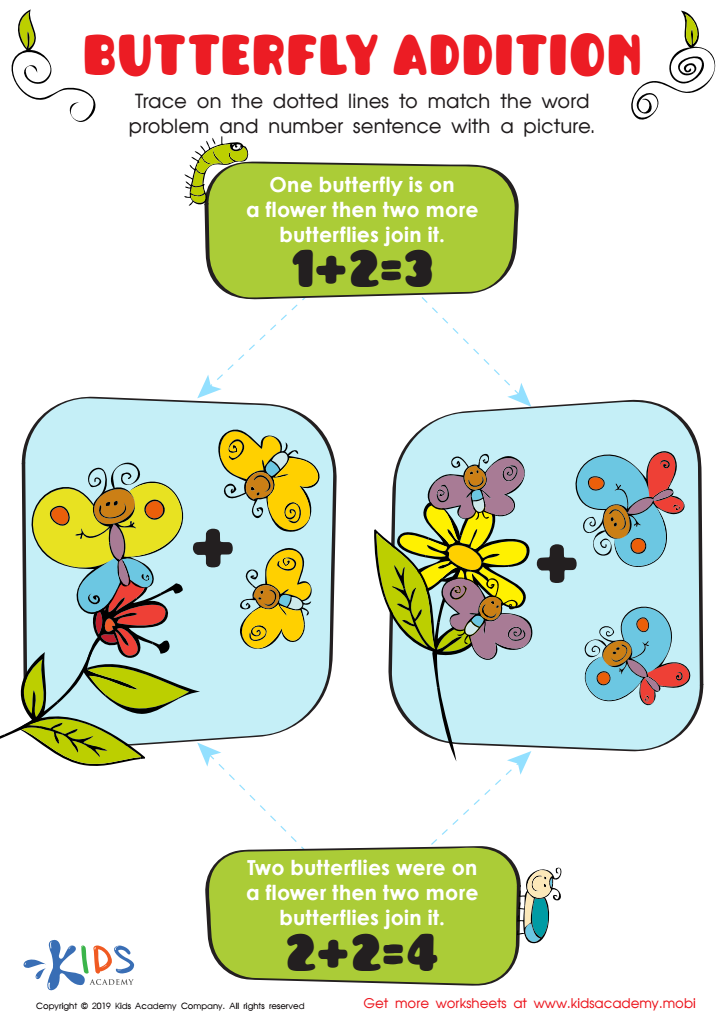
Butterfly Addition Worksheet
 Assign to My Students
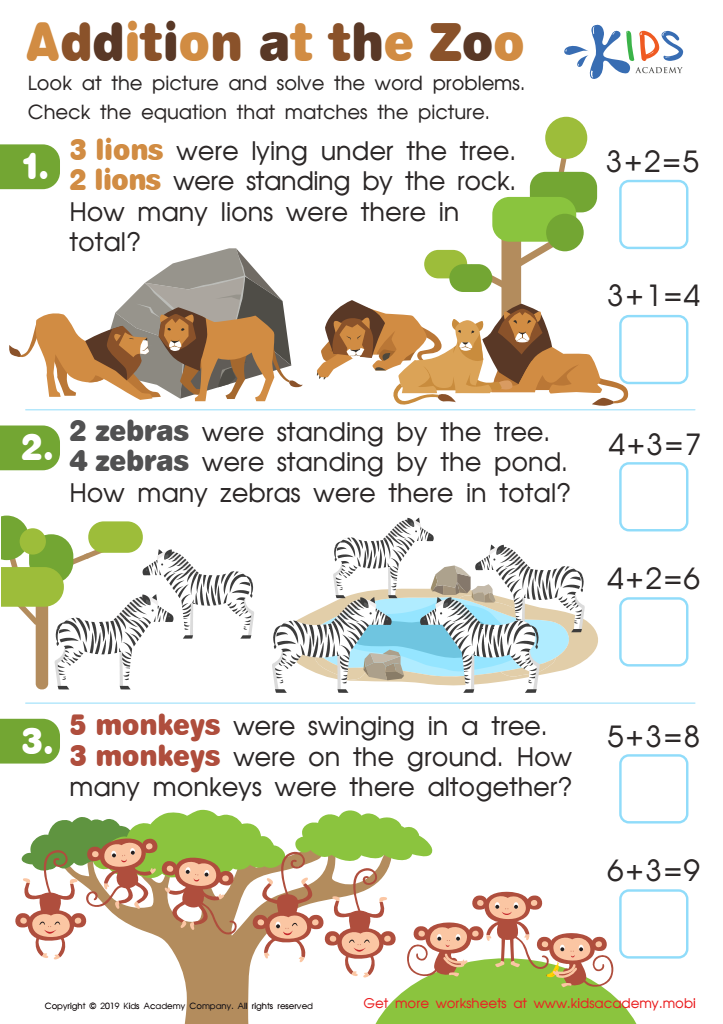
Addition at the Zoo Worksheet








Visual learning is a crucial educational approach for Grade 3 students, particularly in understanding addition concepts. At this stage, children are transitioning from concrete operational understanding to more abstract mathematical thinking. By incorporating visual learning strategies, such as number lines, manipulatives, and visual diagrams, teachers and parents can enhance the learning experience for young learners.
Visual tools help students grasp addition concepts more effectively by providing concrete representations of abstract ideas. Children often engage better with visuals, as they can see and manipulate numbers, making the process of addition more tangible. This heightened engagement leads to a deeper understanding of mathematical relationships and fosters critical thinking skills.
Additionally, visual learning caters to various learning styles. Some students may excel in auditory or kinesthetic areas, while others are visual learners. By using visual methods, educators and parents ensure inclusivity in their teaching techniques, enabling every child to find success in mastering addition.
Encouraging visual learning also bolsters confidence in math, creating a positive attitude toward future mathematical challenges. Overall, visual learning strategies not only make the learning process enjoyable but also lay a robust foundation for ongoing success in mathematics.