Understanding times tables Grade 3 Advanced Times Tables up to 12 Worksheets
3 filtered results
-
From - To
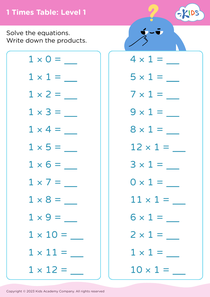
Unlock the power of multiplication with our "Understanding Times Tables: Grade 3 Advanced Times Tables up to 12 Worksheets." Designed for third graders, these engaging worksheets elevate students' math skills by providing a comprehensive approach to mastering times tables. Each worksheet is thoughtfully crafted to enhance understanding through visual aids, interactive challenges, and problem-solving exercises. Perfect for in-class practice or at-home learning, these resources foster confidence and fluency in multiplication. Equip your child with the tools they need to excel in math, build a solid foundation for future learning, and make understanding times tables an enjoyable experience! Explore our collection today!
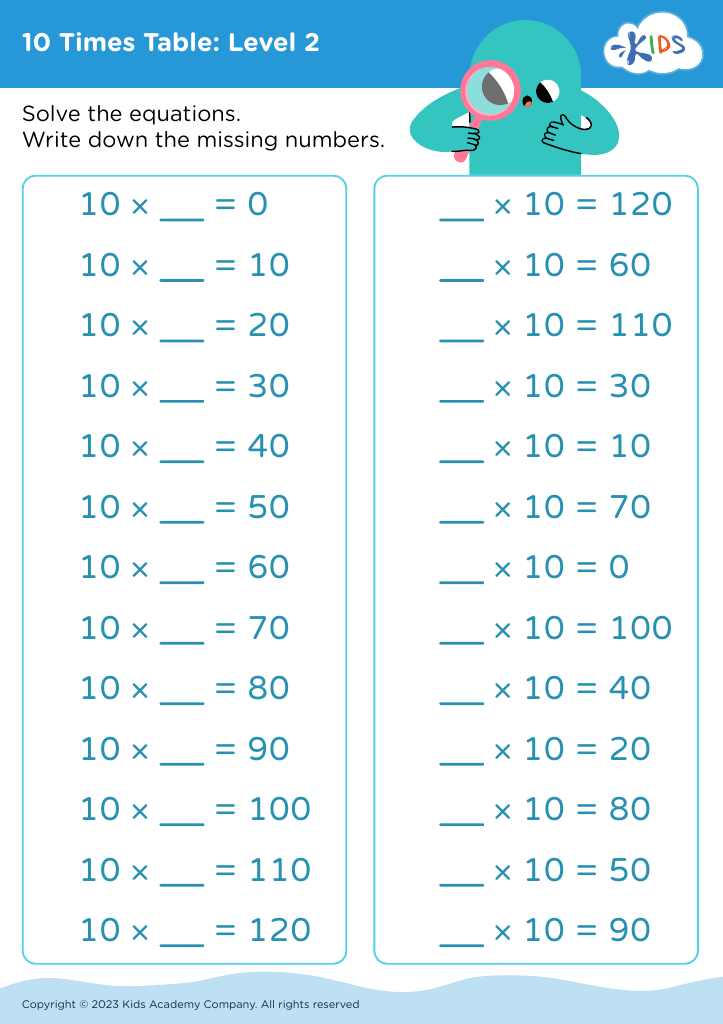
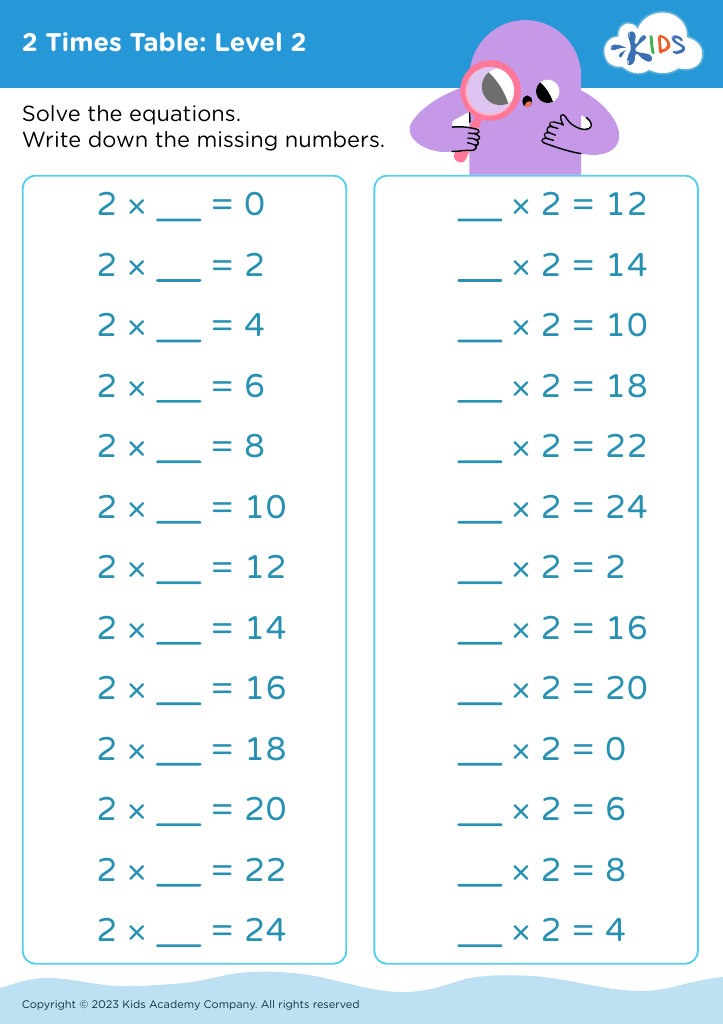
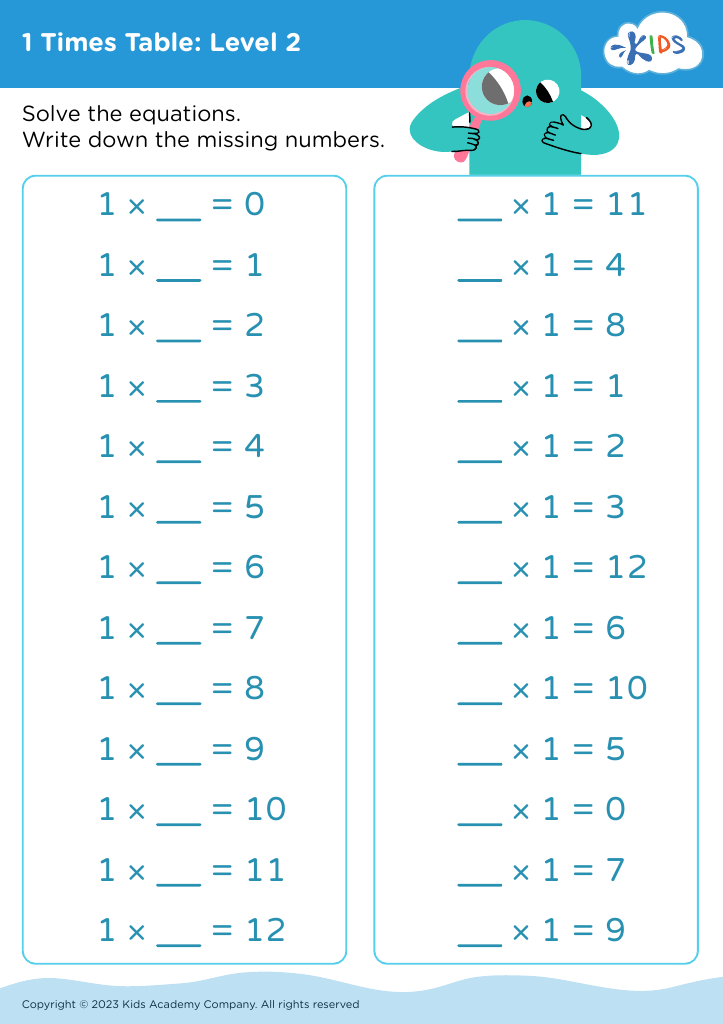



Understanding times tables, especially up to 12, is crucial for Grade 3 students, as it forms the foundation for a child’s mathematical development. Mastery of multiplication tables enhances a student's ability to solve problems quickly and accurately, thereby boosting their confidence. These skills are not only essential in the classroom but are also applied in real-life situations, such as calculating total costs while shopping or determining distances.
For parents and teachers, fostering this understanding is important because it supports the learning of more complex mathematical concepts in later grades. Proficiency in multiplication is tied to various advanced topics in math, including long division, fractions, and geometry. Additionally, early mastery helps in reducing math anxiety, making students more enthusiastic about the subject.
Moreover, reinforcing multiplication through interactive and engaging methods—like games or visuals—can make learning enjoyable and effective. By investing time in teaching these essential skills, parents and teachers are equipping students with lifelong skills that foster logical thinking and problem-solving abilities. This foundational competence not only enhances academic performance but also encourages a positive attitude toward mathematics, setting the stage for future educational success.