Mental math skills Grade 3 Times Tables Worksheets
4 filtered results
-
From - To
Boost your Grade 3 student's math abilities with our engaging Times Tables Worksheets designed to enhance mental math skills! Our resources focus on crucial multiplication facts, helping children develop fluency and confidence in math. Each worksheet features a variety of exercises that encourage quick thinking and problem-solving, essential for mastering multiplication. Perfectly aligned with Grade 3 curriculum standards, these worksheets provide a fun and interactive way for students to practice multiplication at their own pace. Give your child the tools they need to excel in math with our thoughtfully designed Times Tables Worksheets, fostering a strong foundation for future mathematical challenges.
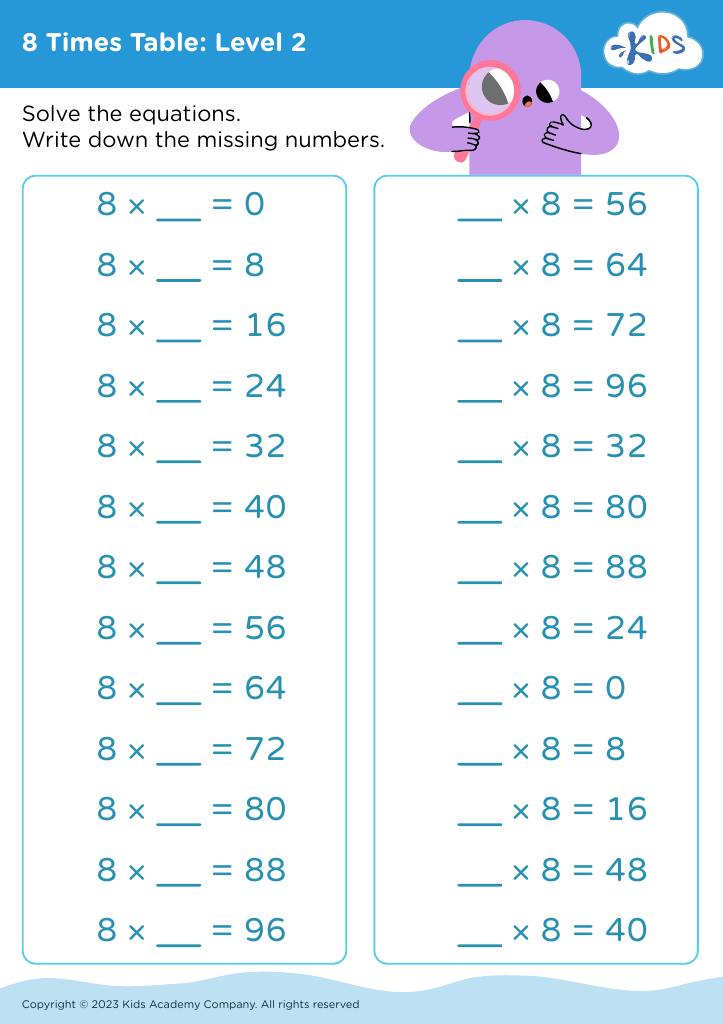
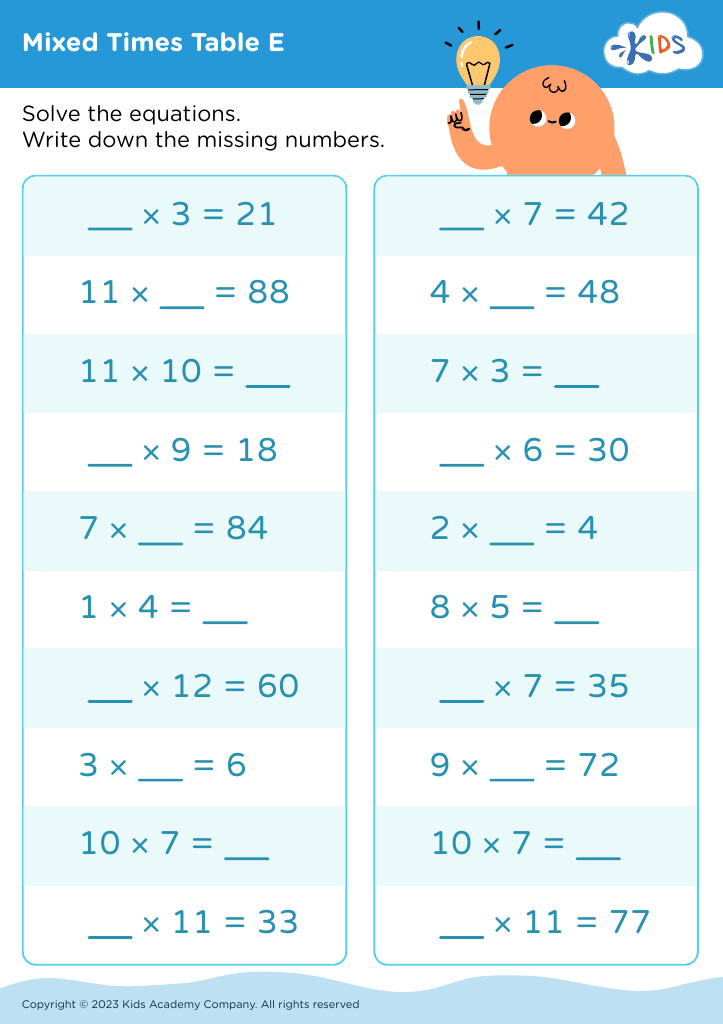
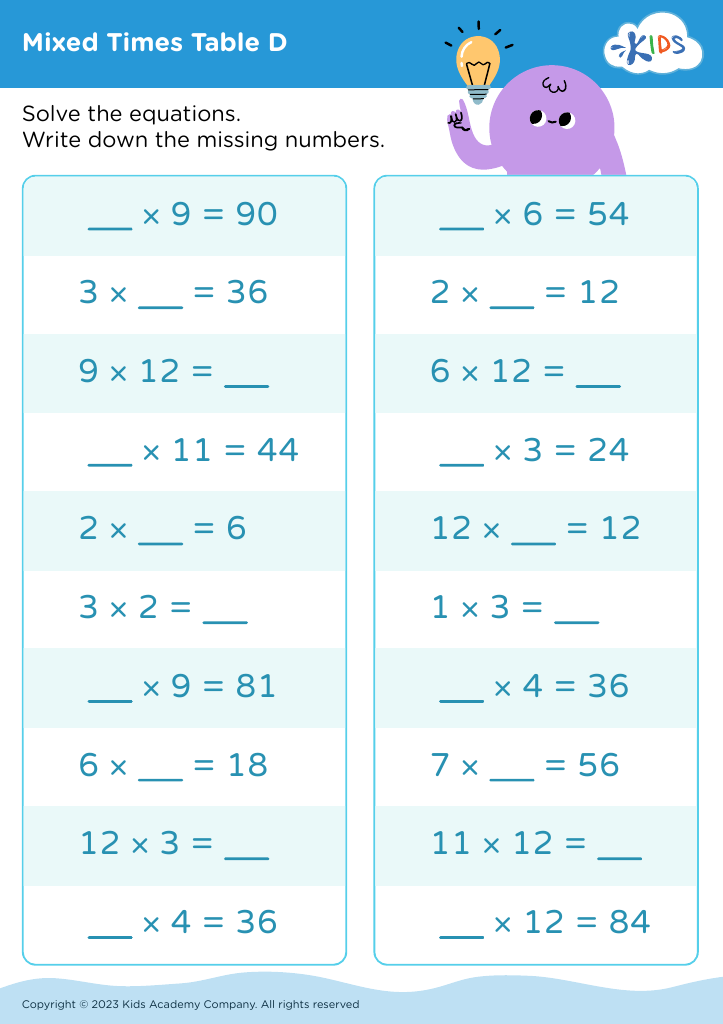
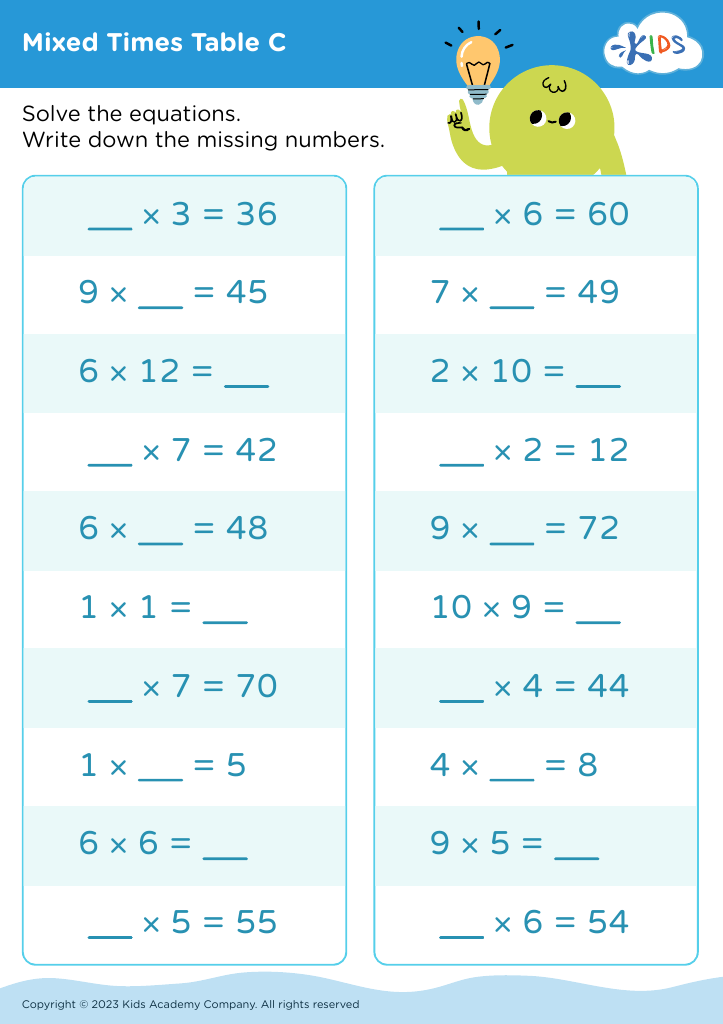




Parents and teachers should prioritize mental math skills, particularly in Grade 3 times tables, for several reasons. Firstly, mastering multiplication tables lays a crucial foundation for more complex mathematical concepts. Students who can quickly recall basic facts boost their confidence and reduce anxiety when tackling advanced problems in higher grades.
Moreover, mental math enhances critical thinking and problem-solving skills. It encourages students to see relationships between numbers, helping them develop a deeper understanding of mathematical concepts. This fluency fosters independence, enabling students to tackle homework and standardized tests more effectively.
Additionally, strong mental math skills can enhance a child’s overall academic performance as math proficiency is essential across subjects, including science and economics. By encouraging regular practice at home or in the classroom, parents and educators reinforce positive math habits and promote a growth mindset.
Lastly, in an age increasingly reliant on technology, nurturing basic math skills prepares students to navigate daily life, ensuring they can make informed decisions regarding finances, measurements, and problem-solving in day-to-day situations. Fostering these skills establishes a strong academic and practical foundation necessary for lifelong learning and success.