Recognizing shapes Grade 3 Building Vocabulary Worksheets
3 filtered results
Difficulty Level
Grade
Age
-
From - To
Subject
Activity
Standards
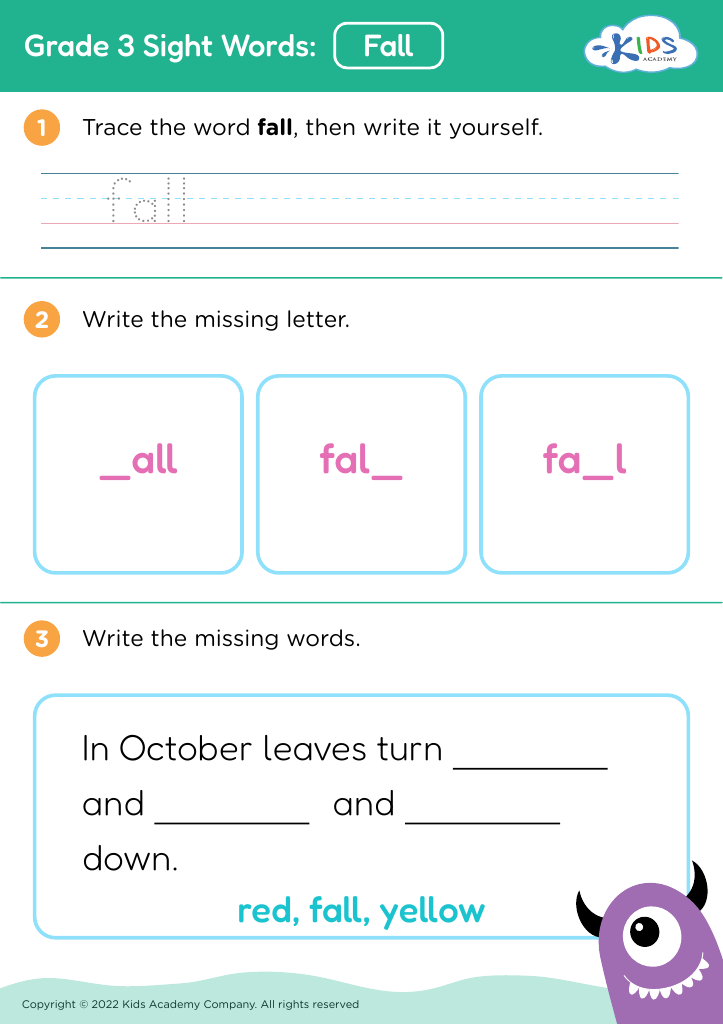
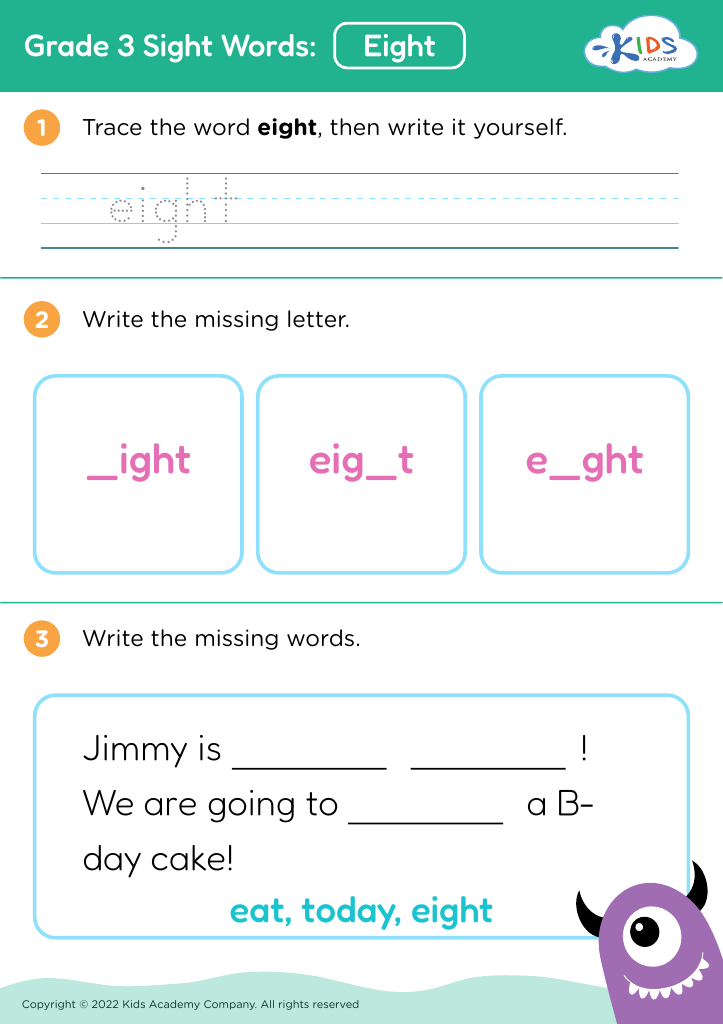
Explore our engaging "Recognizing Shapes" worksheets, designed specifically for Grade 3 students to enhance their vocabulary and understanding of geometric concepts. These comprehensive resources help young learners identify, describe, and differentiate various shapes such as circles, triangles, squares, and more. Through interactive activities and visual aids, students will build essential terminology and improve their spatial awareness. Ideal for independent work or classroom use, these worksheets support curriculum standards and make abstract concepts tangible and fun. Foster a love for shapes while boosting language skills with our carefully crafted materials, ensuring your third graders are well-equipped for future learning adventures!
Favorites
With answer key
Interactive
Join Kids Academy for Free
Who is primarily going to use this learning content?








Recognizing shapes is a fundamental skill that serves as a building block for essential mathematical concepts in grade 3. Parents and teachers should prioritize this skill because it lays the groundwork for more advanced topics, such as geometry, spatial reasoning, and even algebra later on. Understanding shapes fosters critical thinking; children learn to observe, compare, and categorize objects in their environment. This cognitive development enhances their problem-solving abilities and encourages an analytical mindset.
Building vocabulary around shapes also strengthens language skills. Describing shapes—like triangles, rectangles, and circles—enables children to articulate their thoughts clearly, enhancing communication skills that are vital both in academic settings and daily life. Furthermore, recognizing and categorizing shapes can support students in understanding measurement concepts, symmetry, and patterns, which are crucial for success in higher mathematics.
Additionally, engaging in shape-related activities promotes collaboration and social skills among peers. As they discuss and explore shapes, children learn the importance of teamwork and sharing perspectives. Overall, recognizing shapes and expanding vocabulary around them is crucial for cognitive growth, problem-solving, and communication, making it an area worth investing time and resources in for parents and teachers alike.