Critical Thinking Grade 3 Governance and Civics Worksheets
4 filtered results
-
From - To
Enhance your Grade 3 students' understanding of governance and civics with our engaging Critical Thinking worksheets! Designed to foster analytical skills, these worksheets challenge young learners to think deeply about community structures, citizenship, and the importance of civic responsibilities. Through fun exercises and thought-provoking questions, students will practice problem-solving, develop reasoning skills, and connect key concepts to their everyday lives. Suitable for classroom use or at home, our worksheets provide an interactive way to explore essential civics topics while encouraging independent thought. Equip your students with the critical thinking skills they need to become informed and active members of their communities!
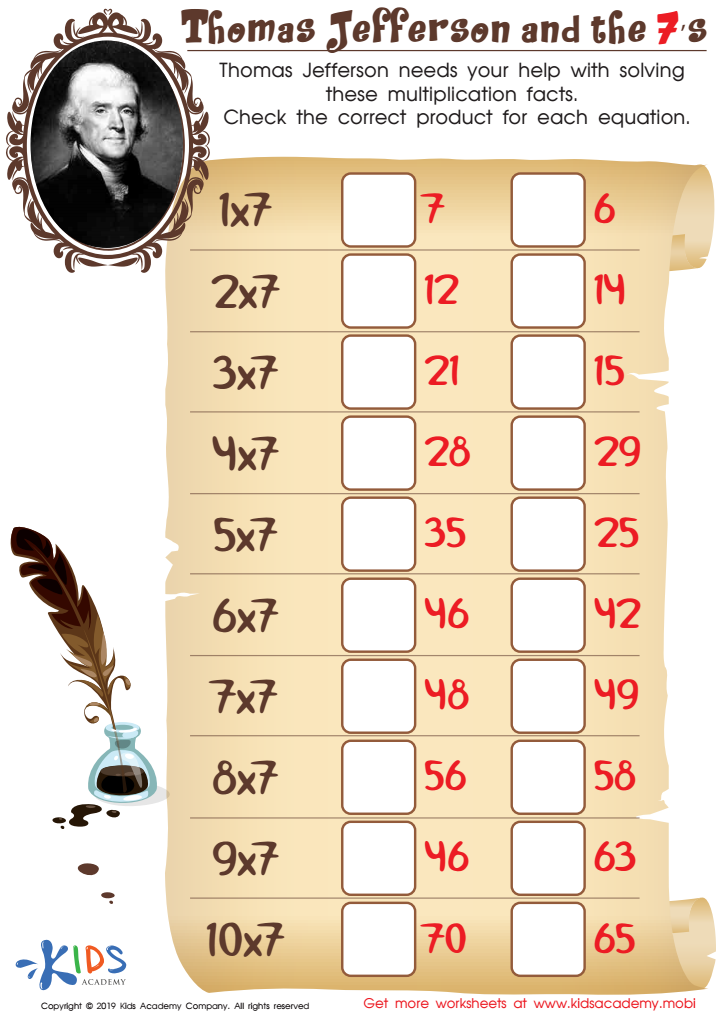
Thomas Jefferson and the 7’s Worksheet
 Assign to My Students
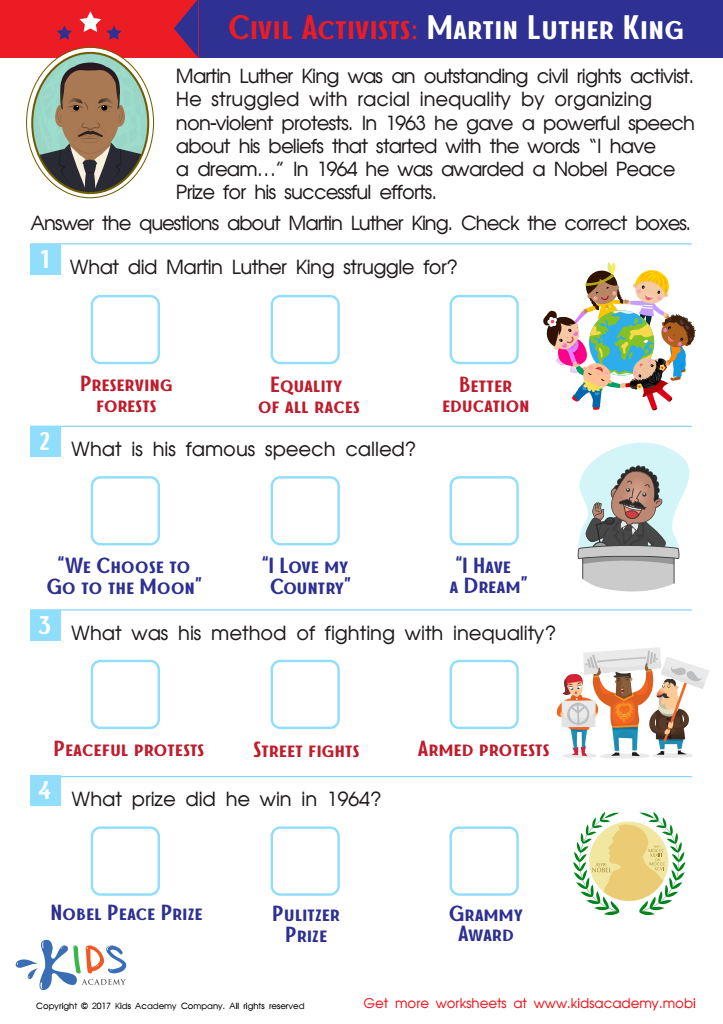
Martin Luther King Worksheet
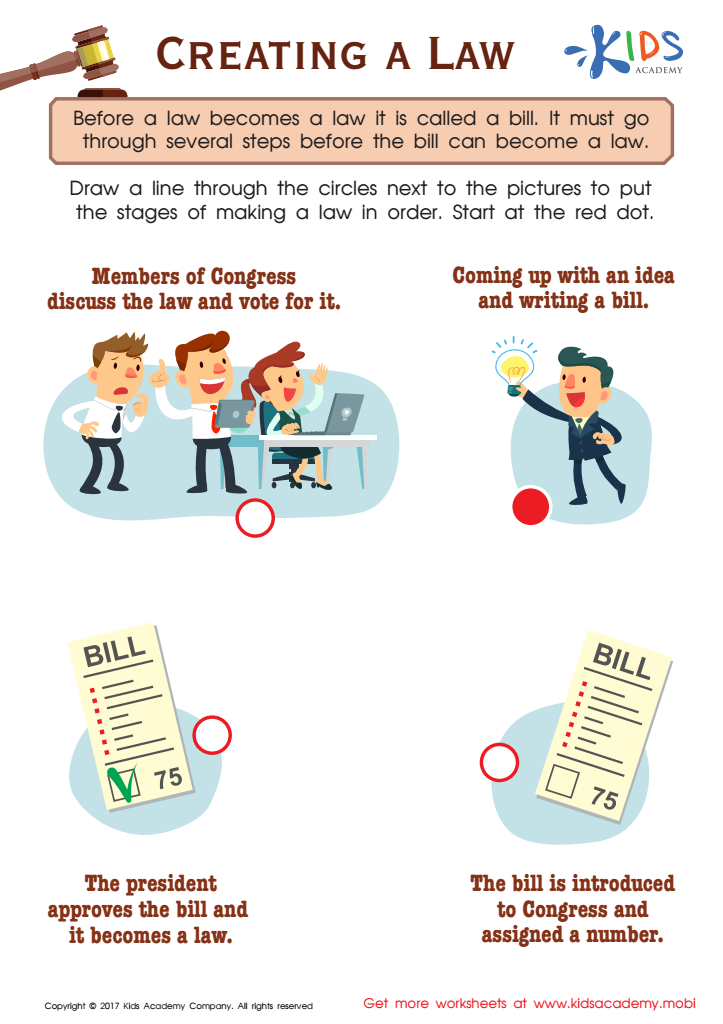
Creating a Law Worksheet
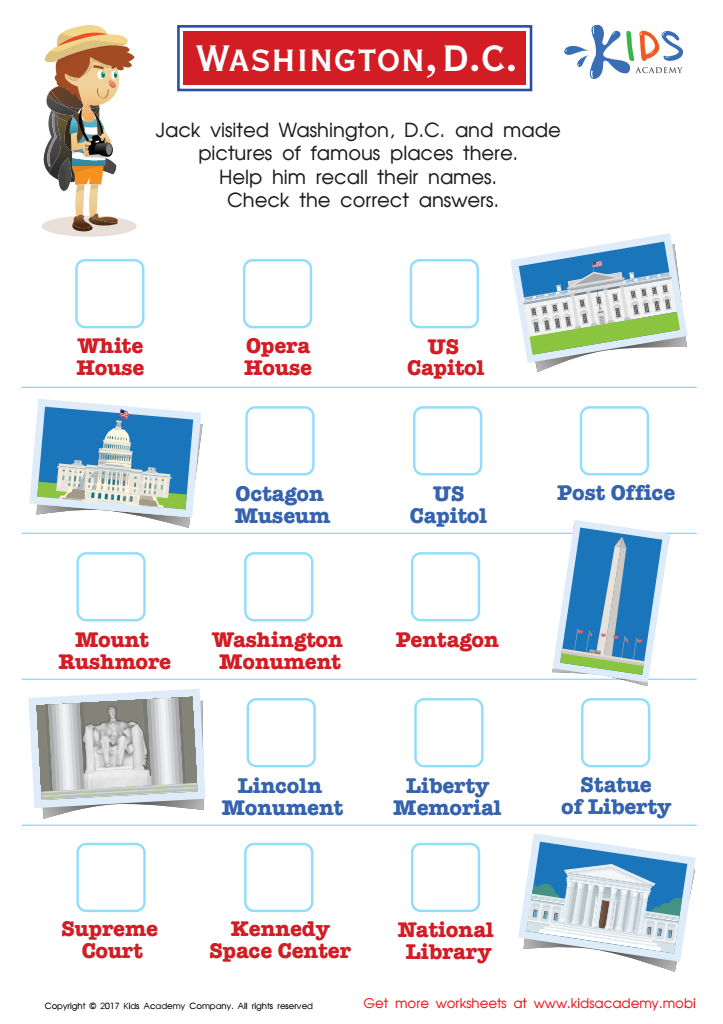
Washington D.C. Printable Worksheet


Parents and teachers should prioritize critical thinking in Grade 3 governance and civics because it lays the foundation for informed and engaged citizenship. At this age, children are beginning to understand their roles within communities and society. Introducing critical thinking skills helps them question, analyze, and understand their rights, responsibilities, and the structure of governance.
By nurturing these skills, educators empower students to evaluate information, differentiate between facts and opinions, and understand diverse perspectives. This is essential in a world filled with complex issues where children will encounter conflicting viewpoints and information. Children who develop strong critical thinking abilities are better equipped to engage in discussions about civic responsibilities, advocate for themselves and others, and participate in democratic processes.
Furthermore, teaching governance and civics through critical thinking encourages children to recognize the importance of empathy, community involvement, and active participation in their surroundings. In fostering these skills early on, we prepare them to become responsible citizens who can contribute positively to society, understand the impact of their decisions, and become advocates for change when necessary. Thus, the focus on critical thinking in governance and civics ideally shapes not just educated individuals but also thoughtful, engaged members of the community.