Historical Knowledge Grade 3 Governance and Civics Worksheets
3 filtered results
Difficulty Level
Grade
Age
-
From - To
Subject
Activity
Standards
Explore our engaging "Historical Knowledge Grade 3 Governance and Civics Worksheets" designed to ignite curiosity in young learners. These worksheets help students understand the foundations of governance by exploring key historical events and figures. Aligned with educational standards, our resources make learning accessible and enjoyable, fostering critical thinking and civic understanding. Students will dive into the significance of major historical milestones, develop their skills in analyzing civic responsibilities, and appreciate the importance of their roles as informed citizens. Ideal for classroom or home use, these worksheets are perfect for reinforcing vital concepts in social studies through fun-filled educational activities!
Favorites
With answer key
Interactive
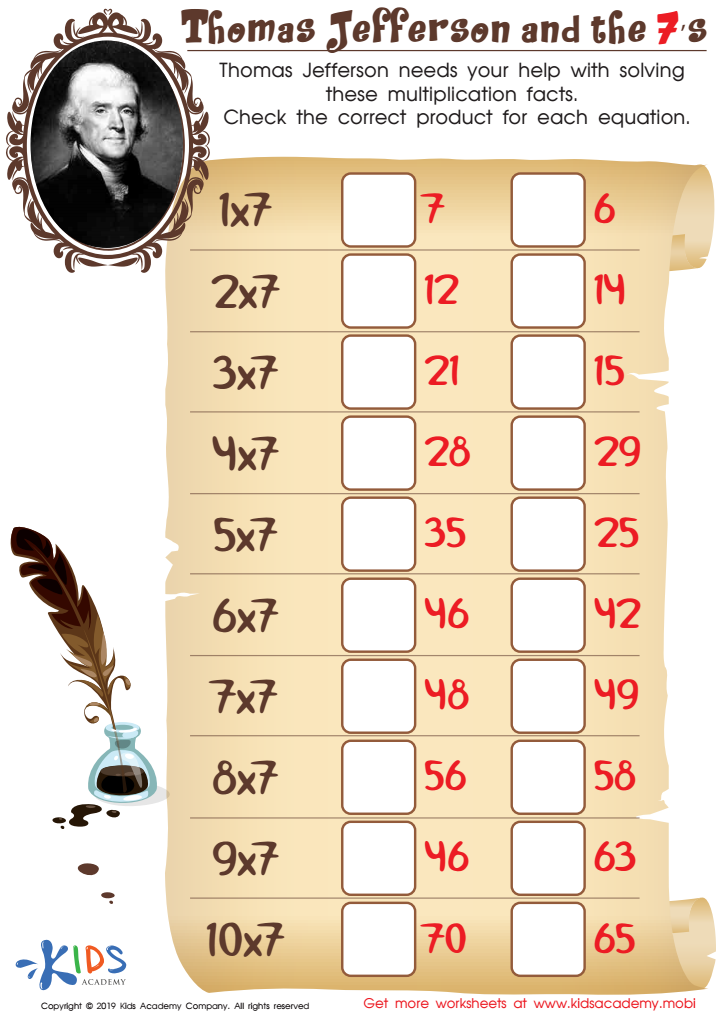
Thomas Jefferson and the 7’s Worksheet
Thomas Jefferson championed education and wants kids to know their times tables. Help your child with this worksheet focusing on 7's. Check the box for the correct answer for each multiplication problem. Make sure your child gets the facts right!
 Assign to My Students
Thomas Jefferson and the 7’s Worksheet
Worksheet
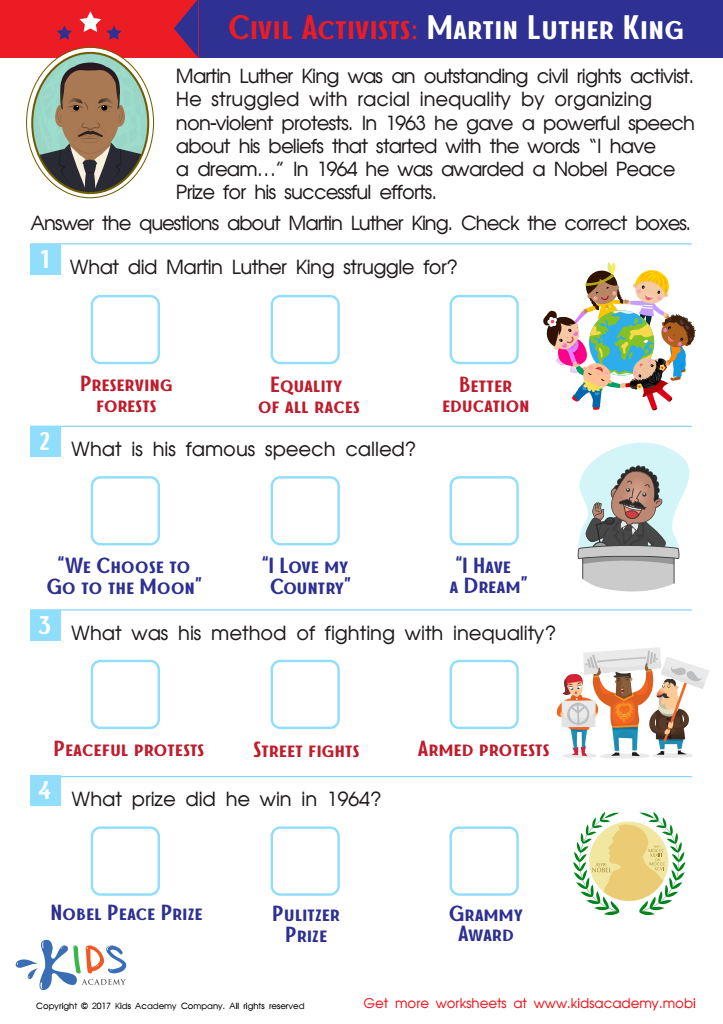
Martin Luther King Worksheet
Introduce your 3rd grader to Martin Luther King Jr.! This worksheet will open their eyes to his impact on US history. Let them discover his life, learnings, and legacy with this informative activity.
Martin Luther King Worksheet
Worksheet
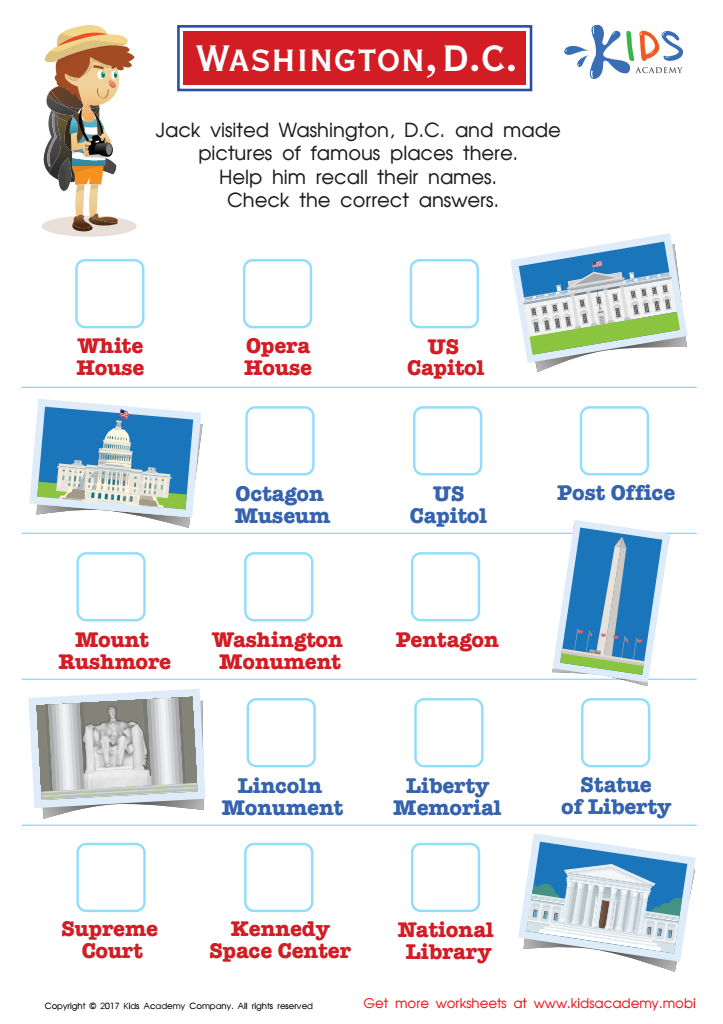
Washington D.C. Printable Worksheet
Join Jack on an adventure to explore the iconic attractions of Washington, D.C.! This printable worksheet helps kids learn about and recognize buildings and monuments that form part of the nation's history. It's a fun way to introduce children to the importance of these landmarks.
Washington D.C. Printable Worksheet
Worksheet
Join Kids Academy for Free
Who is primarily going to use this learning content?


Understanding historical knowledge in governance and civics is vital for third-grade students as it lays the foundation for responsible citizenship. At this age, children are developing their identities and learning to navigate social structures. By imparting an understanding of governance and civics, educators and parents can help children appreciate the importance of rules, rights, and responsibilities.
Knowledge of history allows students to grasp how past events shape our present governance systems. This context fosters critical thinking — enabling them to question and understand the mechanisms of authority and community participation. In a rapidly changing world, early engagement with these concepts nurtures an informed future citizenry dedicated to democracy and civic engagement.
Moreover, discussing historical figures and events relevant to governance teaches empathy and respect for diverse perspectives, encouraging collaboration and dialogue in their interactions with peers and the larger community.
In essence, instilling historical knowledge in governance and civics at an early age empowers students to take an active role in society, helps them understand their place in the world, and cultivates lifelong learners who value participation in democratic processes. Consequently, teachers and parents play a crucial role in facilitating this essential knowledge.