
Grammar worksheets activities for Ages 3-6
4 filtered results
Difficulty Level
Grade
Age
-
From - To
Subject
Activity
Standards
Discover engaging grammar worksheets and activities designed for children aged 3-6 on our dedicated web page. Tailored to enhance language skills, these resources include fun games, printable exercises, and interactive activities that make learning grammar enjoyable and accessible. Perfect for preschool and kindergarten settings, our worksheets encourage young learners to explore the building blocks of language through delightful illustrations and easy-to-follow instructions. Foster a love for writing and communication in your little ones, while helping them develop essential grammar skills. Explore our extensive collection today and support your child's learning journey with creativity and fun!
Favorites
With answer key
Interactive
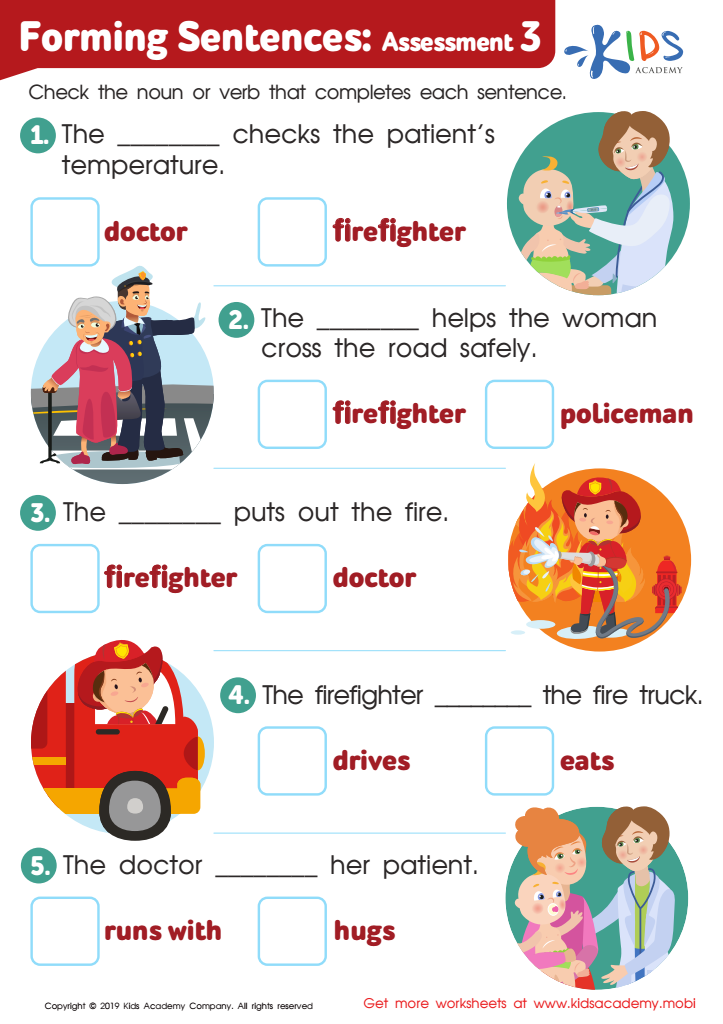
Forming Sentences: Assessment 3 Worksheet
Students must master sentence formation to be successful English learners. After grasping the ABCs and basic words, the next step is to construct sentences using those words. Worksheets like this one can help teach kids how to make sentences; they need to look at the pictures and select the correct noun or verb to complete each sentence.
 Assign to My Students
Forming Sentences: Assessment 3 Worksheet
Worksheet
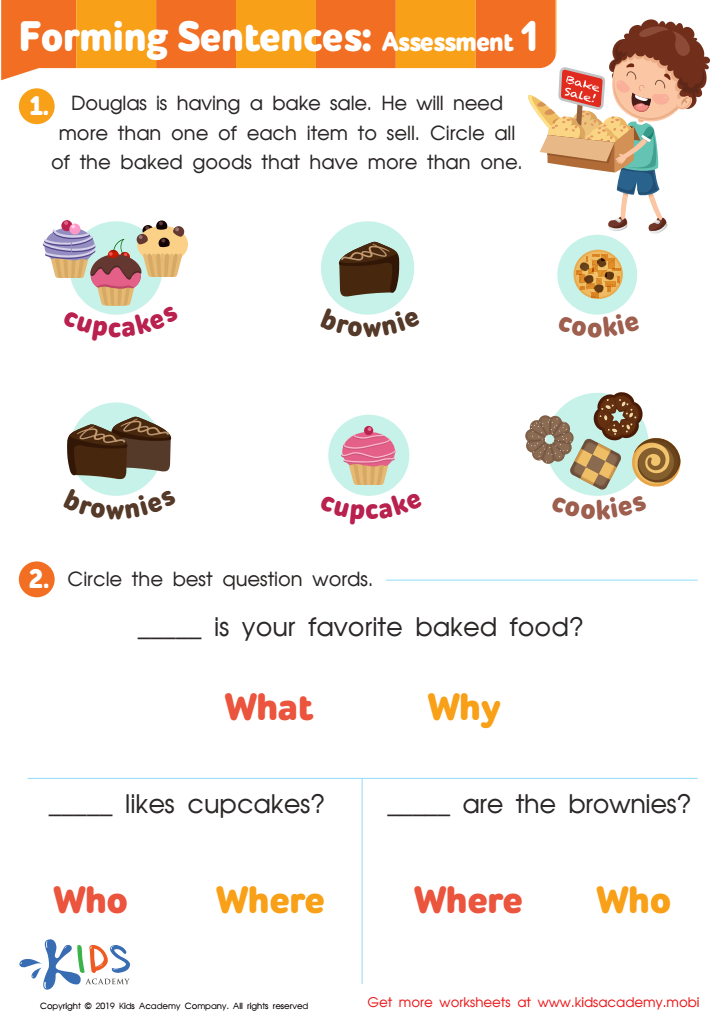
Forming Sentences: Assessment 1 Worksheet
Bake sales are great fun, offering a variety of goodies and treats! Kids also have a chance to make a bit of money. Help your students circle all the yummy baked goods with more than one in this worksheet - Douglas is hosting a bake sale and needs items in bulk!
Forming Sentences: Assessment 1 Worksheet
Worksheet
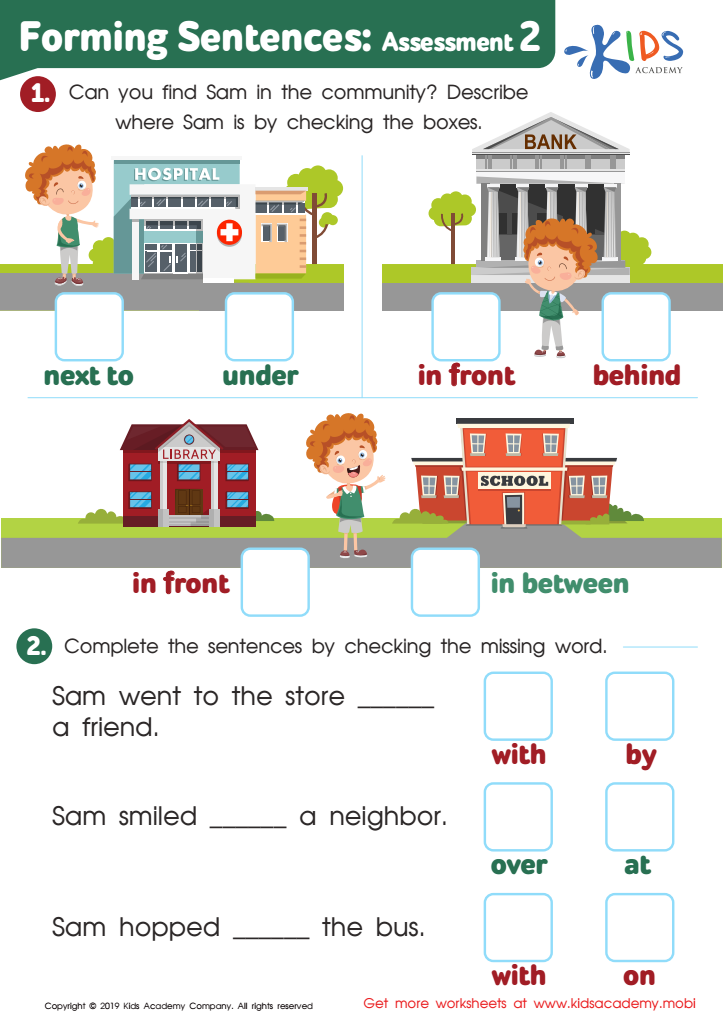
Forming Sentences: Assessment 2 Worksheet
A community is an area with different people, buildings and professionals. Ask students to list buildings in their area, then help find Sam. Describe where he is and check the boxes in the worksheet. At the bottom, help complete the sentences by checking the missing word.
Forming Sentences: Assessment 2 Worksheet
Worksheet
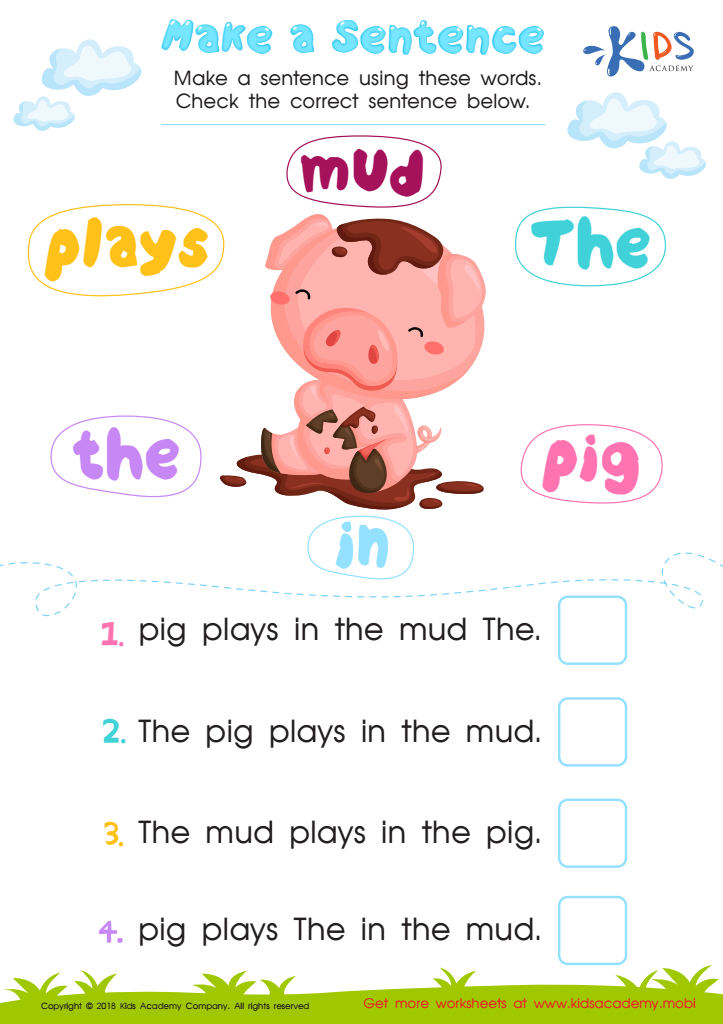
Assessment: Make a Sentence Worksheet
Help your kids identify the animal in the printout. Read the words in the bubbles and then read the four sentences in the options 1 – 4. Ask them to check the box with the correct sentence.
Assessment: Make a Sentence Worksheet
Worksheet
Join Kids Academy for Free
Who is primarily going to use this learning content?


.jpg)





Parents and teachers should prioritize grammar activities for ages 3-6 because such activities lay the foundational building blocks for language development. During these formative years, children engage in critical periods of cognitive growth, where they begin to comprehend and use language. Introducing grammar concepts through playful and interactive activities fosters not only their linguistic abilities but also their overall communication skills.
Engaging children in grammar activities encourages them to articulate their thoughts clearly and correctly. This early exposure helps prevent misunderstandings and establishes good communication habits that can benefit them in academic settings and beyond. Moreover, children who develop a strong grammatical foundation tend to have a greater capacity for reading and writing later in life.
Incorporating grammar activities into learning can also boost a child's confidence in expressing themselves. Songs, rhymes, and stories can make grammar fun and engaging, turning what might seem like a dry subject into an enjoyable experience. Given these numerous advantages, establishing a solid grounding in grammar through interactive methods is essential for nurturing well-rounded, articulate individuals who can navigate various realms of personal and academic life successfully.








