Physical Science worksheets activities for Ages 3-6
4 filtered results
-
From - To
Discover engaging Physical Science worksheets and activities designed for ages 3-6, perfect for young learners eager to explore the basics of science! Our carefully crafted resources introduce foundational concepts such as matter, energy, and simple machines in a fun and age-appropriate way. Each worksheet combines vibrant illustrations with enjoyable activities to capture children's imagination and enhance their learning experience. Parents and teachers can easily access printable worksheets that encourage hands-on exploration, foster critical thinking, and promote STEM skills from an early age. Join us in nurturing the curiosity of young minds and laying the groundwork for a lifetime of scientific discovery!
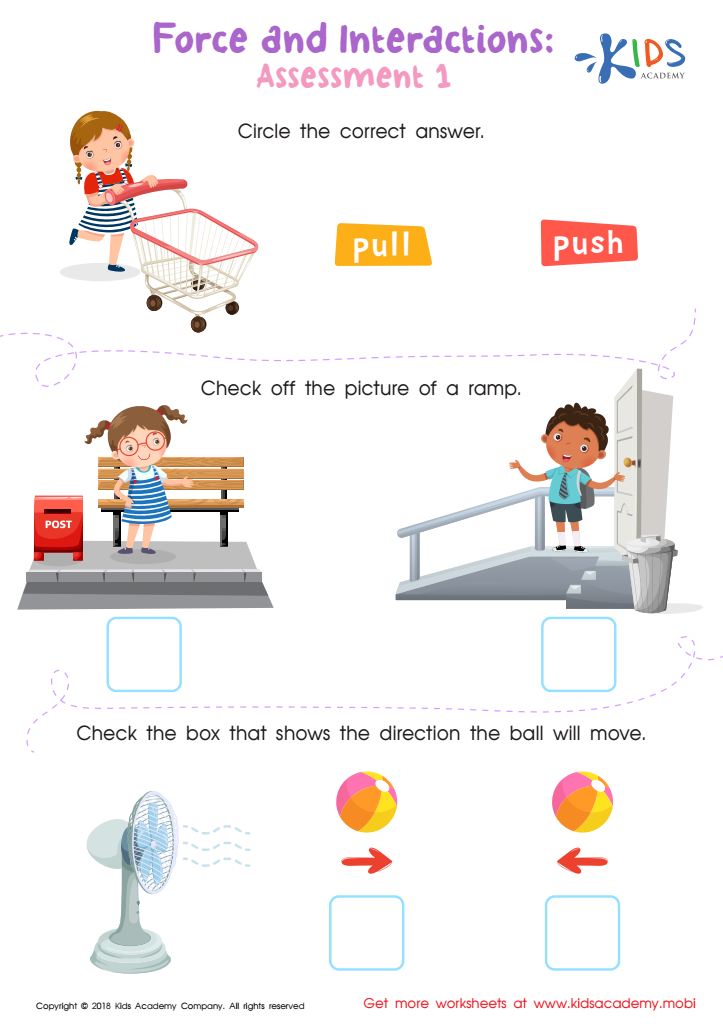
Force and Interactions: Assessment 1 Worksheet
 Assign to My Students
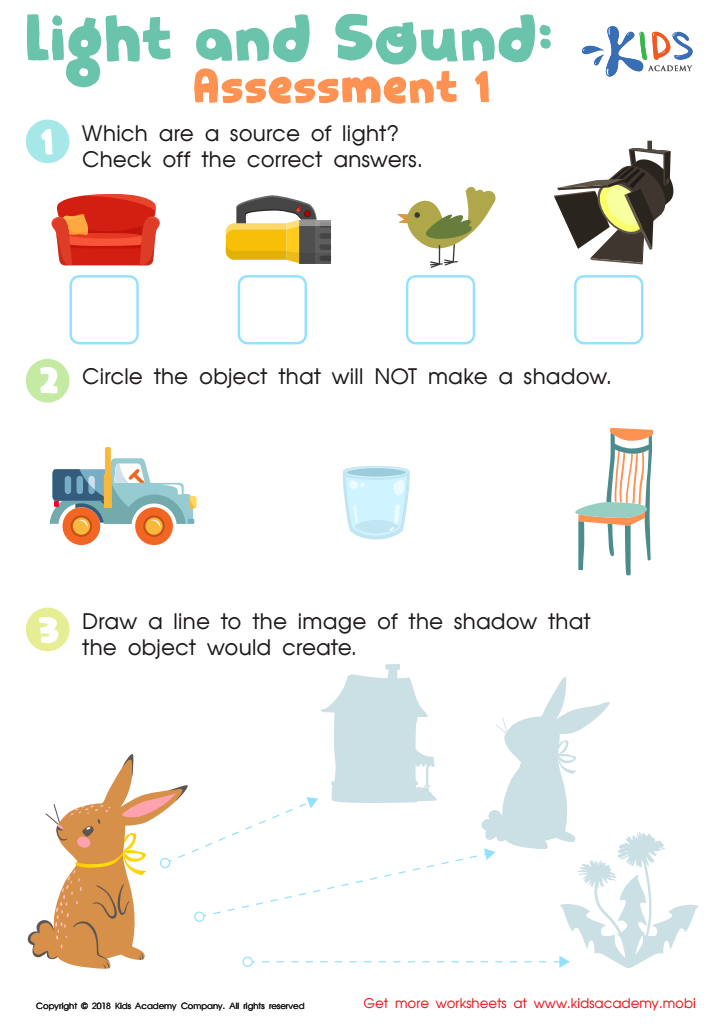
Light and Sound: Assessment 1 Worksheet
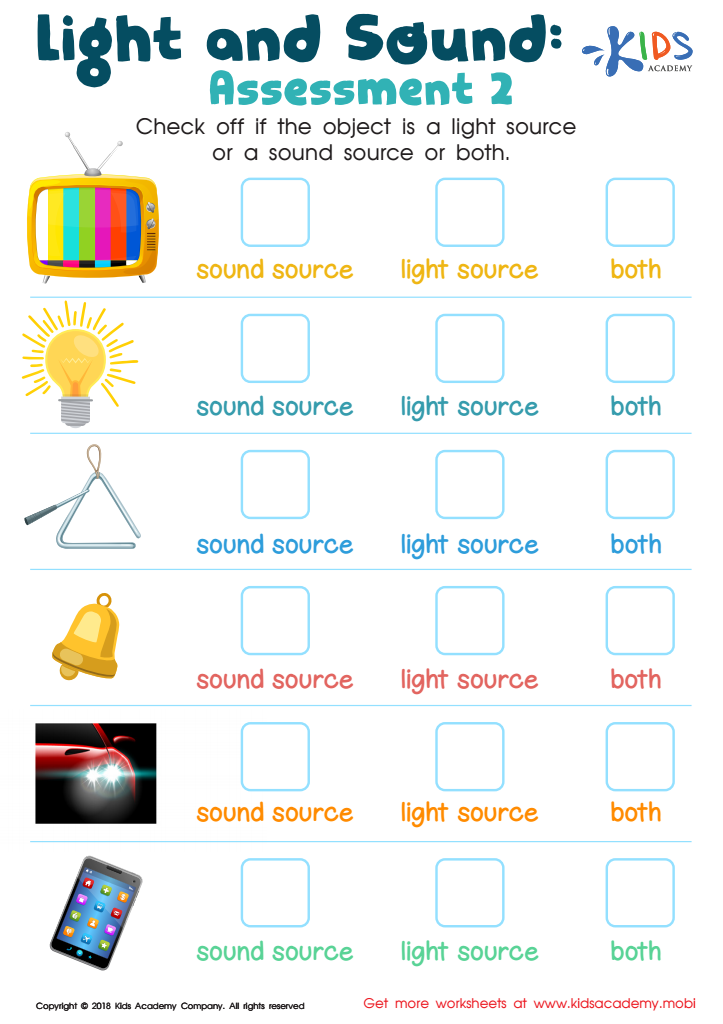
Light and Sound: Assessment 2 Worksheet
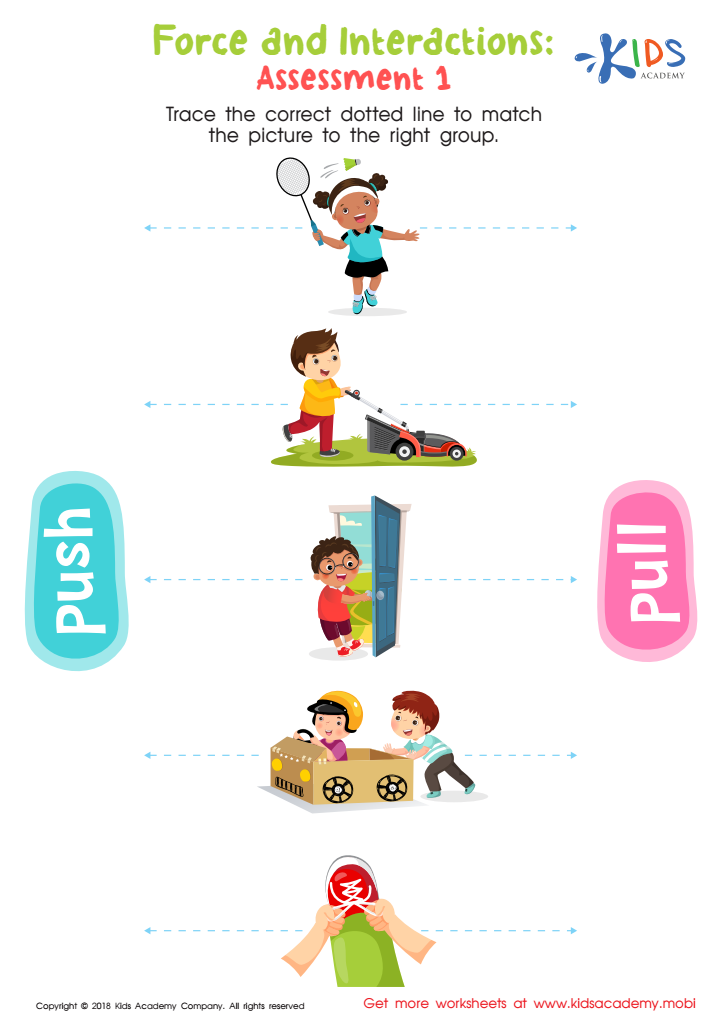
Force and Interactions: Assessment 2 Worksheet


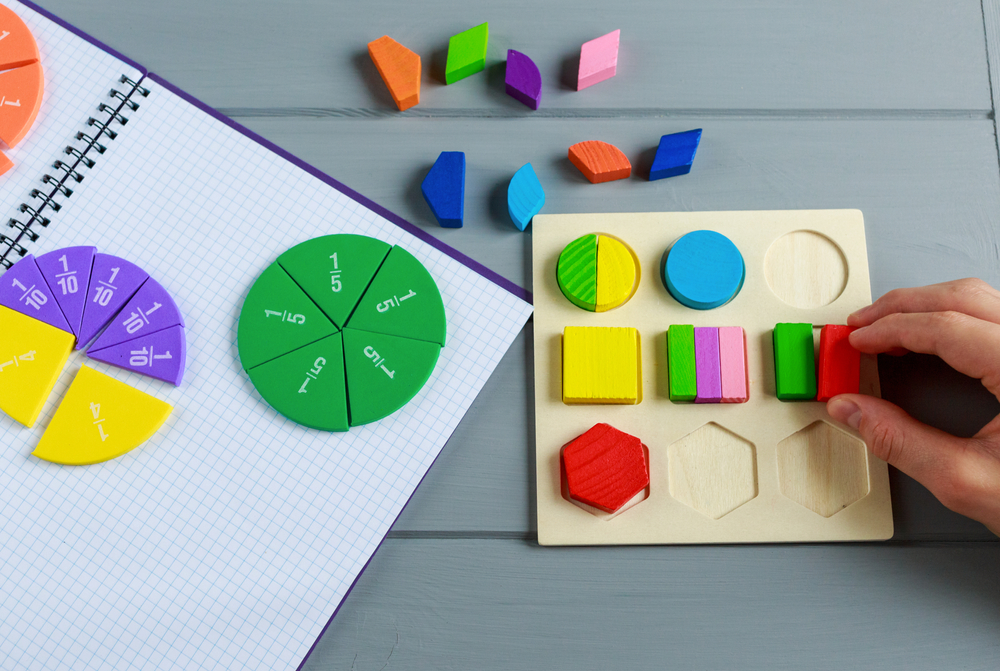




Parents and teachers should prioritize physical science activities for children aged 3-6 because these activities lay the foundation for critical thinking and an understanding of the world around them. At this stage, children are naturally curious and eager to explore their environment, making it an ideal opportunity to introduce fundamental science concepts through hands-on experiences.
Engaging in physical science activities helps young learners develop essential skills such as observation, problem-solving, and experimentation. By conducting simple experiments—like mixing water and sand or observing the changes in ice as it melts—children practice asking questions and seeking answers, fostering a love for inquiry.
Additionally, these activities promote motor skills and coordination as children manipulate objects, enhancing their cognitive development. They also encourage teamwork and communication when children work in groups, reinforcing social skills.
Moreover, integrating physical science into early childhood education cultivates a lifelong interest in STEM fields, which are crucial in today’s technology-driven world. This early exposure can resonate throughout a child's academic journey, opening doors to future opportunities. In essence, investing time in physical science activities not only enriches learning but also equips children with the skills and curiosity necessary for lifelong success.








