
Alphabet Learning ABC Letters Worksheets for Ages 3-4
3 filtered results
Difficulty Level
Grade
Age
-
From - To
Subject
Activity
Standards
Introducing our engaging "Alphabet Learning ABC Letters Worksheets" designed specifically for children aged 3-4! These interactive worksheets provide a fun and effective way to introduce young learners to the alphabet. With a variety of activities, including tracing, coloring, and identifying letters, children will develop essential pre-reading skills while enhancing their fine motor abilities. Our worksheets promote letter recognition and phonemic awareness, setting a strong foundation for future literacy. Parents and educators will appreciate the ease of use and the educational value these resources offer. Get ready for a delightful learning experience as your child explores the wonderful world of letters!
Favorites
With answer key
Interactive
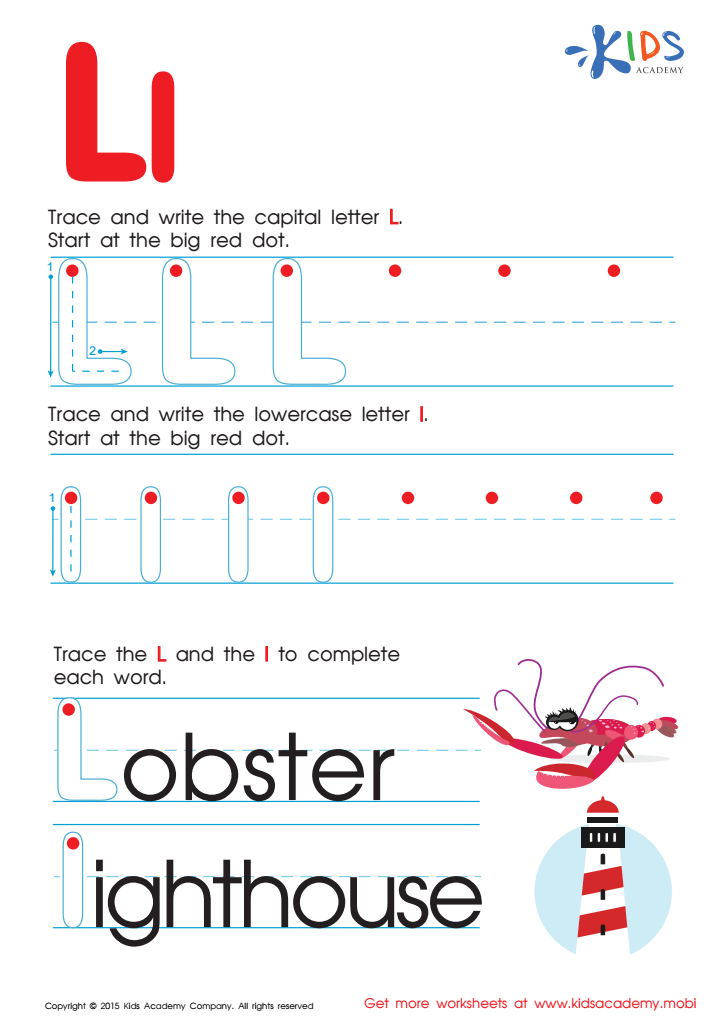
Letter L Tracing Page
Trace uppercase and lowercase letters to practice writing. Pay attention to the lowercase letters, like the "L", that are not as tall as an uppercase "I" or as short as a lowercase "i". Words like "lobster" and "lighthouse" are waiting to be completed. Enjoy!
Letter L Tracing Page
Worksheet



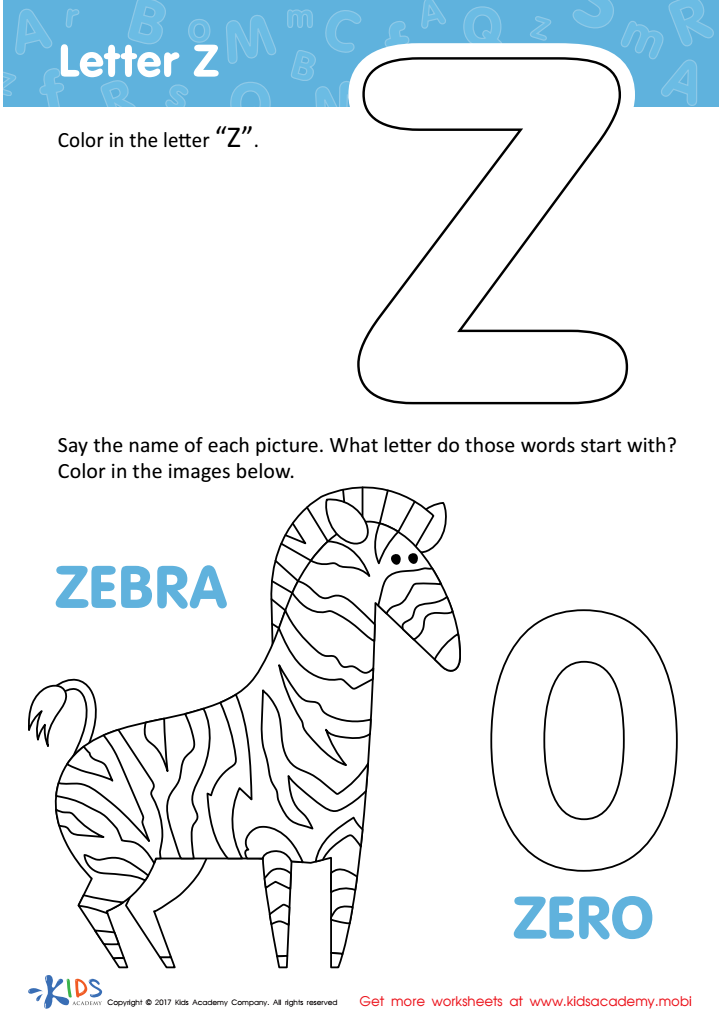
Letter Z Coloring Sheet
This coloring page featuring the letter "Z" is perfect for your child to practice letter recognition! Help them learn the unique sound it makes as they color. It'll be a fun and easy activity they won't have trouble with!
Download (PDF)
 Assign to My Students
Assign to My Students
Letter Z Coloring Sheet
Worksheet
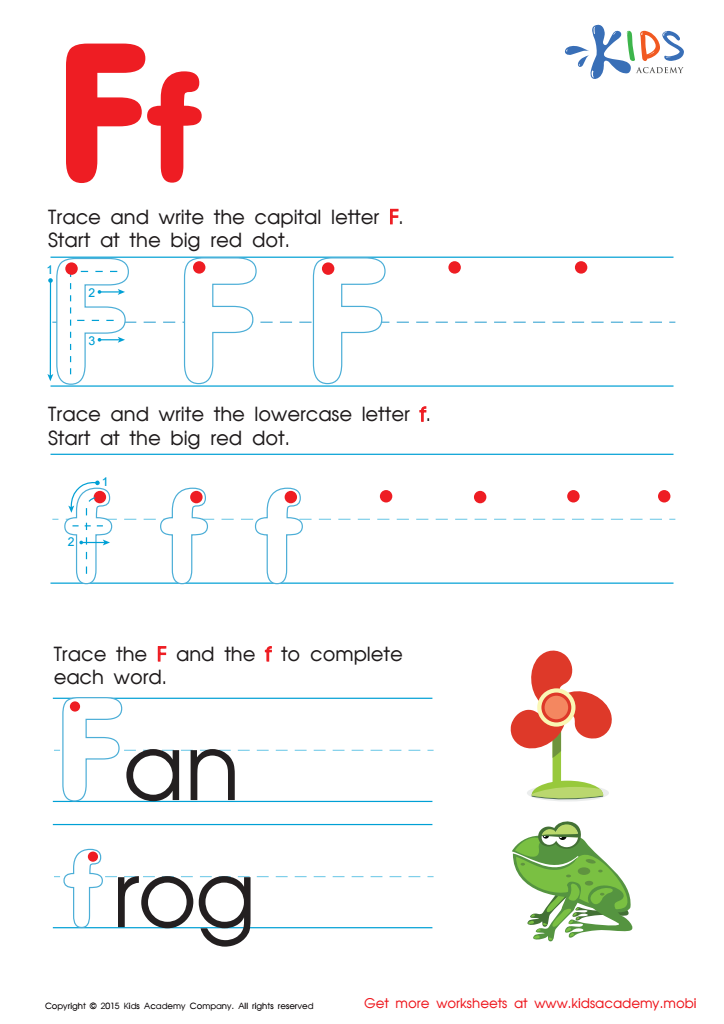
Letter F Tracing Page
Trace "F" with your pencil! Start at the red dot and draw lines — it's fun! Check it out — it looks great! Keep practicing to make it even better. Then, try completing words. Help out the broken fan and funny frog! Get free alphabet worksheets and activities for your kids. Come see our new tracing pages!
Letter F Tracing Page
Worksheet
Join Kids Academy for Free
Who is primarily going to use this learning content?








Alphabet learning is a critical foundation for early literacy, essential for children aged 3-4. This stage is pivotal as children are developing skills that will support their reading and writing abilities later on. Understanding the ABCs helps children recognize letters, understand their shapes, and differentiate between uppercase and lowercase forms.
Parents and teachers should care about this learning process because strong alphabet knowledge correlates with success in reading and communication skills. Familiarity with letters allows children to progress to phonics, where they begin to connect sounds to symbols, an essential step in learning to read. Moreover, engaging activities centered around alphabet learning—such as games, songs, and art projects—foster a love for learning and encourage curiosity, boosting overall cognitive development.
Additionally, instilling a sense of achievement in children as they master their ABCs builds confidence in their academic abilities. This not only prepares them for Kindergarten but also encourages lifelong learning habits. In a world increasingly reliant on effective communication and literacy, prioritizing alphabet learning ensures that children are equipped with the foundational skills necessary for continued educational success and personal growth. Thus, parents and teachers play a vital role in supporting this early learning.







