Fine motor skills improvement ABC Letters Worksheets for Ages 3-4
3 filtered results
-
From - To
Enhance your child's fine motor skills with our ABC Letters Worksheets, designed specifically for ages 3-4. These engaging, educational worksheets help young learners develop precise hand movements essential for writing. Each activity focuses on letter tracing and matching exercises, ensuring a balanced blend of fun and learning. Our worksheets introduce the alphabet in a way that is both enjoyable and effective, promoting early literacy while refining fine motor abilities. Perfect for preschool preparation, these worksheets will set your child on the path to academic success while fostering creativity and confidence. Give your little learner a head start with our expertly crafted ABC worksheets!
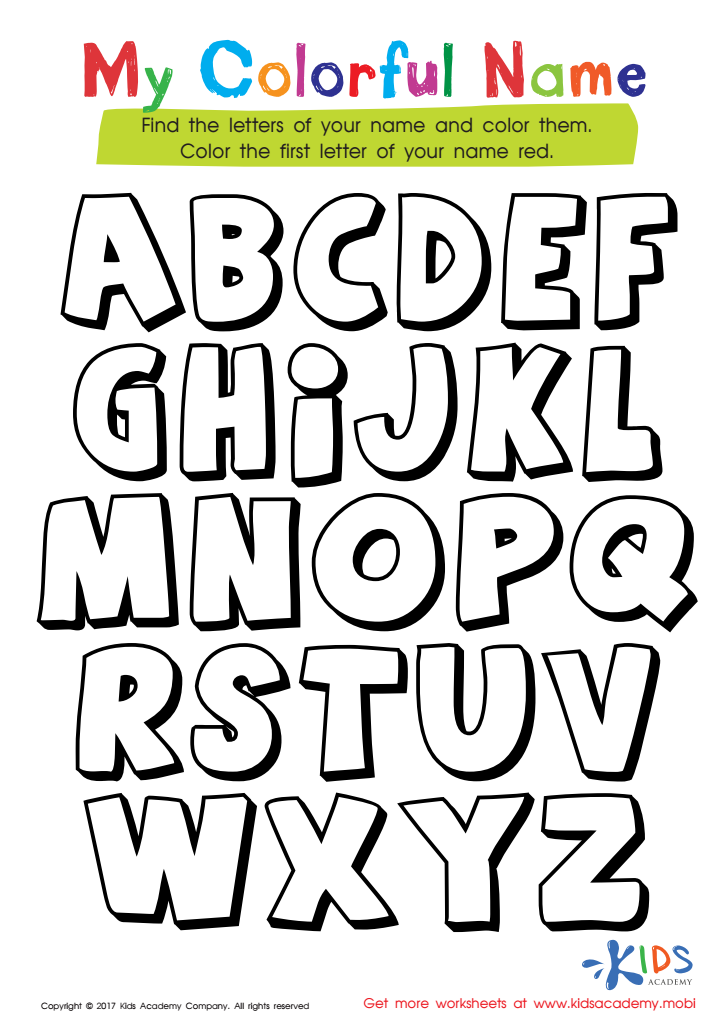
My Colorful Name Worksheet
 Assign to My Students







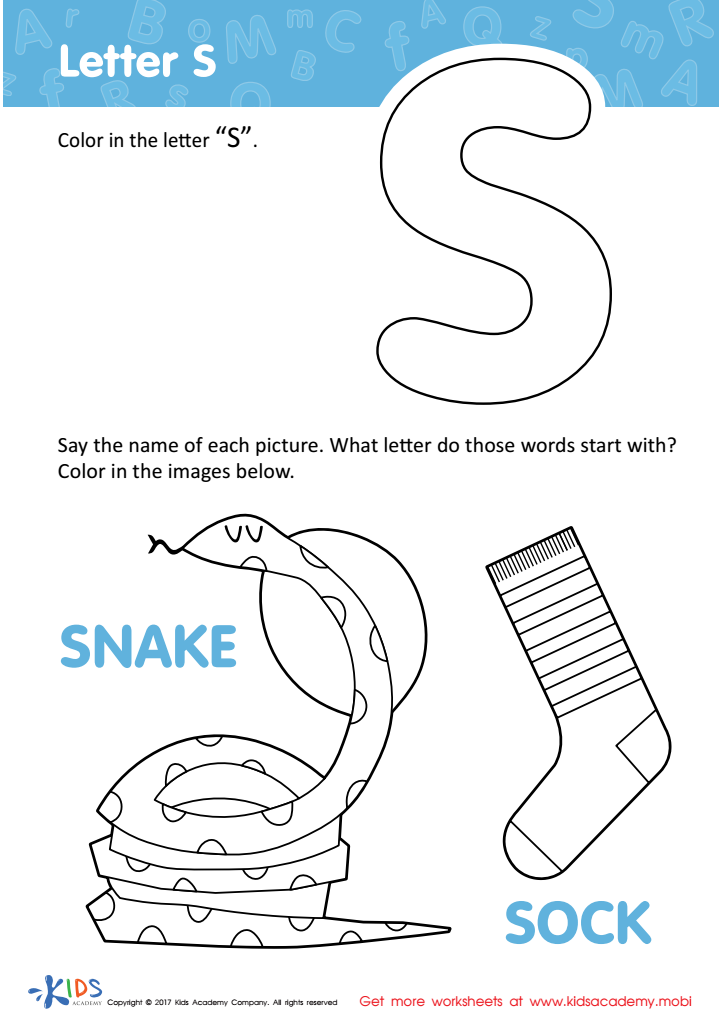
Letter S Coloring Sheet
Assign to My Students
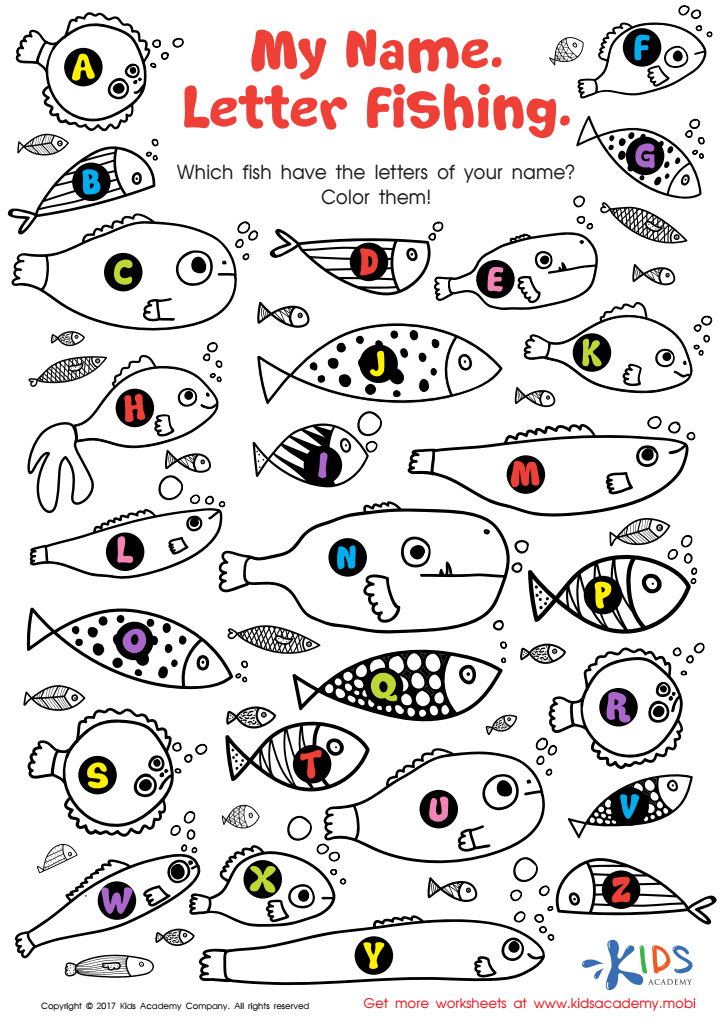
My Name: Letter Fishing Worksheet
Assign to My Students








Fine motor skills are crucial for children aged 3-4 as they form the foundation for more advanced manual dexterity. These skills involve the coordination of small muscles in movements–typically in the hands and fingers–with the eyes. When young children engage in activities like tracing or drawing ABC letters, they enhance their motor skills significantly. This kind of practice not only boosts their ability to complete other daily tasks (like buttoning shirts or using utensils), but it is also essential for their readiness for school activities, such as writing and lab work.
Moreover, developing fine motor skills through activities focused on ABC letters can have a dual benefit: children improve their handwriting and learn letter recognition simultaneously. Recognizing and writing letters establishes their literacy skills, paving the way for reading and spelling. Early success in these areas often leads to greater confidence and academic achievement in later years.
Teachers and parents play critical roles by creating opportunities for playful yet focused practice. Encouraging children to draw, color, or use manipulative toys that involve letters can make learning engaging and effective. Therefore, a concerted effort to improve fine motor skills through engaging with ABC letters equips young learners with critical competencies, fostering a smoother transition to more complex tasks in future learning stages.







