
Letter recognition Alphabetizing Worksheets for Ages 3-4
3 filtered results
Difficulty Level
Grade
Age
-
From - To
Subject
Activity
Standards
Discover engaging Letter Recognition Alphabetizing Worksheets designed specifically for children aged 3-4. Our fun and interactive activities help young learners master the alphabet while developing essential skills in letter recognition and sequencing. With vibrant illustrations and age-appropriate tasks, these worksheets make learning enjoyable and effective. Each worksheet encourages children to identify letters, practice proper order, and enhance their understanding of the alphabet, laying a strong foundation for future literacy. Ideal for preschool classrooms or at-home learning, our resources ensure that your little ones build confidence and excitement in their reading journey! Explore our collection and inspire your child's love for learning today!
Favorites
With answer key
Interactive
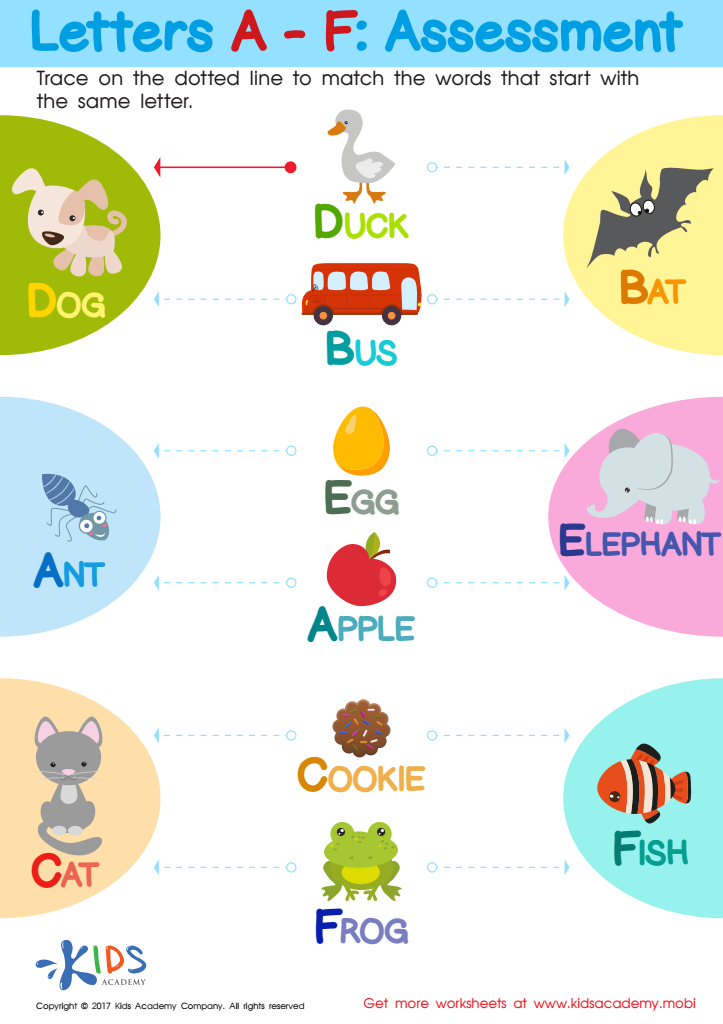
Letters A - F Worksheet
Help your child develop their reading skills with this fun phonics worksheet aimed at preschoolers. They can match letters A-F using colorful words and pictures. Assist your child by sounding out the letters and words - it's a great way to learn!
 Assign to My Students
Letters A - F Worksheet
Worksheet
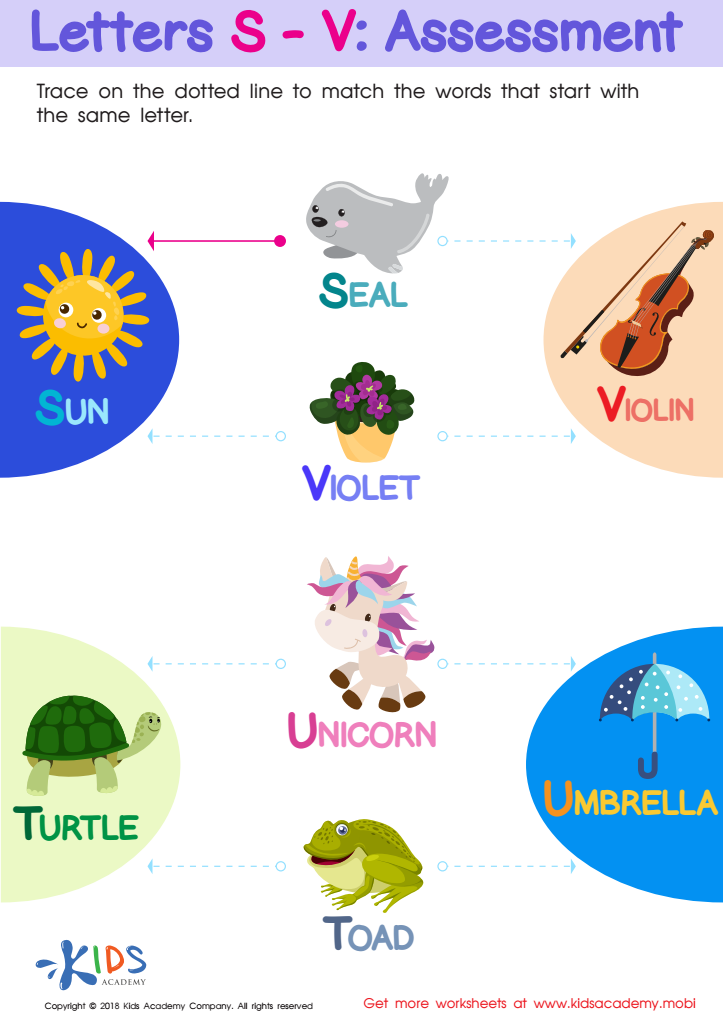
Letters S - V Tracing Worksheet
Kids can have fun learning phonics and reading with this PDF! Trace the lines of letters S-V to match words that start with the same letter. With easy directions and bright pictures, any young learner will love it!
Letters S - V Tracing Worksheet
Worksheet
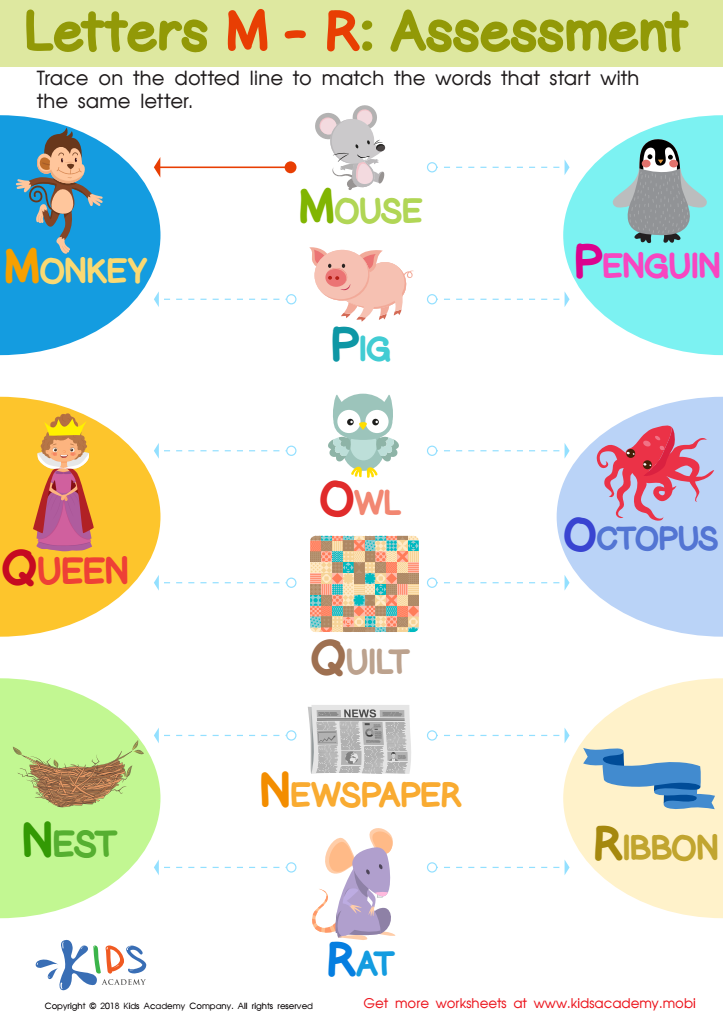
Letters M-R Tracing Worksheet
Does your child like learning to read? This printout is ideal! Kids match words to letters M-R by tracing. You can assist them in sounding out the words to pick the correct letter. Plus, visuals are included to help them recognize words with pictures.
Letters M-R Tracing Worksheet
Worksheet
Join Kids Academy for Free
Who is primarily going to use this learning content?


Letter recognition and alphabetizing are crucial skills for children aged 3-4 as they lay the foundation for literacy development. At this early age, children are primed for learning and developing cognitive skills. Recognizing letters helps them connect sounds with their written forms, promoting phonemic awareness that is vital for reading.
When children can identify letters, they can begin to understand the structure of words—an essential step towards reading fluency. Alphabetizing also introduces them to the concept of order and sequencing, enhancing their cognitive development and organizational skills. This ability to categorize letters can later translate into skills related to sorting and classifying in various subjects.
Moreover, active engagement in letter recognition and alphabetizing supports language development, enriching vocabulary and comprehension abilities. Activities can be playful and interactive, fostering a positive attitude toward learning.
For parents and teachers, facilitating these skills not only empowers children but also builds their confidence and sense of achievement. A strong early foundation in literacy opens doors to academic success in the future, making early intervention in letter recognition an essential component of education during these formative years. Investing time in these activities is a valuable step toward lifelong learning and enthusiasm.







