Sound recognition Consonants Worksheets for Ages 3-4
3 filtered results
-
From - To
Introduce your child to the world of reading with our "Sound Recognition Consonants Worksheets for Ages 3-4." These engaging and colorful worksheets help young learners identify and pronounce consonant sounds, laying a solid foundation for future literacy. Each worksheet combines vibrant illustrations with fun matching and tracing activities, making learning enjoyable. Tailored for preschool and early kindergarten, these exercises support auditory discrimination and phonemic awareness, crucial pre-reading skills. Watch as your child builds confidence and excitement through interactive sound recognition practice. Give your child a head start on their reading journey with these expertly designed worksheets!
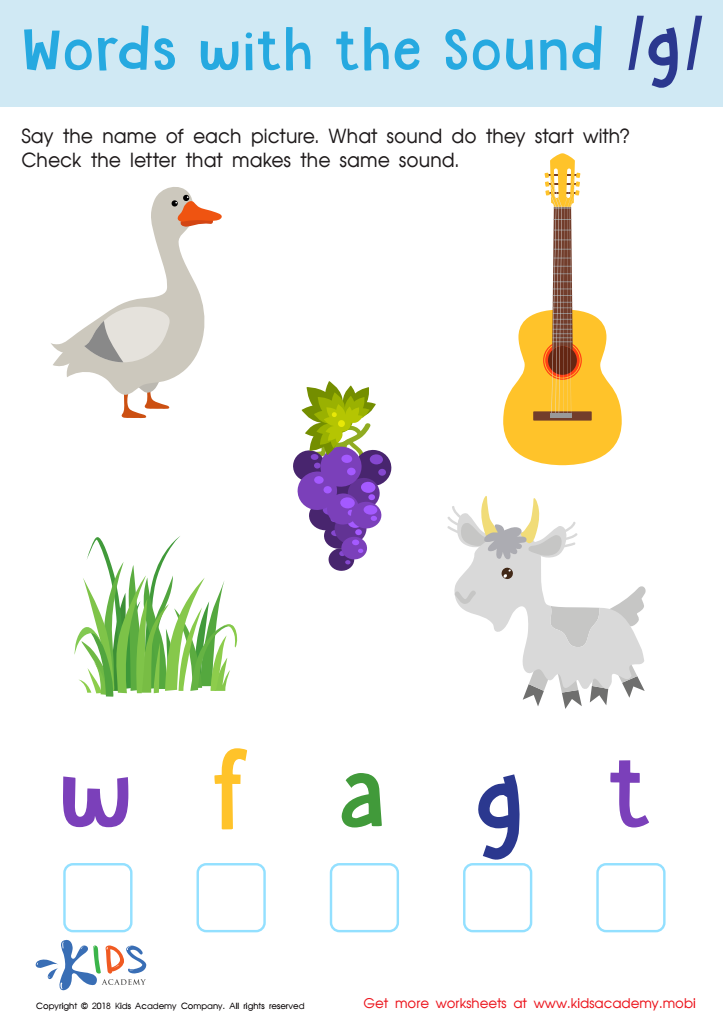
Words with sound g Reading Worksheet
 Assign to My Students
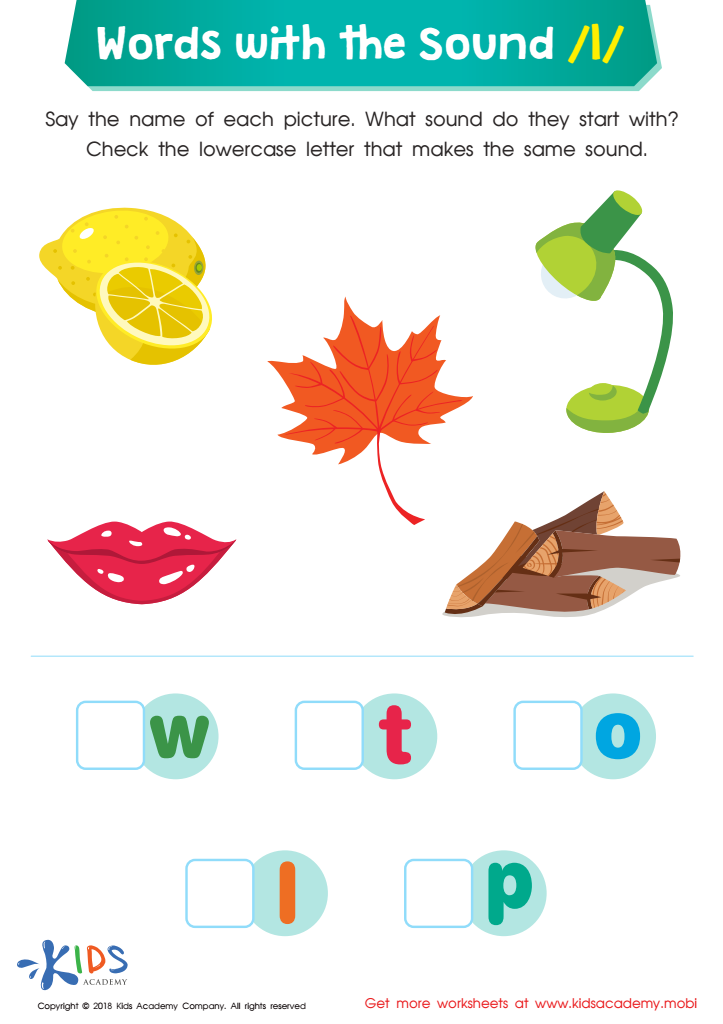
Words with Sound L Reading Worksheet
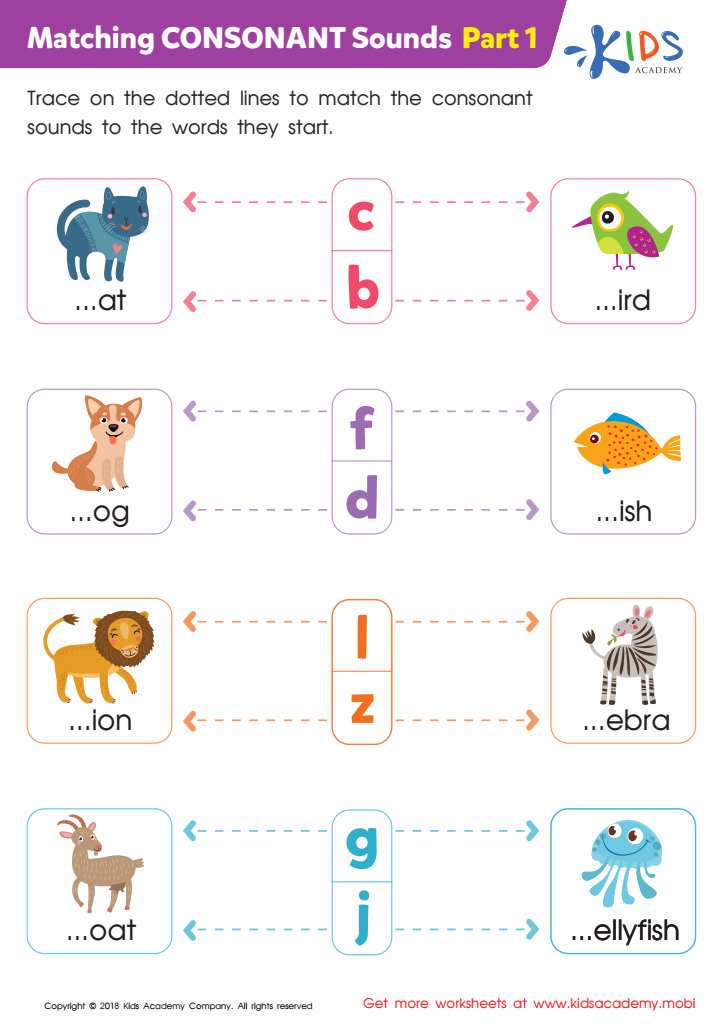
Matching Consonant Sounds: Part 1 Worksheet



Sound recognition, particularly of consonants, is a crucial foundational skill for children aged 3-4 years. At this formative stage, young minds are exceptionally receptive to learning new concepts, making it an ideal time to emphasize phonetic development. Recognizing consonant sounds helps kids forge a sound-letter connection, an essential precursor to reading and writing.
For parents and teachers, fostering sound recognition translates to enhanced literacy skills later in life. By understanding consonant sounds, children become adept at decoding words, an ability that significantly eases the learning-to-read process. This skill also bolsters their spelling as they learn how sounds pair with letters.
Early sound recognition also supports linguistic development. It aids in the articulation of words and richer vocabulary acquisition, preparing children for clearer verbal communication. As they gain proficiency, their confidence grows, promoting a positive attitude toward learning.
Socially, children with strong language foundations tend to navigate school environments more successfully. They're more likely to participate in class, interact confidently with peers, and perform well academically. Therefore, prioritizing consonant sound recognition isn't just about academic success; it's also about nurturing well-rounded, confident, and articulate individuals. With the guidance of attentive parents and teachers, children can develop these essential skills early on, setting the stage for lifelong learning.







