Vocabulary enhancement Consonants Worksheets for Ages 3-4
4 filtered results
-
From - To
Boost your child's language skills with our "Vocabulary Enhancement Consonants Worksheets for Ages 3-4". These engaging worksheets are designed to introduce young learners to a variety of consonant sounds, enhancing their vocabulary and phonics abilities. Through fun activities like matching, tracing, and identifying initial consonant sounds, children build a strong foundation for reading and speaking. Perfect for preschoolers, these worksheets make learning enjoyable and effective. Developed by educational experts, they provide a stepping stone to literacy success. Equip your little one with the tools to expand their language skills, all from the comfort of your home.
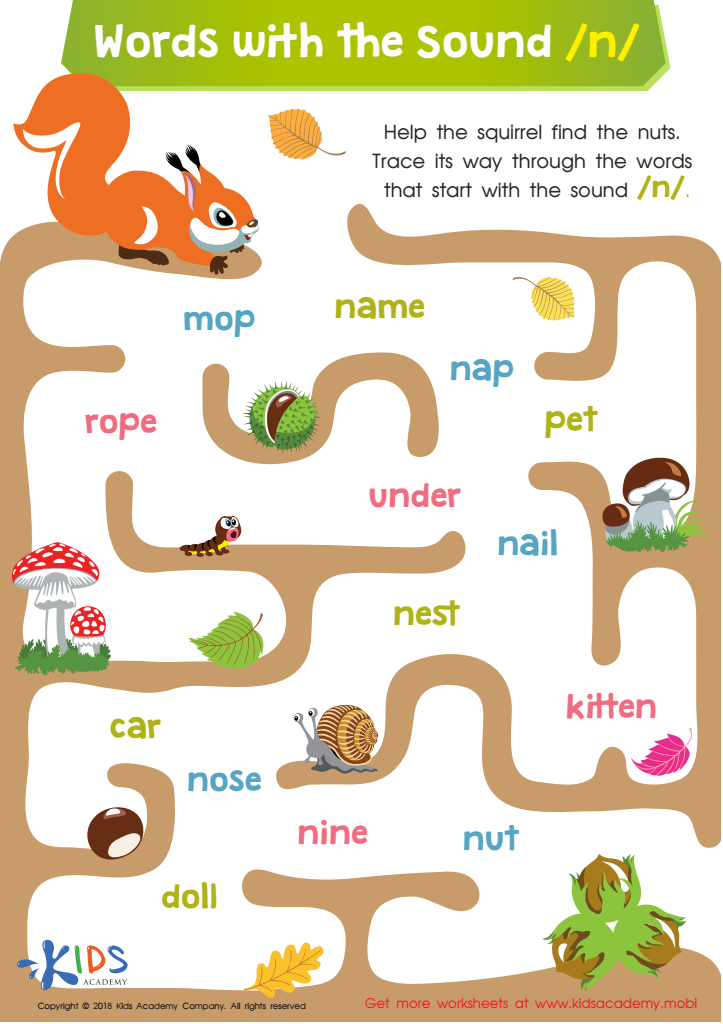
Words with Sound N Reading Worksheet
 Assign to My Students
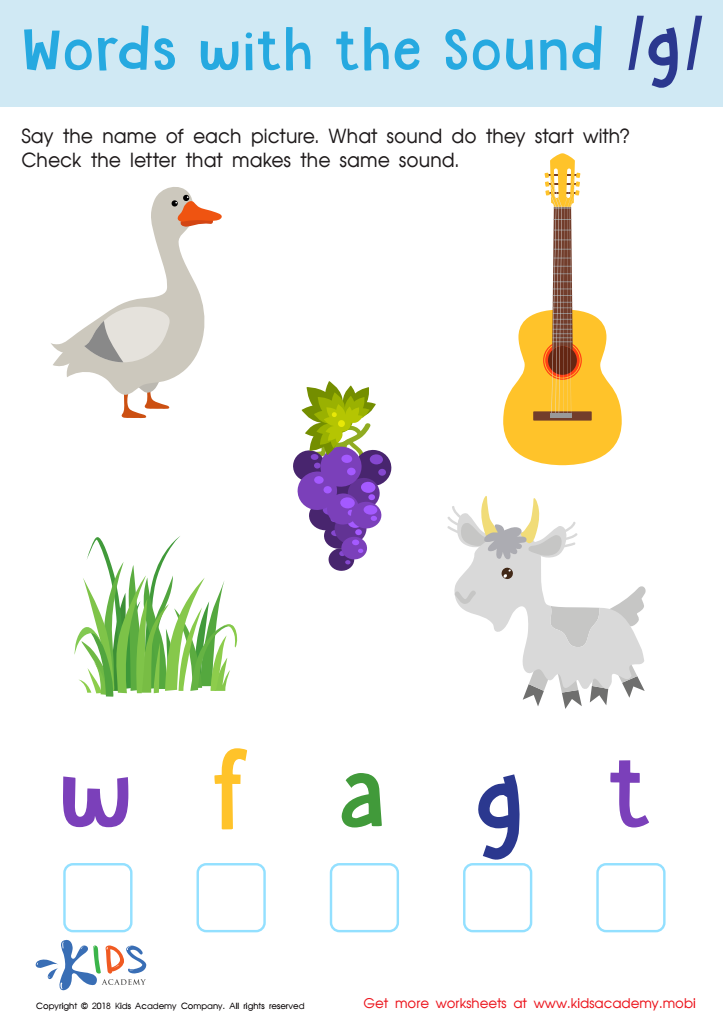
Words with sound g Reading Worksheet
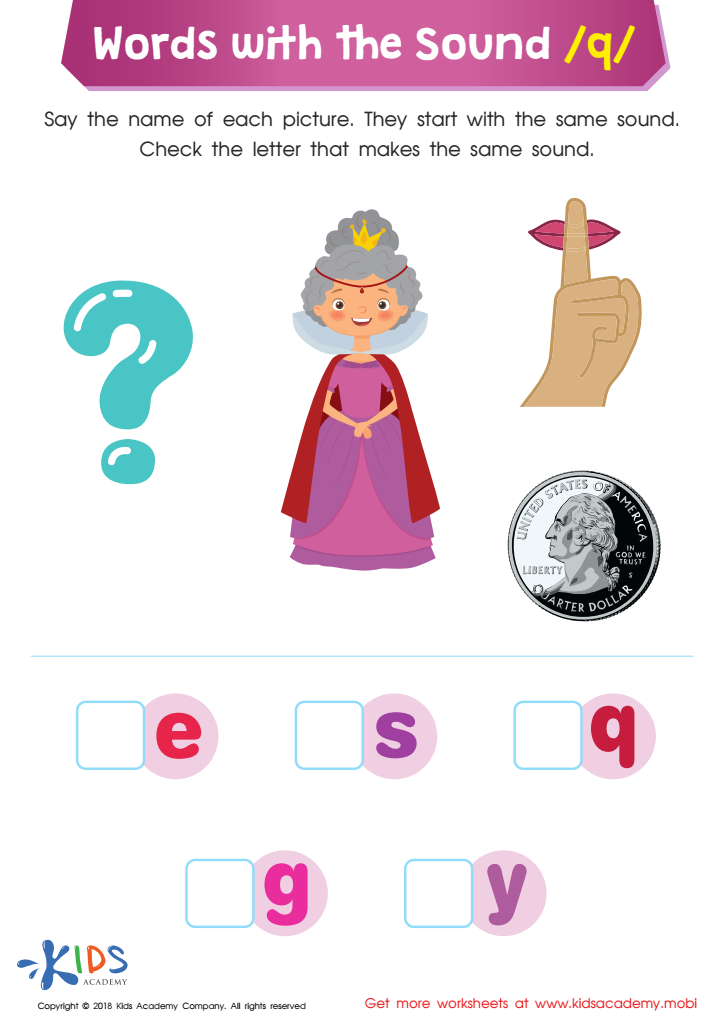
Words with Sound Q Reading Worksheet
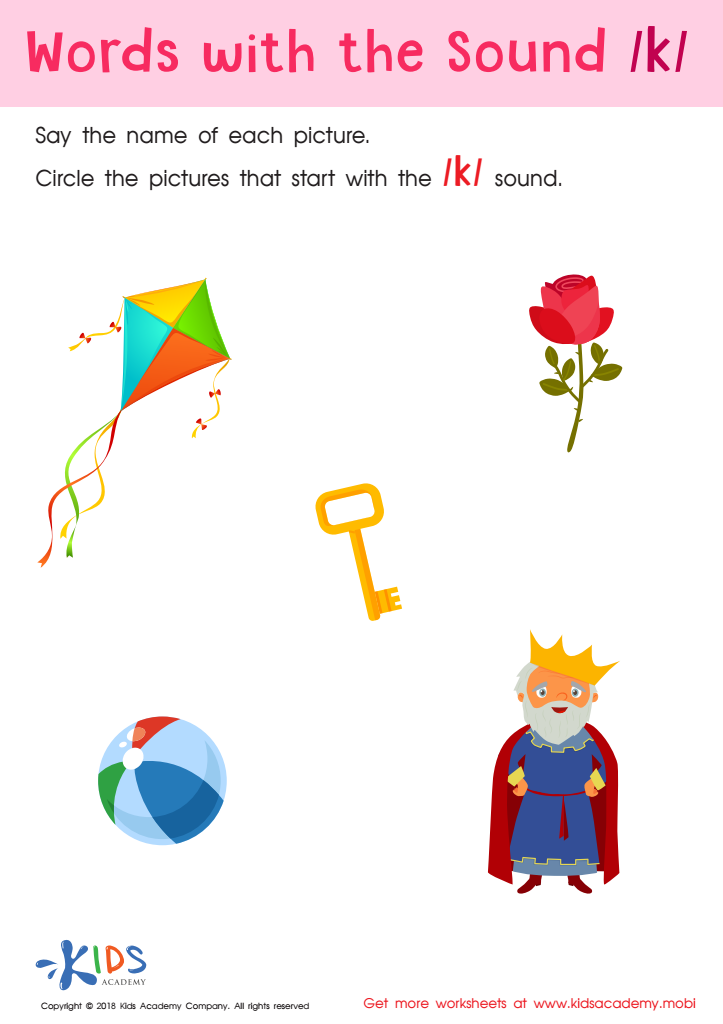
Words with sound k Reading Worksheet



Vocabulary enhancement and understanding of consonants for children ages 3-4 is foundational for several reasons. Firstly, during these early developmental years, children's brains are highly receptive to language acquisition. Introducing a rich vocabulary and the distinct sounds of consonants at this stage lays the groundwork for effective communication skills. For parents and teachers, focusing on consonants—like 'b', 'c', 'd'—is essential as they form the building blocks of many words children will learn and use.
Improved vocabulary and phonemic awareness promote literacy, a foundational skill for academic success. By recognizing and articulating consonant sounds, children improve their reading readiness, aiding in recognizing letters and understanding that words are made of different sounds. This vital skill translates to better decoding of words when they start reading.
Moreover, early vocabulary and consonant exposure boosts cognitive development, helping children categorize objects, describe experiences, and engage in conversations effectively. Socially, these skills allow children to express needs, feelings, and ideas more clearly, promoting better interaction with peers and adults.
Parents and teachers can create a language-rich environment by reading aloud, singing songs, playing rhyming games, and encouraging conversations. Active interaction supports children in mastering these essential language components, setting a strong foundation for future educational success and effective communication skills.







