Vocabulary expansion Consonants Worksheets for Ages 3-4
4 filtered results
-
From - To
Boost your child's language skills with our Vocabulary Expansion Consonants Worksheets for ages 3-4. These engaging and educational sheets are designed to help young learners recognize and pronounce consonants, enhancing their vocabulary and early reading abilities. Each worksheet offers fun activities such as matching, tracing, and sound recognition, making learning enjoyable and effective. Perfect for preschool-aged children, our printable worksheets lay a strong foundation for future literacy success. Develop your child's confidence and excitement for learning by incorporating these interactive tools into your daily routine. Download now and watch their vocabulary soar!
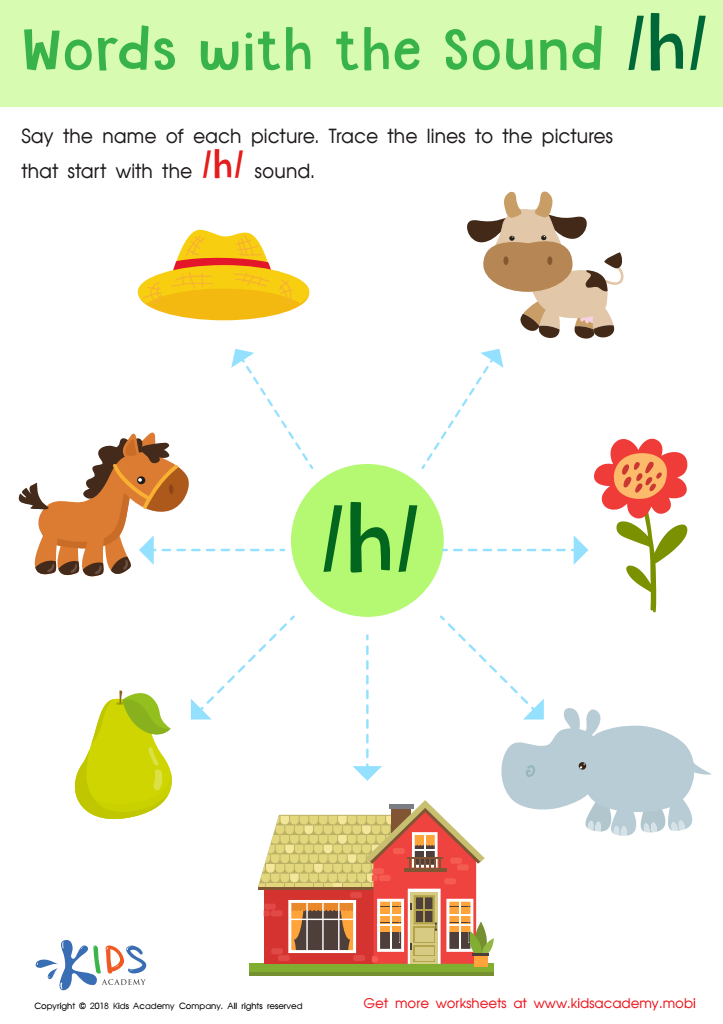
Words with sound h Reading Worksheet
 Assign to My Students
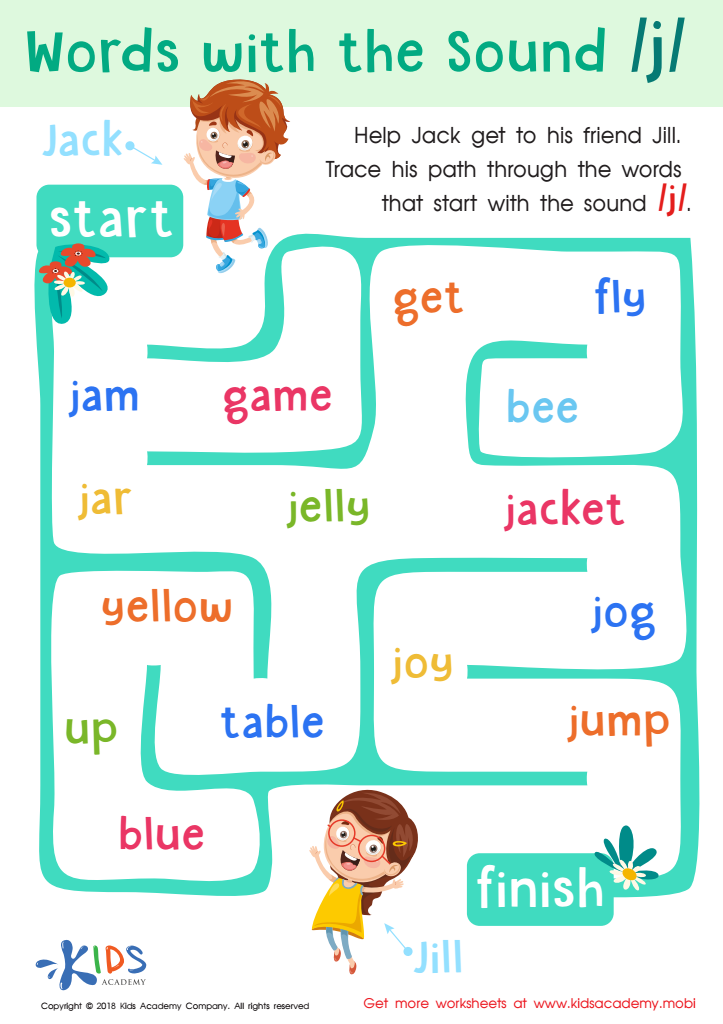
Words with sound j Reading Worksheet
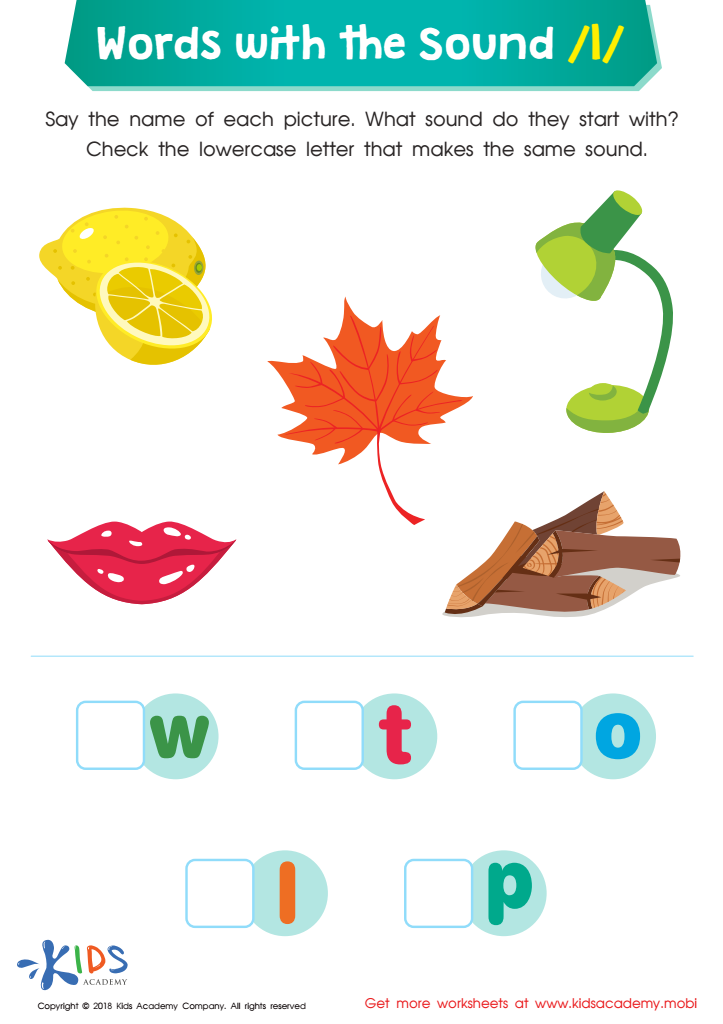
Words with Sound L Reading Worksheet
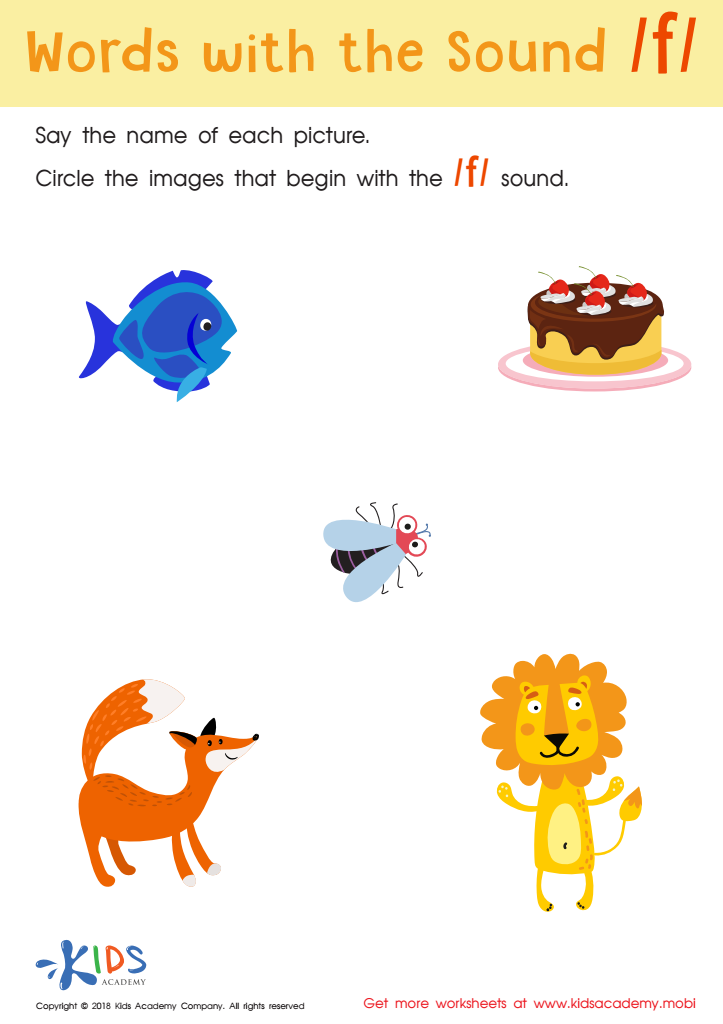
Words with sound f Reading Worksheet



Vocabulary expansion and consonant recognition are foundational skills for children ages 3-4, and both parents and teachers should prioritize these areas to support early literacy and overall cognitive development. At this age, children are in a critical period of language acquisition, where their brains are highly receptive to learning new words and sounds.
Expanding a child's vocabulary helps them express themselves more clearly and confidently. The more words a child knows, the better they can articulate their thoughts, emotions, and needs, leading to improved social interactions and higher self-esteem. Rich vocabulary also enhances comprehension skills, essential for future reading success and academic achievement.
Consonant recognition is equally important as it forms the basis of phonemic awareness—a vital component of reading. Understanding consonant sounds aids in the development of decoding skills, enabling children to blend sounds together to form words. This early exposure is instrumental in making connections between letters and sounds, which is a precursor to effective reading and writing.
Moreover, engaging activities that focus on vocabulary and consonant recognition can make learning fun and engaging, fostering a positive attitude towards education. Early intervention in these areas sets a strong foundation for lifelong learning, setting children up for future success both in and out of the classroom.







