
Phonics recognition Elementary Phonics Worksheets for Ages 3-4
3 filtered results
Difficulty Level
Grade
Age
-
From - To
Subject
Activity
Standards
Explore our engaging Elementary Phonics Worksheets designed specifically for ages 3-4! Our resources help young learners develop essential phonics recognition skills through fun and interactive activities. Each worksheet is tailored to introduce children to important letter sounds, blending techniques, and basic word recognition, laying a strong foundation for early literacy. With colorful illustrations and playful exercises, these worksheets make learning enjoyable and effective. Ideal for both home and classroom settings, our phonics activities encourage children to build confidence in their reading abilities, paving the way for academic success. Start your child's phonics journey today!
Favorites
With answer key
Interactive
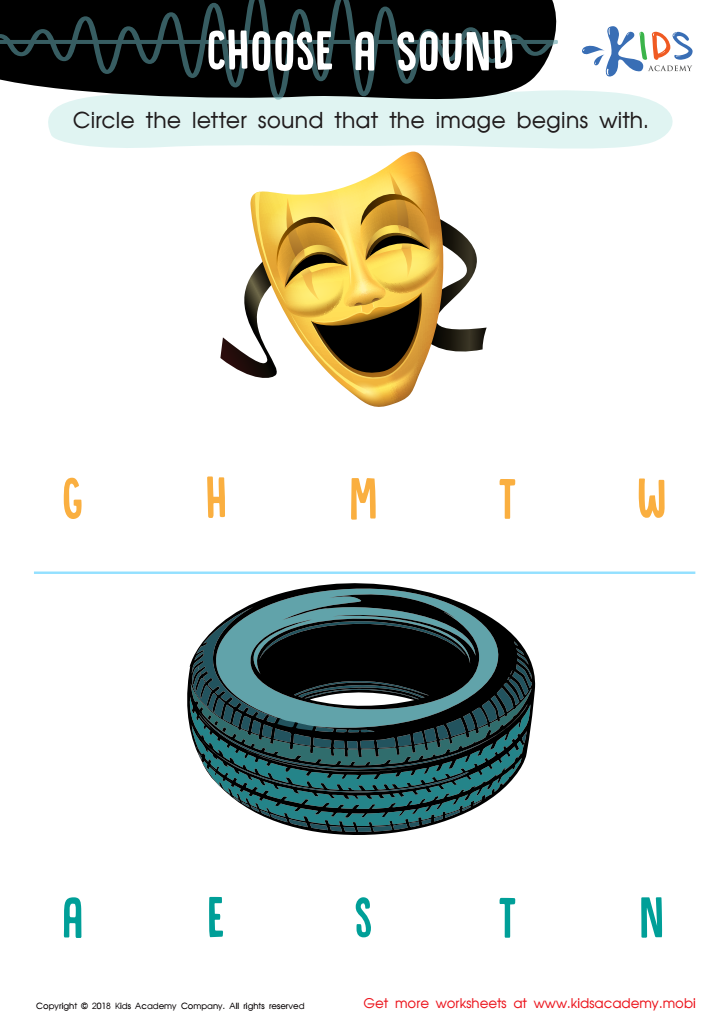
Choose a Sound Worksheet
Help your child hone pre-reading skills with this colorful worksheet! They'll practice tracing letter sounds, develop phoneme awareness, and gain confidence. Plus, it's a fun way to work on their fine motor skills.
 Assign to My Students
Choose a Sound Worksheet
Worksheet
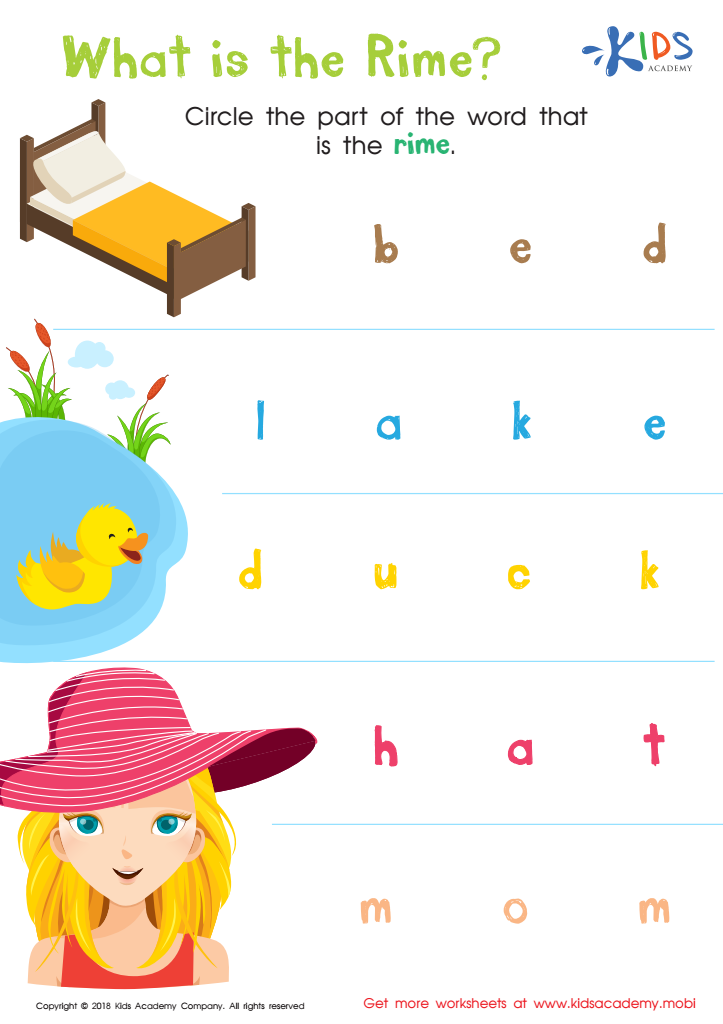
What Is the Rime? Worksheet
Kids will love this PDF worksheet that boosts their reading skills and fine motor skills as they trace the correct rimes for each picture. Knowing onset and rime is key to decoding and fluency, and this worksheet makes it fun! They won't even know they're learning and will be asking for more.
What Is the Rime? Worksheet
Worksheet
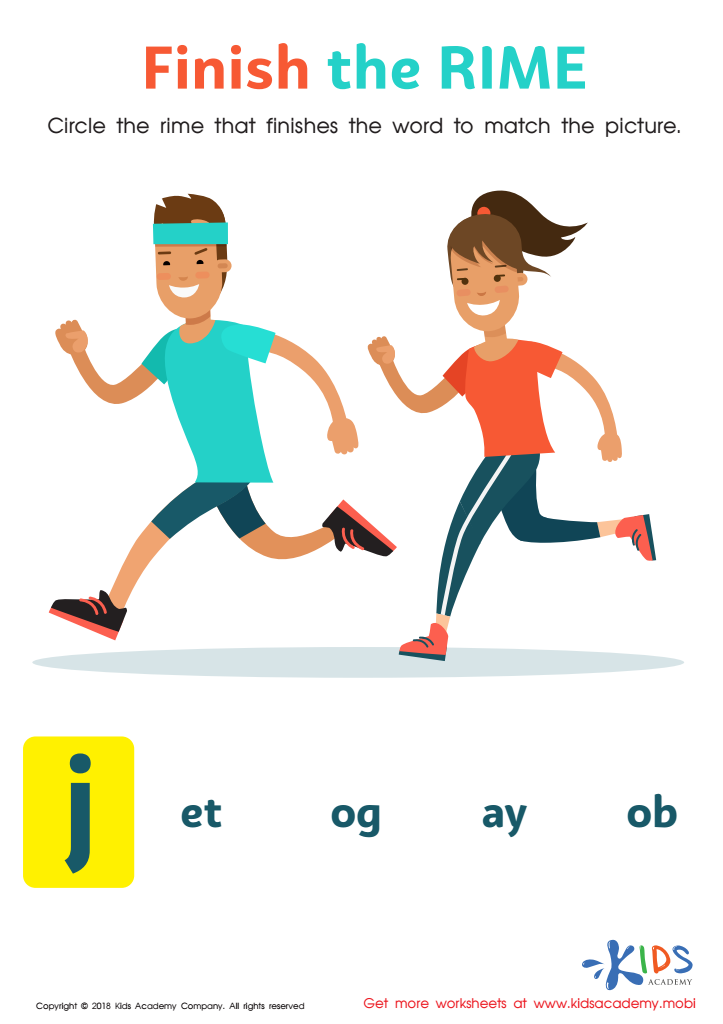
Finish the Rime Worksheet
Rimes help kids learn word families and spelling strategies. This PDF worksheet gives new readers practice with initial consonants, pictures, colors and motor skills. It's fun and cheery, and a great way to boost phonological awareness and rime identification.
Finish the Rime Worksheet
Worksheet
Join Kids Academy for Free
Who is primarily going to use this learning content?




Phonics recognition is a vital foundational skill for children aged 3-4, as it serves as the stepping stone for literacy development. Understanding phonics helps children connect sounds with letters or groups of letters, which is essential for reading and writing. When parents and teachers invest in phonics education early on, they foster a love for reading and empower children with essential tools that enhance their communication skills.
At this critical age, children are naturally curious and eager to learn. Introducing them to phonics in a fun, engaging way can spark their interest in literature and language. By incorporating games, songs, and interactive activities, educators can create an enjoyable learning environment that promotes cognitive development and critical thinking.
Moreover, mastering phonics improves children's confidence as they begin to recognize words and attempt to read independently. This skill also positively impacts their performance in later grades, making language arts, reading comprehension, and vocabulary acquisition easier.
Ultimately, early phonics recognition equips young learners with the skills and confidence to succeed academically and nurtures lifelong learning habits. For parents and teachers, prioritizing phonics means playing an instrumental role in shaping a child's educational journey.







