Shape Recognition Alphabet Worksheets for Ages 3-4
4 filtered results
-
From - To
Introduce your little ones to the world of shapes and letters with our Shape Recognition Alphabet Worksheets designed specifically for ages 3-4! These engaging worksheets help young learners develop essential skills by combining shape recognition with alphabet practice. Each worksheet features fun, colorful illustrations and simple activities that capture children's attention while promoting early literacy. Your child will explore different shapes through tracing, coloring, and matching exercises, reinforcing both shape and letter identification. Perfect for classroom use or at-home learning, these worksheets are great tools for fostering creativity and cognitive development. Get started today and watch your child thrive in their foundational learning!
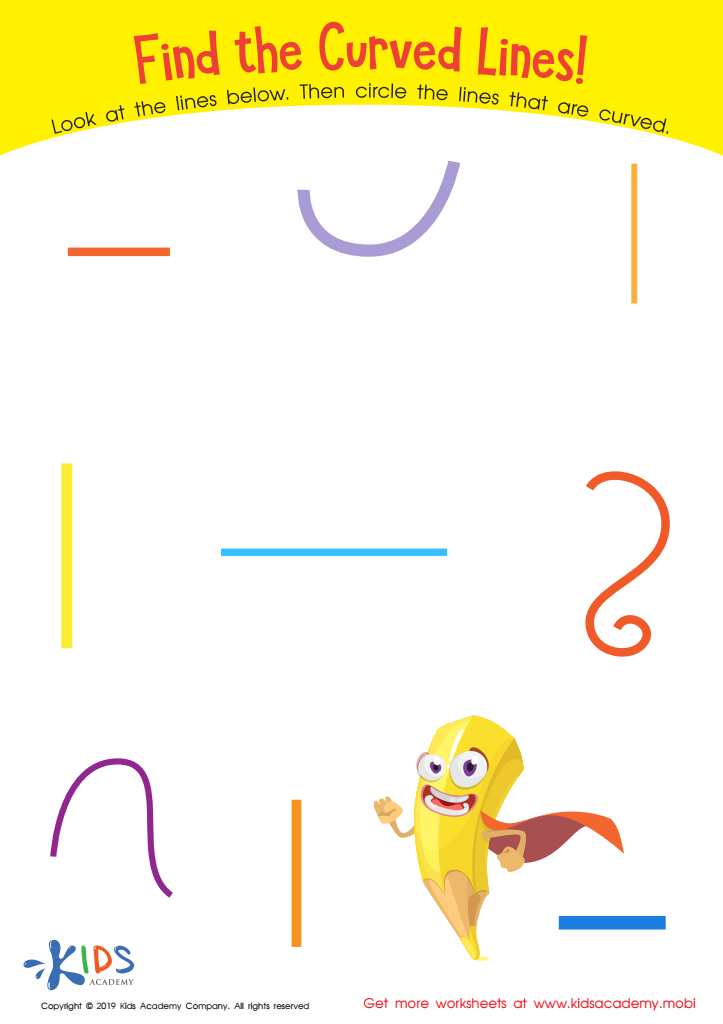
Find the Curved Lines! Worksheet
 Assign to My Students
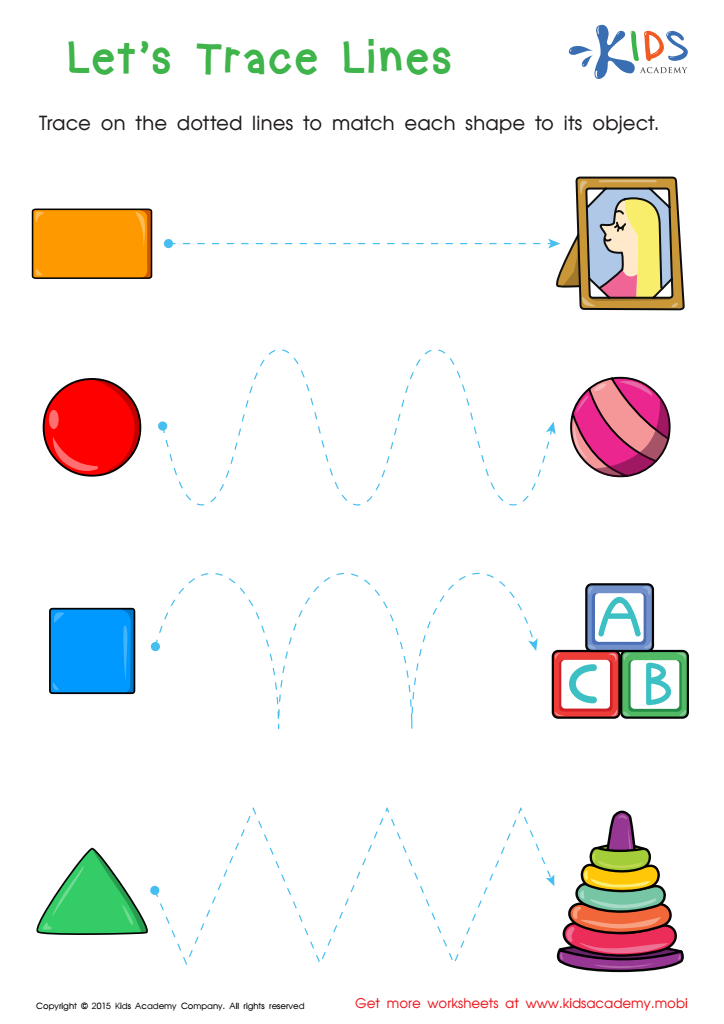
First Words: Let's Trace Lines Worksheet
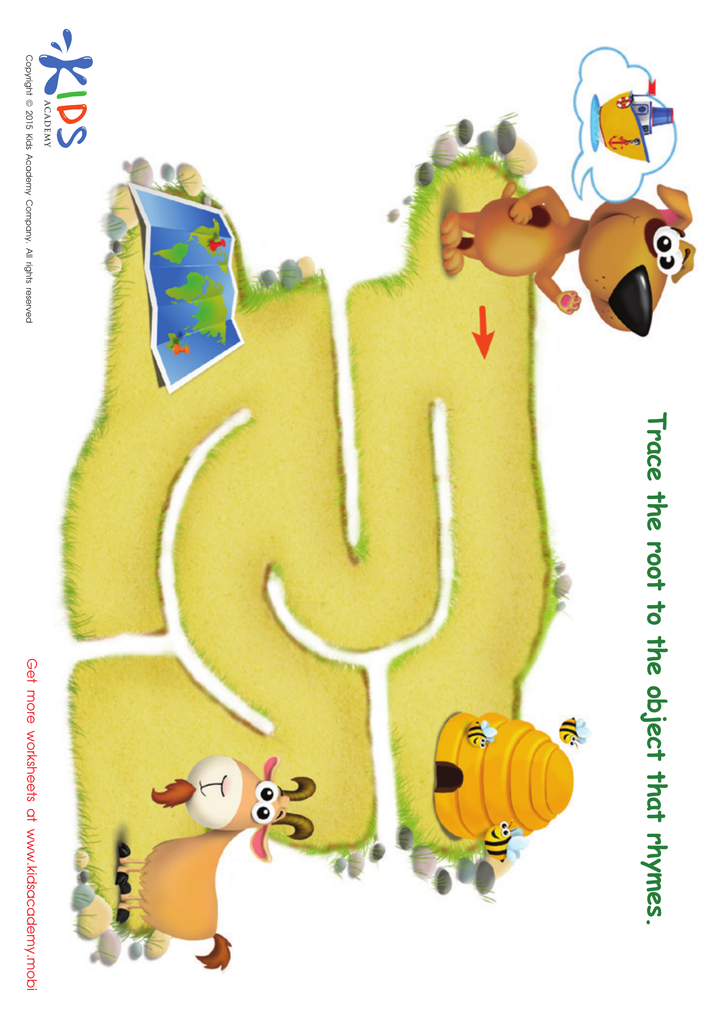
Boat Rhyming Words Worksheet
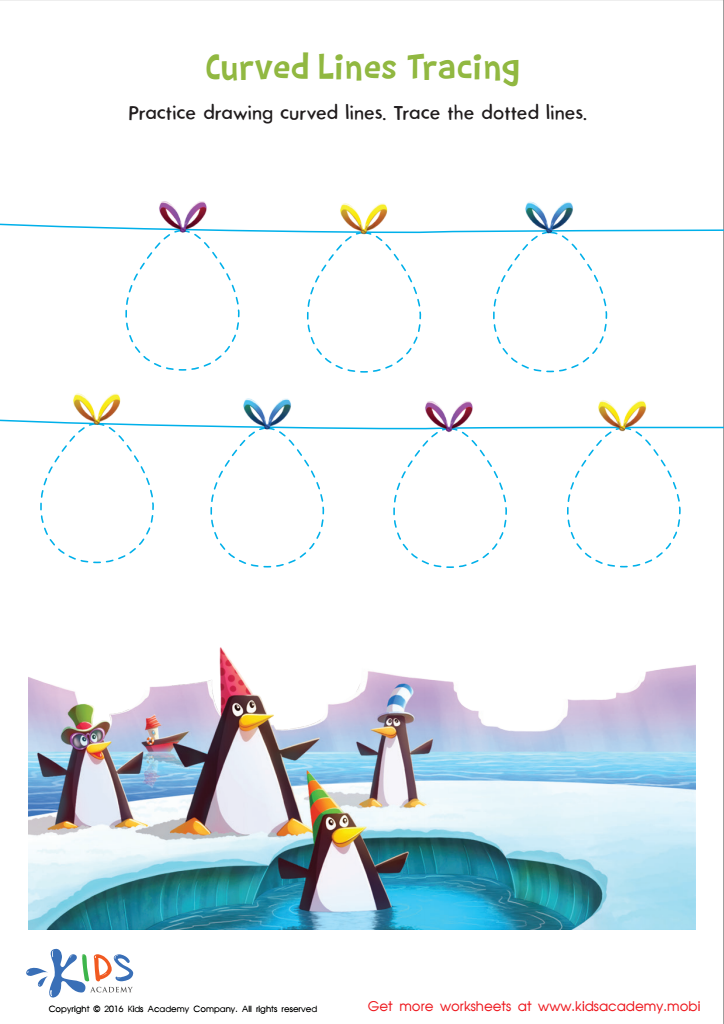
Curved Lines Tracing Worksheet







Shape recognition is a critical foundational skill for early learners aged 3-4, serving as a gateway to various cognitive, math, and spatial understanding crucial for later learning. Parents and teachers should care about this aspect of learning because it fosters critical thinking and problem-solving abilities. Kids who can recognize shapes can categorize objects, compare sizes, and begin to understand complex concepts like symmetry and patterns.
Moreover, shape recognition is interconnected with literacy and numeracy. Recognizing basic shapes aids in the understanding of letters and numbers, which often have unique shapes themselves. For example, the letter “O” is a circle, while “A” incorporates triangles. This early exposure helps with language development, as children connect shapes with words and forms, enhancing their vocabulary.
Additionally, incorporating shapes into play can enhance fine motor skills. Activities like cutting, drawing, and building reinforce both shape recognition and hand-eye coordination. When parents and teachers engage children in shape-related activities, it builds a sense of curiosity and discovery, laying a robust groundwork for academic success in a supportive and fun environment. Thus, fostering shape recognition during this critical stage of development has long-lasting benefits on children’s learning curves and overall confidence.







