Fine motor skills development Letter Recognition Worksheets for Ages 3-4
5 filtered results
-
From - To
Discover the essential tool for enhancing fine motor skills and letter recognition with our worksheets designed specifically for children aged 3-4. These engaging activities not only help youngsters learn the alphabet but also develop their dexterity and coordination through tracing, coloring, and more. Each worksheet promotes handwriting skills while making learning enjoyable. The interactive and playful designs encourage children to explore letters in a fun way, fostering a love for learning at an early age. Perfect for parents and educators, our worksheets are easy to print and can be used at home or in the classroom to support early childhood development.
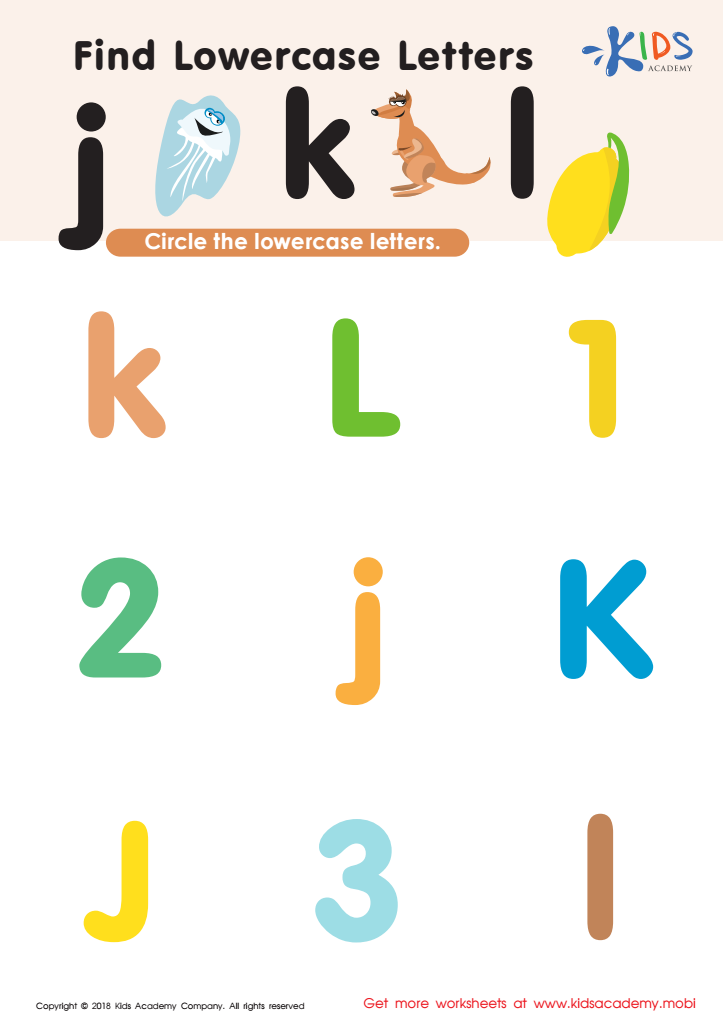
Find Lowercase Letters j k l Worksheet
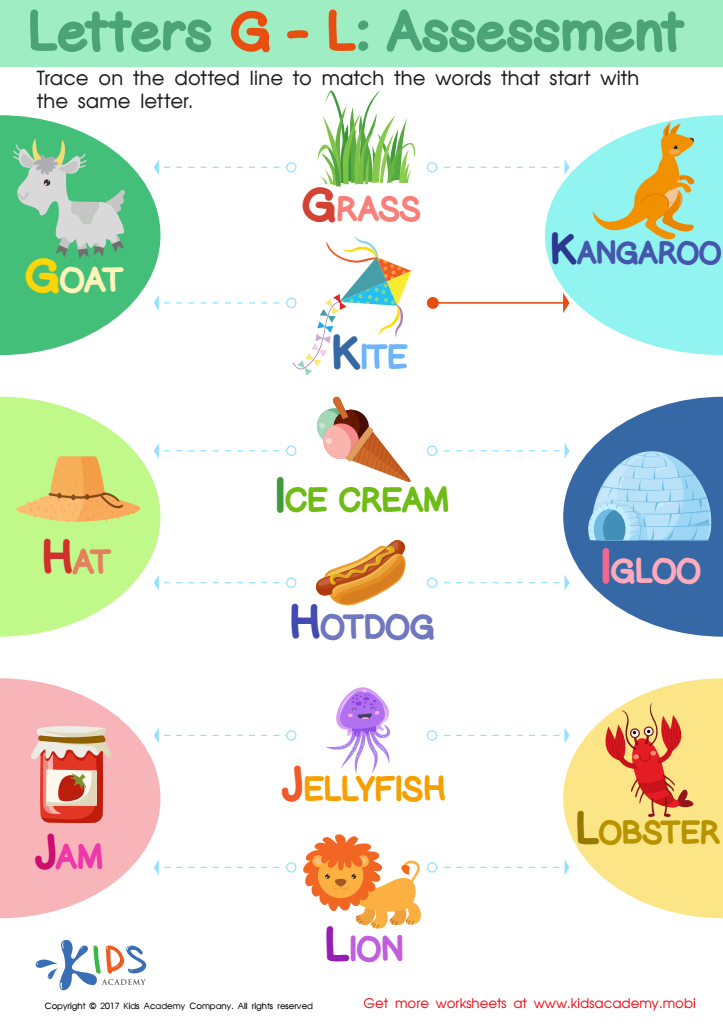
Letters G-L Worksheet
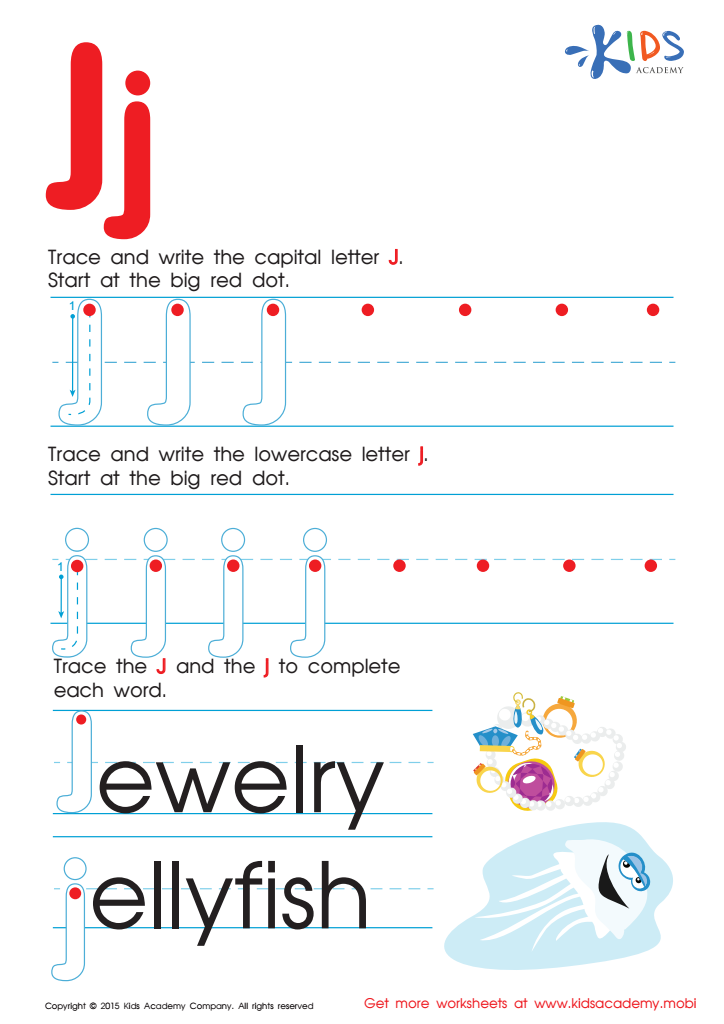
Letter J Tracing Page
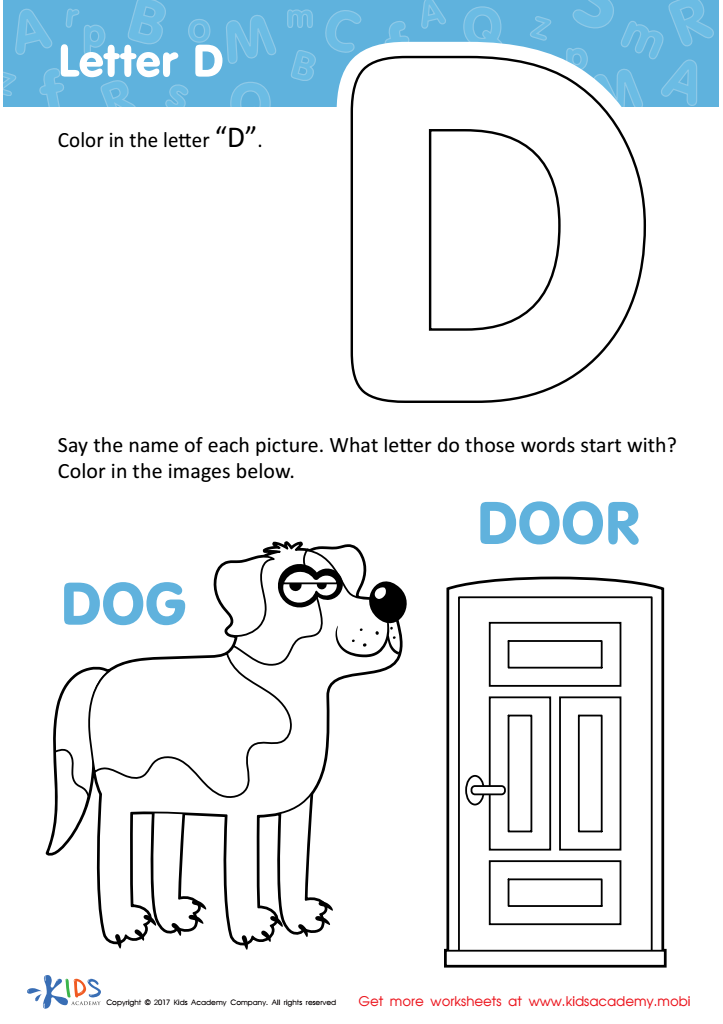
Letter D Coloring Sheet
 Assign to My Students
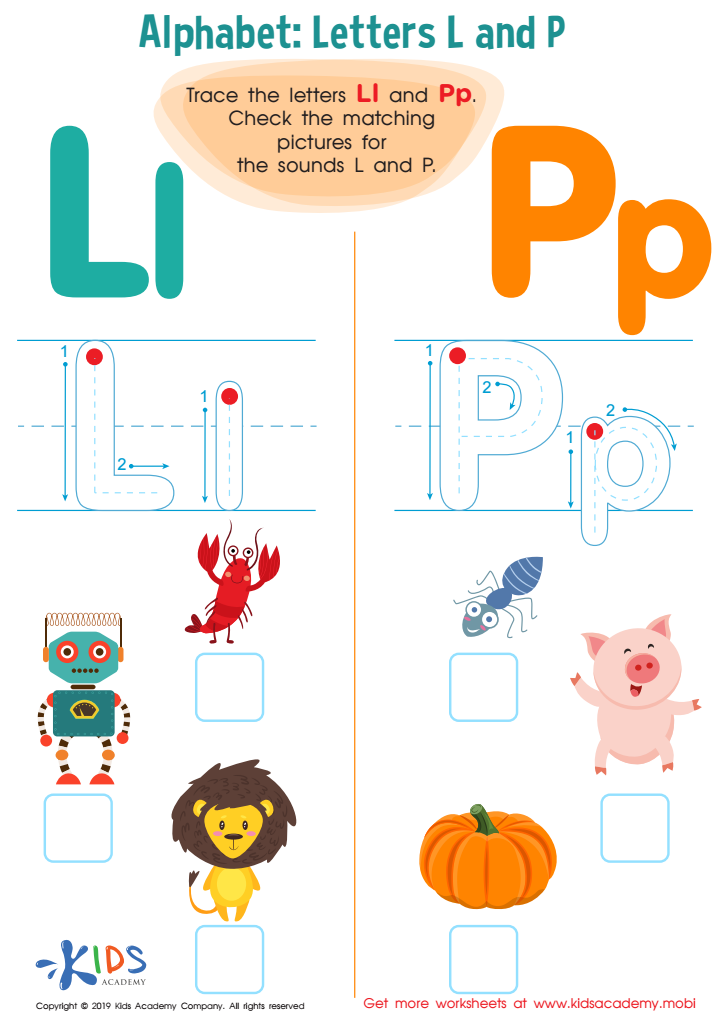
Letter L and P Tracing Worksheet








Fine motor skills and letter recognition are crucial components of early childhood development and should be prioritized by parents and teachers for children ages 3-4. Fine motor skills involve the coordination of small muscles in the hands and fingers, essential for tasks like writing, drawing, and manipulating objects. Developing these skills at a young age enhances children's ability to perform academic tasks independently and confidently.
Letter recognition is equally important, as it lays the foundation for literacy. Recognizing letters and their sounds enables children to decode words, an essential skill for reading. At this age, children are naturally curious, and engaging them in activities that promote fine motor development through letter recognition can be both educational and enjoyable. Simple activities like tracing letters using different textures or crafting alphabet shapes can make learning interactive and fun.
When parents and teachers emphasize these skills, they not only improve children's readiness for kindergarten but also boost their self-esteem and promote a love for learning. Investing time in fine motor skills and letter recognition fosters cognitive development, laying the groundwork for future academic success and lifelong skills. Therefore, it’s vital for caregivers to integrate support for these skills into daily routines and learning environments.







