Letter-sound association Letter Recognition Worksheets for Ages 3-4
8 filtered results
-
From - To
Enhance your child's literacy skills with our engaging Letter-Sound Association Letter Recognition Worksheets designed for ages 3-4. These interactive and colorful worksheets foster early learning by helping young learners identify letters and associate them with their corresponding sounds. Through fun activities such as tracing, coloring, and matching, children will boost their letter recognition and phonemic awareness, laying a strong foundation for reading and writing. Perfect for parents and educators, these worksheets make learning enjoyable and effective. Encourage a love for letters and ignite your child’s language skills today! Visit our site and start exploring these educational resources now.
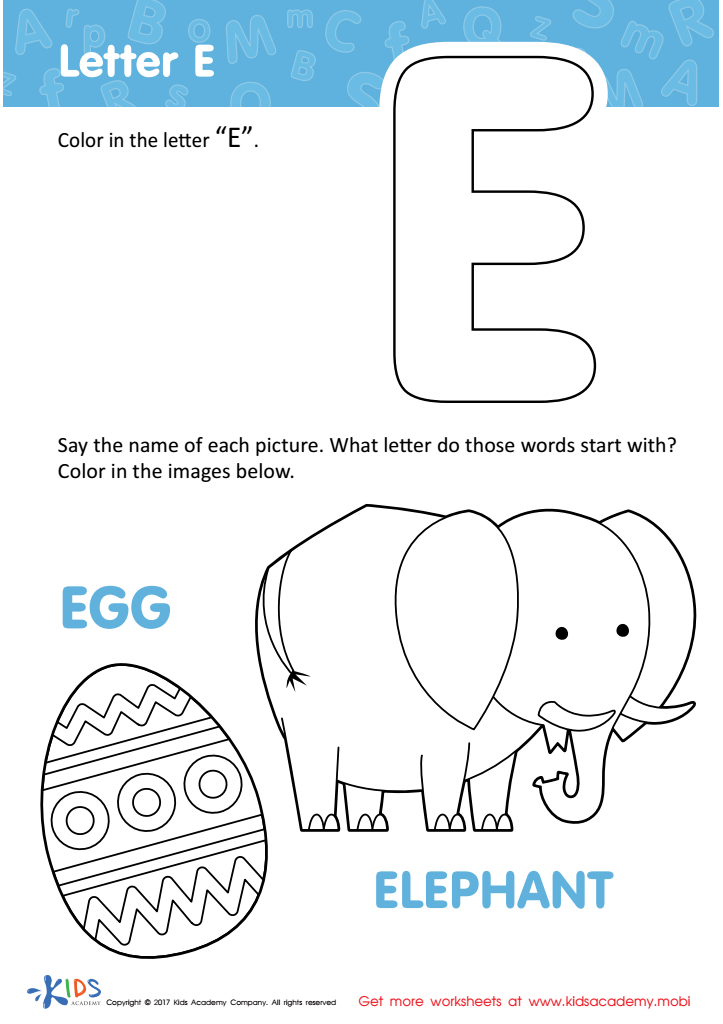
Letter E Coloring Sheet
 Assign to My Students
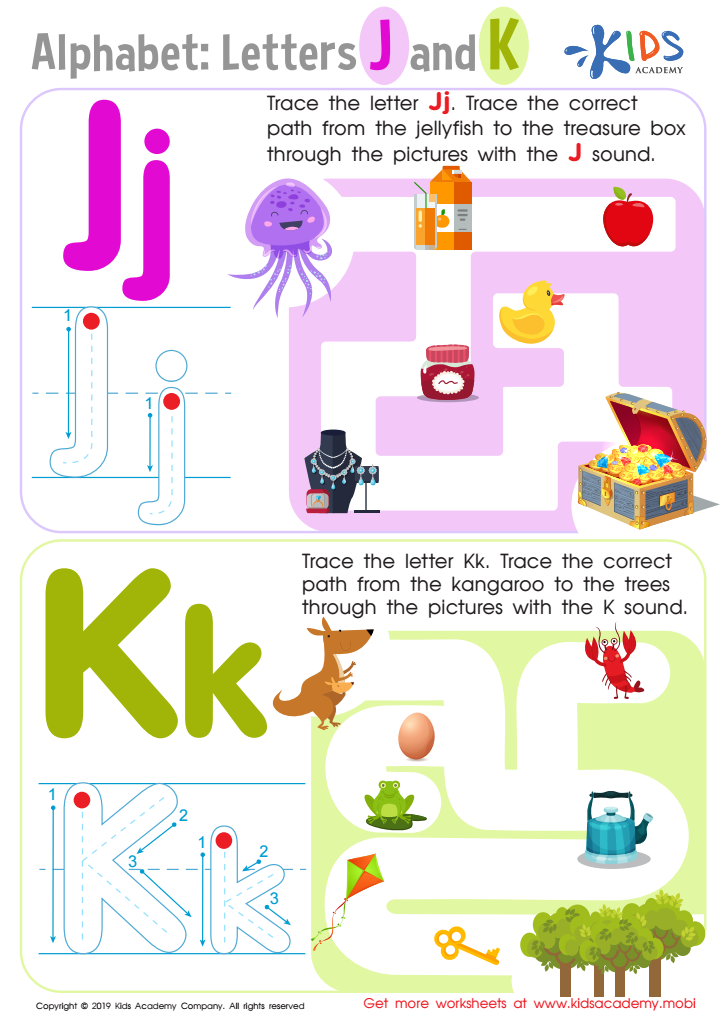
Letters J and K Tracing Worksheet
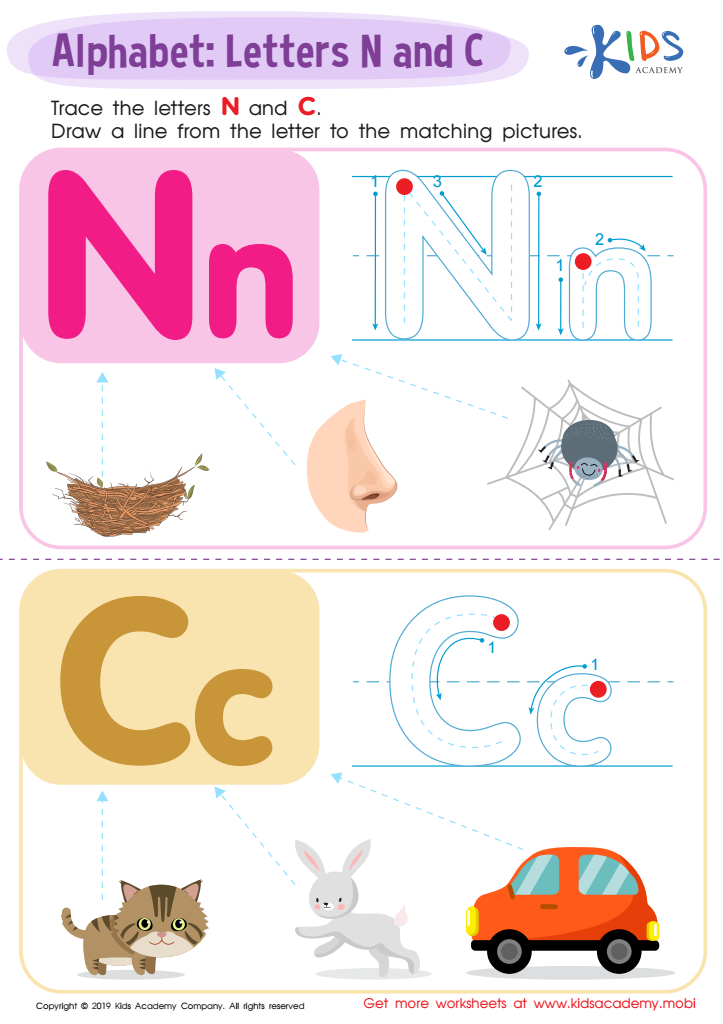
Letter N and C Tracing Worksheet
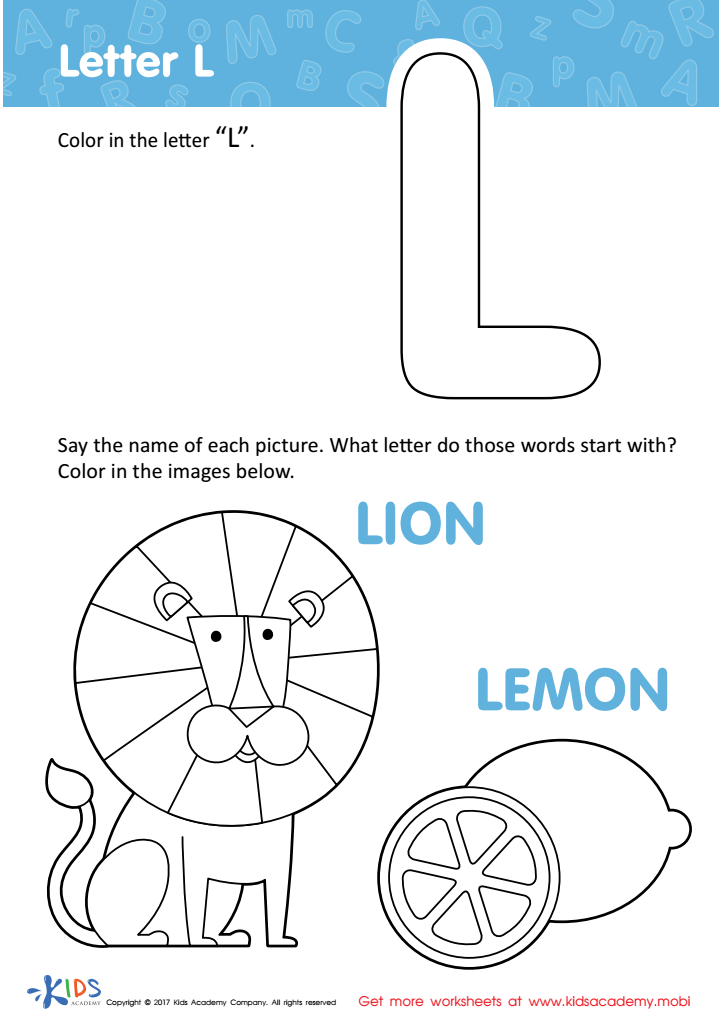
Letter L Coloring Sheet
Assign to My Students
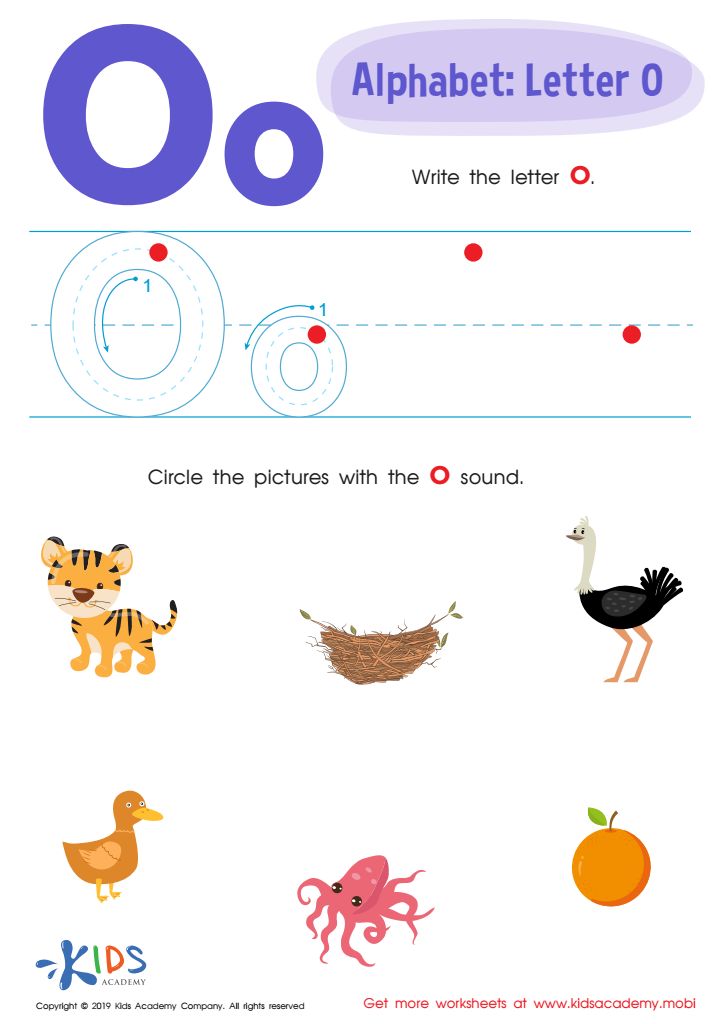
Letter O Tracing Worksheet
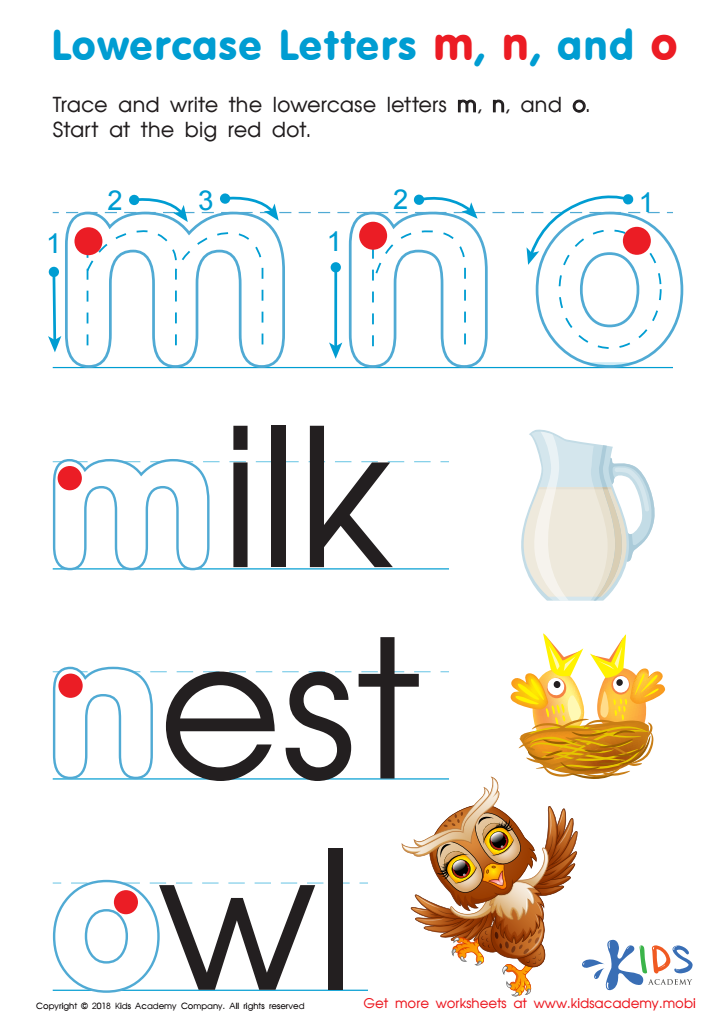
Lowercase Letters m n o Worksheet
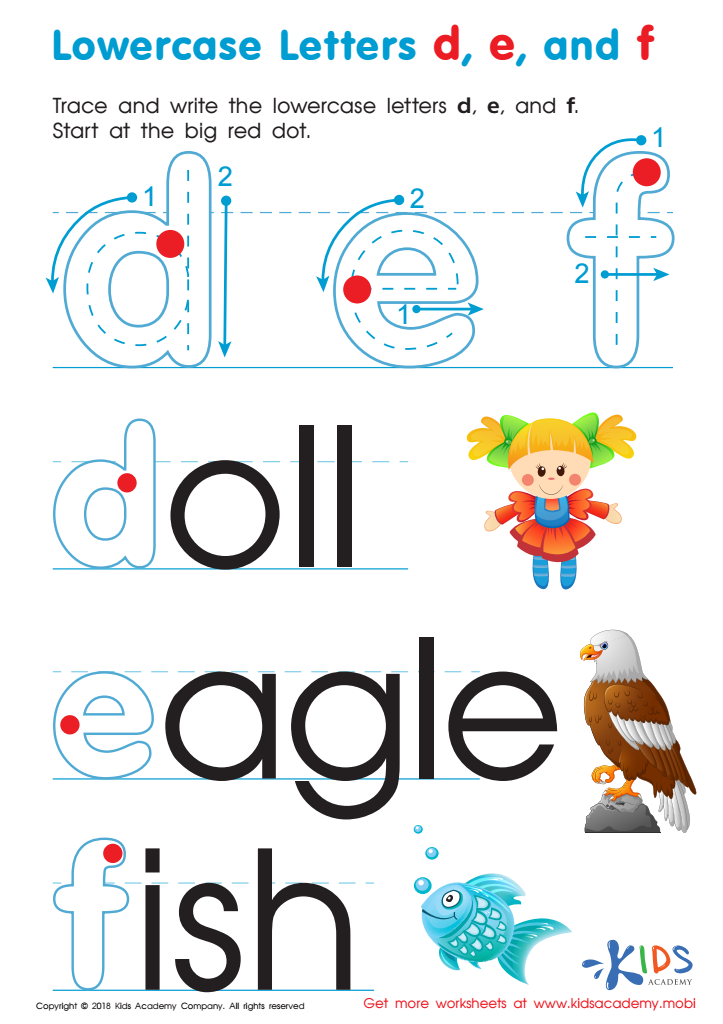
Lowercase Letters d e f Worksheet
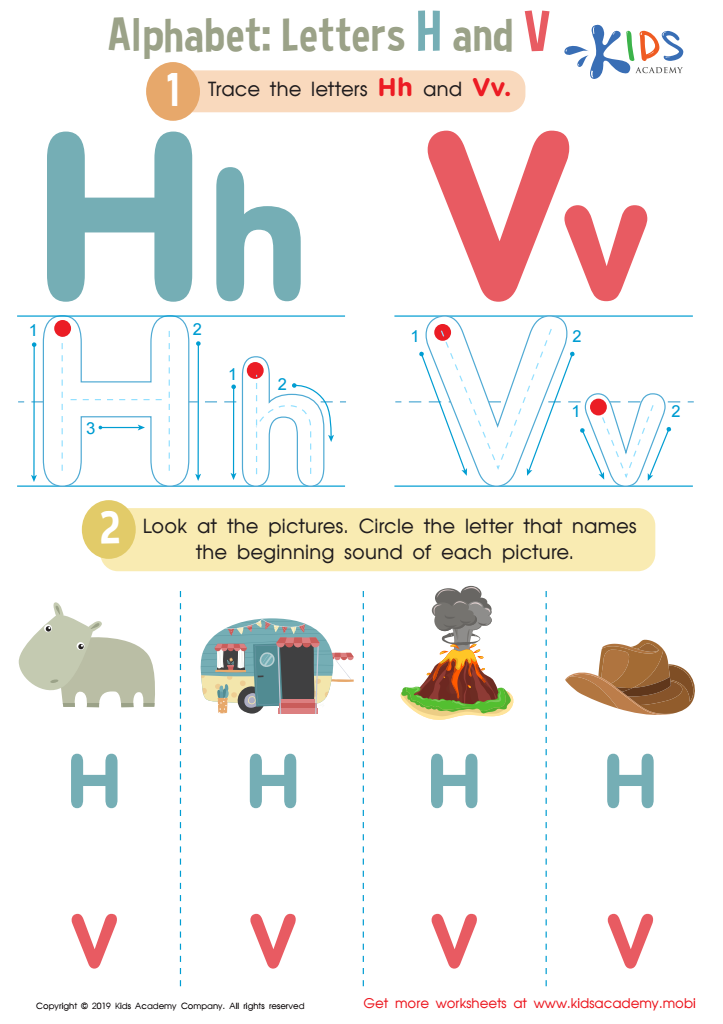
Letters H and V Tracing Worksheet








Letter-sound association and letter recognition are fundamental building blocks for early literacy skills, making them essential for children aged 3-4. At this age, children’s brains are uniquely primed for language acquisition, and understanding the relationship between letters and their corresponding sounds lays the groundwork for reading proficiency.
When parents and teachers emphasize letter-sound associations, they help children develop phonemic awareness, which is critical for decoding words later on. Recognizing letters and associating them with sounds enables children to begin blending sounds to form words, fostering early reading skills.
Moreover, letter recognition supports vocabulary development and language skills. As children learn to identify letters, they gain exposure to a variety of words, enriching their language experience. This interaction not only enhances their communication abilities but also boosts their confidence in engaging with books.
Engaging in activities that promote these skills—like singing the alphabet, playing letter games, or reading together—can make learning enjoyable and effective. Early mastery of letter-sound associations and recognition can significantly impact a child's future academic success, encouraging a lifelong love of reading and learning. Thus, both parents and teachers should prioritize these skills in early childhood education.







