
Letter Tracing Practice Letter Recognition Worksheets for Ages 3-4
5 filtered results
Difficulty Level
Grade
Age
-
From - To
Subject
Activity
Standards
Introduce delight and learning with our Letter Tracing Practice Letter Recognition Worksheets, tailored for children ages 3-4! Perfectly crafted to bolster alphabet familiarity and fine motor skills, these engaging worksheets guide young learners in forming each letter by tracing. Every page includes fun illustrations, making learning enjoyable and effective. Emphasizing early literacy foundations, these practice sheets aid children's recognition of uppercase and lowercase letters while enhancing hand-eye coordination. Ideal for home or classroom use, our worksheets are a wonderful resource to kick-start your child's reading and writing journey. Bring learning to life today with Kids Academy!
Favorites
With answer key
Interactive
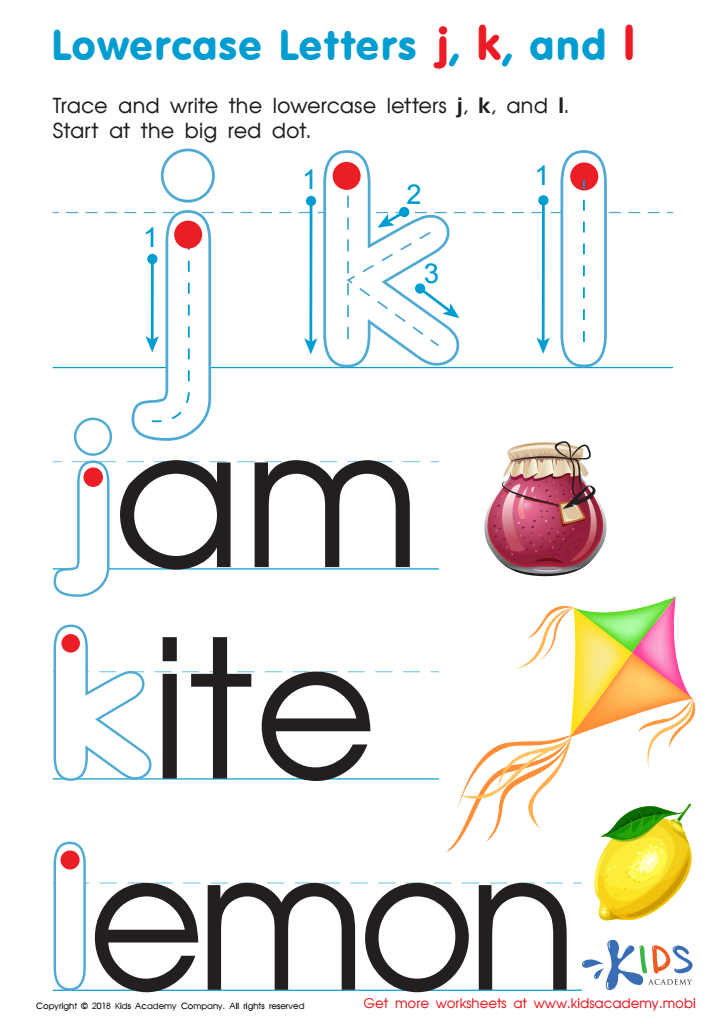
Lowercase Letters j k l Worksheet
Teach your child the difference between uppercase and lowercase letters. Have them trace and write the lowercase letters j, k, and l, starting at the red dot. Guide your child's hand to form the letters correctly.
Lowercase Letters j k l Worksheet
Worksheet
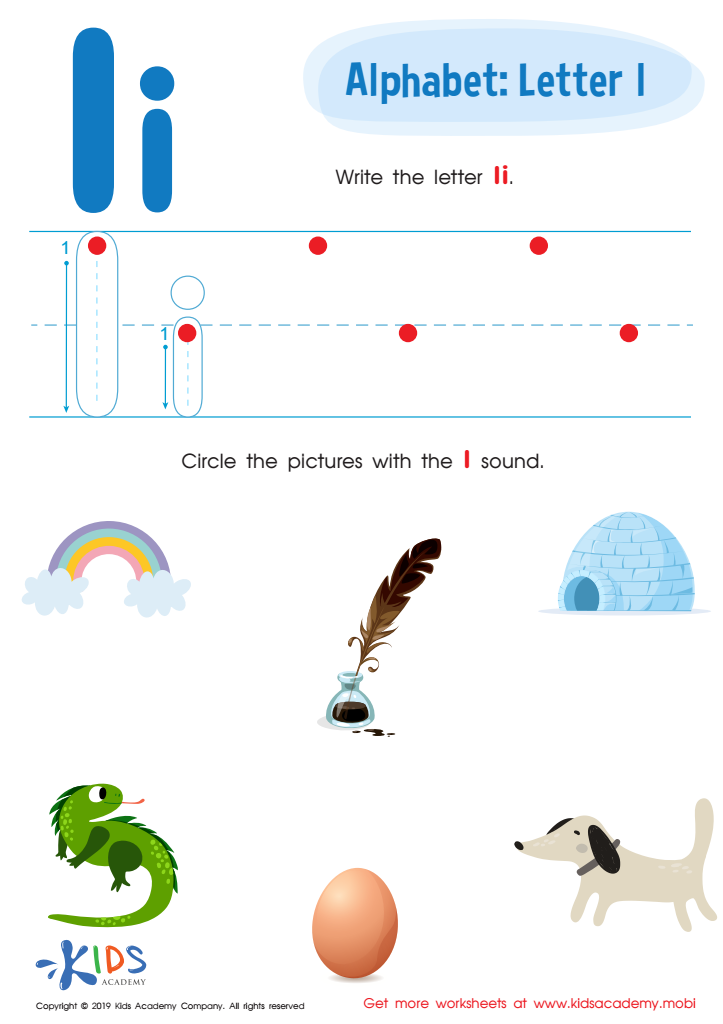
Letter I Tracing Worksheet
Kids can hone tracing, writing and identifying skills for the letter 'I' with this worksheet. Whether visual or reading/writing learners, every child can benefit from the tasks - tracing, writing and circling objects beginning with 'I'. This free sheet will soon get preschoolers confident with the 'I' letter!
Letter I Tracing Worksheet
Worksheet
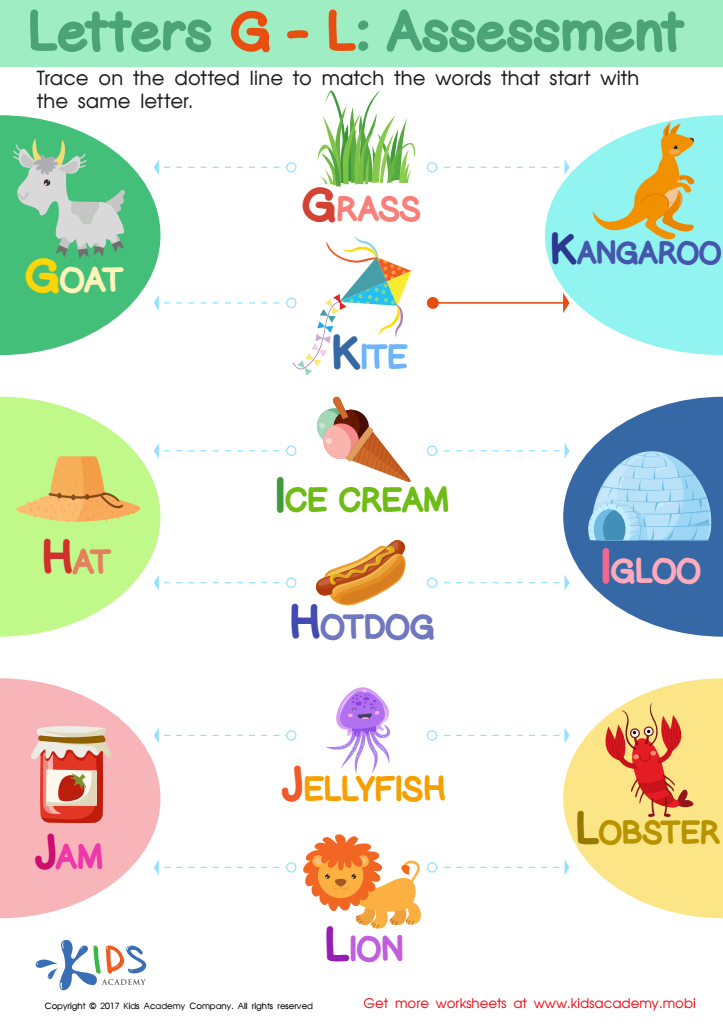
Letters G-L Worksheet
This fun worksheet helps preschoolers develop reading and phonics skills. It gets kids to match G-L words that start with the same letter, making it engaging and educational.
Letters G-L Worksheet
Worksheet
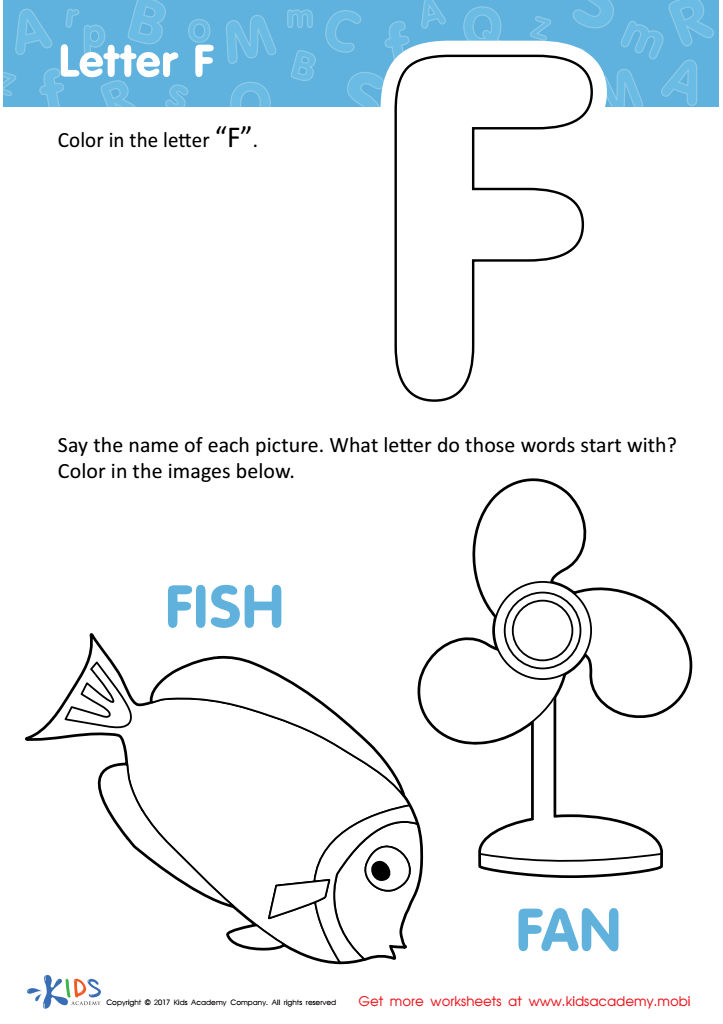
Letter F Coloring Sheet
Coloring pages help kids learn to recognize letters and sounds. Our "F" page has kids color a fish and a fan. It's a great way to introduce them to the letter "F" using words they already know.
Download (PDF)
 Assign to My Students
Assign to My Students
Letter F Coloring Sheet
Worksheet
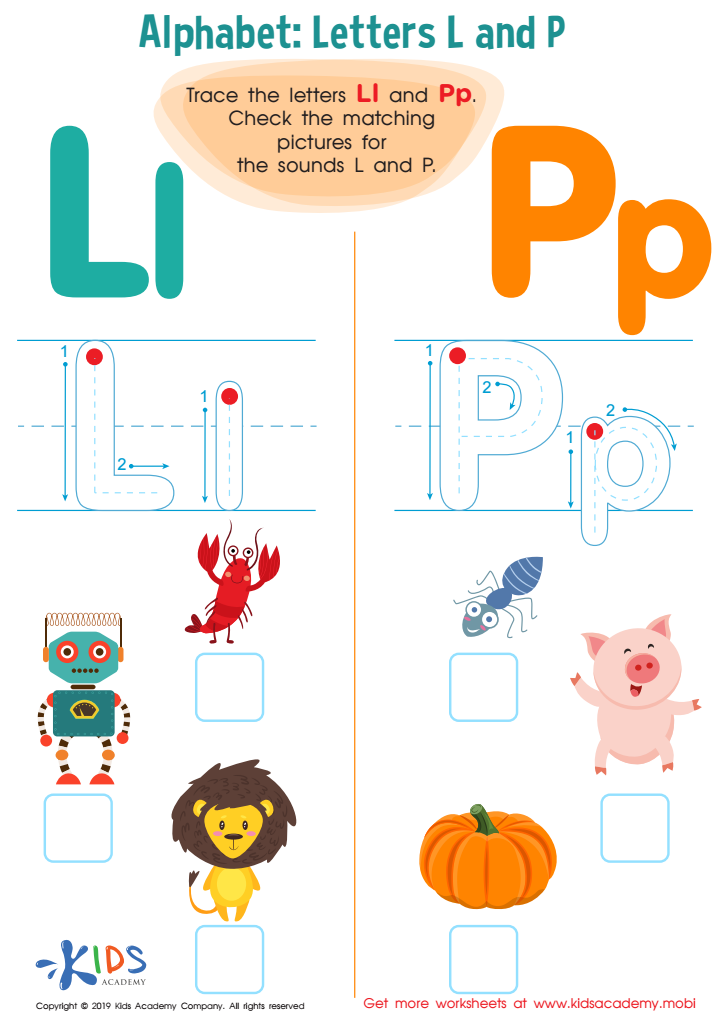
Letter L and P Tracing Worksheet
This traceable worksheet can motivate your students to learn and practice core skills. They'll trace the letters 'L' and 'P' and identify the pictures next to them. With this exercise, they'll unlock their learning abilities and excel in the subject!
Letter L and P Tracing Worksheet
Worksheet
Join Kids Academy for Free
Who is primarily going to use this learning content?








Parents and teachers should understand the importance of Letter Tracing Practice for children aged 3-4 because it lays the foundational skills essential for early literacy development. At this age, children are in a critical stage of learning and brain development when their neural pathways are rapidly forming. Letter tracing activities provide a multi-sensory experience that helps young learners recognize and differentiate between the shapes and sounds of various letters. This practice enhances fine motor skills through the physical act of writing and strengthens cognitive abilities by reinforcing memory and attention.
Furthermore, early familiarity with letter shapes and recognition fosters confidence in young learners as they engage with books and other written materials. When children can identify letters, they are more likely to decode words and begin reading sooner. This boosts their overall comprehension and vocabulary, setting them up for future academic success. By integrating letter tracing into their routine, parents and teachers create a structured yet enjoyable environment that encourages lifelong learning and curiosity. Ultimately, investing time in letter tracing practice supports developmental milestones and empowers children to master the fundamental skills necessary for reading and writing, making it a crucial element of early childhood education.







