Lowercase letter writing Letter Recognition Worksheets for Ages 3-4
3 filtered results
-
From - To
Our "Lowercase Letter Writing and Letter Recognition Worksheets for Ages 3-4" offer an engaging way to introduce young learners to the fascinating world of letters! Designed specifically for preschoolers, these worksheets feature fun activities that promote recognition and writing of lowercase letters. Children will enjoy tracing, coloring, and identifying letters through playful images and activities, fostering both their writing skills and letter familiarity. Perfect for home or classroom use, these worksheets support early literacy development while keeping learning enjoyable. Start your child's literacy journey today with our enchanting and educational resources tailored for their age group!
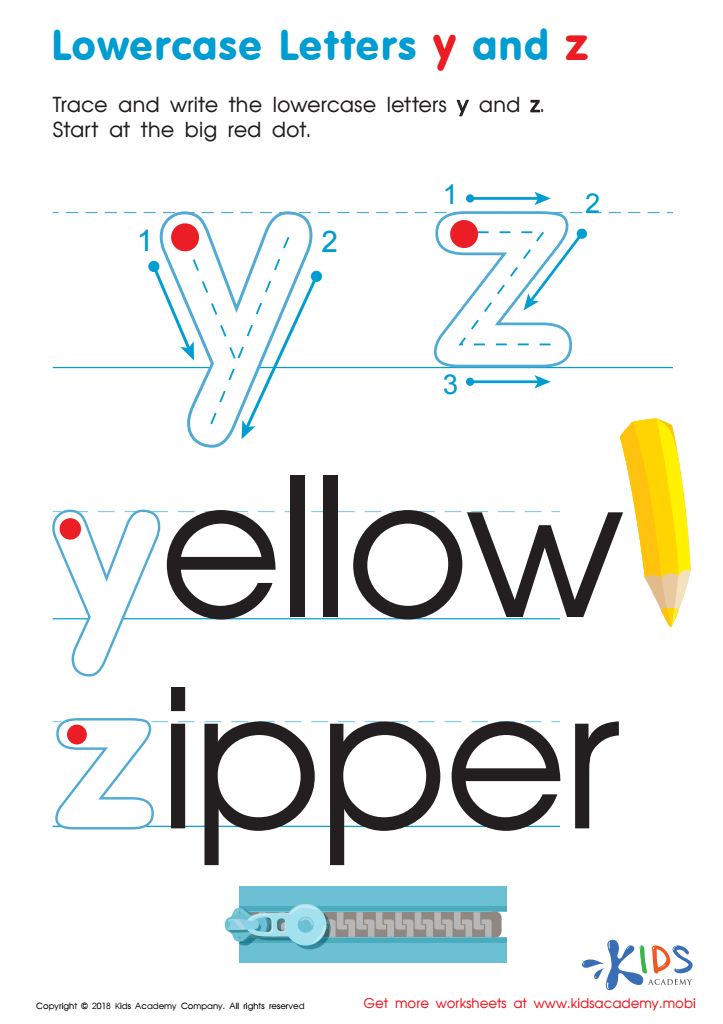
Lowercase Letters y z Worksheet
 Assign to My Students
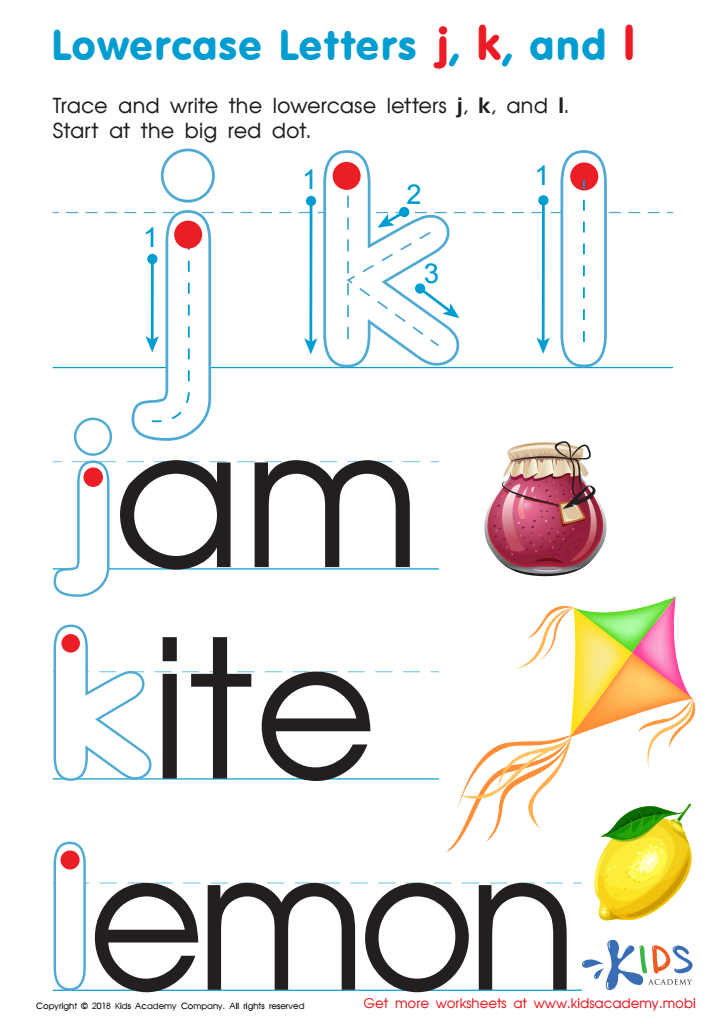
Lowercase Letters j k l Worksheet
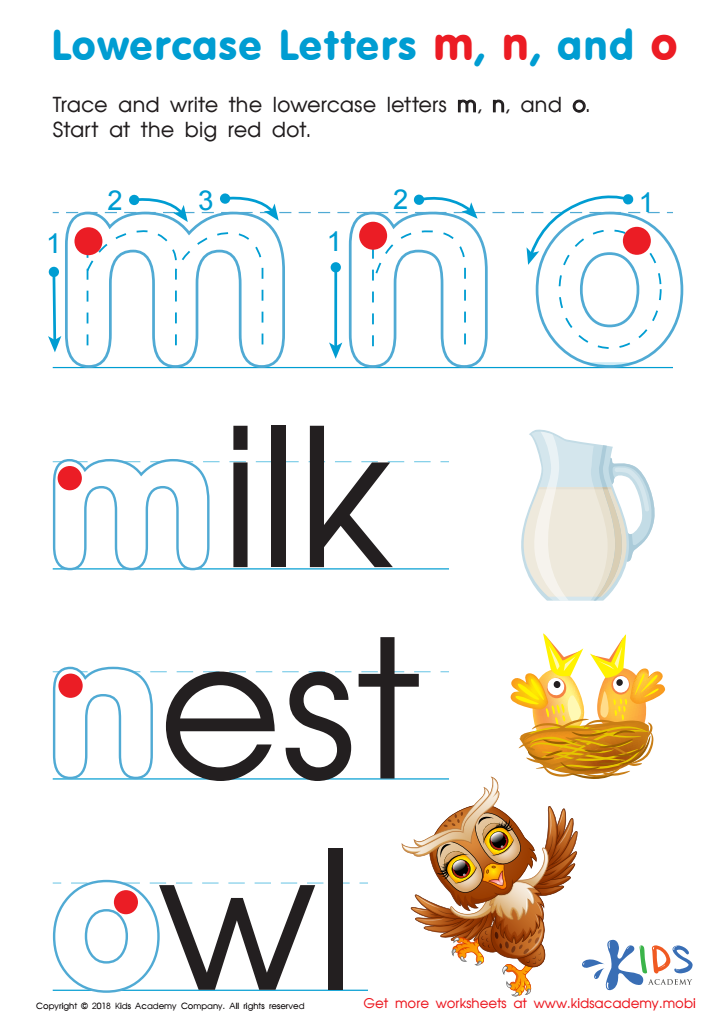
Lowercase Letters m n o Worksheet








Parents and teachers should prioritize lowercase letter recognition and writing for children aged 3-4 because this foundational skill is crucial for their literacy development. At this age, children are naturally curious and eager to learn, making it an ideal time to introduce them to lowercase letters. Recognizing lowercase letters helps children understand that letters can take many forms, as lowercase letters are commonly used in everyday writing, such as in books, labels, and street signs.
Learning to recognize and write lowercase letters builds confidence in young learners as they start to see their names and other words in print, fostering a sense of ownership over their literacy journey. Mastering these skills will aid in their transition to reading and writing, laying the groundwork for effective communication. Furthermore, the development of fine motor skills associated with writing letters helps enhance their overall dexterity and hand-eye coordination.
In summary, focusing on lowercase letter writing and recognition not only supports early literacy but also cultivates critical thinking and creativity, engaging children in the learning process. By investing time in these skills, parents and teachers are equipping children with the tools necessary for academic success and instilling a lifelong love for reading and writing.







