
Visual discrimination Letter Recognition Worksheets for Ages 3-4
5 filtered results
Difficulty Level
Grade
Age
-
From - To
Subject
Activity
Standards
Discover our engaging Visual Discrimination Letter Recognition Worksheets designed specifically for children aged 3-4! These playful worksheets help young learners develop essential skills by focusing on identifying letters and differentiating between similar shapes. Through fun activities, children will enhance their visual discrimination abilities, a crucial foundation for reading and writing readiness. Perfect for at-home learning or classroom use, our resources are tailored to keep little ones entertained while fostering their love for letters. Boost your preschooler's confidence and set them on a path to literacy success with our easy-to-use, colorful worksheets that make letter recognition a joy! Explore now!
Favorites
With answer key
Interactive
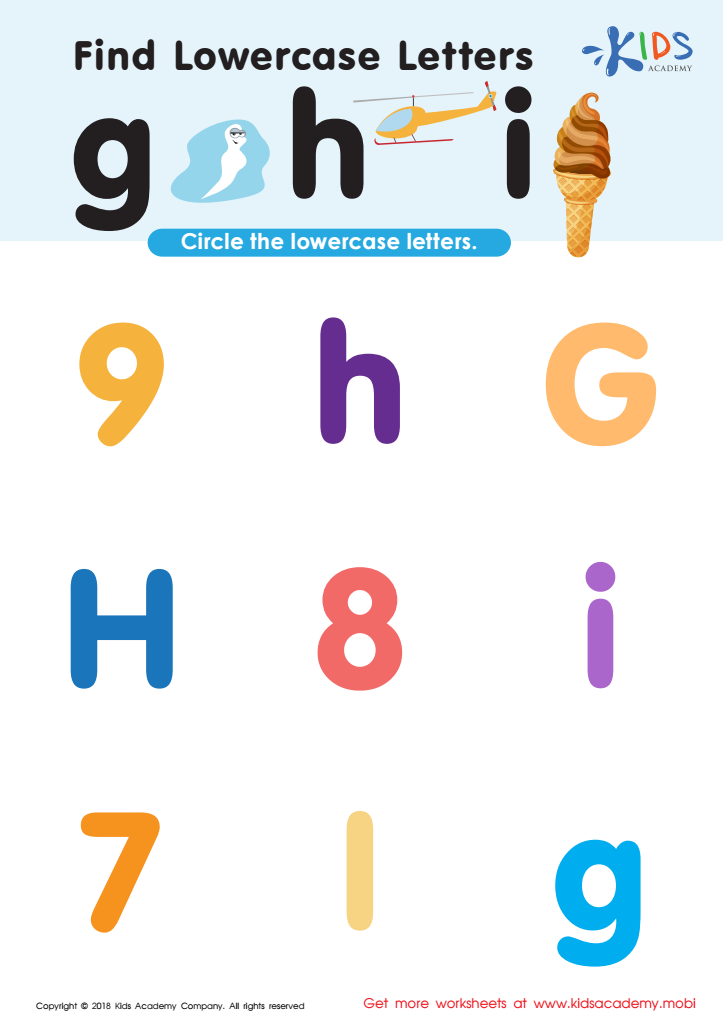
Find Lowercase Letters g h i Worksheet
Turn learning into a fun journey with your child! Use this free worksheet to find and circle the lowercase letters hidden amongst uppercase letters and numbers. Your child will understand what you're teaching them as they enjoy the search.
 Assign to My Students
Find Lowercase Letters g h i Worksheet
Worksheet
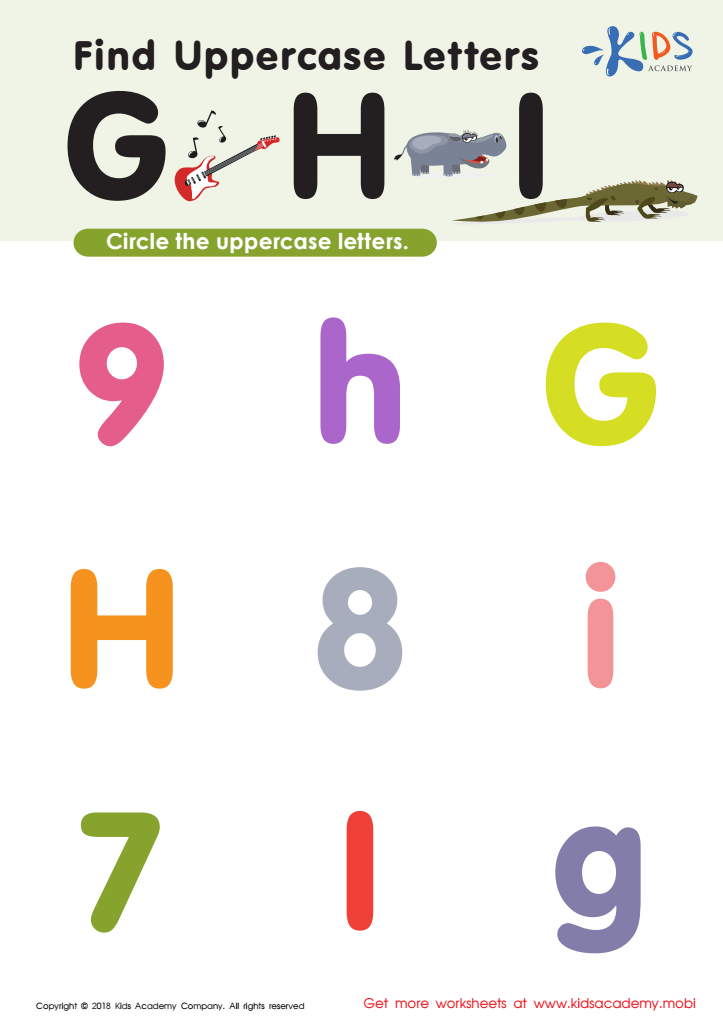
Find Uppercase Letters G, H, and I Worksheet
Find G, H, and I in uppercase with this downloadable worksheet! Numbers are included to challenge your kindergartener's letter recognition skills. Plus, practice G, H, and I sounds using the cute graphics. Perfect for learning letter case recognition!
Find Uppercase Letters G, H, and I Worksheet
Worksheet
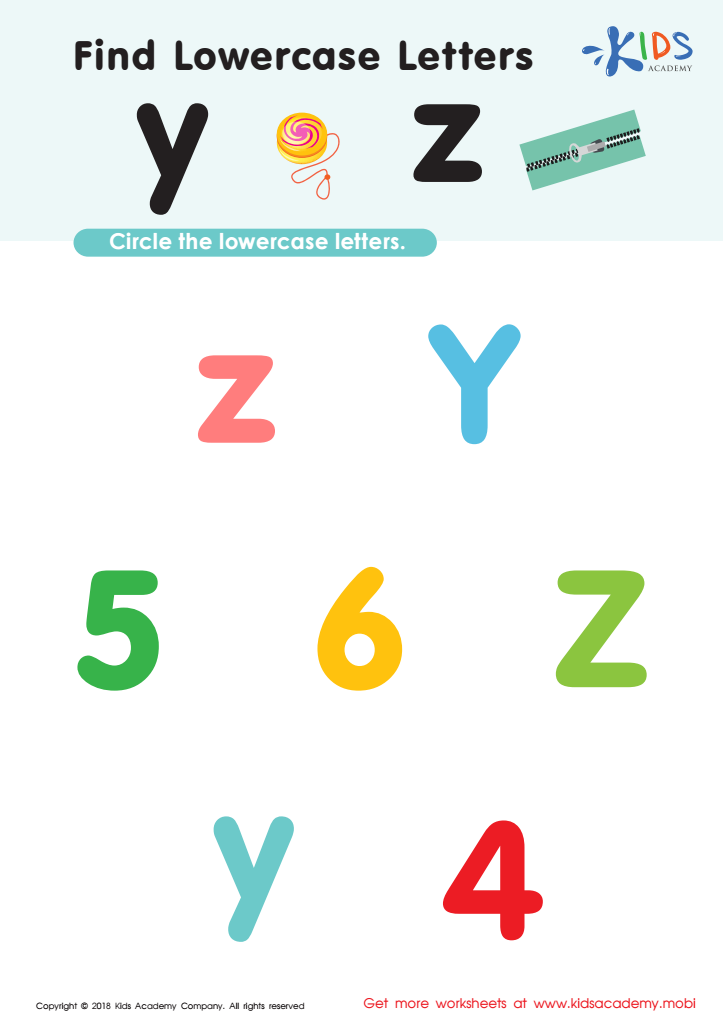
Find Lowercase Letters y z Worksheet
Help your kid learn the alphabet. Before they can move on to words and reading, they must first know the lower and uppercase letters. Show them how to find the letters y and z in this worksheet, which is filled with uppercase letters and numbers. Together, find and circle them.
Find Lowercase Letters y z Worksheet
Worksheet
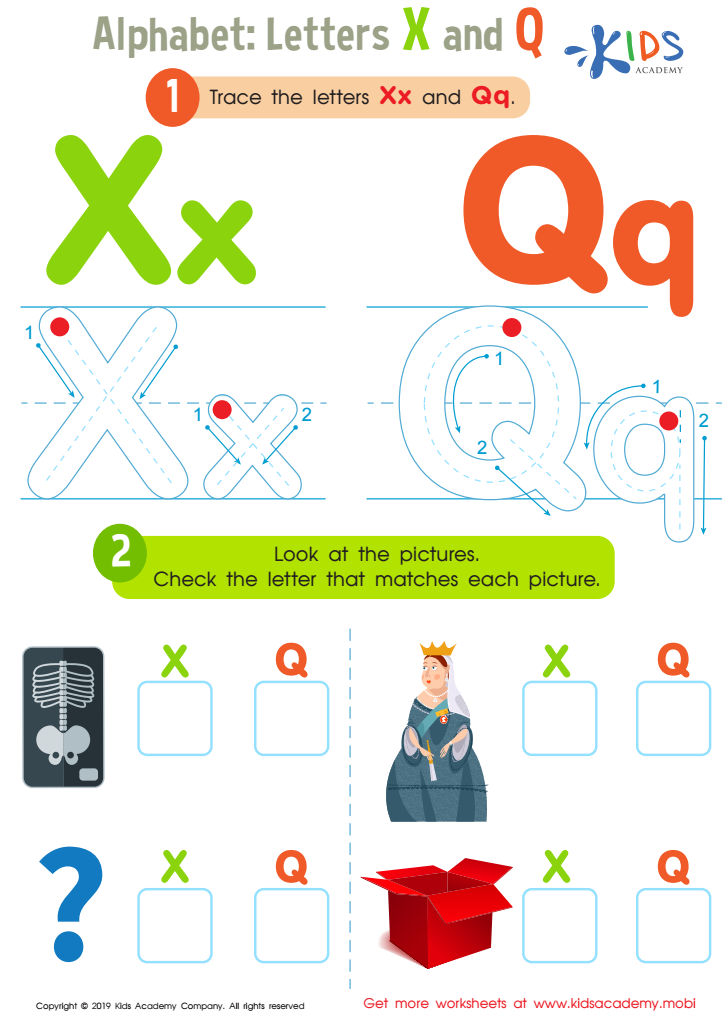
Letters X and Q Tracing Worksheet
Do you want your students to improve writing and letter recognition? This worksheet is a great place to start! Kids can trace the letters «X» and «Q» and identify pictures that match each letter. With a little encouragement, they'll do a great job!
Letters X and Q Tracing Worksheet
Worksheet
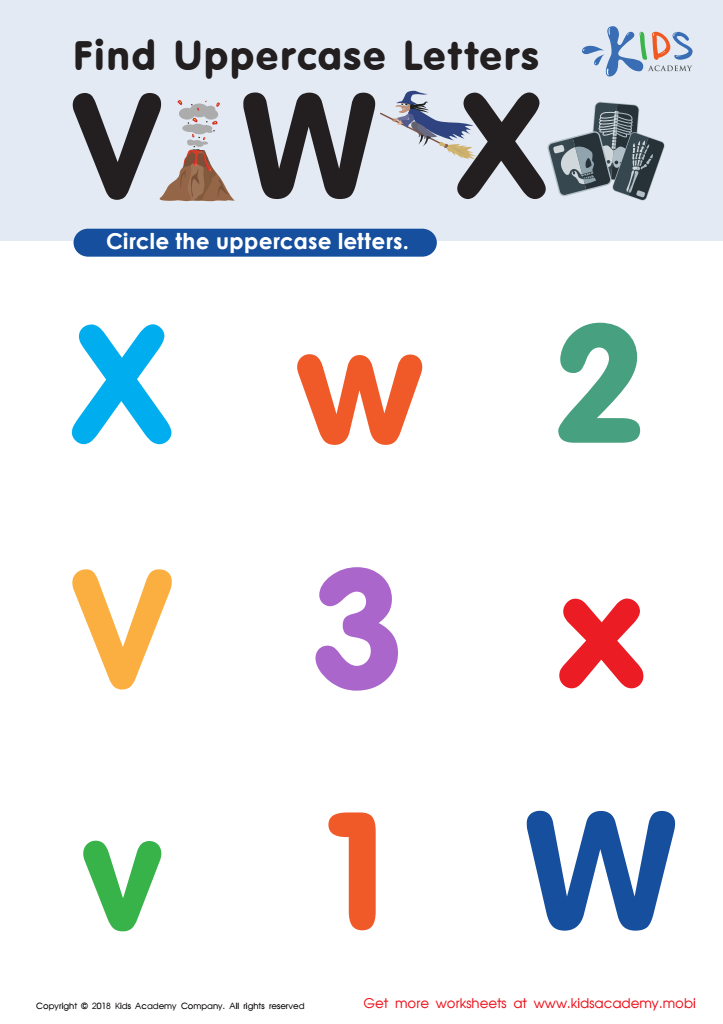
Find Uppercase Letters V, W, X Worksheet
Ask your kids if they can spot the uppercase letters V, W and X hidden in the lowercase letters and numbers, then have them circle them. After that, ask them to give you examples of words beginning with those letters. This worksheet will help them get started.
Find Uppercase Letters V, W, X Worksheet
Worksheet
Join Kids Academy for Free
Who is primarily going to use this learning content?








Visual discrimination letter recognition is a critical skill for children aged 3-4, laying the foundation for their future reading and writing abilities. During early childhood, children begin to identify differences and similarities among letters and objects, which is essential in developing literacy skills. For parents and teachers, fostering visual discrimination helps young learners recognize letters, understand their shapes, and differentiate between them, which are important steps toward reading comprehension.
By engaging in activities that promote visual discrimination—like letter-matching games or alphabet puzzles—children enhance their cognitive abilities, improve focus, and boost their memory. Early and consistent exposure to letter recognition contributes to confidence in language skills as children which prepares them for structured learning in kindergarten and beyond.
Moreover, strong letter recognition skills can reduce frustration when faced with more advanced literacy tasks, allowing children to engage more fully in educational activities. As literacy is linked to success in school and beyond, supporting visual discrimination and letter recognition during this formative stage is vital. Teachers and parents play an essential role in providing the support and resources necessary for children to develop these foundational skills, ensuring a smooth transition into reading and writing. Educational efforts at this stage propel lifelong learning.







