Vocabulary development Letter Sounds Worksheets for Ages 3-4
6 filtered results
-
From - To
Our Vocabulary Development Letter Sounds Worksheets for Ages 3-4 are designed to enhance your child's early literacy skills through engaging activities. Focusing on letter-sound recognition, these worksheets help preschoolers make vital connections between sounds and letters, setting a robust foundation for reading and writing. Each worksheet incorporates fun, colorful images and interactive tasks suitable for young learners, ensuring that the learning process is both effective and enjoyable. These resources not only develop phonemic awareness but also build vocabulary, listening, and speaking skills. Perfect for both parents and teachers, start your child's literacy journey with our expertly crafted worksheets.
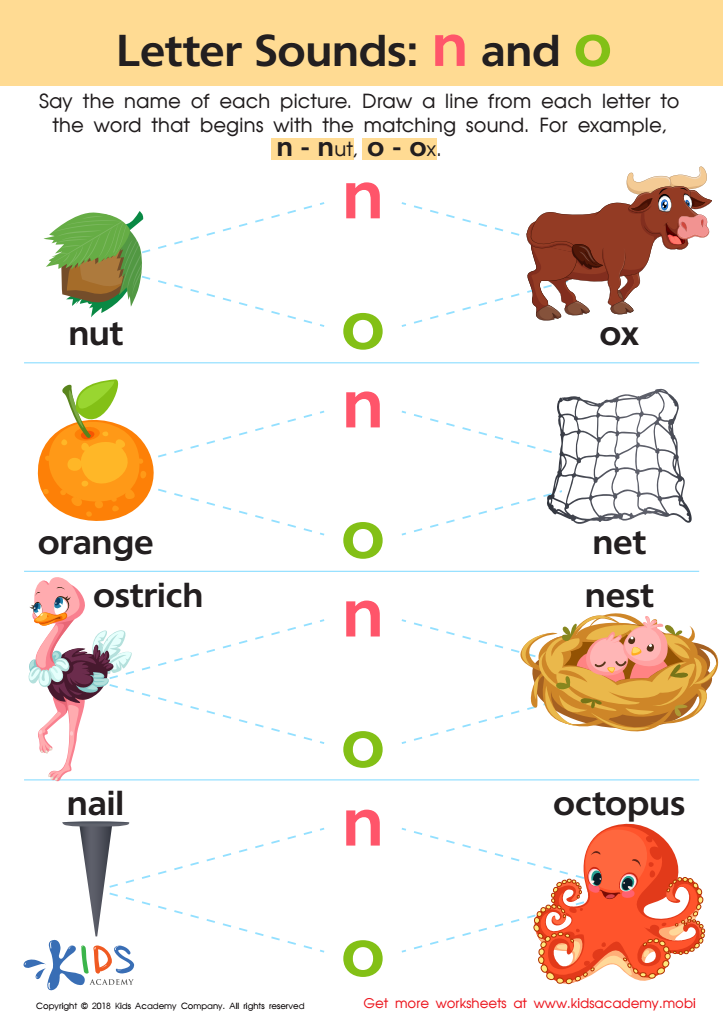
Letter N and O Sounds Worksheet
 Assign to My Students
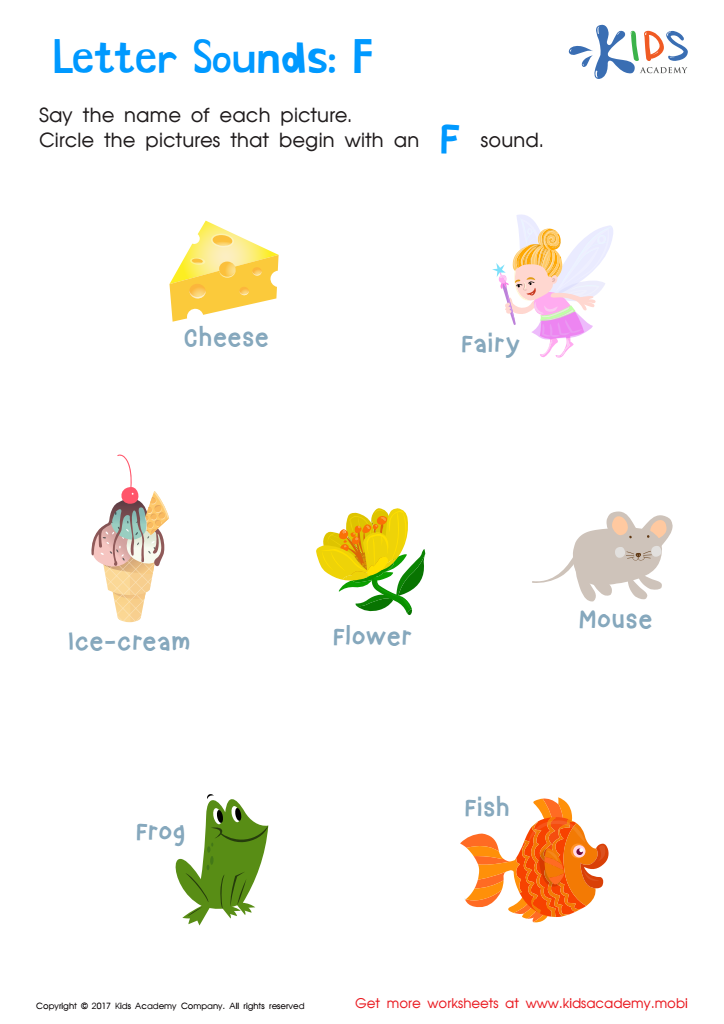
Letter F Sounds Worksheet
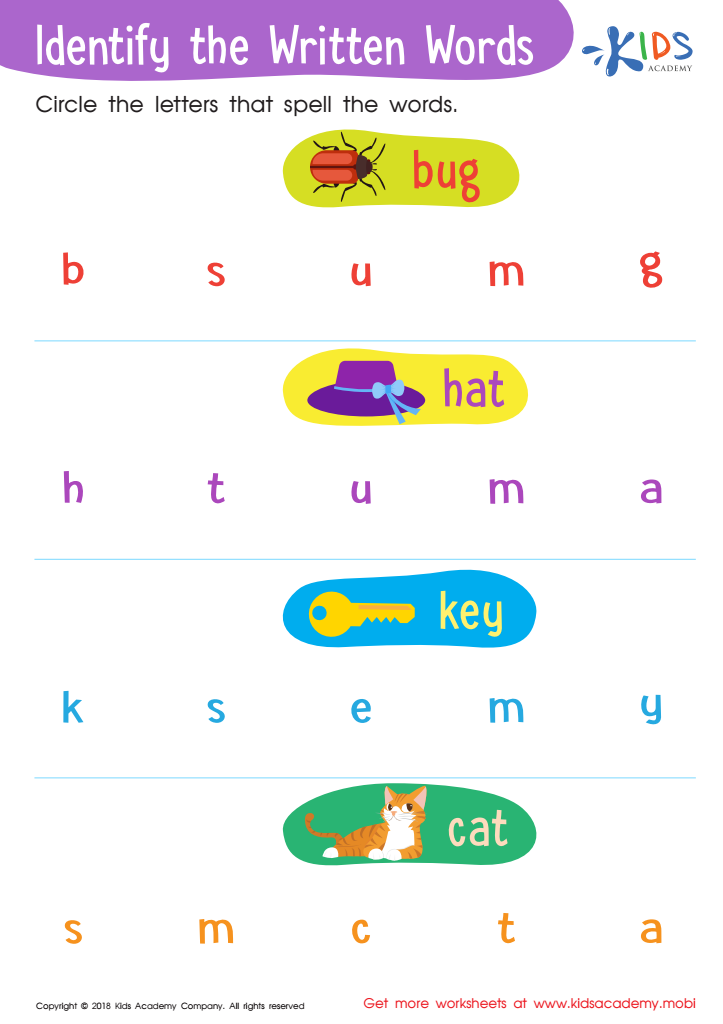
Identify the Written Words Worksheet
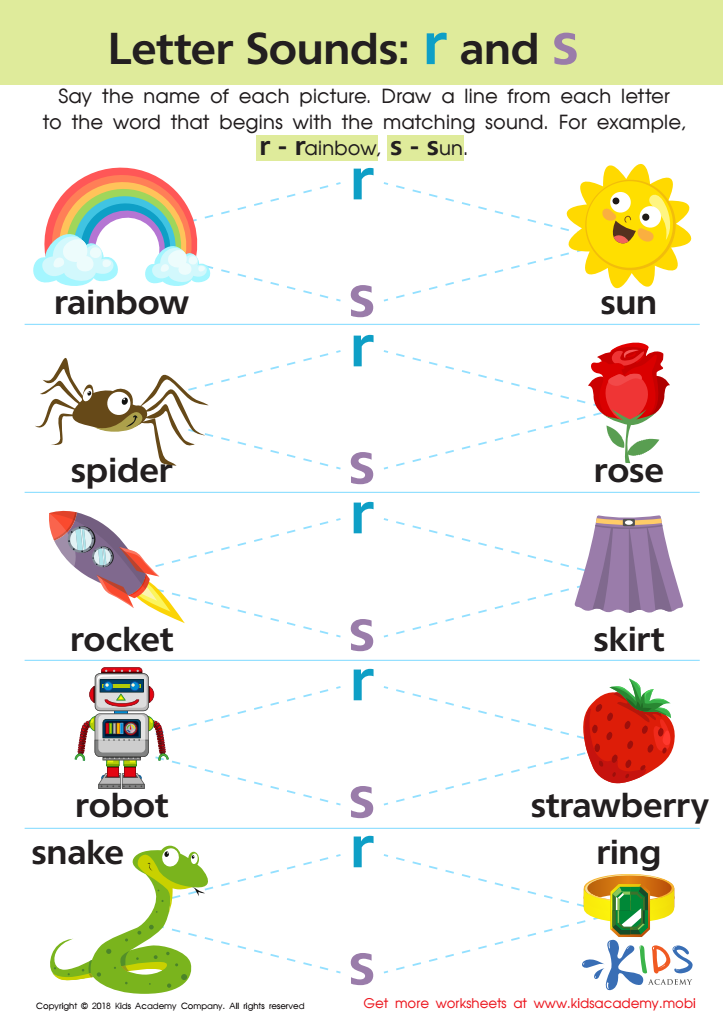
Letter R and S Sounds Worksheet
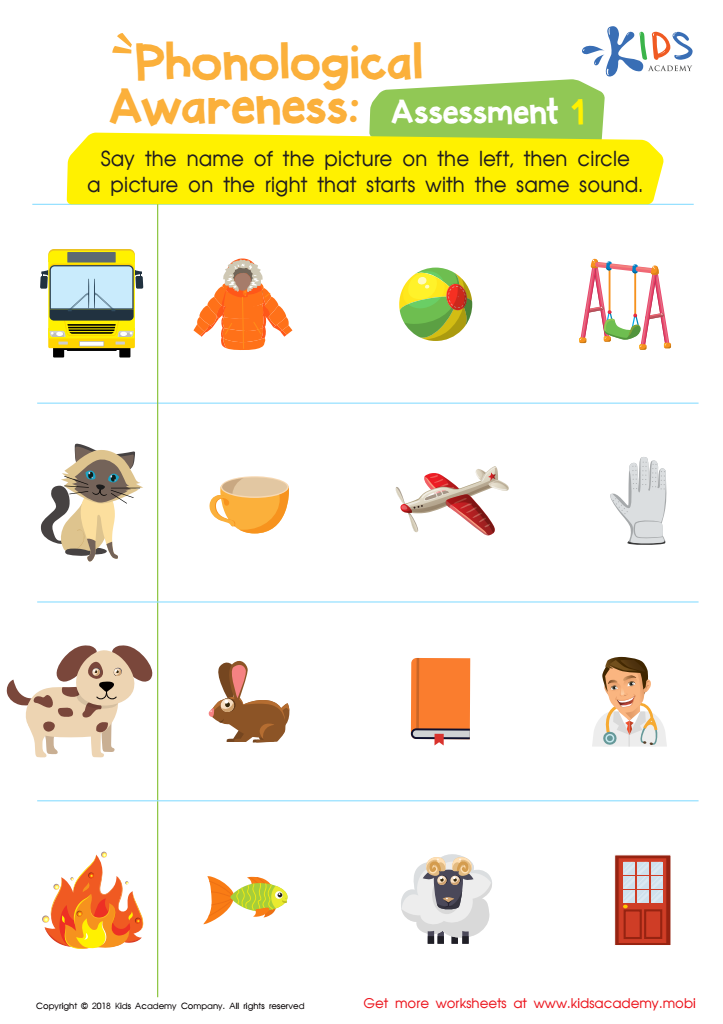
Phonological Awareness: Assessment 1 Worksheet
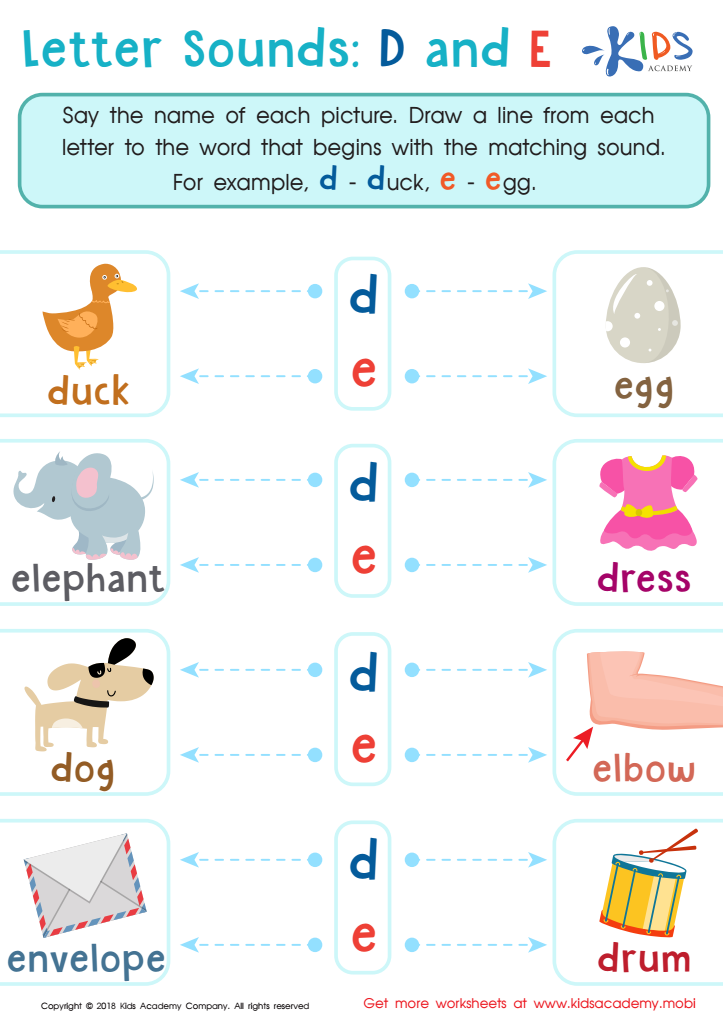
Letter D and E Sounds Worksheet








Vocabulary development and letter sounds form the cornerstone for a child's early literacy skills, and they play a crucial role in setting the stage for future academic success. At ages 3-4, children's brains are remarkably adaptable and optimized for language acquisition. During this period, exposure to rich vocabulary and phonetic fundamentals promotes optimal cognitive, social, and emotional development.
When parents and teachers focus on vocabulary development, they broaden a child's understanding of the world, facilitating better communication skills and enhanced comprehension abilities. With a strong vocabulary, children can express feelings, ideas, and questions with greater clarity, fostering self-confidence and social interactions.
Simultaneously, understanding letter sounds—phonemic awareness—forms the essential framework for reading skills. Recognizing that letters represent specific sounds enables children to decode words when they start reading. This pre-literacy skill is pivotal for word recognition, spelling, and reading fluency.
Early investment in vocabulary and phonetics not only promotes academic readiness but also engenders a lifelong love of learning. Activities such as reading aloud, playing sound-games, and engaging in rich conversations provide enjoyable contexts for these skills to flourish. Consequently, parents and teachers who prioritize these aspects empower children with the foundational tools they need for future literacy success.







