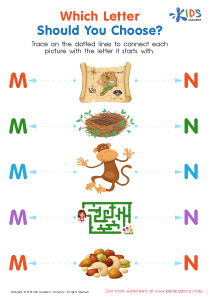
Alphabet sequencing Lowercase/Small Letters Worksheets for Ages 3-4
3 filtered results
-
From - To
Unlock the fun of learning with our Alphabet Sequencing Lowercase/Small Letters Worksheets for ages 3-4! Perfectly designed for preschoolers, these engaging and interactive printables help little learners master the sequence of the alphabet. These worksheets not only reinforce letter recognition but also enhance fine motor skills and cognitive development. Through a variety of charming and colorful activities, kids will enjoy matching, tracing, and ordering lowercase letters from A to Z. Make early literacy a playful adventure—download these worksheets today and watch your child's confidence in alphabet sequencing grow!
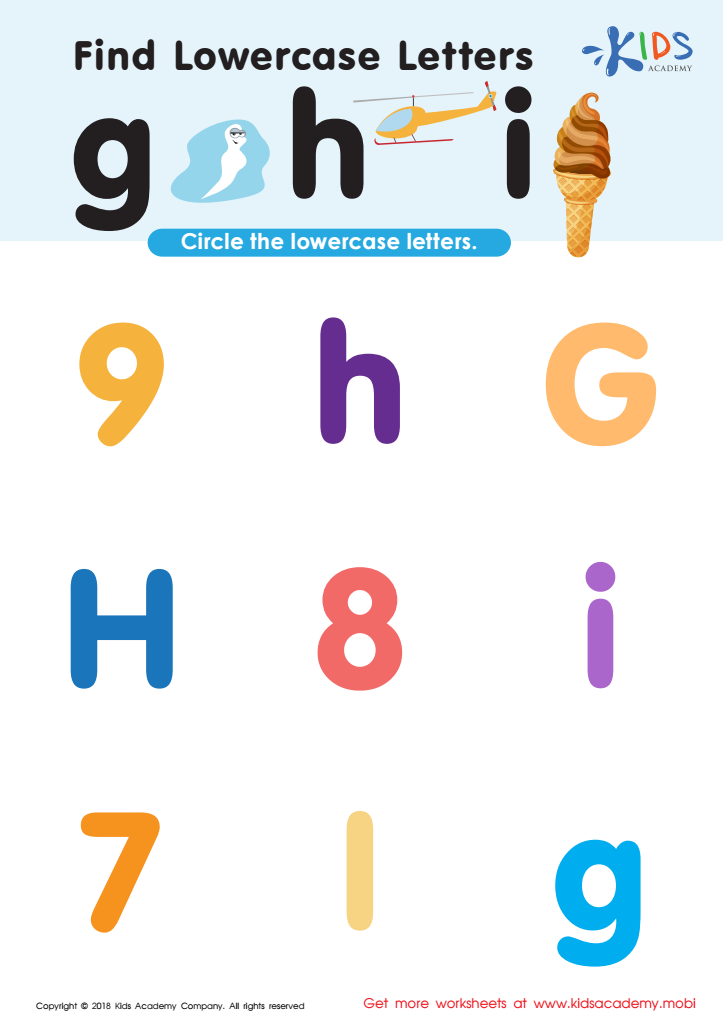
Find Lowercase Letters g h i Worksheet
 Assign to My Students
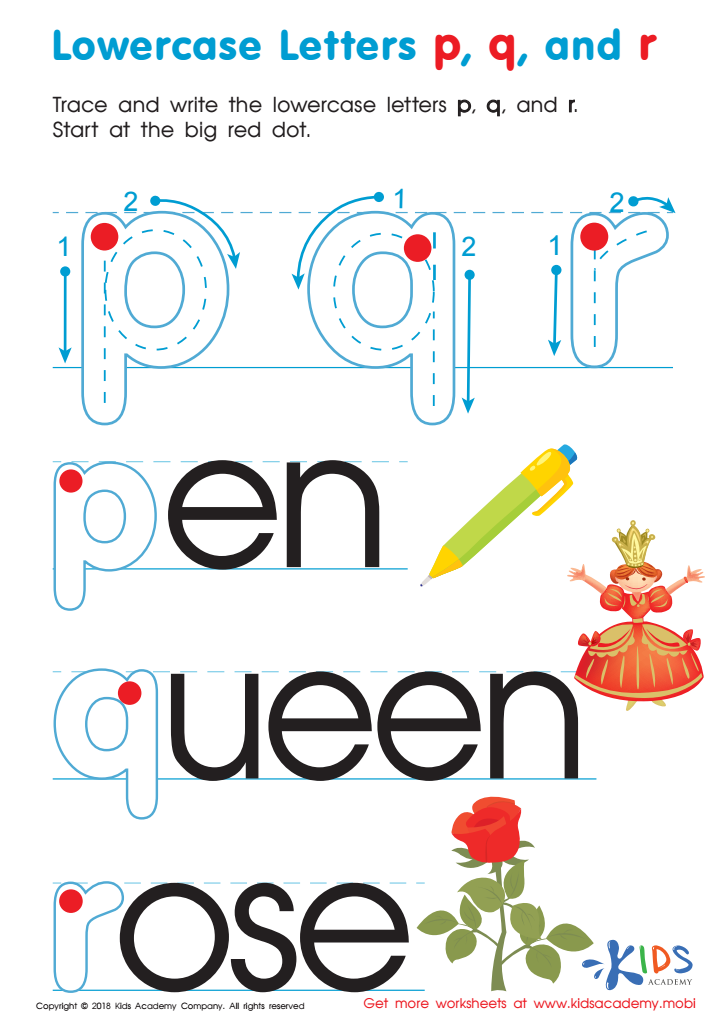
Lowercase Letters p q r Worksheet
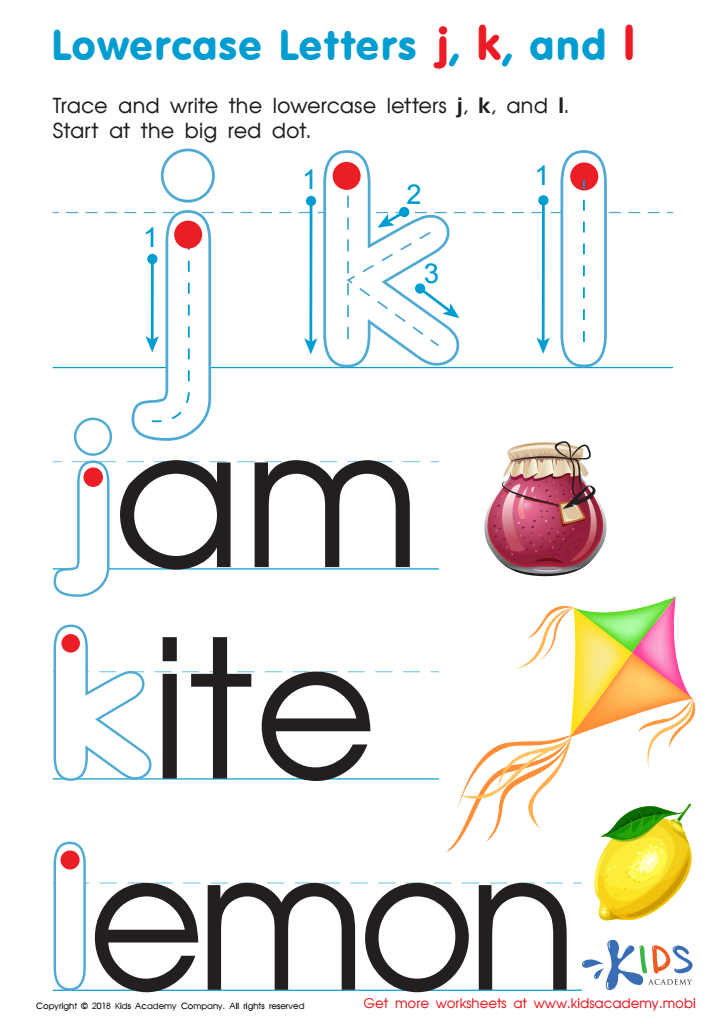
Lowercase Letters j k l Worksheet


Alphabet sequencing for lowercase or small letters is an essential building block for early childhood development and literacy skills. For children aged 3-4, understanding the sequence of the alphabet can pave the way for kindergarten readiness and foster a solid foundation for future reading and writing.
Firstly, alphabet sequencing helps children to differentiate between characters and recognize patterns, enhancing their cognitive and memory skills. Knowing the order of letters aids in alphabetic principle understanding—a core component of early literacy that connects letters to sounds, which is fundamental for phonics and word formation.
Furthermore, this skill significantly boosts vocabulary acquisition and language development. When children understand the sequence of letters, they can start forming simple words, which unlocks the doors to reading. Early literacy skills developed through alphabet sequencing correlate with better academic performance in later years.
Additionally, lowercase letter recognition is particularly important as these forms are more common in print than uppercase letters, aiding children in becoming familiar with the text they encounter in books and real-world contexts. Finally, engaging in playful and educational alphabet sequencing activities promotes fine motor skills, enhances concentration, and builds confidence in young learners, setting a positive tone for their academic journey.
Parents and teachers should thus prioritize alphabet sequencing to nurture well-rounded, confident, and capable lifelong learners.